Artwork
Abbrutimento (Ricordo di Constantinopoli) [Brutalization (Souvenir of Constantinople)]
![Abbrutimento (Ricordo di Constantinopoli) [Brutalization (Souvenir of Constantinople)], by Alberto Pasini, ink, 1870](https://artifactworldgallery.com/img/alberto-pasini--abbrutimento-ricordo-di-constantinopoli-brutalization-souven--634a4466009a10f7-w1024.webp)
Abbrutimento (Ricordo di Constantinopoli) [Brutalization (Souvenir of Constantinople)] is an ink print by the Impressionist artist Alberto Pasini. It dates from 1870 and is held in the collection of the National Gallery of Art.
About this work
Overview
Abbrutimento (Ricordo di Constantinopoli), created by Italian artist Alberto Pasini in 1870, is an etching that embodies his Orientalist focus through a late-Romantic lens, capturing a somber scene linked to Constantinople.
Subject & Meaning
The etching depicts a solitary, hunched figure in a dark doorway, face obscured, conveying a sense of melancholy or despair. The title suggests a narrative tied to Constantinople, yet the image prioritizes evoking a mood over explicit detail.
Technique & Style
Pasini employed quick, scratchy etching lines to achieve a textured, urgent feel. This technique, characteristic of etching, involves acid-etched metal plates to produce prints, here enhancing the scene's rough, emotional intensity.
History & Provenance
Created in 1870, the work is part of Pasini's broader engagement with Eastern Mediterranean themes, particularly Constantinople, within a Romantic framework. Specific provenance details are not provided.
Context
Situated within the Orientalist tradition, the piece reflects 19th-century European fascination with the East. Pasini's late-Romantic approach adds an emotional, expressive layer to the typical Orientalist subject matter.
Artist & collection

Artist
Alberto Pasini was an Italian painter. He is best known for depicting Orientalist subjects in a late-Romantic style.

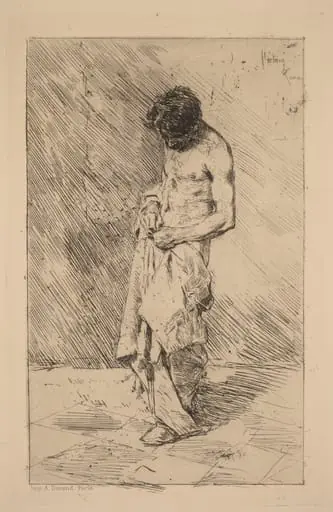 Un Pouilleux (Flea Seeker)
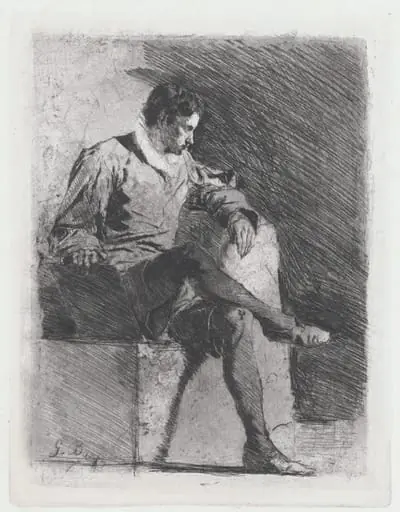 Seated Man in Sixteenth-Century Costume
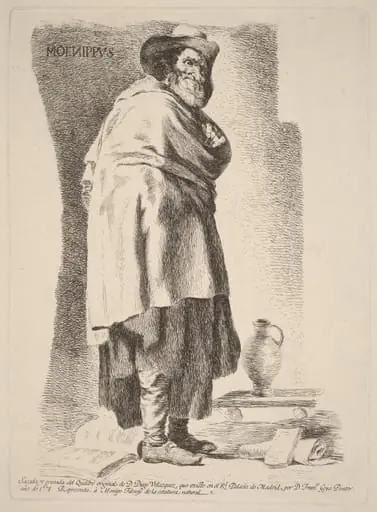 Moenippvs (Moenippus)
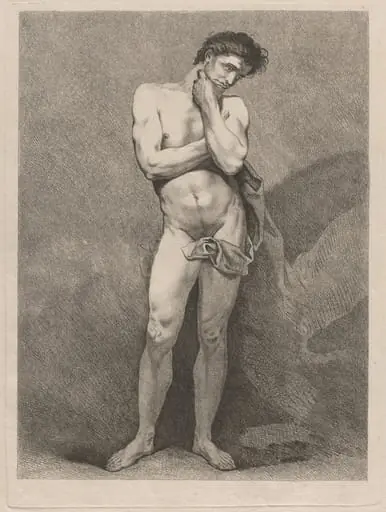 Standing Man in Pensive Pose
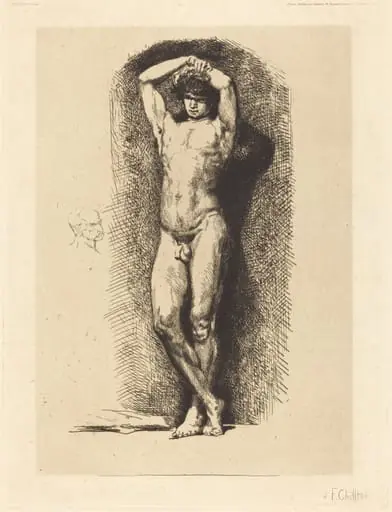 Male Academy
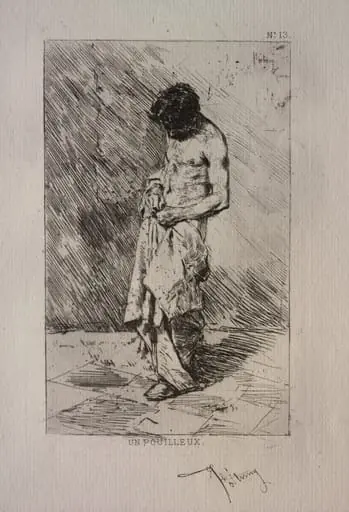 Man Searching for Fleas
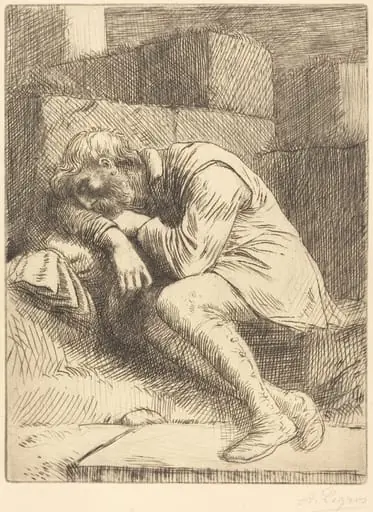 Sleeping Beggar (Mendiant endormi)
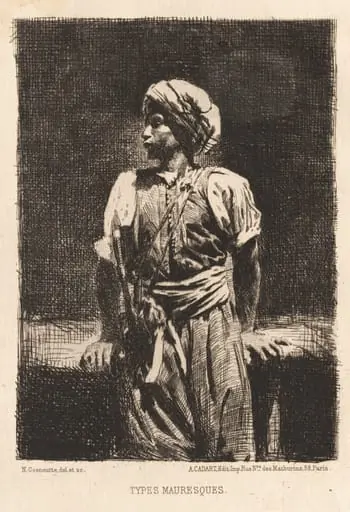 Types Mauresques
 Study of a Moroccan Man with a Green Wrap
 Procession Leaving a Church (La sortie de la procession)
 Sleeping Beggar (Mendiant endormi)
 The Image Seen by Nebuchadnezzar