Artwork
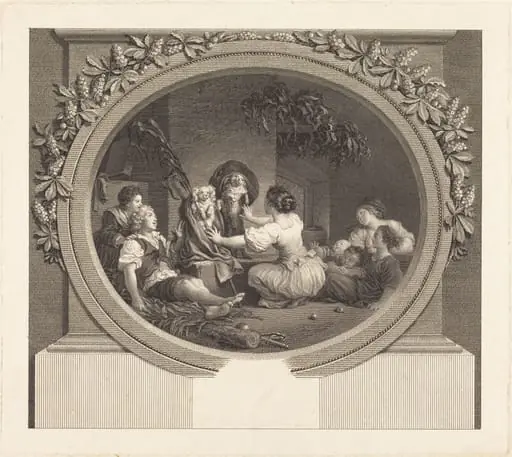
La famille du fermier
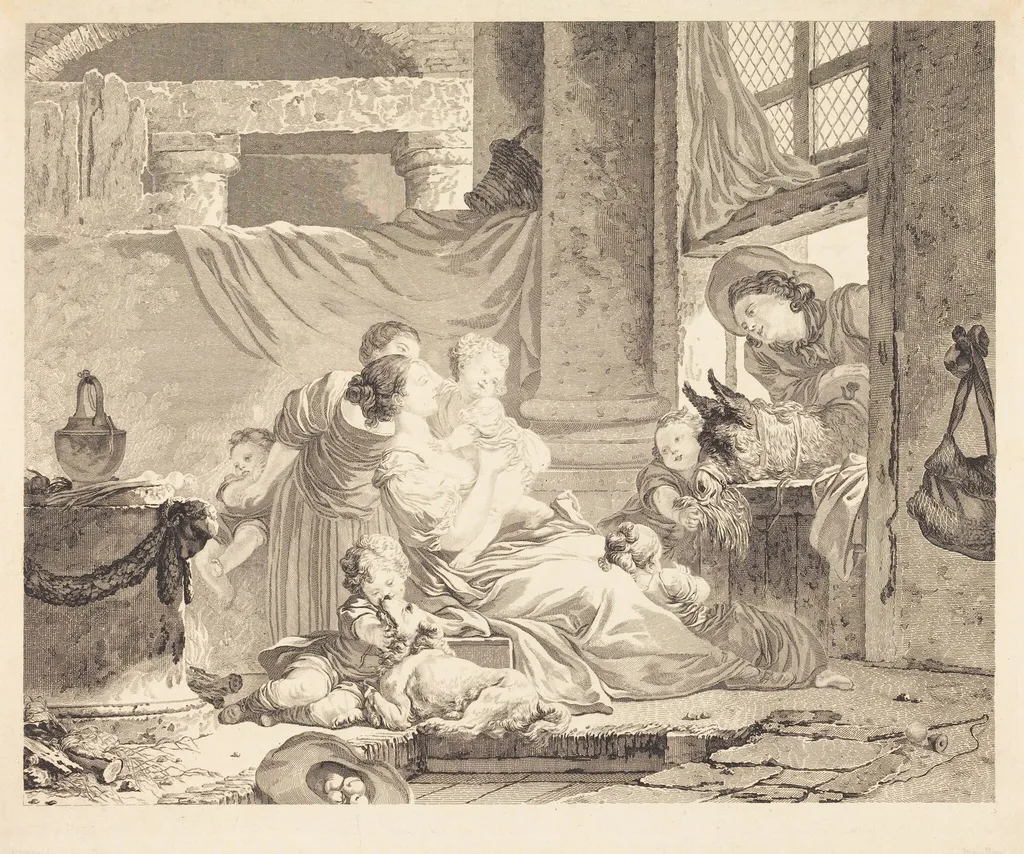
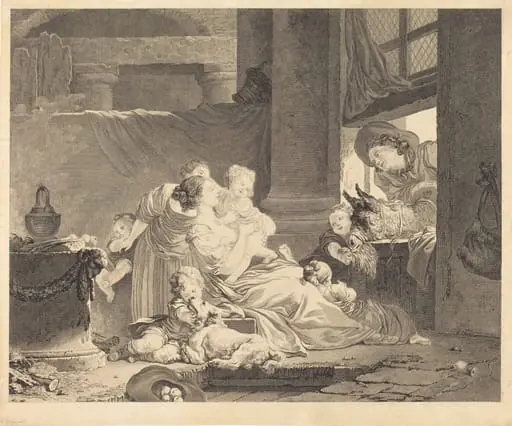
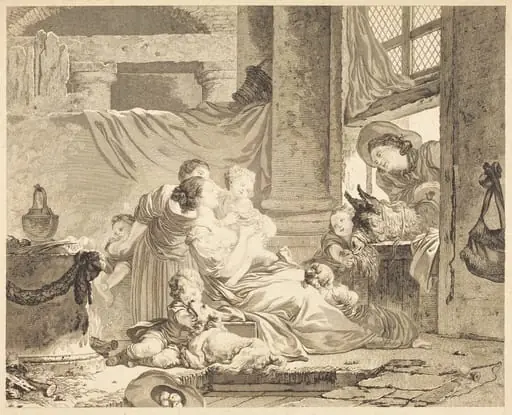
La famille du fermier is an ink print by the Romanticist artist Clément-Pierre Marillier. It dates from 1791 and is held in the collection of the National Gallery of Art.
About this work
Overview
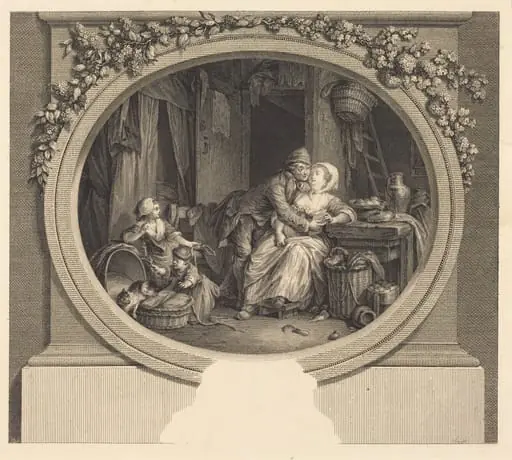
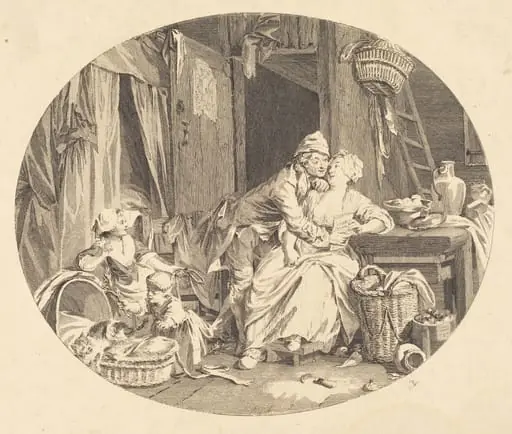
La famille du fermier is an 1791 etching by Clément-Pierre Marillier, depicting a rural French household in a moment of everyday activity.
La famille du fermier is an 1791 etching by Clément-Pierre Marillier, depicting a rural French household in a moment of everyday activity. The composition captures a family of five within a confined interior, surrounded by signs of domestic life. The artist employed the etching technique to render fine, precise lines that define both the figures and the cluttered environment, emphasizing texture and spatial depth without color.
Subject & Meaning
The scene portrays a working-class family engaged in routine tasks: a mother holds an infant while another child clings to her leg; two younger children play on the floor with a cat and scattered toys. Outside the window, a woman on a balcony with a basket suggests a separate, quieter sphere of labor. The contrast between the indoor disorder and the calm exterior may reflect the tension between domestic toil and the stillness of the natural world.
Technique & Style
Marillier used etching to create detailed, linear textures that convey the roughness of worn fabrics and the uneven surfaces of a humble interior. The sharp, controlled lines define each figure and object with clarity, while the dense arrangement of forms avoids idealization. The absence of shading or tone relies entirely on line weight and spacing to suggest volume and shadow, characteristic of late 18th-century printmaking traditions.
History & Provenance
Created in 1791, the work emerged during a period of social upheaval in France, when artists increasingly turned to scenes of ordinary life. Marillier, known for his genre prints, likely produced this piece for a middle-class audience interested in realistic depictions of rural existence. Its survival suggests it was circulated as a standalone print, possibly as part of a series documenting peasant life.
Context
In the years before the French Revolution, there was growing interest in portraying the lives of common people, moving away from aristocratic or mythological subjects. Marillier’s etching aligns with this shift, offering a quiet, unembellished view of rural domesticity. The inclusion of a figure on the balcony may reference the separation between private labor and public space, a subtle commentary on class and gender roles.
Legacy
La famille du fermier remains a modest but significant example of late 18th-century French genre printmaking. It reflects the period’s increasing attention to everyday realism and the dignity of labor. Though not widely reproduced, it contributes to the broader understanding of how artists documented social conditions through intimate, detailed imagery rather than grand narratives.
Artist & collection