Artwork
La Félicité villageoise
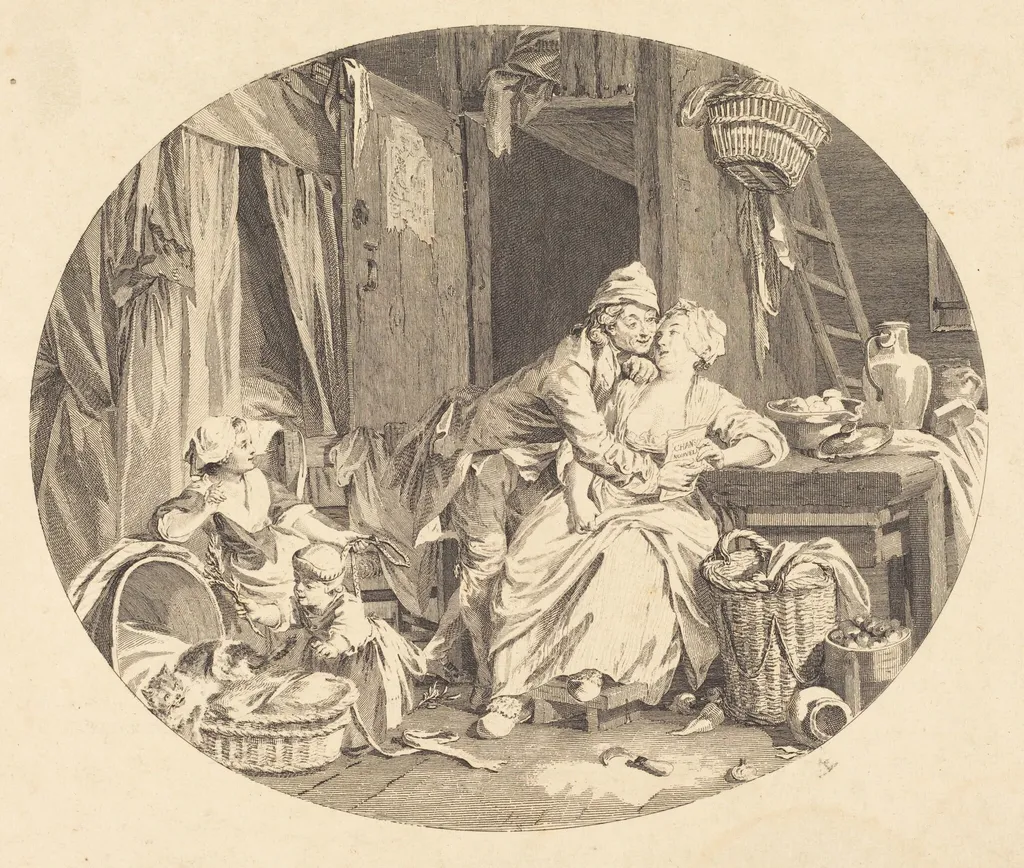
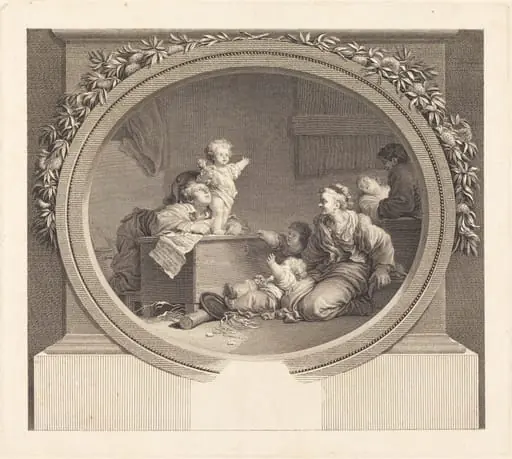
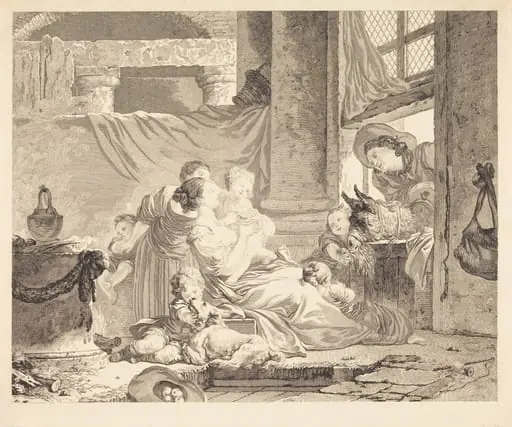
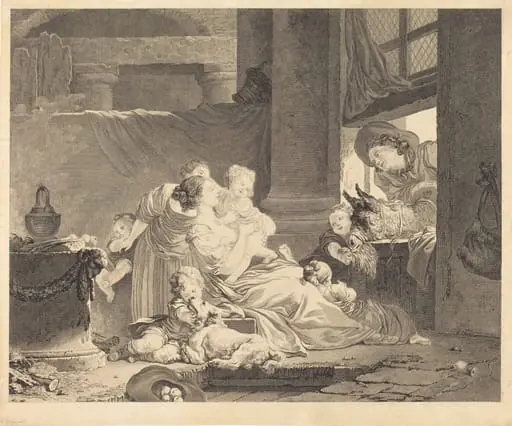
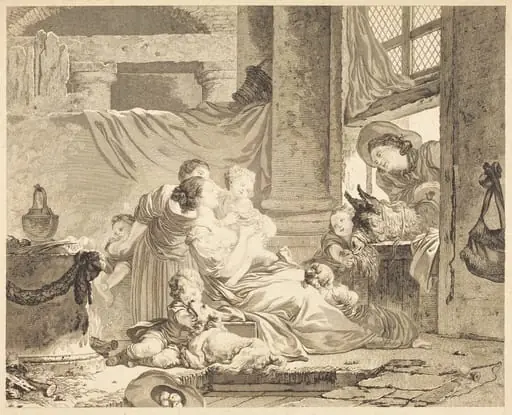
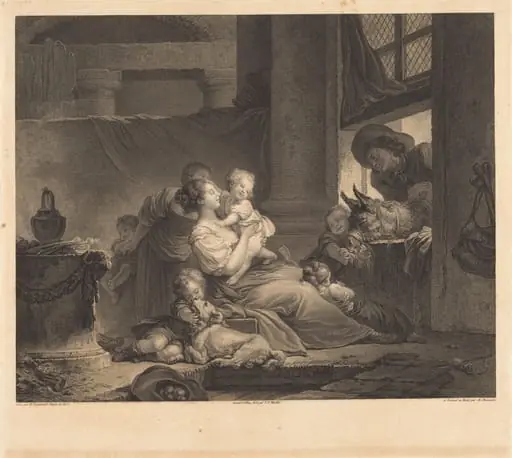
La Félicité villageoise is an ink print by the Romanticist artist Nicolas Delaunay. It dates from 1784 and is held in the collection of the National Gallery of Art.
About this work
Overview
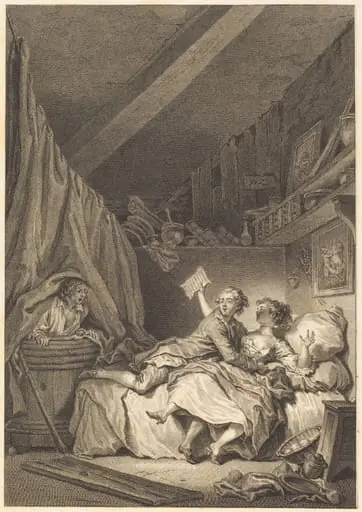
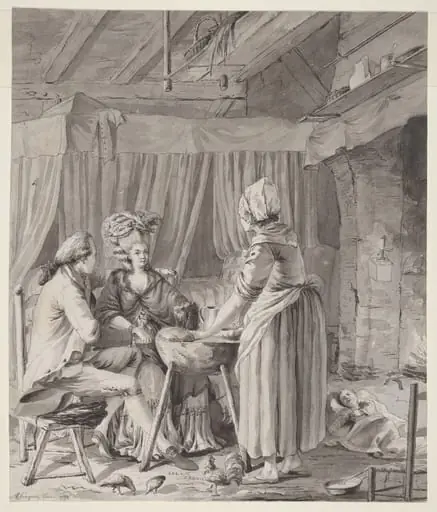
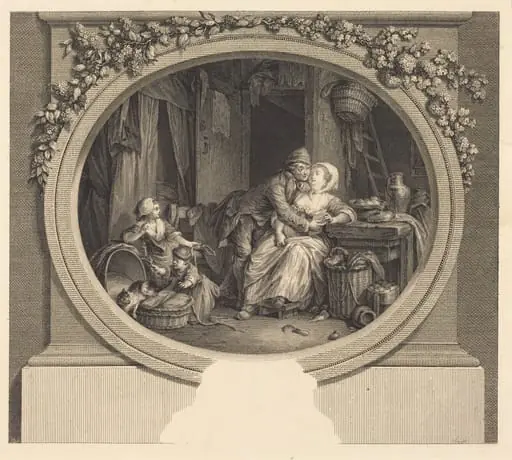
La Félicité villageoise is an 1784 etching by French artist Nicolas Delaunay. It depicts an intimate domestic moment in a rural home, rendered through fine linear marks and tonal contrasts typical of the etching technique. The composition captures a quiet, unposed scene of daily life, emphasizing warmth and stillness rather than narrative drama.
Subject & Meaning
The scene portrays four figures in a modest interior: a woman reads aloud, another listens closely, a child plays with toys on the floor, and a man stands near the doorway, gazing outward. The title, meaning 'The Village Happiness,' suggests contentment found in simple, domestic routines. Objects like bread, a pitcher, and a sleeping dog reinforce the theme of humble, orderly domesticity.
Technique & Style
Delaunay employed etching to achieve subtle gradations of light and shadow. Fine lines define textures—fabric, wood, fur—while areas of dense ink deepen the doorway, creating a stark contrast with the softly lit interior. The composition avoids theatricality, favoring naturalistic arrangement and quiet observation, characteristic of 18th-century genre printmaking.
History & Provenance
Created in 1784, the print emerged during a period when French artists increasingly turned to scenes of ordinary life. Delaunay, known for his reproductive prints after painters like Greuze, used etching to translate sentimental domestic imagery into accessible formats. The work circulated among collectors and middle-class households, reflecting growing interest in moralizing genre scenes.
Context
In the decades before the French Revolution, images of rural virtue and familial harmony gained popularity as cultural counterpoints to urban excess. Delaunay’s print aligns with this trend, echoing the ideals promoted by Enlightenment thinkers and painters who idealized peasant life as morally pure. Such works appealed to audiences seeking emotional resonance in everyday realism.
Legacy
La Félicité villageoise exemplifies the shift in print culture toward intimate, morally grounded genre scenes. Though Delaunay is less widely known today, his prints contributed to the broader acceptance of domestic subjects in fine art. The work remains a quiet testament to the aesthetic value placed on unadorned, authentic moments in 18th-century French visual culture.
Artist & collection