Artwork
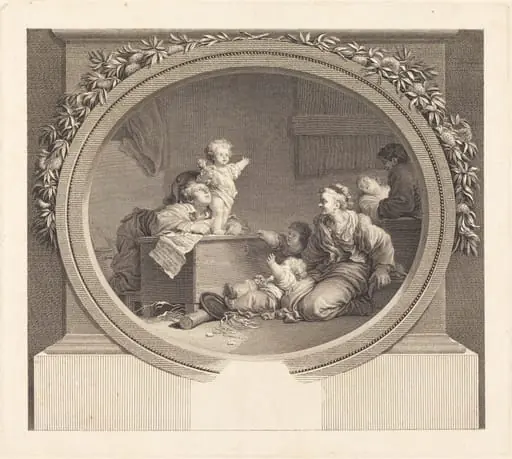
La Félicité villageoise
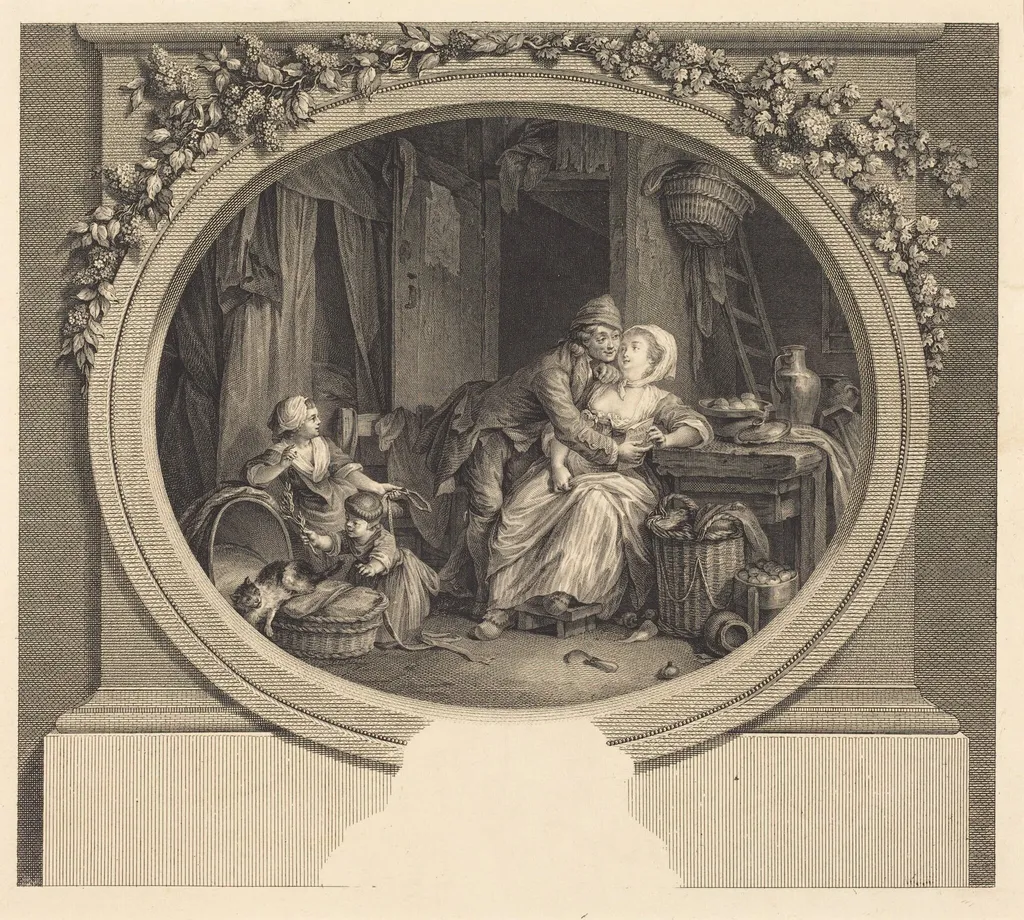
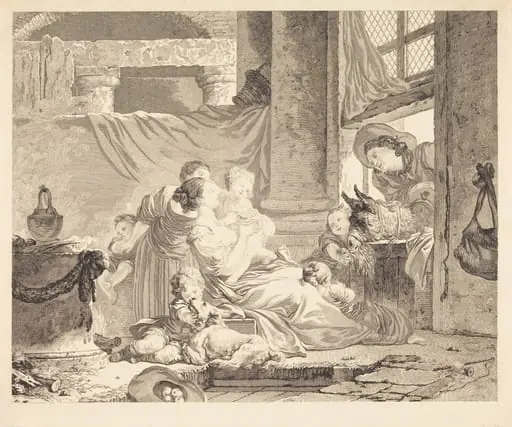
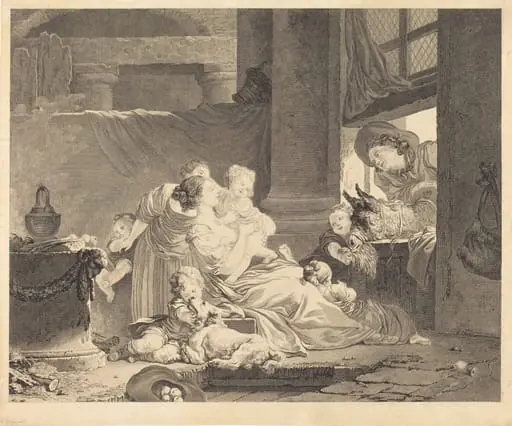
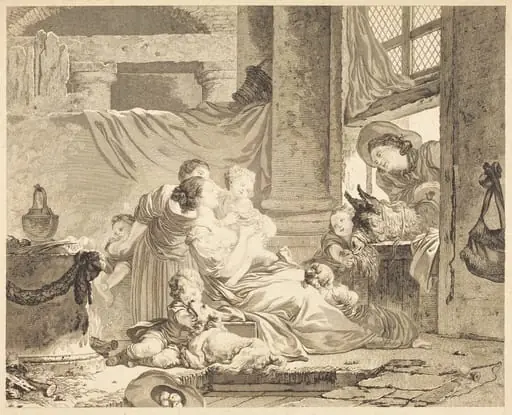
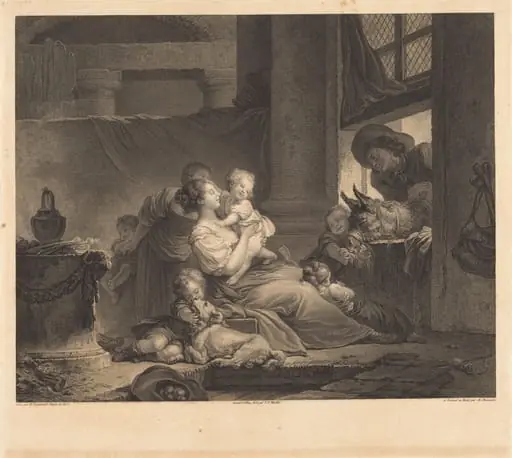
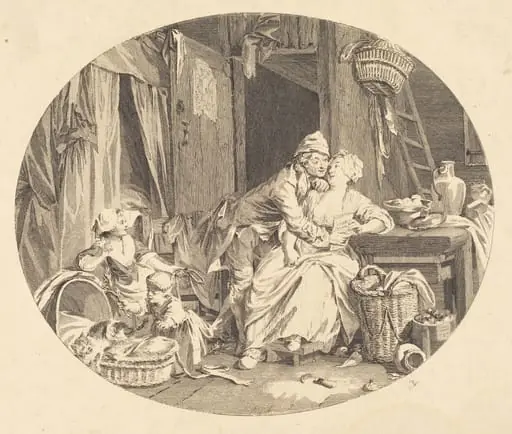
La Félicité villageoise is an ink print by the Romanticist artist Nicolas Delaunay. It dates from 1784 and is held in the collection of the National Gallery of Art.
About this work
Overview
Rendered in monochrome, the composition centers on a woman seated at a low table, a child playing on the floor, and a figure partially visible in the doorway.
Nicolas Delaunay’s 1784 print La Félicité villageoise is an etching and engraving that depicts a modest interior scene. Rendered in monochrome, the composition centers on a woman seated at a low table, a child playing on the floor, and a figure partially visible in the doorway. Everyday objects—a pitcher, a bowl of fruit, a basket of bread—populate the space, conveying a quiet domestic atmosphere.
Subject & Meaning
The work presents a moment of rural contentment, emphasizing simple pleasures and familial harmony. The woman’s relaxed posture, the child’s play, and the modest provisions on the table suggest a theme of humble happiness, aligning with Enlightenment ideals that valorized the virtue of ordinary village life.
Technique & Style
Delaunay employed a combination of etching and engraving on a copper plate. Fine, delicate lines render the texture of fabrics and the subtle play of light across surfaces, while deeper engraved strokes define the outlines of furniture and figures. The contrast between the soft tonal areas and the sharper incised lines creates a sense of depth within the flat medium.
History & Provenance
Created in 1784, La Félicité villageoise was produced during the late Ancien Régime, a period when prints of genre scenes were popular among the emerging middle class. While specific ownership records are scarce, the print has been cited in catalogues of Delaunay’s oeuvre and appears in several 19th‑century collections of French prints.
Artist & collection