Artwork
Drawing Water
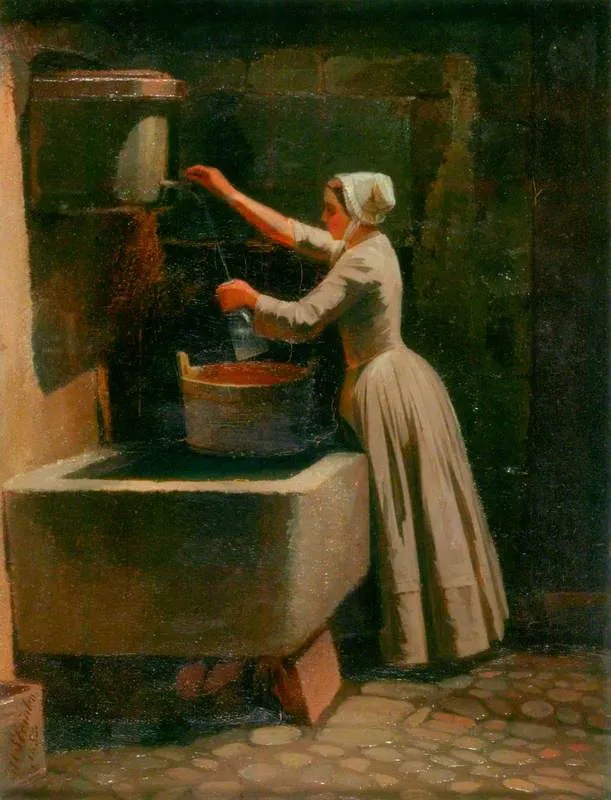
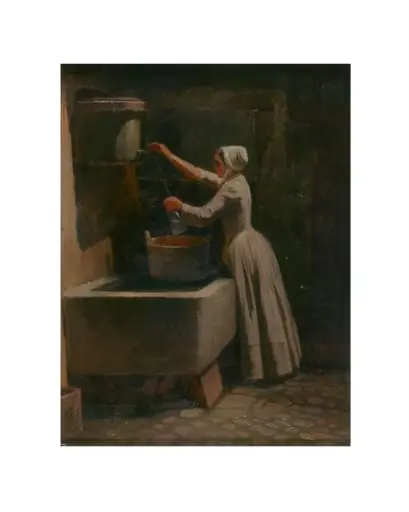
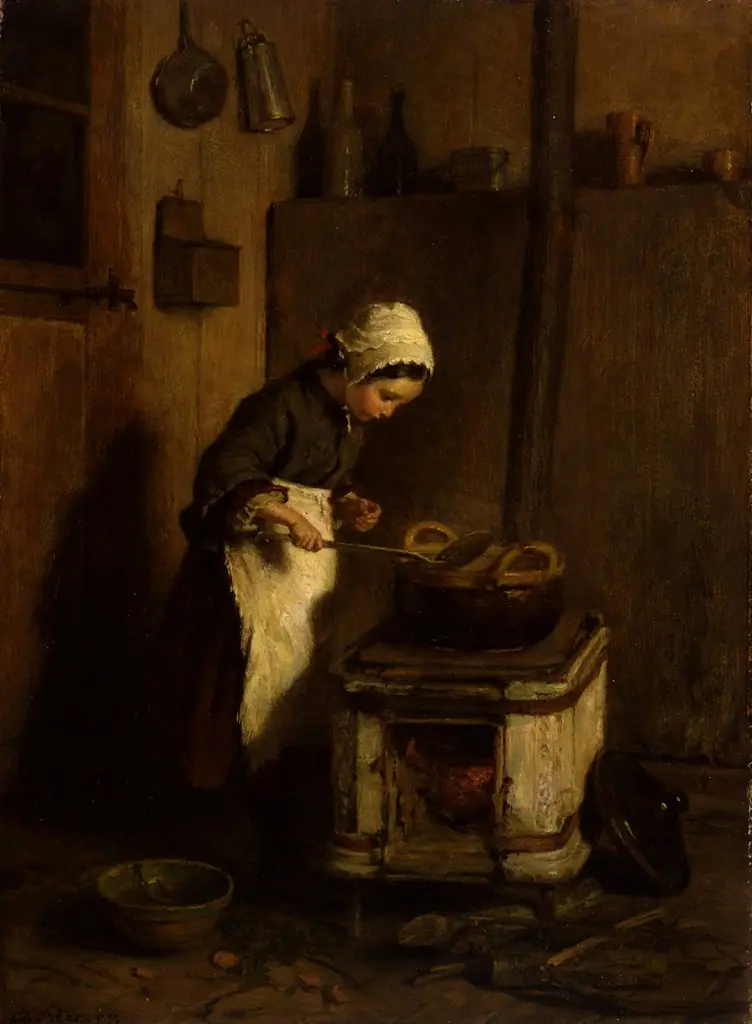
Drawing Water is an oil painting by the Realist artist Marius Steinlen. It dates from 1855 and is held in the collection of the Victoria and Albert Museum.
About this work
Overview
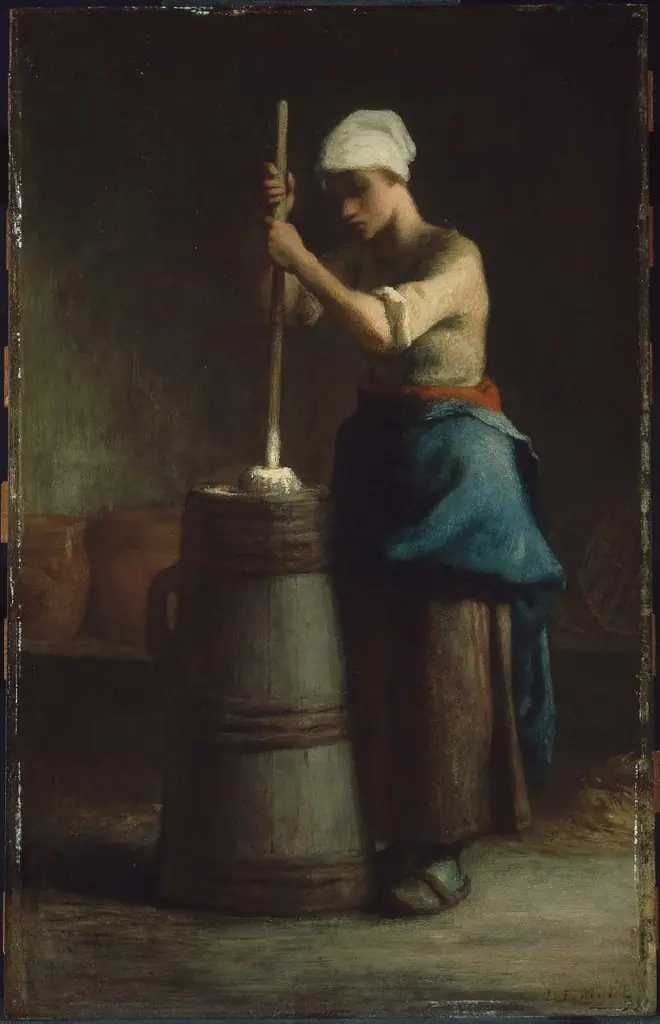
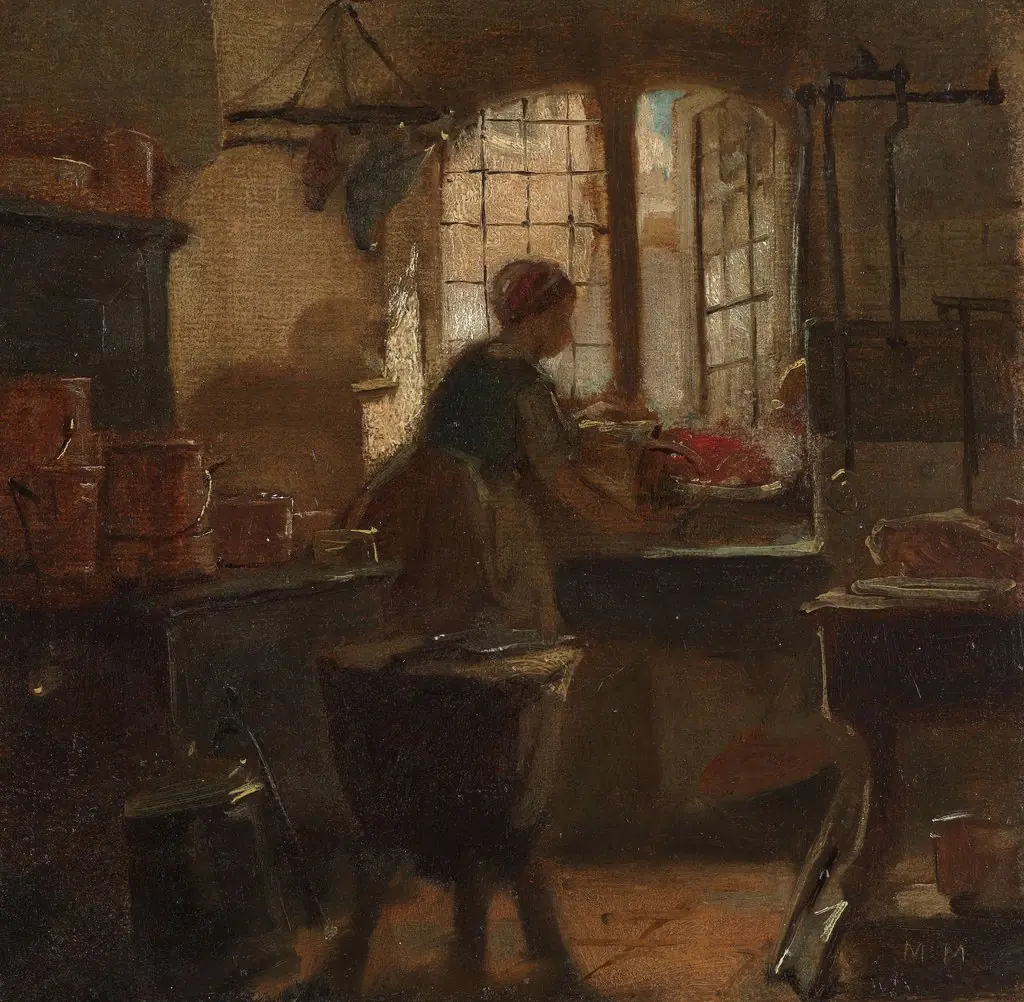
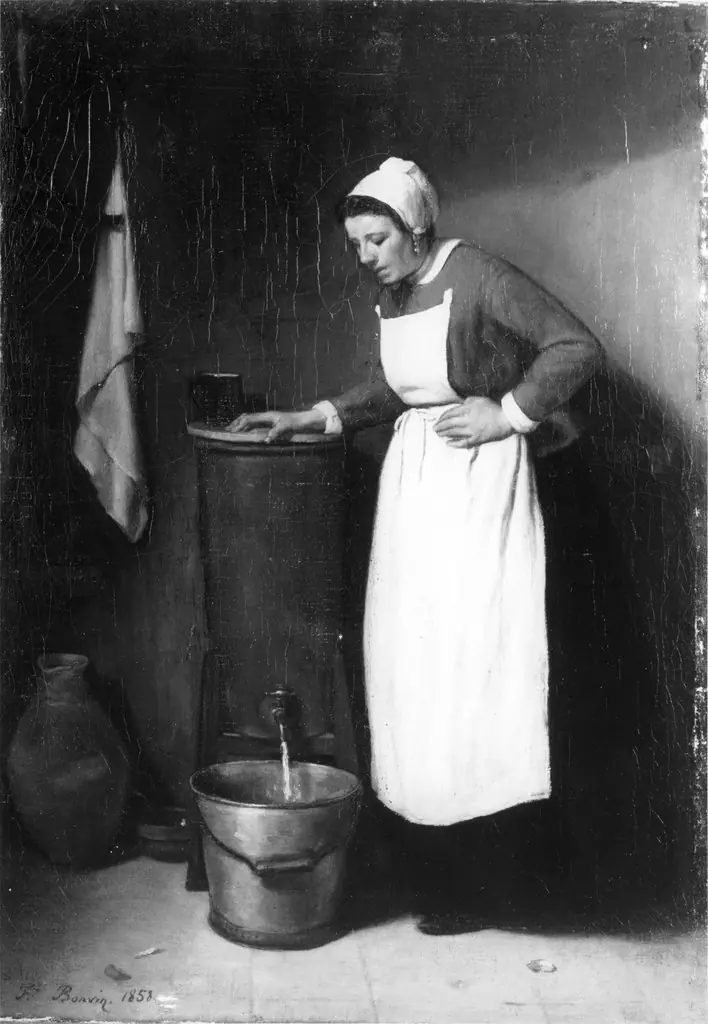
Created in 1855, this oil painting by Marius Steinlen depicts a solitary figure engaged in the daily act of drawing water from a well. The work is part of the Victoria and Albert Museum’s collection and exemplifies 19th-century genre painting, focusing on ordinary life with quiet attention to detail. Its restrained palette and gentle lighting emphasize stillness over drama.
Subject & Meaning
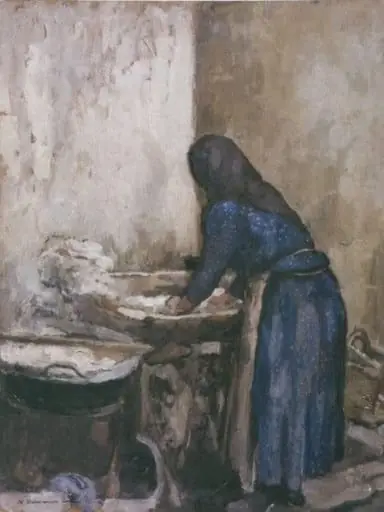
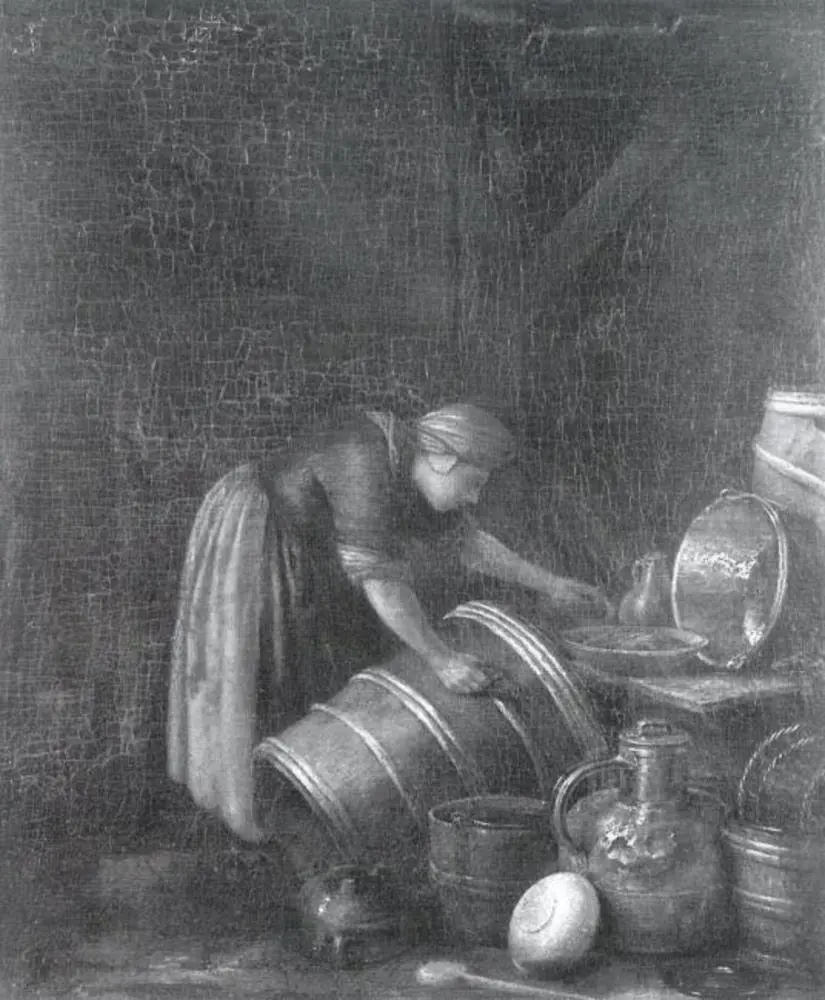
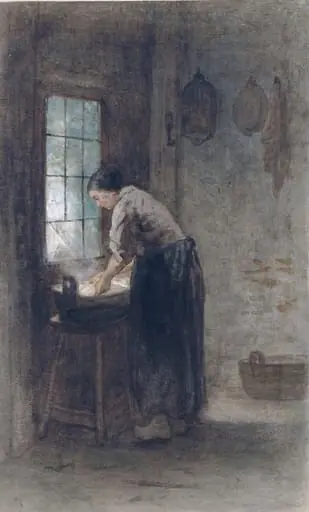
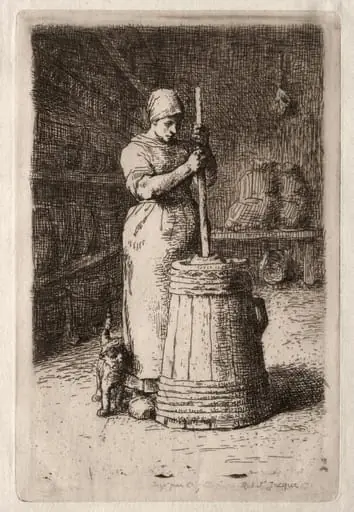
The central figure is a woman in a light-colored dress and head covering, leaning over a stone well to operate its handle while holding a bucket. Her posture suggests routine labor, not hardship. The scene avoids narrative climax, instead conveying dignity in mundane tasks. The absence of other figures or overt symbolism invites reflection on private, repetitive acts of domestic survival.
Technique & Style
Steinlen employs soft, muted tones and diffused light to unify the composition. Brushwork is subdued, with careful attention to the texture of stone, fabric, and cobblestones. The lighting falls naturally across the figure and well, creating subtle contrasts without theatricality. This approach aligns with contemporary genre painters who favored realism over idealization.
History & Provenance
The painting entered the Victoria and Albert Museum’s collection in the late 19th century, likely acquired as part of a broader effort to document domestic life in European art. Its provenance before that is undocumented. It has remained in the museum’s holdings since, with no record of significant exhibition or public display beyond routine cataloging.
Context
In mid-19th-century Europe, genre scenes depicting rural labor gained traction among artists and collectors seeking authenticity. Steinlen’s work reflects this trend, aligning with painters who turned away from historical or mythological subjects. The painting’s focus on a solitary woman at a well echoes similar themes in Dutch and French realism of the period.
Legacy
Though not widely reproduced or critically analyzed, the painting remains a quiet example of 19th-century genre painting. It contributes to the museum’s collection of domestic scenes, offering insight into how everyday labor was visually recorded during a time of rapid social change. Its significance lies in its understated observation rather than its fame.
Artist & collection
Artist
Marius Steinlen filled small oil panels with scenes of everyday life in the mid-1800s.