Artwork
Anticarul
Anticarul is an unspecified painting by Alexandre Markelback. It dates from 1850 and is held in the collection of the National Museum of Art of Romania.
About this work
Overview
The painting presents a solitary male figure rendered in careful detail, with attention to the play of light on fabric and the subtleties of posture.
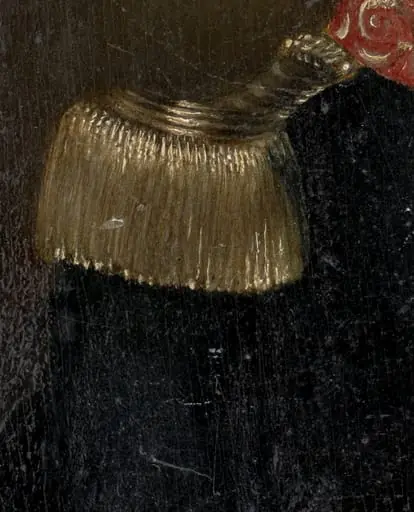
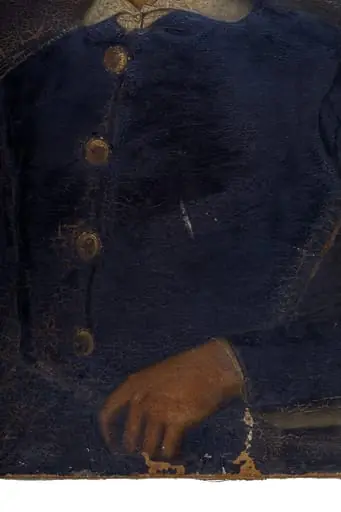
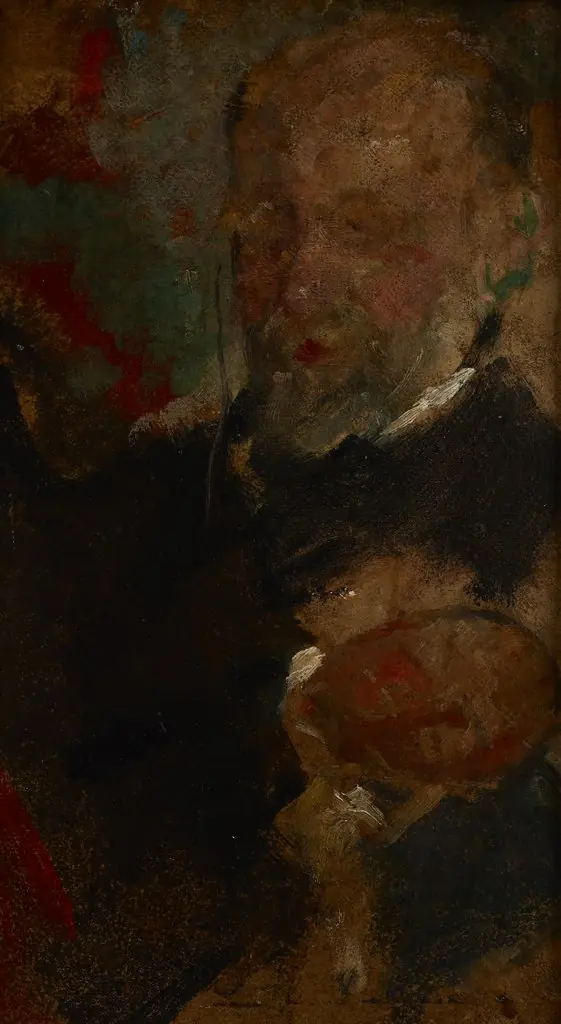
Anticarul, dated around 1850, is a portrait attributed to Alexandre Markelback. The painting presents a solitary male figure rendered in careful detail, with attention to the play of light on fabric and the subtleties of posture. The subject’s clothing and setting suggest a working-class identity, though no specific trade is identified. The composition is intimate, centered on the figure against a muted, earth-toned background that enhances the tactile quality of the attire.
Subject & Meaning
The figure, a man with a mustache, wears a dark jacket, white shirt, and a light-colored apron—garments commonly associated with manual labor in the mid-19th century. The apron, prominently displayed, implies practical work, possibly in woodworking, metalwork, or similar crafts. The direct gaze and stillness of the subject convey dignity in labor, without overt narrative or symbolism. The painting emphasizes presence over story, inviting contemplation of the individual’s role in daily life.
Technique & Style
Markelback employs a detailed, observational approach, rendering fabric textures through layered brushwork and subtle tonal shifts. The folds of the jacket and the sheen of the shirt are rendered with precision, while the apron’s lighter hue creates visual contrast against the darker garments. The background, rendered in warm ochres and browns, recedes softly, focusing attention on the figure. Lighting is even and naturalistic, avoiding dramatic chiaroscuro in favor of clarity and realism.
History & Provenance
Little is documented about Alexandre Markelback or the early history of Anticarul. The painting’s origin, ownership, and exhibition history remain obscure. It appears to have been privately held for much of its existence, with no record of public display or critical reception during the artist’s lifetime. Its survival suggests it was valued within a domestic or artisanal context, though its path to current preservation is untraced.
Context
Created in the mid-1800s, Anticarul reflects a broader European trend of depicting laborers with quiet dignity, emerging alongside rising social awareness of the working class. While not aligned with overtly political movements, the painting aligns with the era’s growing interest in everyday life as worthy of artistic attention. Its style owes something to academic realism, yet lacks the grandeur of official portraiture, suggesting a more personal or local commission.
Legacy
Anticarul remains a modest but evocative example of 19th-century figurative painting, notable for its restrained emotion and attention to detail. Markelback’s name has not entered mainstream art historical discourse, and the work has not been widely reproduced or studied. Nevertheless, it endures as a quiet testament to the visual documentation of ordinary lives during a period of industrial and social transformation.
Artist & collection
Artist
This painter made a single known work called *Anticarul*, part of a small bundle of images with no recorded movement or contemporaries.