Artwork
Teodor Botez
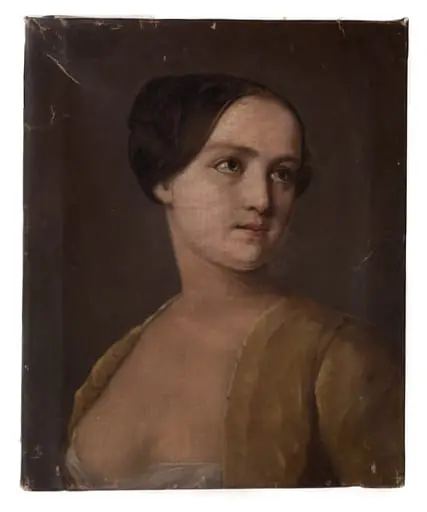
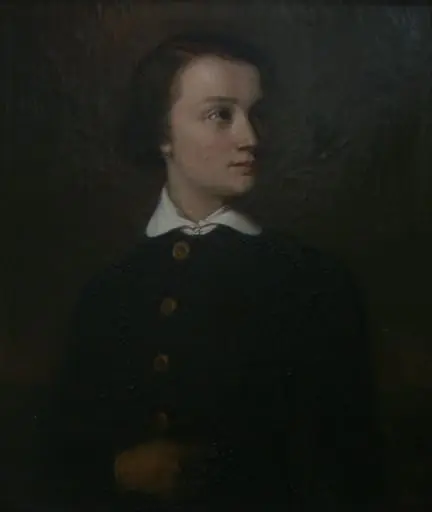
Teodor Botez is an unspecified painting by Gheorghe Panaiteanu-Bardasare. It dates from 1858 and is held in the collection of the Moldova National Museum Complex.
About this work
Overview
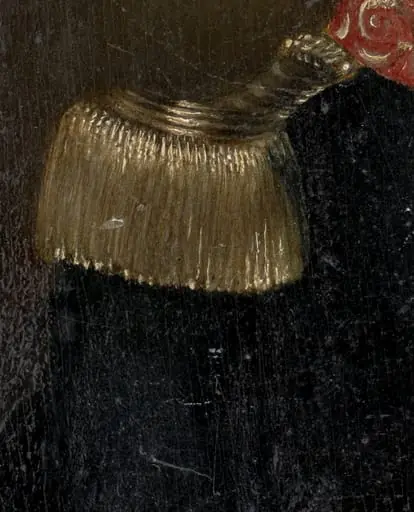
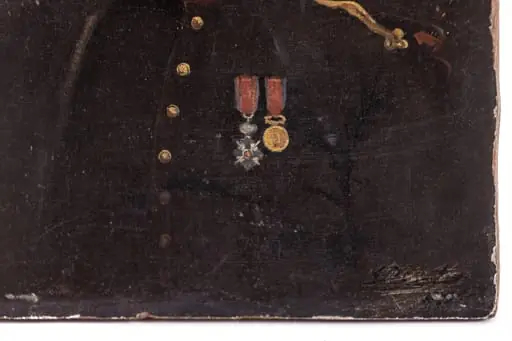
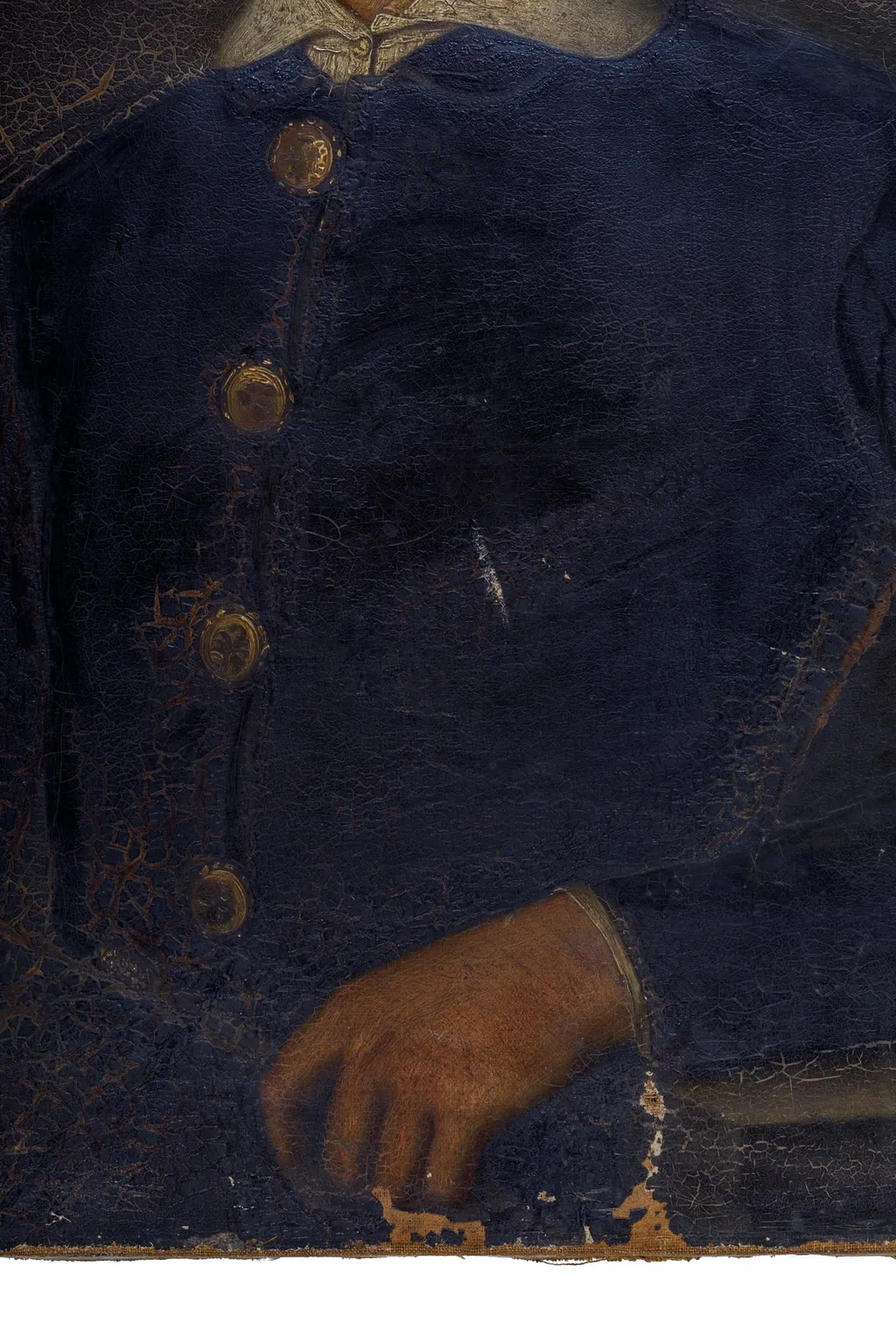
The dark blue garment, accented with gold embroidery and buttons, suggests a deliberate attention to detail in clothing as a marker of identity.
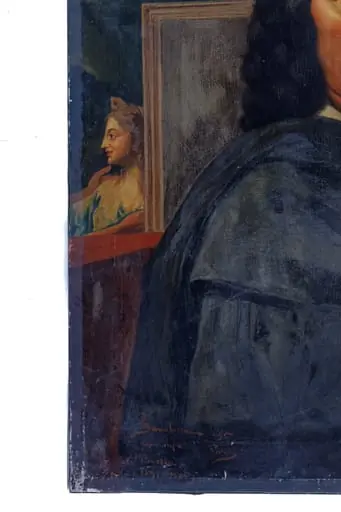
Painted around 1858 by Gheorghe Panaiteanu-Bardasare, this portrait depicts Teodor Botez, a figure of modest social standing. The composition centers on a close-up view of the subject’s upper torso, emphasizing texture and material over full bodily representation. The dark blue garment, accented with gold embroidery and buttons, suggests a deliberate attention to detail in clothing as a marker of identity.
Subject & Meaning
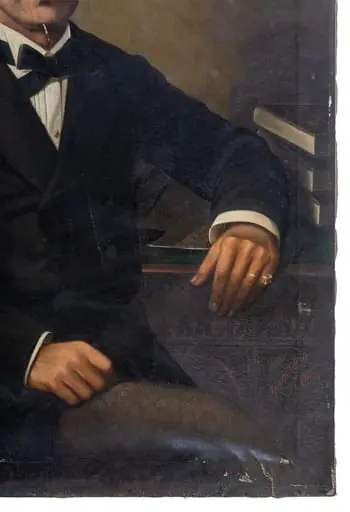
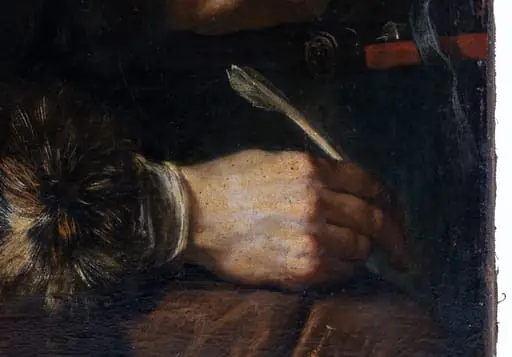
Teodor Botez is portrayed not as a noble or public figure, but as an individual whose dignity is conveyed through quiet realism. The worn edges of the fabric and the slightly oversized hand may indicate the artist’s interest in the passage of time and the physicality of labor. The restrained palette and focus on textile suggest a celebration of everyday presence rather than grandeur.
Technique & Style
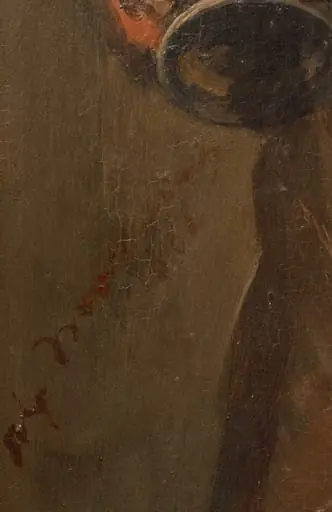
The painting employs subtle chiaroscuro to model the form beneath the garment, creating volume through soft transitions between light and shadow. The gold embroidery and buttons are rendered with precision, contrasting with the rougher, flaking paint along the fabric’s edges. The hand’s disproportionate scale may reflect an emphasis on tactile detail over anatomical accuracy, reinforcing the work’s intimate, observational approach.
History & Provenance
The painting’s early date places it within the formative years of Romanian academic art, when portraiture began shifting from idealized types toward more personal, localized subjects. While its early ownership is undocumented, its survival suggests it was preserved within a private or familial context, possibly by descendants of Botez or the artist’s circle.
Context
Created during a period of cultural awakening in the Romanian Principalities, the portrait reflects a broader trend of valuing individual identity over aristocratic symbolism. Artists like Panaiteanu-Bardasare turned to ordinary citizens as subjects, aligning with emerging nationalist sentiments that sought legitimacy in the lives of common people rather than imported European models.
Legacy
Though not widely exhibited, the portrait contributes to a quiet but significant body of 19th-century Romanian portraiture that prioritized authenticity over ornament. Its focus on texture, wear, and quiet presence influenced later realist painters who sought to document the material culture and dignity of non-elite Romanians.
Artist & collection
Artist
Gheorghe Panaiteanu-Bardasare focused on portraits and figure prints in the mid-1800s style of Romanian art.