Artwork
James Ussher, Archbishop of Armagh
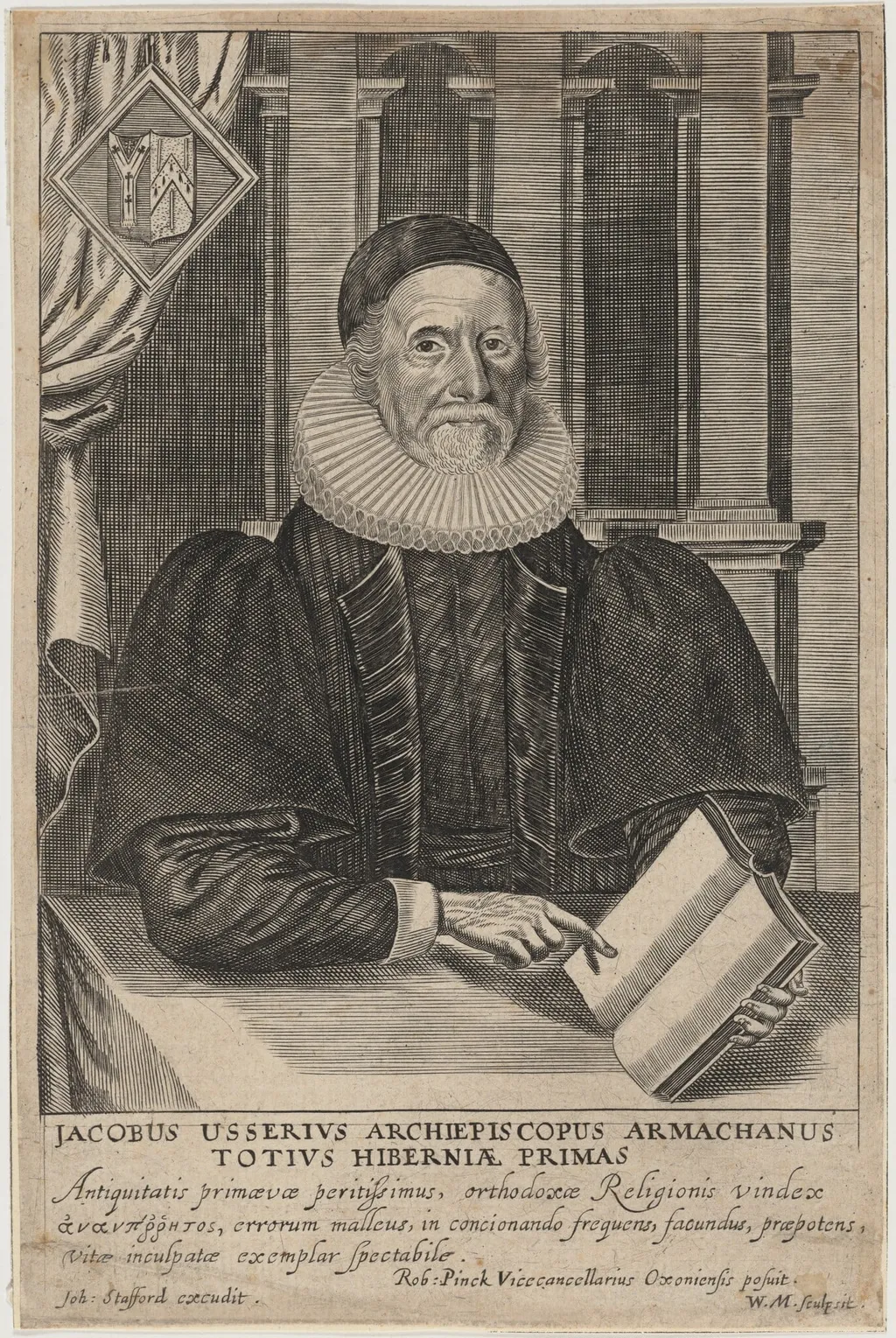
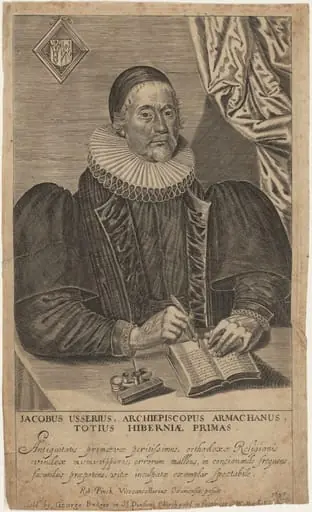
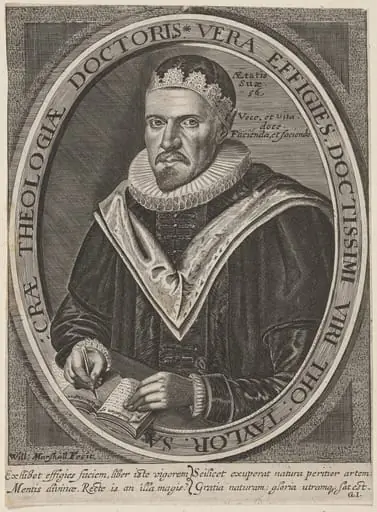
James Ussher, Archbishop of Armagh is an ink print by the Renaissance artist William Marshall. It dates from 1623 and is held in the collection of the National Gallery of Art.
About this work
Overview
As a print, it was likely produced for distribution among clergy and scholars, reinforcing Ussher’s public image as a leading church figure.
This 1623 engraving by William Marshall depicts James Ussher, Archbishop of Armagh, in a formal portrait. Rendered in monochrome, the image captures the ecclesiastical authority of its subject through precise linework and careful shading. The composition follows conventions of early 17th-century portraiture, emphasizing dignity and intellectual gravitas. As a print, it was likely produced for distribution among clergy and scholars, reinforcing Ussher’s public image as a leading church figure.
Subject & Meaning
James Ussher, a prominent Anglican theologian and scholar, is portrayed with solemnity, reflecting his role as head of the Church of Ireland. His attire—a high white collar, dark robe, and ceremonial chain—signals his ecclesiastical rank. The book in his hand and the coat of arms behind him underscore his scholarly and institutional authority. The restrained expression and upright posture convey a sense of moral seriousness, aligning with his reputation as a rigorous defender of Protestant doctrine.
Technique & Style
William Marshall employed fine-line engraving to achieve depth and texture, using cross-hatching and delicate etched lines to model the folds of fabric and the contours of Ussher’s face. The contrast between the luminous collar and the shadowed robe enhances the three-dimensionality of the figure. The background curtain and heraldic shield are rendered with precision, suggesting a controlled, deliberate approach typical of professional printmakers of the period who prioritized clarity and detail over expressive flair.
History & Provenance
Created in 1623, the engraving was produced during Ussher’s tenure as Archbishop of Armagh, a position he held from 1625 until his death. Though the exact original purpose of the print is undocumented, such portraits were often commissioned by institutions or circulated among theological circles to affirm ecclesiastical legitimacy. Its survival suggests it was valued within religious or academic collections, possibly used for educational or commemorative purposes in early modern Ireland and England.
Context
In the early 17th century, engraved portraits of clergy served both as visual records and tools of religious identity, particularly amid tensions between Protestant and Catholic factions. Ussher’s image, with its emphasis on scholarship and hierarchy, reflects the Church of Ireland’s efforts to project stability and intellectual authority. The inclusion of heraldry aligns with broader trends in Protestant portraiture that linked ecclesiastical office with lineage and institutional continuity.
Legacy
Though not widely known outside scholarly circles, this engraving remains a key visual document of Ussher’s public persona. It preserves the iconography of Anglican leadership during a formative period in Irish church history. As one of the earliest printed representations of Ussher, it contributes to the historical record of how religious figures were visually constructed and disseminated in the pre-photographic era.
Artist & collection

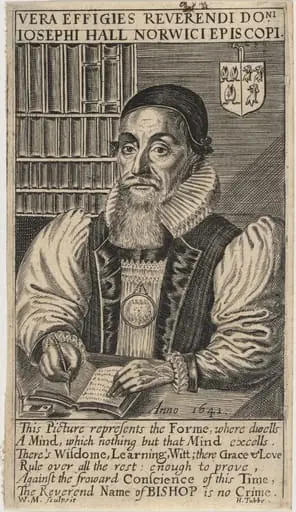 Joseph Hall, Bishop of Norwich
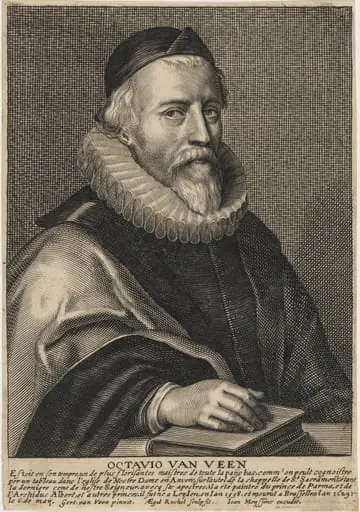 Octavio van Veen
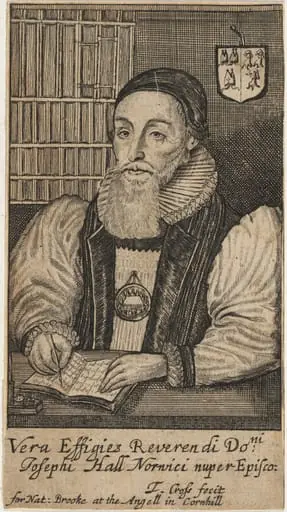 Reverendi Doni: Josephi Hall Norwici Nuper Episco. (Joseph Hall, Bishop of Norwich)
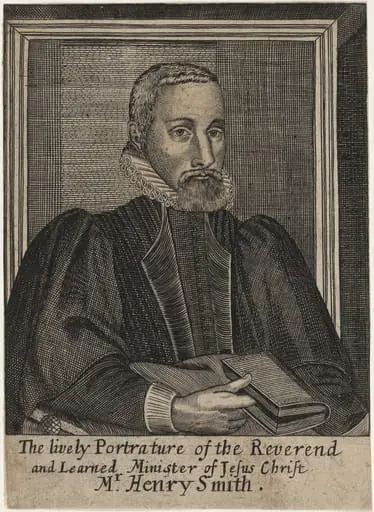 Mr. Henry Smith
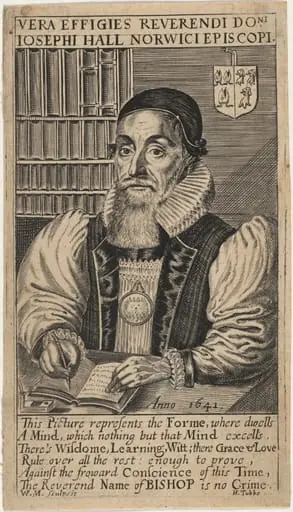 Joseph Hall, Bishop of Norwich
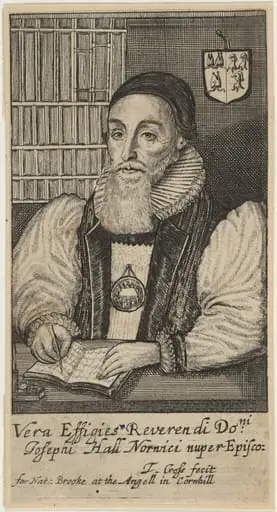 Reverendi Doni: Josephi Hall Norwici Nuper Episco. (Joseph Hall, Bishop of Norwich)
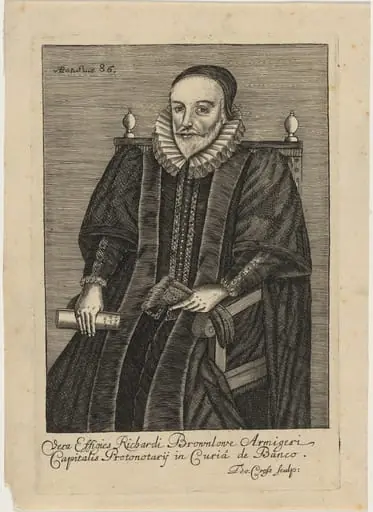 Richardi Brownlowe Armigeri
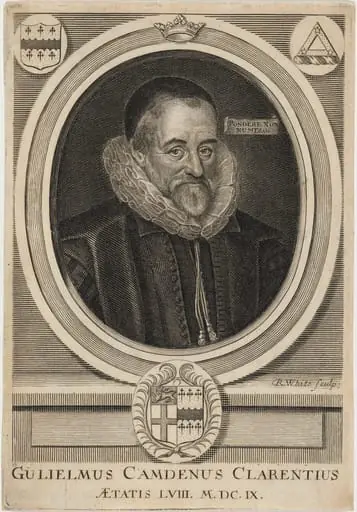 William Camden
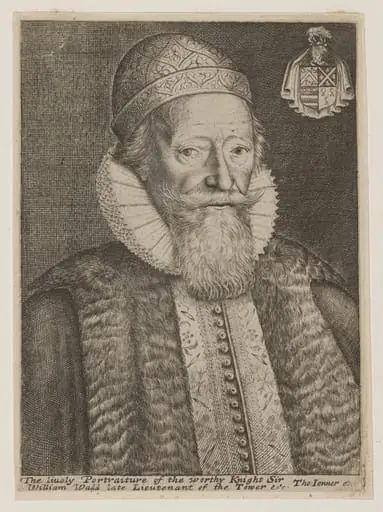 Sir William Wadd