Artwork
Sadness
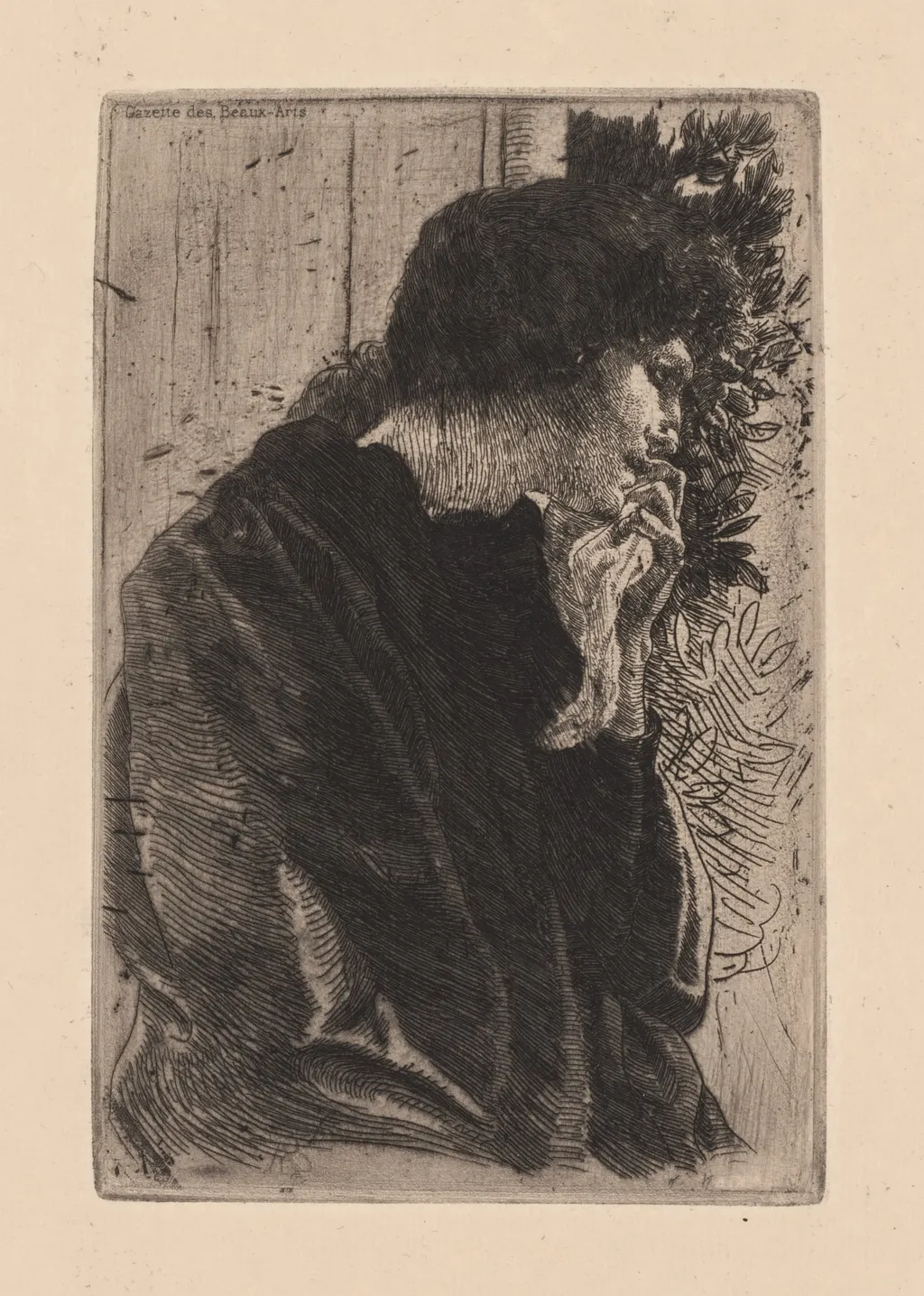
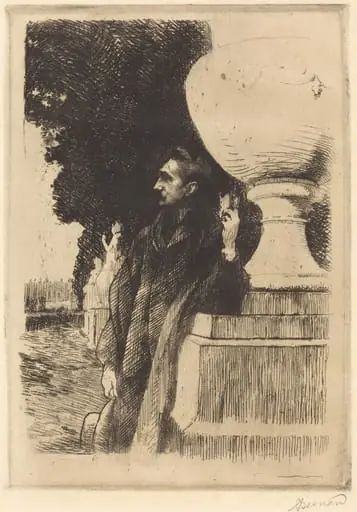
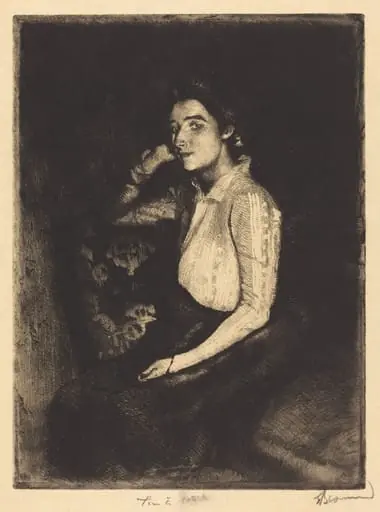
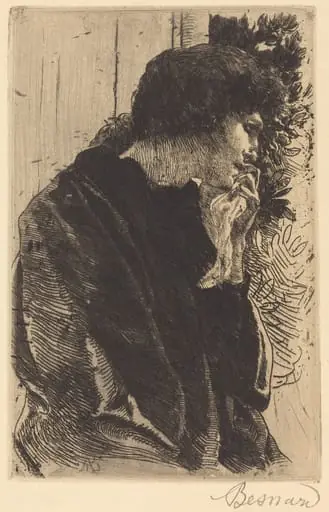
Sadness is a print by the Impressionist artist Paul-Albert Besnard. It dates from 1887 and is held in the collection of the Cleveland Museum of Art.
About this work
Overview
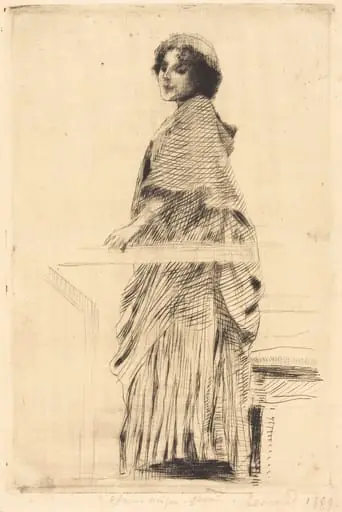
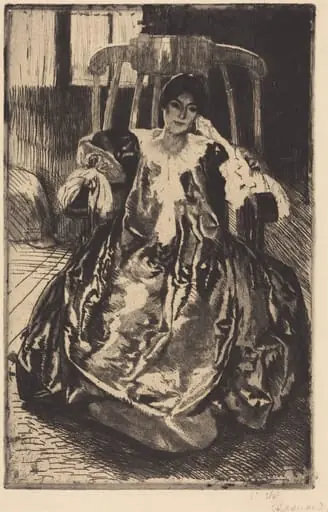
Created in 1887 by Albert Besnard, Sadness is an etching that captures a quiet moment of introspection. The work is part of the collection at The Cleveland Museum of Art. Rendered in monochrome, it employs fine linear detail and tonal gradations to convey emotional weight without narrative exposition. The composition centers on a solitary figure, isolated within a subdued interior space.
Subject & Meaning
The figure is a woman seated in stillness, her head supported by one hand, body slumped in exhaustion. Her dark, voluminous dress and oversized feathered hat suggest a formal setting, yet her posture conveys inner fatigue rather than social composure. The absence of context or action invites interpretation as a meditation on solitude, emotional depletion, or the weight of unspoken thought.
Technique & Style
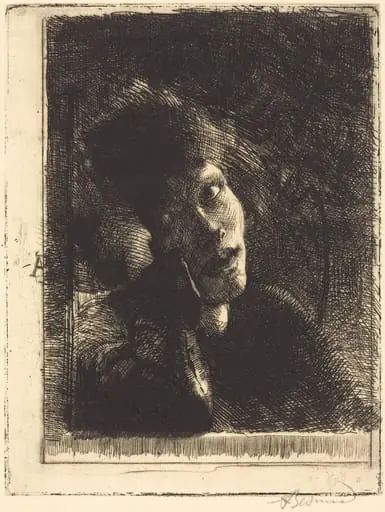
Besnard used etching to achieve delicate contrasts between light and shadow, emphasizing the woman’s face and hands through heightened detail.
Besnard used etching to achieve delicate contrasts between light and shadow, emphasizing the woman’s face and hands through heightened detail. The background recedes into softer, looser lines, creating depth without definition. This selective focus, combined with nuanced hatching, demonstrates a mastery of chiaroscuro to evoke mood rather than describe environment, aligning with Symbolist tendencies of the period.
History & Provenance
The print was produced during Besnard’s engagement with printmaking in the late 1880s, a time when he explored intimate psychological themes beyond his more public portraiture. It entered The Cleveland Museum of Art’s collection through established acquisition channels, likely in the early 20th century, as part of growing interest in European graphic arts among American institutions.
Context
In the late 19th century, artists across Europe turned to printmaking to explore emotional and atmospheric subjects outside academic traditions. Besnard’s work reflects this shift, aligning with Symbolist interests in inner states and the poetic potential of shadow. Unlike overtly dramatic scenes, Sadness conveys feeling through restraint, mirroring broader cultural preoccupations with psychology and private experience.
Legacy
Sadness remains a quiet example of Besnard’s contribution to modern printmaking, illustrating how etching could convey psychological nuance with minimal means. While not widely reproduced, it is recognized in scholarly circles for its sensitivity and technical control. The work continues to be studied for its role in bridging 19th-century realism and early modernist introspection.
Artist & collection
Artist
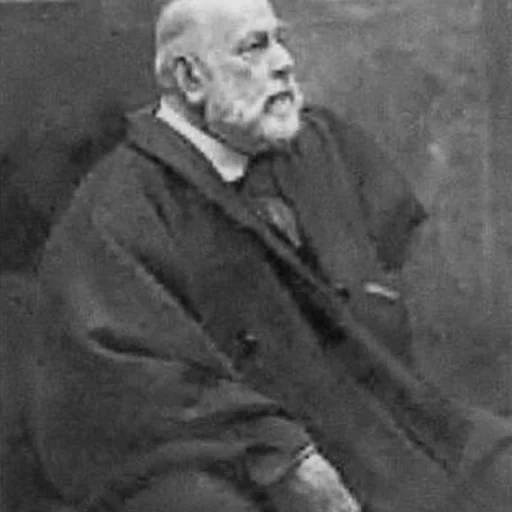
Paul-Albert Besnard (1849–1934) was a French artist, born in 7th arrondissement of Paris.