Artwork
Mélancolie (Melancholy)
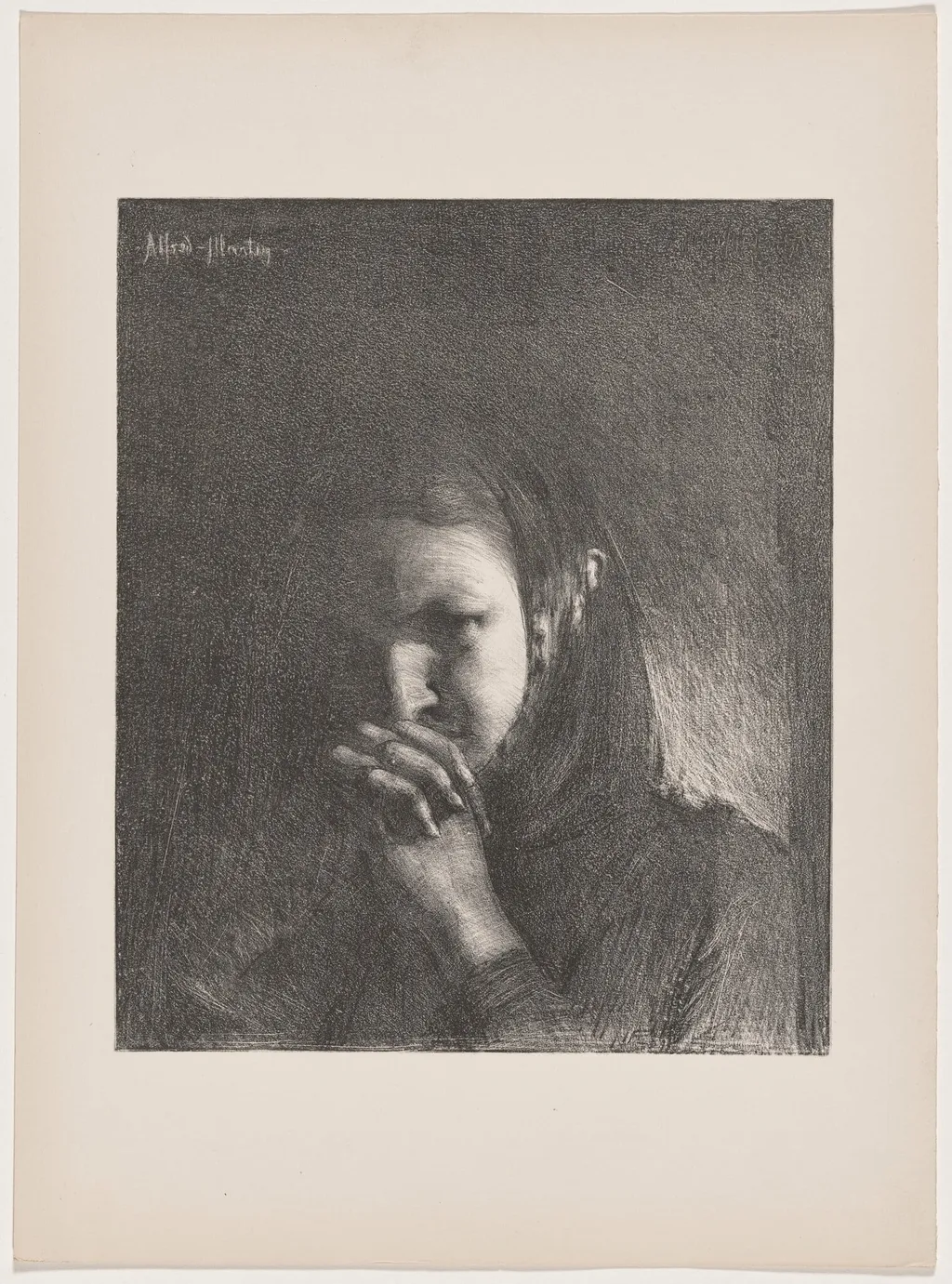
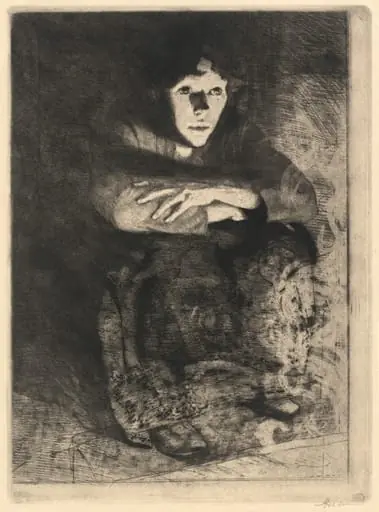
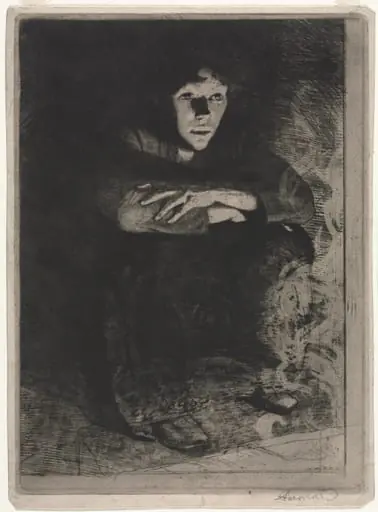
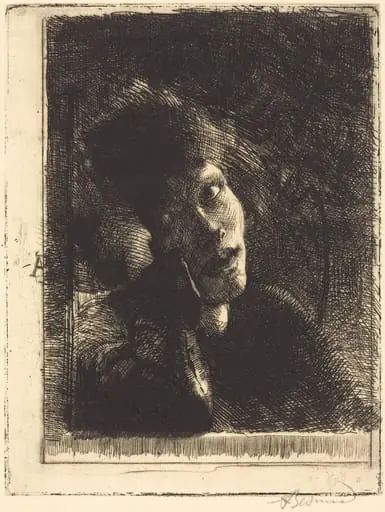
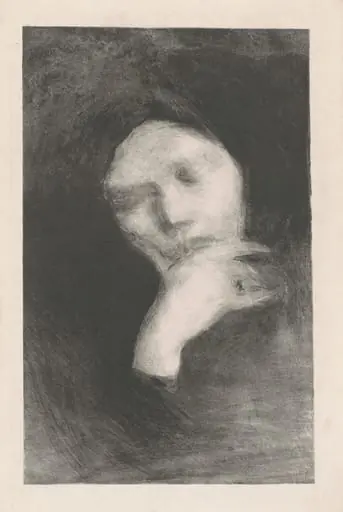
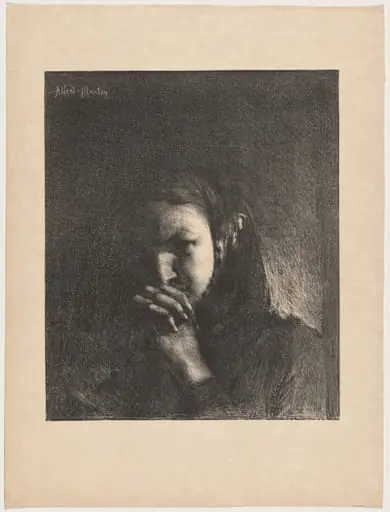
Mélancolie (Melancholy) is an ink print by the Impressionist artist Alfred-Nicolas Martin. It dates from 1895 and is held in the collection of the National Gallery of Art.
About this work
Overview
Created in 1895 by Alfred-Nicolas Martin, Mélancolie is a lithograph executed in black ink on wove paper. The work belongs to the printmaking tradition, utilizing the direct drawing method characteristic of lithography. Its raw, unpolished appearance distinguishes it from highly finished paintings, emphasizing immediacy and emotional tone over technical refinement.
Subject & Meaning
The figure depicted sits with head bowed, one hand resting beneath the chin, eyes cast downward. The posture suggests introspection or sorrow, with no narrative context provided. The absence of background detail isolates the subject, reinforcing a sense of inward focus. The title, Mélancolie, anchors the image in a mood rather than a story, inviting contemplation of emotional solitude.
Technique & Style
Martin employed lithography, a process allowing the artist to draw directly onto a stone surface with greasy materials.
Martin employed lithography, a process allowing the artist to draw directly onto a stone surface with greasy materials. The resulting print retains the spontaneity of hand-drawn marks—rough lines, smudged tones, and uneven textures. These qualities mimic sketchbook studies, rejecting polished finishes in favor of expressive immediacy, aligning the work with late 19th-century interest in personal, unidealized expression.
History & Provenance
The print was produced in 1895, during a period when lithography gained renewed attention among artists seeking accessible, intimate formats. While specific ownership history is not documented, its survival in institutional collections suggests recognition within artistic circles of the time. It reflects broader trends in printmaking that valued process over mass reproduction.
Context
In the 1890s, European artists increasingly turned to printmaking as a medium for personal expression, moving away from academic ideals. Lithography, with its tactile qualities and directness, suited this shift. Martin’s work aligns with contemporaries who explored psychological states through simplified forms and atmospheric tone, contributing to a quieter, more introspective current in visual culture.
Legacy
Mélancolie remains a modest but resonant example of fin-de-siècle printmaking. It does not seek public acclaim but instead captures a fleeting emotional moment with quiet authority. Its preservation in collections underscores its value as a document of artistic experimentation and the enduring appeal of lithography’s hand-drawn aesthetic.
Artist & collection