Artwork
Magnolias on Light Blue Velvet Cloth
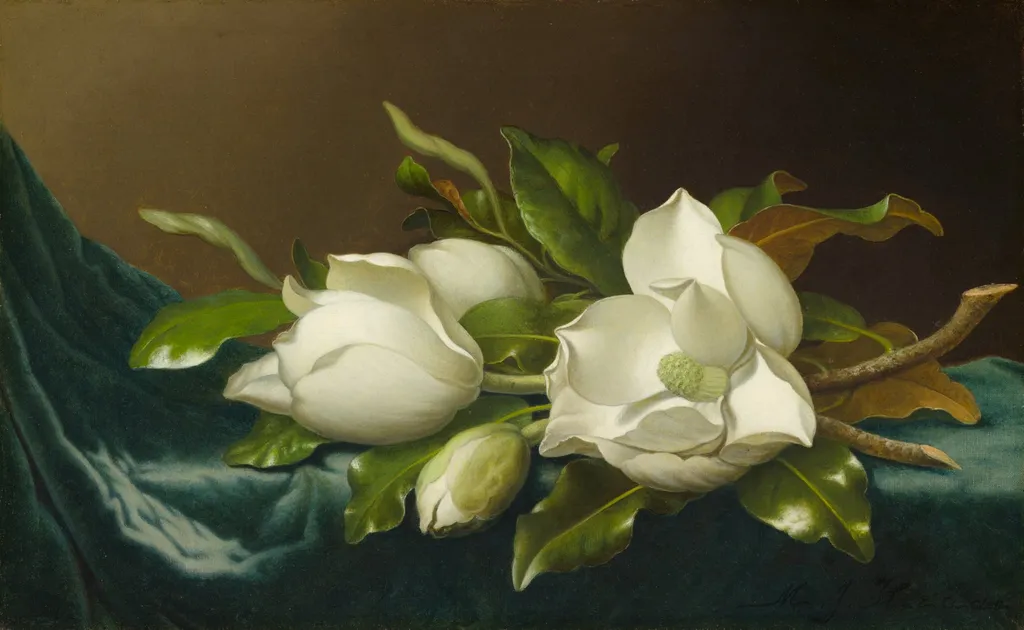
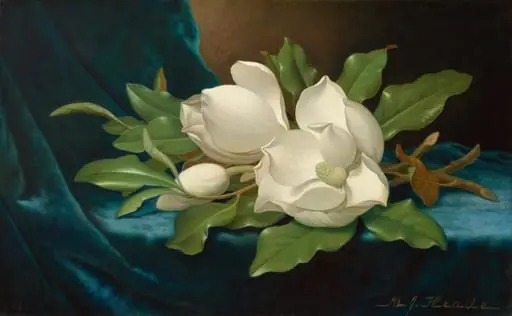
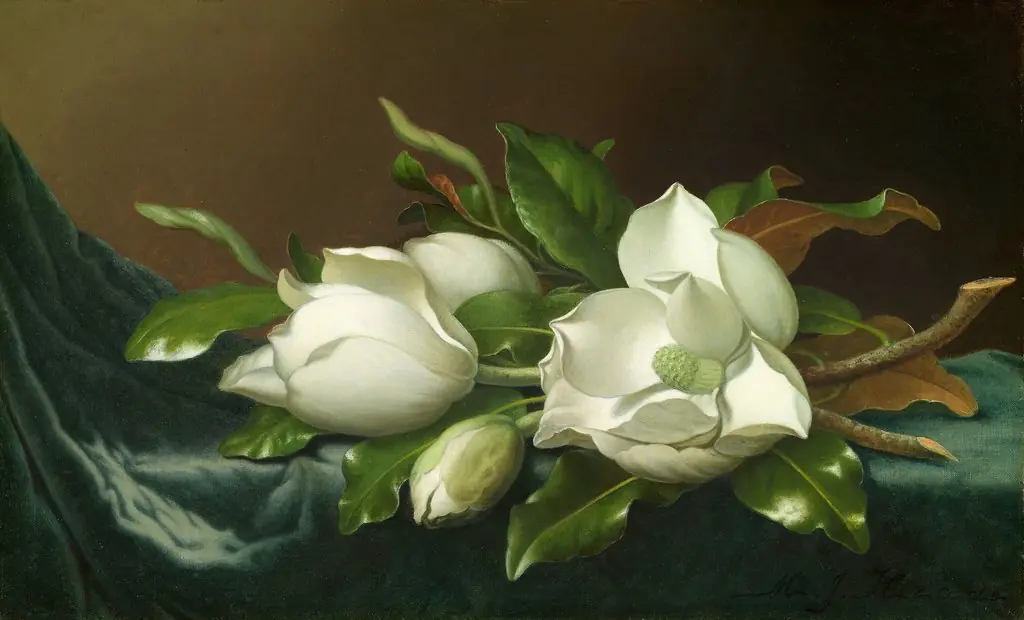
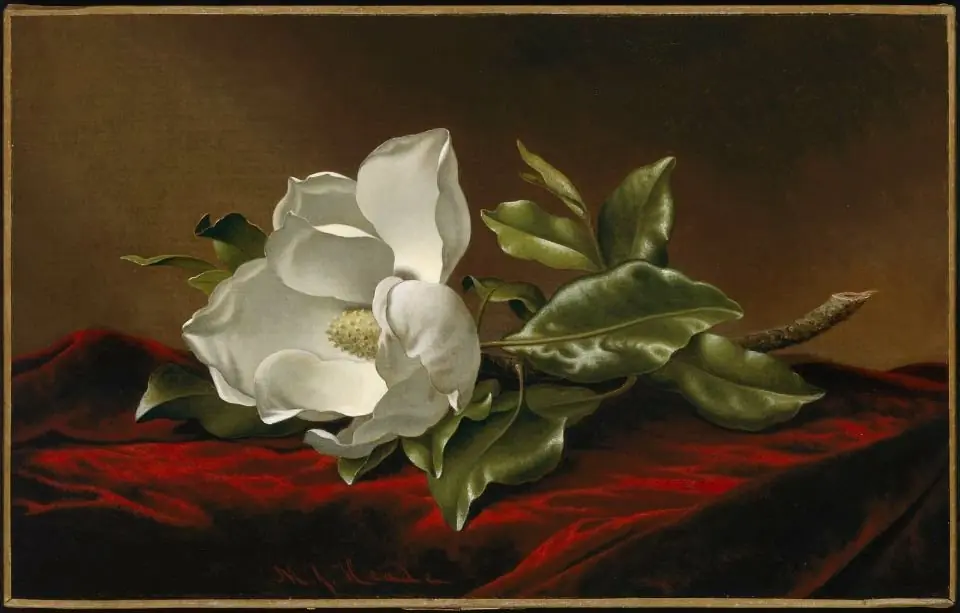
Magnolias on Light Blue Velvet Cloth is an oil painting by the American Impressionist artist Martin Johnson Heade. It dates from 1890 and is held in the collection of the Art Institute of Chicago.
About this work
Overview
Painted in Martin Johnson Heade’s later years, this oil on canvas depicts a single branch of magnolias resting on a fold of light blue velvet.
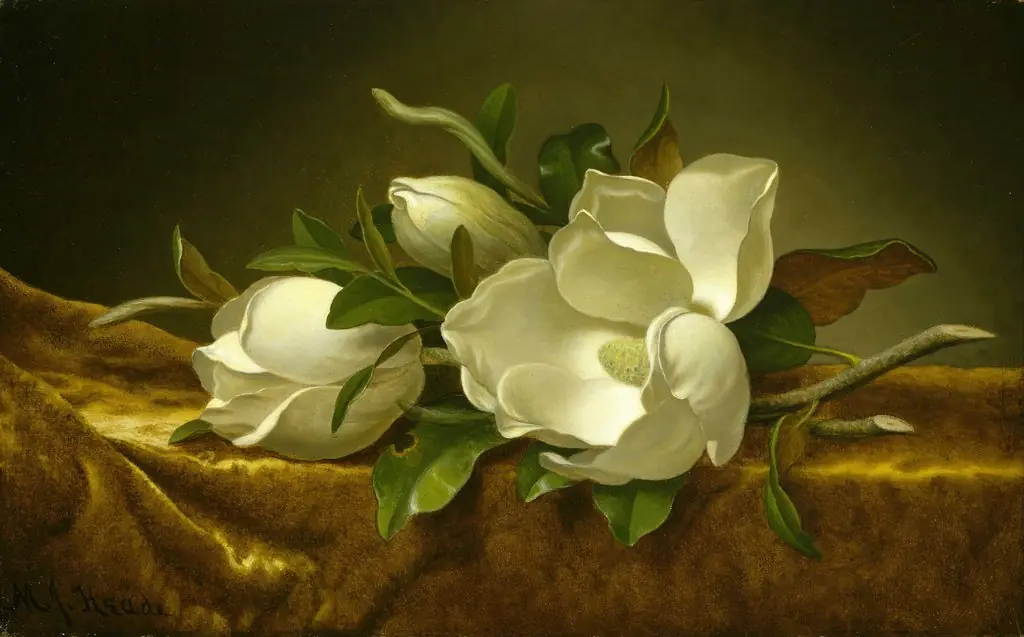
Painted in Martin Johnson Heade’s later years, this oil on canvas depicts a single branch of magnolias resting on a fold of light blue velvet. Created after Heade settled in Saint Augustine, Florida, the work reflects his shift toward intimate floral still lifes, contrasting with his earlier landscapes and bird studies. The composition emphasizes quiet observation over grandeur, capturing the flower’s form with deliberate stillness.
Subject & Meaning
The magnolia, native to the southeastern United States, is rendered with reverence for its structural elegance and transient beauty. Positioned as if reclining, the blossom takes on a quiet, almost human presence. The velvet backdrop enhances its fragility, suggesting a moment suspended between life and decay. No symbolic narrative is overt; the focus lies in the flower’s physical presence and the stillness it commands.
Technique & Style
Heade employed glazing techniques—layering thin, translucent oils—to achieve luminous petal tones and subtle gradations of light. The velvet’s deep blue is built through multiple glazes, creating a rich, velvety depth that contrasts with the petals’ pale pink and white. Sharp, directional lighting defines each curve and edge, lending the scene a tactile clarity reminiscent of Dutch still life traditions, yet devoid of their symbolic weight.
History & Provenance
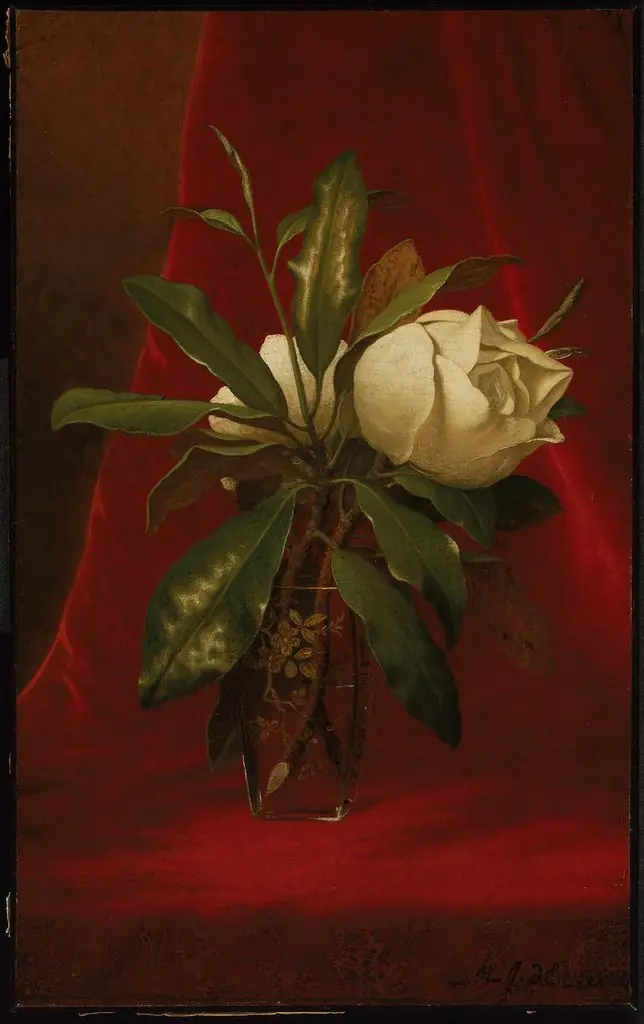
Painted after Heade’s move to Saint Augustine in 1883, this work belongs to a series of magnolia still lifes he produced in his final decade. Heade, then in his mid-sixties, turned away from travel and wide-ranging subjects to focus on local flora. The painting remained in private hands until entering the collection of the Art Institute of Chicago, where it is now held as part of a small but significant group of his late floral works.
Context
In his later years, Heade distanced himself from the Hudson River School’s expansive vistas, embracing instead the quiet intensity of domestic subjects. His magnolia paintings emerged amid a broader 19th-century interest in botanical detail, yet they diverge from scientific illustration by prioritizing mood over taxonomy. The velvet cloth, a rare choice for American painters of the time, signals a deliberate engagement with European still life conventions.
Legacy
Though overshadowed in his lifetime by landscape painters, Heade’s late floral works have gained recognition for their quiet innovation. The magnolia series demonstrates a unique synthesis of realism and poetic stillness, anticipating early 20th-century American modernism’s interest in form and light. These paintings remain among the most personal and refined expressions of his long career.
Own this work as a print
Artist & collection