Artwork
Study of Four Magnolia Blossoms
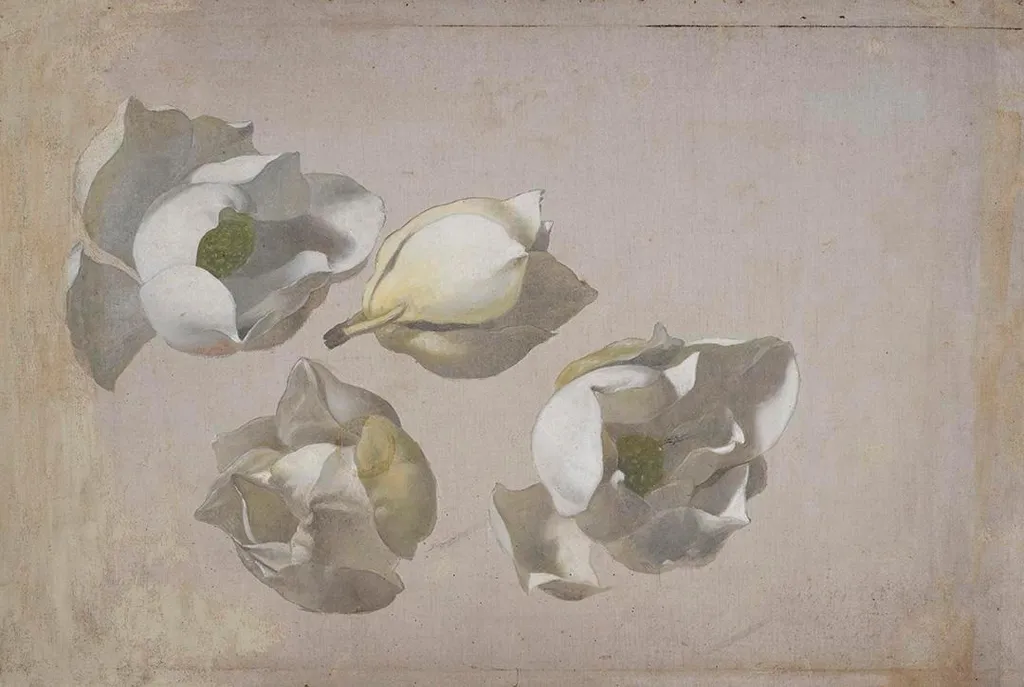
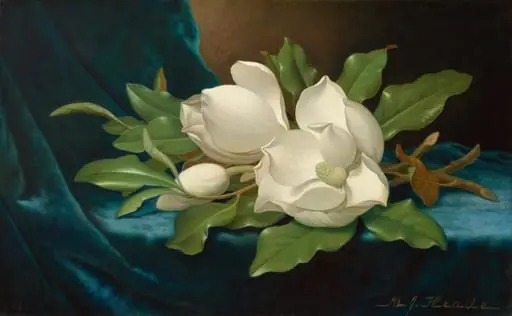
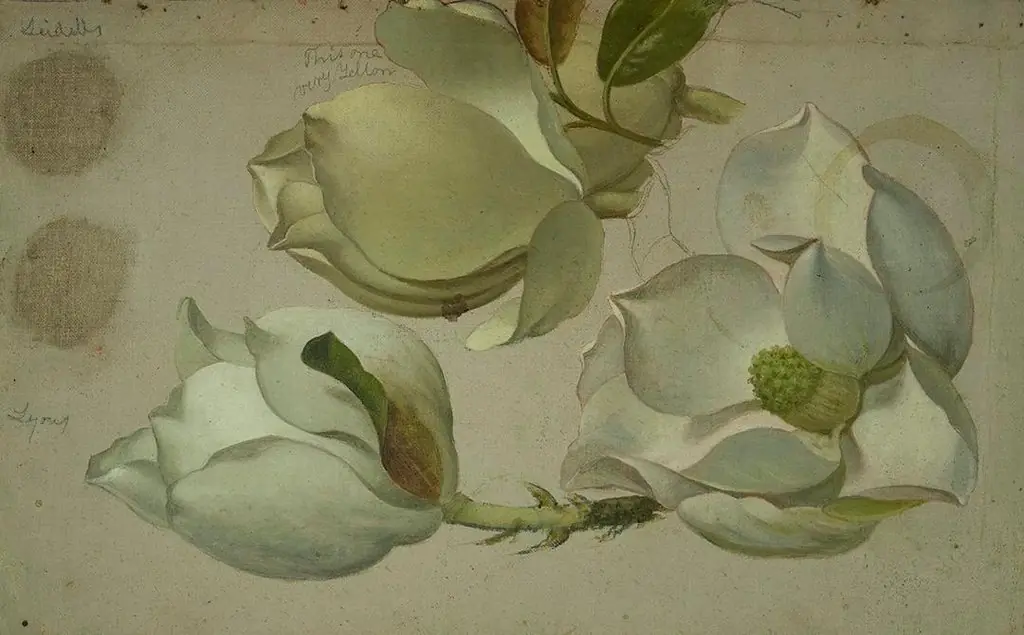
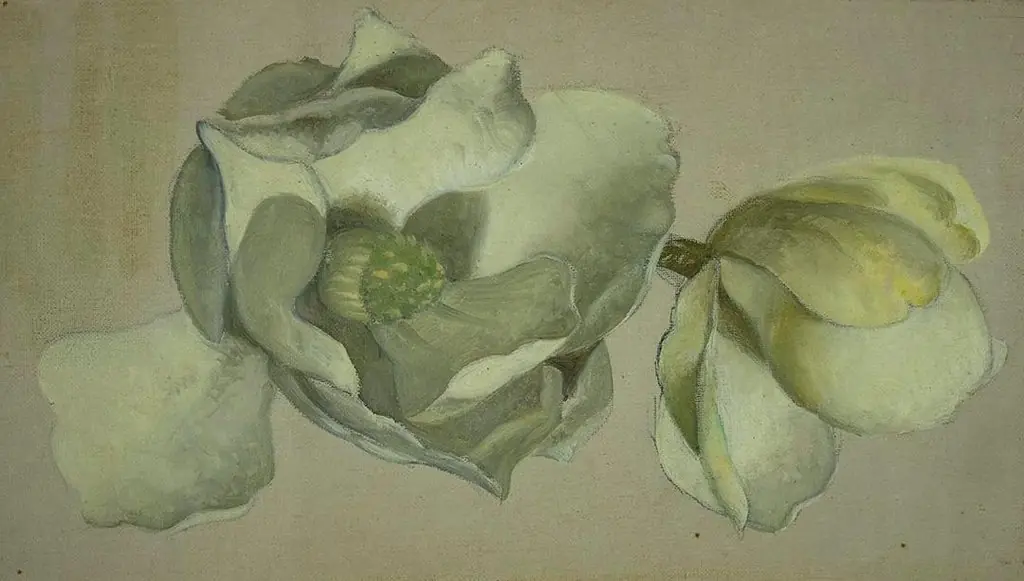
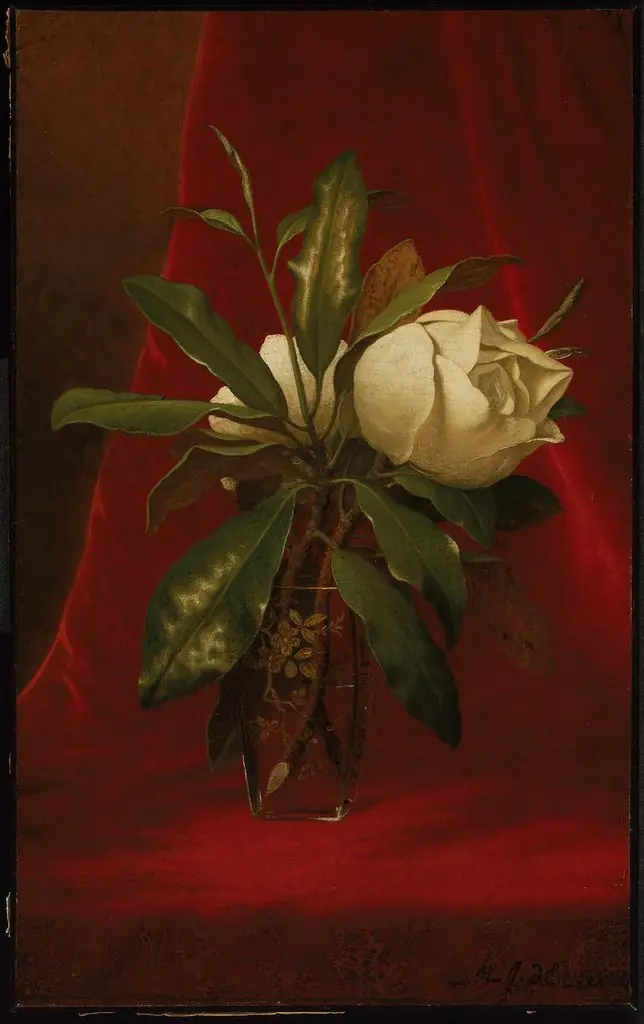
Study of Four Magnolia Blossoms is an oil painting by the American Impressionist artist Martin Johnson Heade. It dates from 1893 and is held in the collection of the Crystal Bridges Museum of American Art.
About this work
Overview
Martin Johnson Heade’s *Study of Four Magnolia Blossoms* (1893) presents a quiet arrangement of four magnolia flowers set against a pale backdrop.
Martin Johnson Heade’s *Study of Four Magnolia Blossoms* (1893) presents a quiet arrangement of four magnolia flowers set against a pale backdrop. The composition captures the blossoms at differing moments of opening, revealing the delicate white interiors of the petals. Light and shadow are employed to give the flowers a subtle three‑dimensional presence, while the muted background ensures the botanical subjects dominate the visual field.
Subject & Meaning
The work focuses on the natural form of magnolia blossoms, emphasizing their transient stages of bloom. By portraying both closed and fully opened petals, Heade underscores the fleeting nature of floral life and invites contemplation of growth and decay within a single moment. The quiet intimacy of the scene reflects a broader 19th‑century interest in detailed observation of plant life.
Technique & Style
Executed in oil, the painting demonstrates Heade’s careful handling of glaze layers to achieve luminous surface tones. Fine brushwork renders the subtle folds and creases of each petal, while a restrained palette of whites and soft neutrals enhances the sense of light passing through the blossoms. The approach aligns with American Impressionist concerns for atmospheric effects, yet retains a precise botanical accuracy.
History & Provenance
Created in the later phase of Heade’s career, the canvas entered the collection of the Crystal Bridges Museum of American Art, where it remains on display. Its acquisition reflects the museum’s focus on representing pivotal American artists and their contributions to the development of still‑life painting in the United States.
Artist & collection

Museum
Crystal Bridges Museum of American Art
Continue through works from the same source collection.