Artwork
Untitled
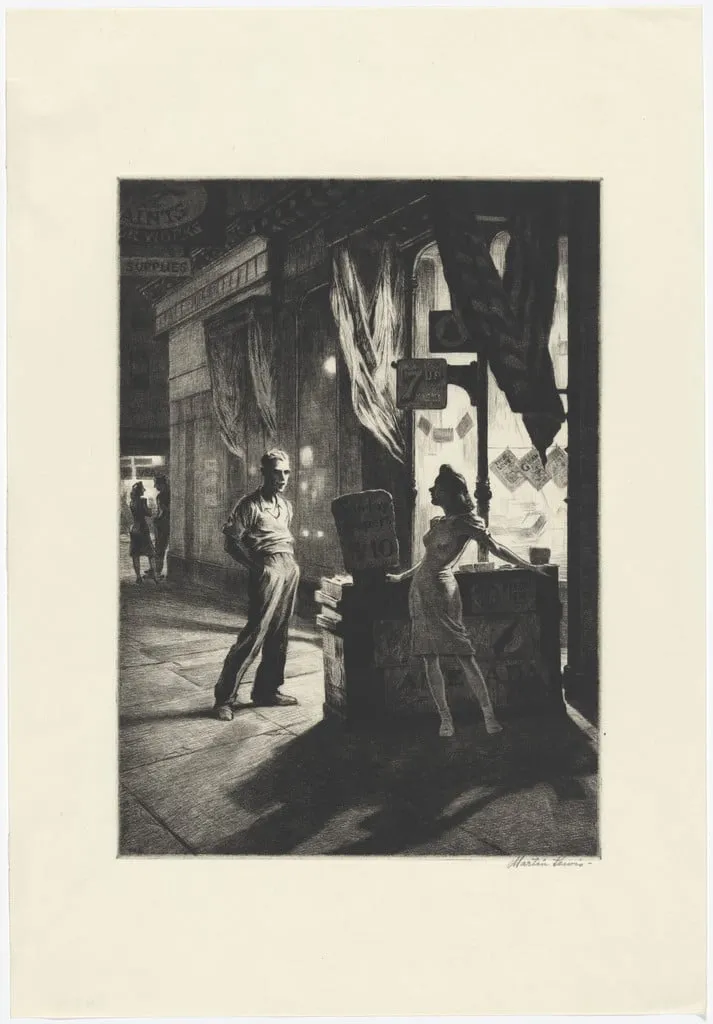
Untitled is an ink print by Martin Lewis. It dates from 1940 and is held in the collection of the Museum of Modern Art.
About this work
Overview
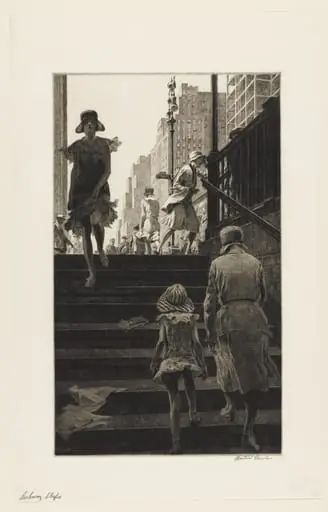
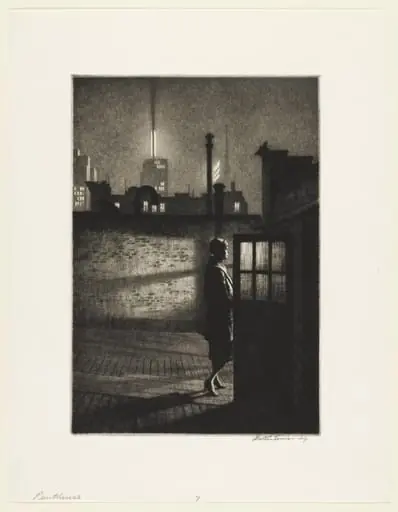
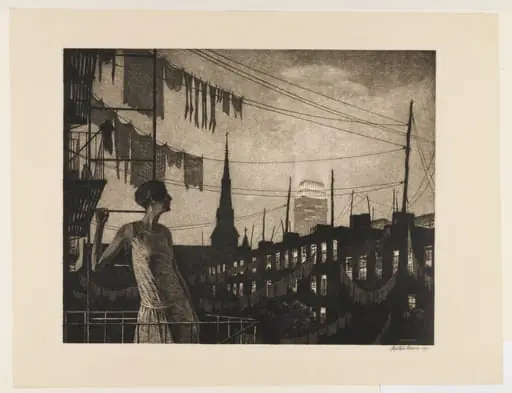
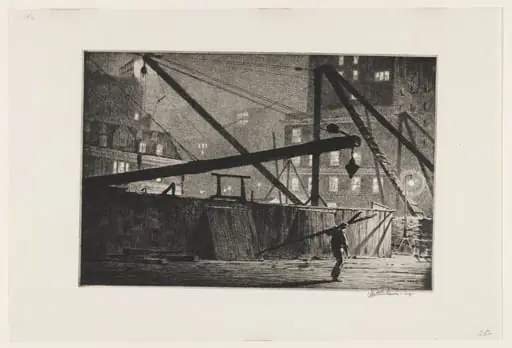
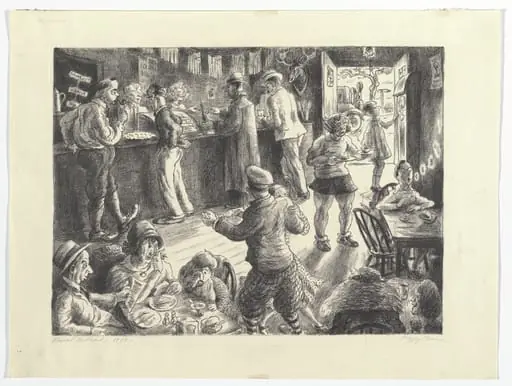
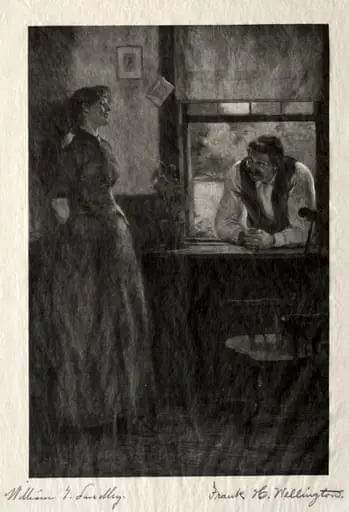
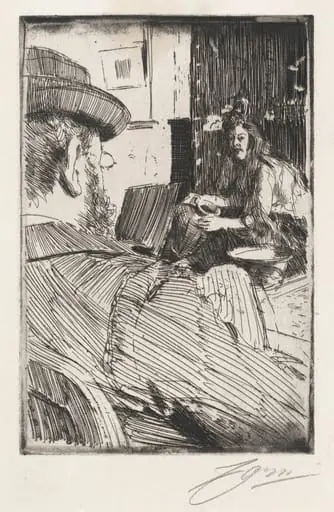
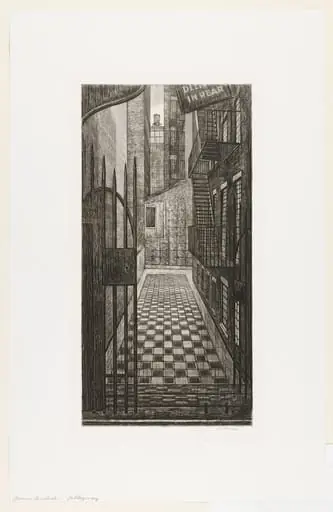
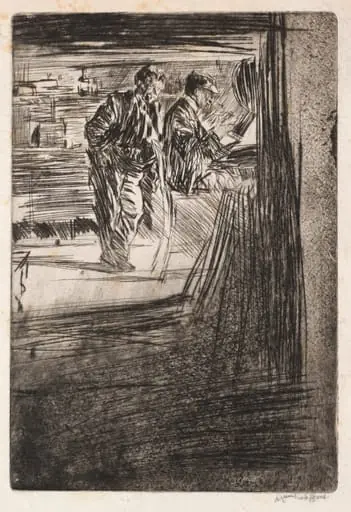
Created in 1940, this drypoint print by Martin Lewis captures a solitary urban moment at night. Executed in black and white, it depicts a quiet street scene with minimal figures and strong contrasts. The work is part of the collection at The Museum of Modern Art, where it exemplifies Lewis’s interest in the emotional resonance of everyday city life during the early 20th century.
Subject & Meaning
The scene implies quiet dignity in mundane routines, reflecting the solitude often found in urban environments after hours.
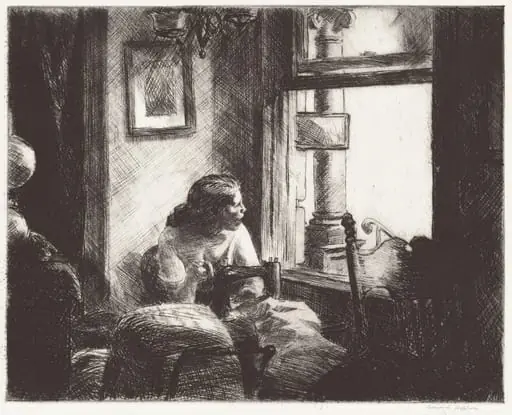
A lone man in a cap rests beside a lamppost, gazing toward a small storefront. Inside, a woman attends to goods under a harsh interior light, her posture suggesting routine labor. The closed shop, marked 'Art Supplies,' and the absence of other people evoke stillness and isolation. The scene implies quiet dignity in mundane routines, reflecting the solitude often found in urban environments after hours.
Technique & Style
Lewis employed drypoint to carve fine, incised lines into a metal plate, producing rich, velvety blacks and delicate gradations of gray. The contrast between the illuminated interior and the shadowed street enhances spatial depth, a hallmark of chiaroscuro. The technique emphasizes texture—the roughness of the pavement, the fabric of curtains, the glow of the bulb—without relying on detail, instead suggesting form through tone.
History & Provenance
The print was made in 1940 during a period when Lewis was deeply engaged with American urban themes. It entered the collection of The Museum of Modern Art in the decades following its creation, likely through acquisition or donation. Its preservation reflects institutional recognition of Lewis’s contribution to American printmaking and his nuanced portrayal of city life in the interwar years.
Context
In the late 1930s and early 1940s, American artists increasingly turned to scenes of ordinary life amid economic hardship and social change. Lewis, influenced by urban realism and the Ashcan School, focused on the quiet rhythms of the city after dark. This work aligns with broader efforts to find meaning in overlooked moments, contrasting with the grand narratives of the era.
Legacy
Lewis’s use of drypoint to convey mood through light and shadow influenced later generations of printmakers interested in psychological atmosphere. While not widely known outside specialist circles, his work remains a touchstone for those studying how technical precision can evoke emotional quietude. This print endures as a restrained, evocative record of urban solitude in mid-century America.
Artist & collection