Artwork
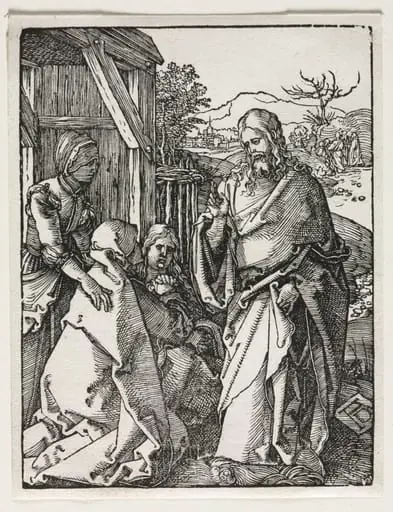
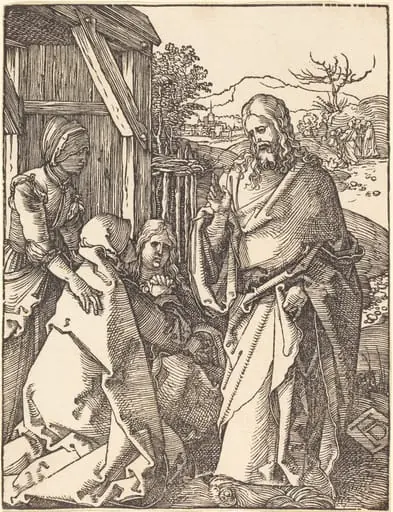
Christ Appearing to the Magdalen
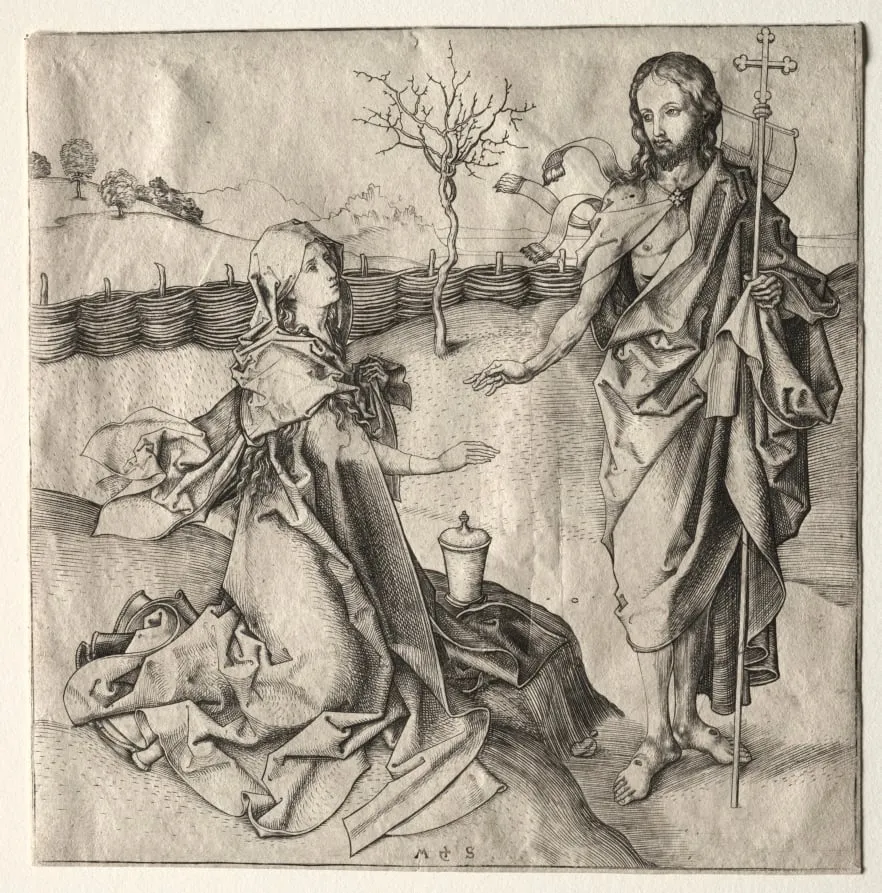
Christ Appearing to the Magdalen is a print by the Renaissance artist Martin Schongauer. It dates from 1485 and is held in the collection of the Cleveland Museum of Art.
About this work
Overview
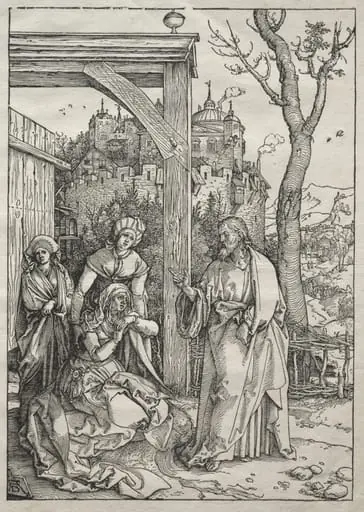
Christ Appearing to the Magdalen is a print depicting a pivotal moment from the Gospel of John, where Jesus Christ, immediately after his resurrection, appears to Mary Magdalene at his tomb.
Subject & Meaning
The print captures the instant before Mary Magdalene recognizes the resurrected Christ, mistaking him for a gardener. Christ’s impending instruction, 'Noli me tangere' (Touch me not), and his directive to inform the apostles of his ascension to the Father, underpin the scene’s narrative.
Technique & Style
Schongauer employs dynamic composition, notably capturing Mary’s surprise through her flying drapery and long hair, swept back as if by wind. The work also exhibits a precursor to sfumato, with softly blended edges that anticipate this later Renaissance technique.
History & Provenance
As one of the earliest prints of this biblical scene, it played a significant role in disseminating the story of Christ’s appearance to Mary Magdalene across Europe during its time.
Context
Created in a period preceding the full flourishing of the Renaissance, the print reflects early explorations of emotional depth and innovative visual techniques that would influence later artistic movements.
Legacy
Schongauer’s 'Christ Appearing to the Magdalen' remains notable for its early contribution to the widespread depiction of this New Testament scene in European art, combining religious narrative with burgeoning artistic innovations.
Artist & collection

Artist
Martin Schongauer, also known as Martin Schön or Hübsch Martin by his contemporaries, was an Alsatian engraver and painter.