Artwork
The Savior and the Virgin
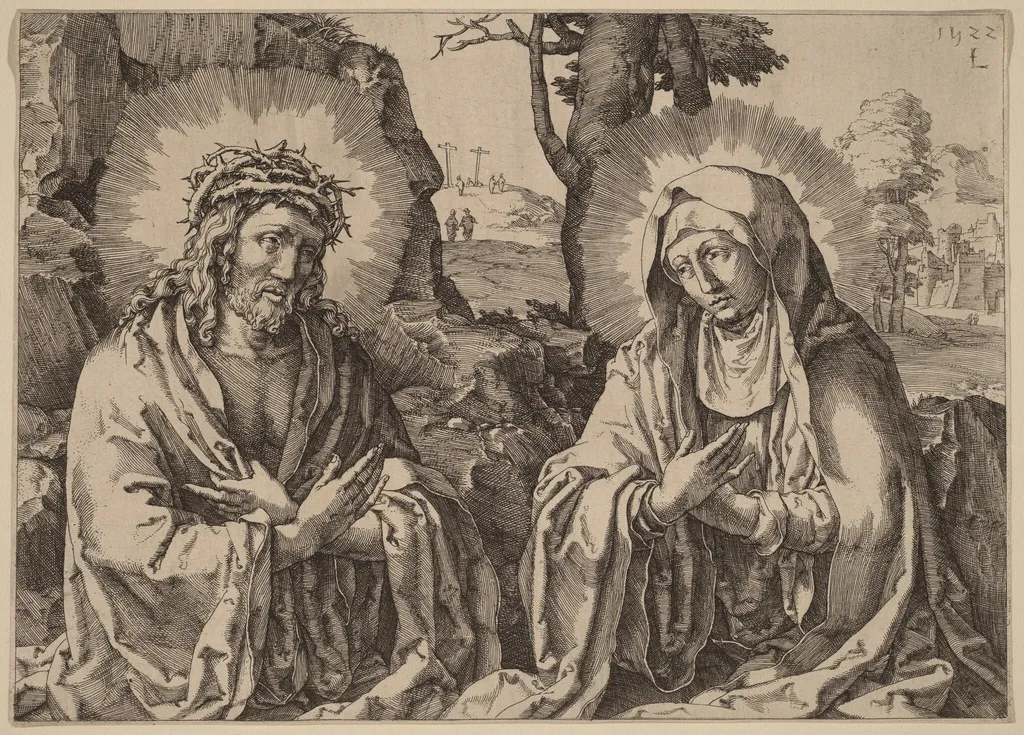
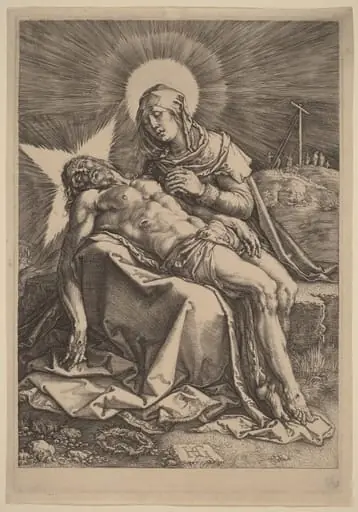
The Savior and the Virgin is an ink print by the Renaissance artist Simon Frisius. It dates from 1604 and is held in the collection of the National Gallery of Art.
About this work
Overview
Created in 1604 by Simon Frisius, this etching on laid paper depicts two religious figures seated together beneath a tree.
Created in 1604 by Simon Frisius, this etching on laid paper depicts two religious figures seated together beneath a tree. Rendered in fine black-and-white lines, the composition balances intimate proximity with a quiet, distant landscape. The technique highlights the precision characteristic of early 17th-century Northern European printmaking, where inked metal plates transferred detailed imagery onto paper.
Subject & Meaning
The figures are identified as Christ and the Virgin Mary. Christ is shown with a crown of thorns and calloused hands, signs of his Passion; Mary, cloaked and contemplative, holds an object likely symbolizing devotion or sorrow. Their placement under a tree evokes themes of rest, mourning, or divine companionship. The background’s distant crosses and figures suggest the broader narrative of crucifixion and pilgrimage, subtly anchoring the scene in sacred history.
Technique & Style
Frisius employed etching, a method involving acid-bitten lines on a metal plate, to achieve fine, controlled detail. The sharp, deliberate strokes define textures—beard, fabric, bark—with clarity. The composition’s depth is suggested through gradations of line density, not shading, typical of monochrome printmaking of the period. Background elements are minimized, directing focus to the central figures while retaining atmospheric perspective.
History & Provenance
The print originates from the early 17th century, a time when religious imagery remained central to Northern European print culture. Frisius, active in the Dutch Republic, was known for reproducing devotional subjects and architectural views. While specific early ownership records are unverified, the work aligns with the broader circulation of religious prints among private collectors and clergy seeking meditative imagery.
Context
In the decades following the Protestant Reformation, Catholic and Protestant communities alike used prints to convey biblical narratives. Frisius’s work reflects a devotional tradition that favored quiet, introspective scenes over dramatic altarpieces. The emphasis on solitude and symbolic detail mirrors contemporary spiritual literature and the rise of personal piety in the Netherlands.
Legacy
Frisius’s etching contributes to a body of work that preserved religious iconography through accessible media. Though not widely exhibited today, it exemplifies how skilled printmakers sustained theological themes in an era of shifting religious authority. Its technical refinement and restrained emotion influenced later generations of engravers focused on intimate, narrative-driven compositions.
Artist & collection


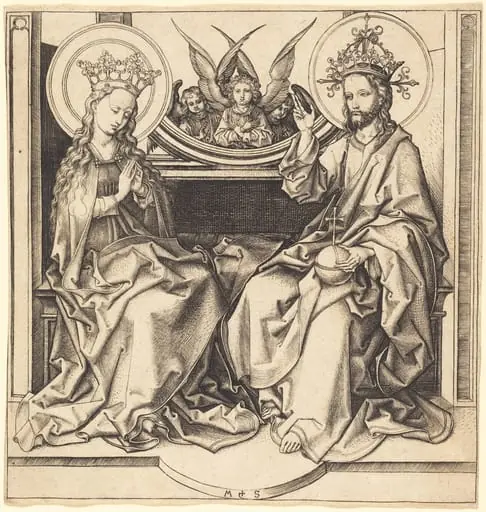 Christ Blessing the Virgin
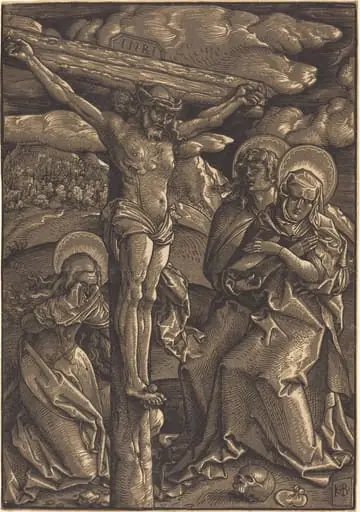 The Crucifixion
 Christ Blessing the Virgin
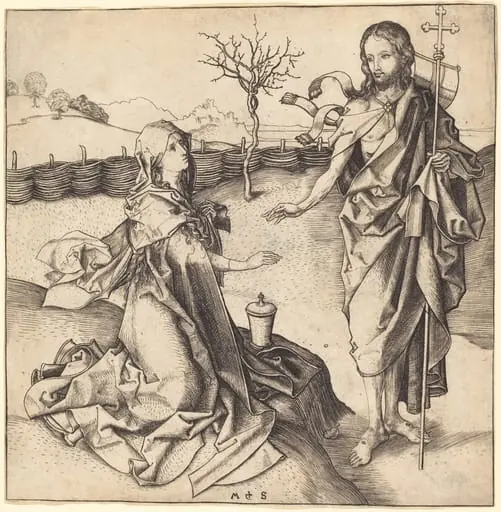 Christ Appearing to Mary Magdalene
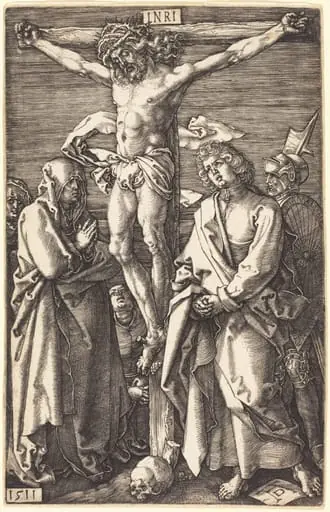 The Crucifixion
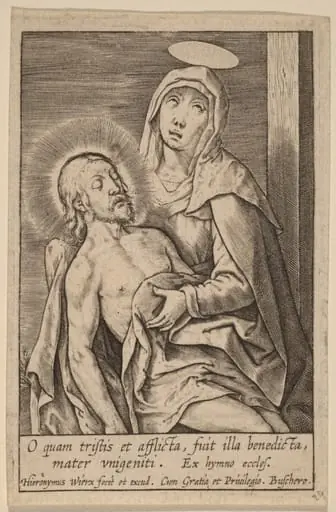 O quam tristis et afflicta ...
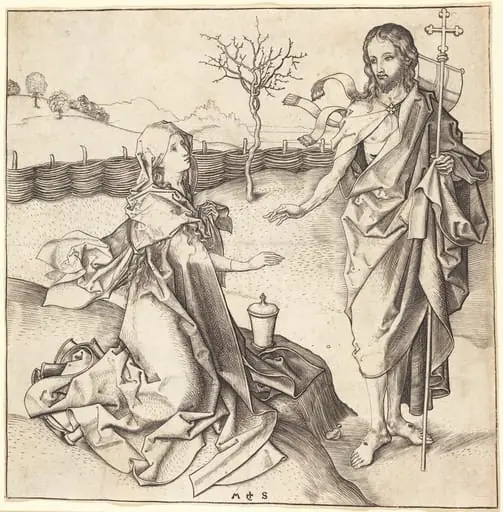 Christ Appearing to Mary Magdalene
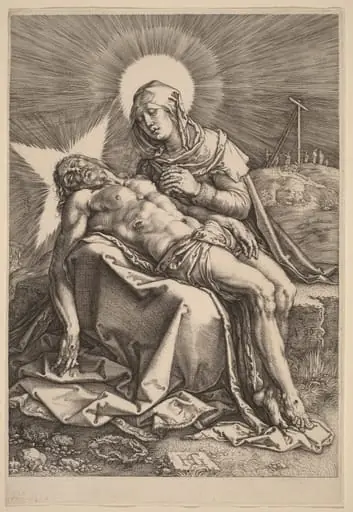 Pietà
Pietà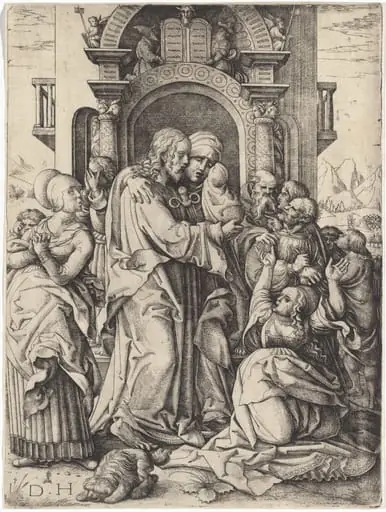 The Virgin Mary Taking Leave of Christ
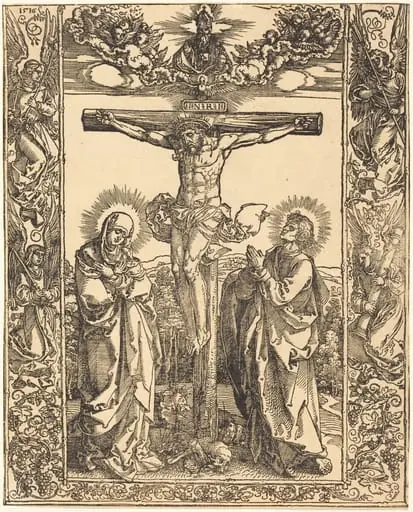 Christ on the Cross
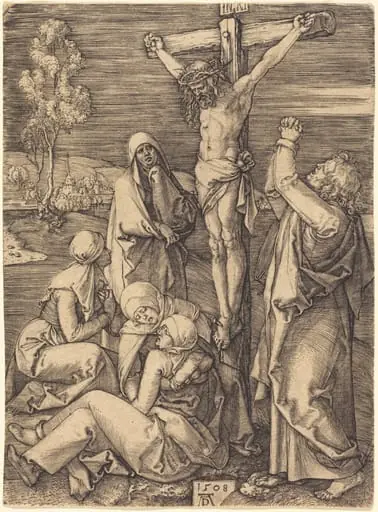 The Crucifixion
 Pietà (The Sorrowing Virgin with the Dead Christ in Her Lap)