Artwork
Lintumyyjätär, Gabriel Metsun mukaan
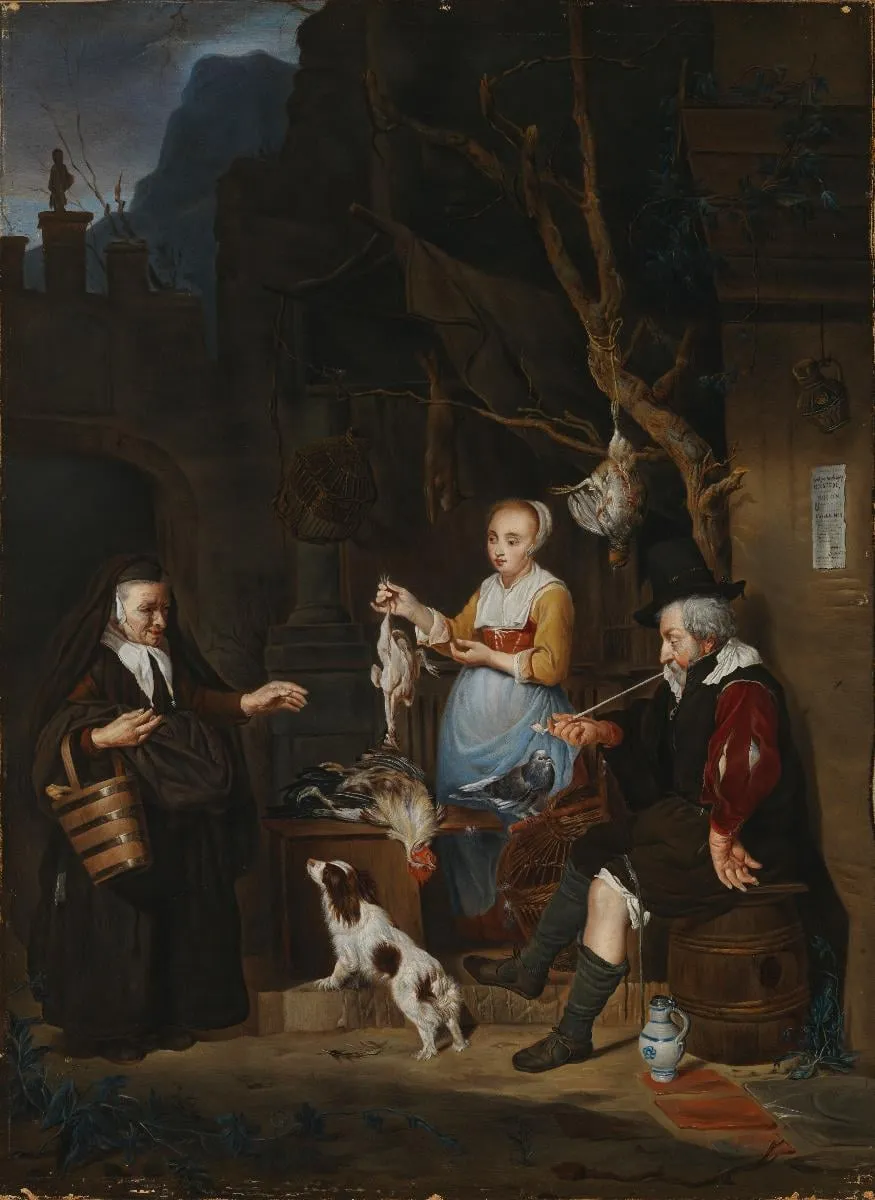
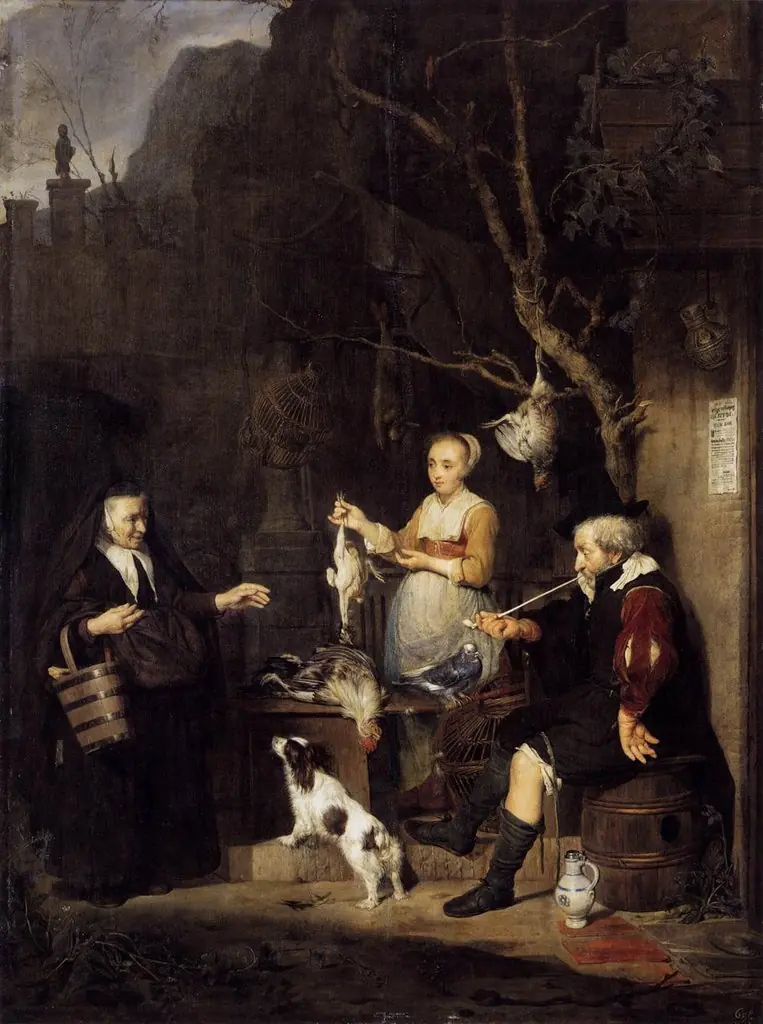
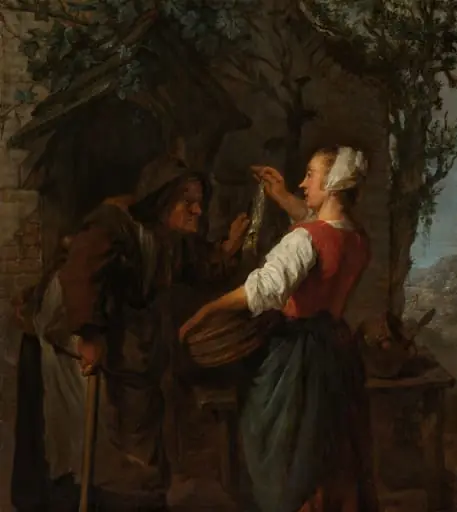
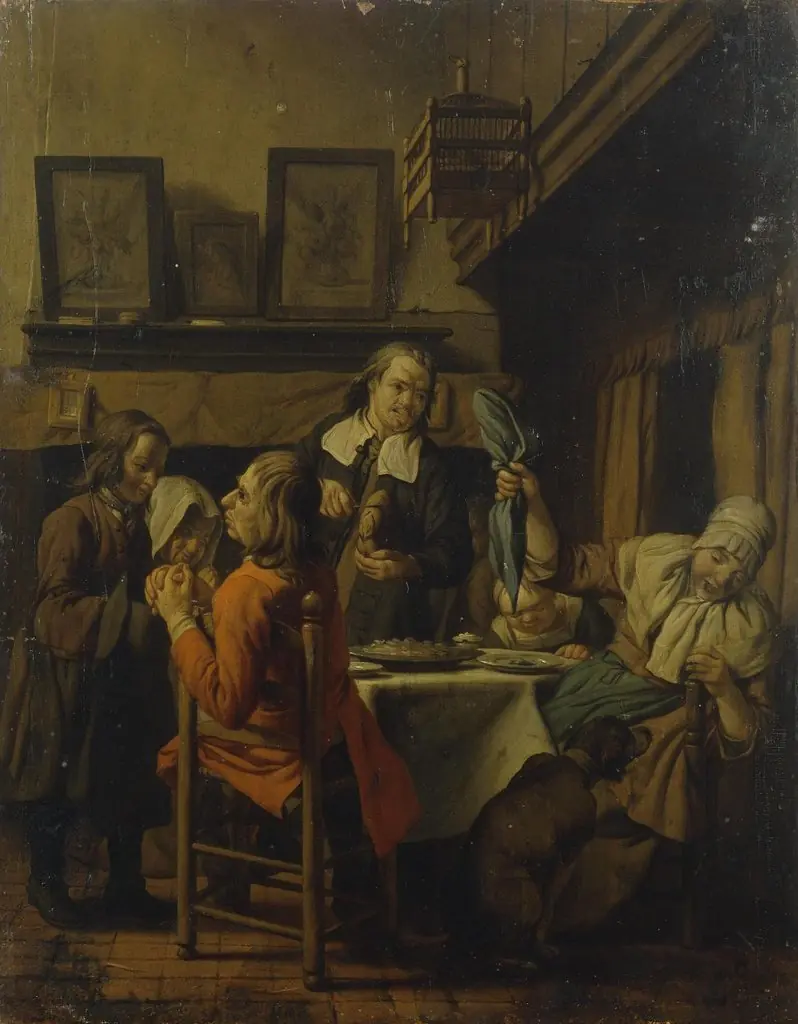
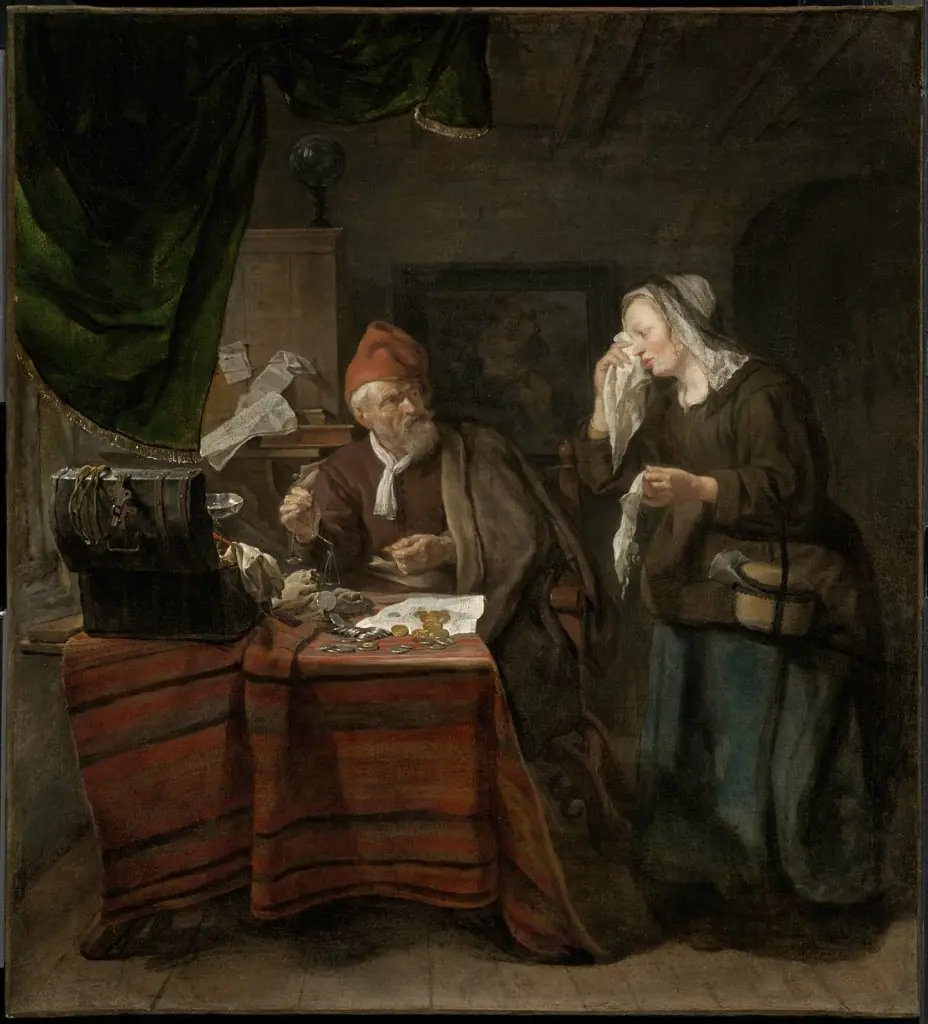
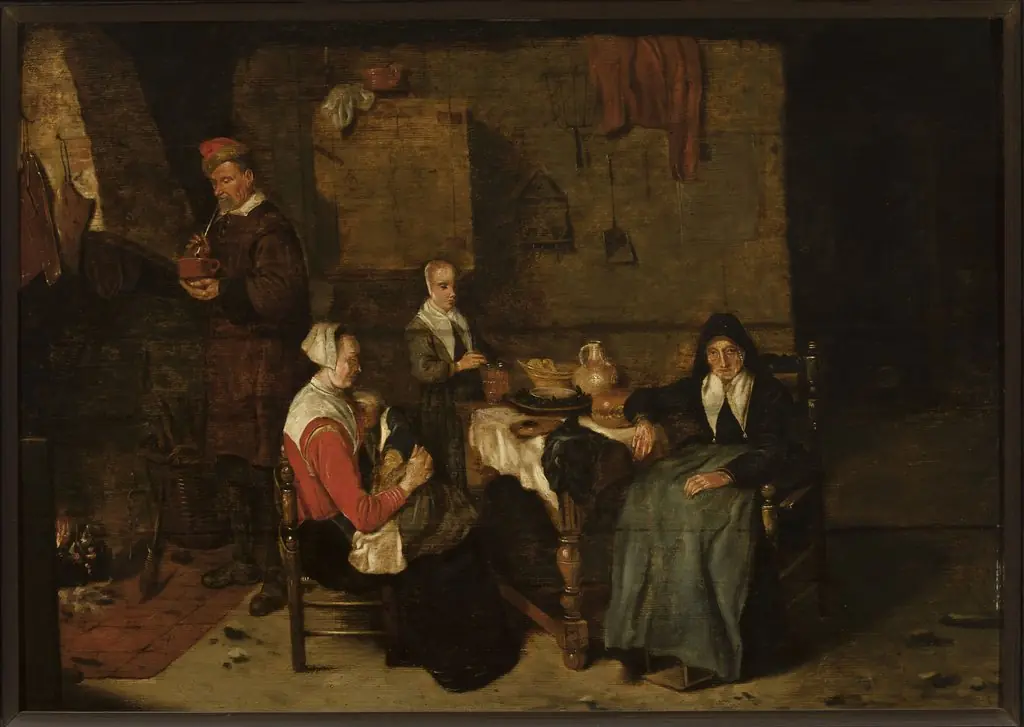
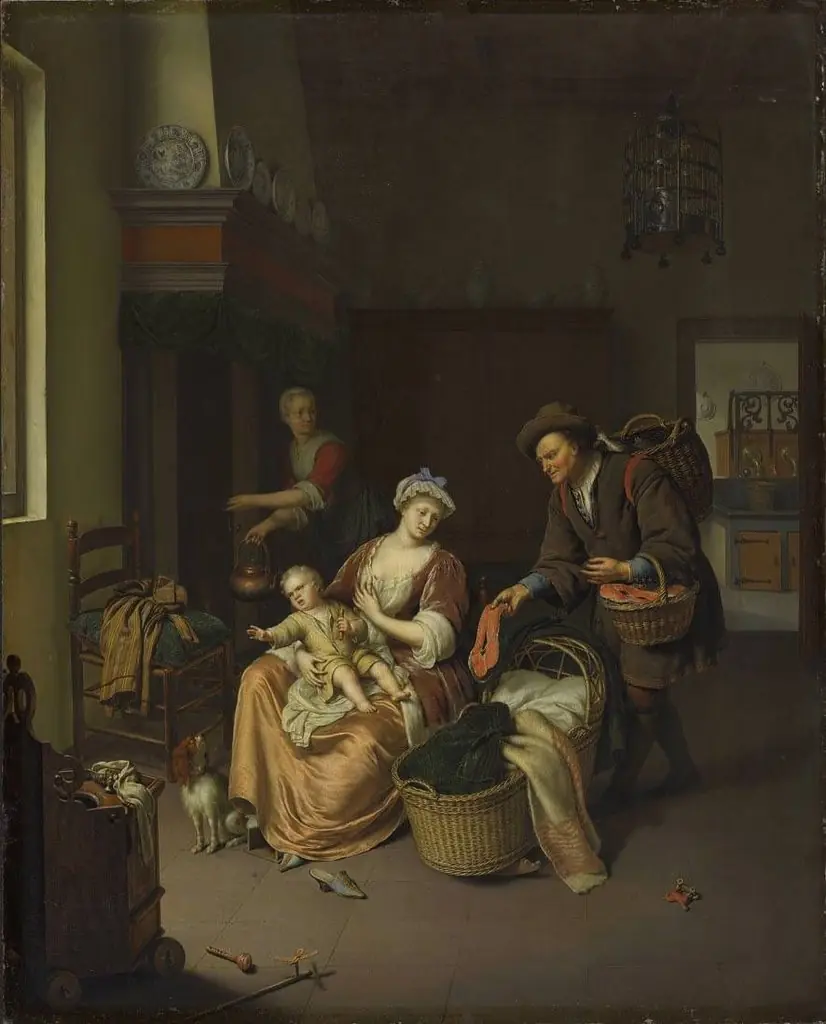
Lintumyyjätär, Gabriel Metsun mukaan is an unspecified painting by Maria Martinau. It is held in the collection of the Finnish National Gallery. This painting, attributed to Gabriel Metsu, depicts a quiet interior scene with four figures in a modest, dimly lit room.
About this work
Overview
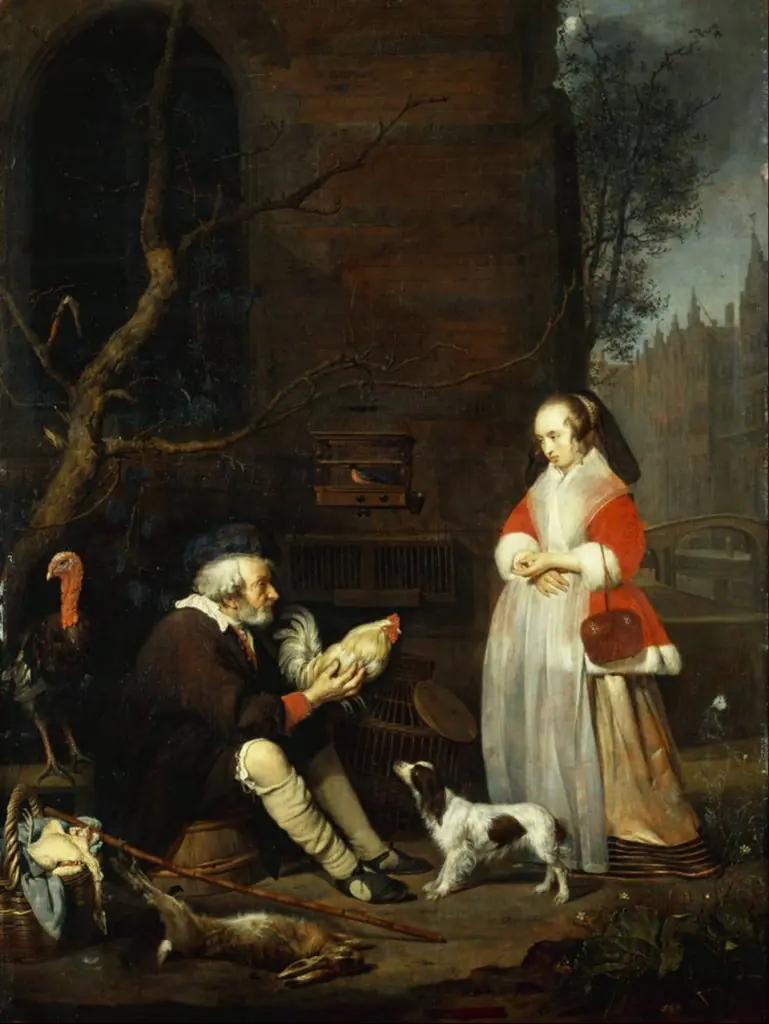
This painting, attributed to Gabriel Metsu, depicts a quiet interior scene with four figures in a modest, dimly lit room. Dead birds suspended from the ceiling suggest domestic activity, possibly food preparation. The composition centers on a woman holding a bird, while others observe or rest nearby. The atmosphere is still and intimate, capturing an ordinary moment with deliberate stillness.
Subject & Meaning
The figures appear engaged in routine tasks, likely related to household provisioning. The presence of dead birds, a calendar, and a basket implies daily life grounded in practicality. The woman holding the bird may represent care or duty, while the man’s relaxed posture suggests respite. No overt symbolism is evident; the scene’s meaning lies in its unembellished depiction of domestic labor.
Technique & Style
Metsu employs chiaroscuro to isolate faces and hands against the shadowed room, drawing attention to subtle expressions and gestures. Brushwork is precise yet unobtrusive, rendering textures like fabric, wood, and feathers with quiet realism. The limited palette—dominated by muted blues, blacks, and reds—enhances the somber, contained mood of the interior.
History & Provenance
The work is linked to Gabriel Metsu, a Dutch Golden Age painter known for genre scenes. Its provenance traces to private collections in the Netherlands, though exact ownership history remains incomplete. It was likely created in the 1650s, during Metsu’s peak period of domestic interior painting, but no definitive archival records confirm its early exhibition or commission.
Context
In mid-17th century Dutch society, domestic interiors were common subjects, reflecting values of order, thrift, and quiet industry. Depictions of food preparation, especially of game or poultry, were not unusual. This painting aligns with broader trends in genre painting that elevated everyday life without romanticizing it, offering a sober view of household routines.
Legacy
Though less widely known than Metsu’s more elaborate scenes, this work exemplifies his ability to convey dignity in ordinary moments. It contributes to the understanding of how Dutch artists captured domesticity with restraint and psychological nuance. Its quiet composition continues to inform studies of light, gesture, and social observation in 17th-century Northern European art.
Artist & collection
Artist
Maria Martinau painted portraits and scenes in early 20th-century Finland. In Naisen muotokuva, a woman’s face is framed by delicate metalwork details. Another work, Lintumyyjätär, Gabriel Metsun mukaan, shows a…