Artwork
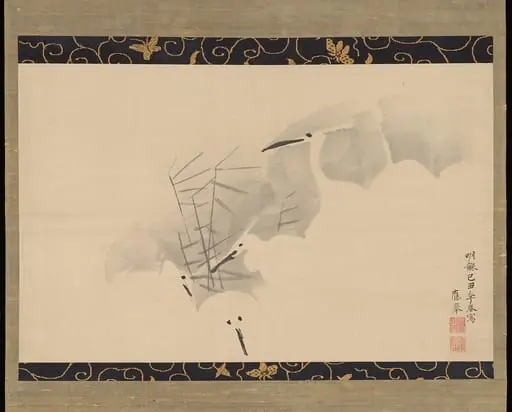
Heron on a Willow Branch
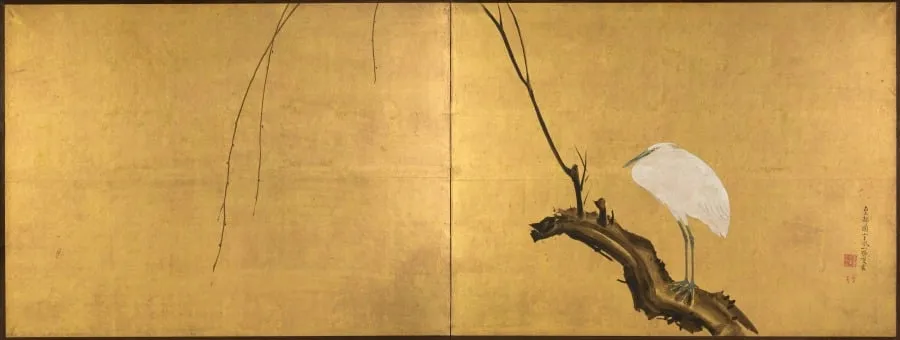
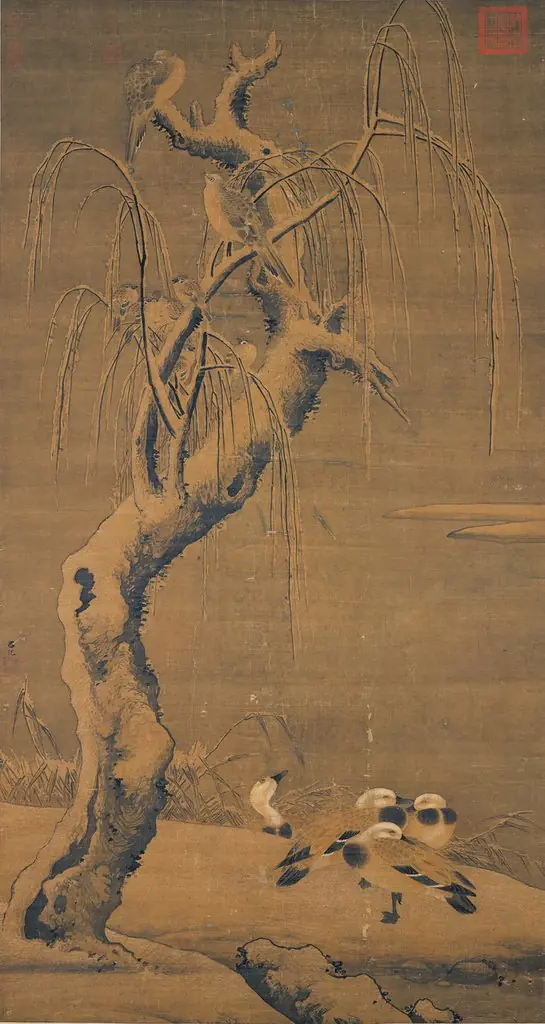
Heron on a Willow Branch is an unspecified painting by the Romanticist artist Maruyama Ōkyo 円山応挙. It dates from 1704 and is held in the collection of the Cleveland Museum of Art. Painted by Maruyama Ōkyo in Kyoto during the late 18th century, this work captures a heron perched on a slender willow branch.
About this work
Overview
Painted by Maruyama Ōkyo in Kyoto during the late 18th century, this work captures a heron perched on a slender willow branch. It reflects Ōkyo’s synthesis of Japanese and Chinese artistic traditions, blending observational precision with decorative flatness. The composition avoids perspective, emphasizing surface pattern and quiet stillness over spatial illusion.
Subject & Meaning
The heron, a symbol of patience and solitude in East Asian culture, is rendered in a moment of calm vigilance. Its stillness contrasts with the delicate, drooping willow, suggesting a quiet harmony between creature and environment. The subject reflects a broader aesthetic preference for natural forms observed with quiet reverence, common in Japanese painting of the period.
Technique & Style
Ōkyo employed flat, unmodulated pigments without shading or chiaroscuro, characteristic of yamato-e traditions. The heron’s feathers are rendered in soft washes of green and white, while the willow’s branches are drawn with fine, linear precision. The expansive, empty background enhances the sense of isolation and focuses attention on the singular figure.
History & Provenance
Created during Ōkyo’s peak influence in Kyoto, the painting emerged from his studio, which trained a generation of artists in naturalistic observation. Though specific early ownership records are sparse, the work aligns with the output of his school, which emphasized direct study of nature over conventional stylization.
Context
In late 18th-century Japan, artists like Ōkyo moved away from rigid courtly styles toward more lifelike depictions of nature. While influenced by Chinese ink painting, Ōkyo’s approach retained Japanese decorative sensibilities. This piece exemplifies the tension between realism and tradition that defined Kyoto’s artistic circles at the time.
Legacy
Ōkyo’s integration of naturalism into Japanese painting influenced later schools, including the Maruyama-Shijō tradition. His use of flat color and careful observation became foundational for artists seeking to depict the natural world with both accuracy and poetic restraint, shaping the trajectory of Edo-period painting.
Artist & collection