Artwork
Plum Trees
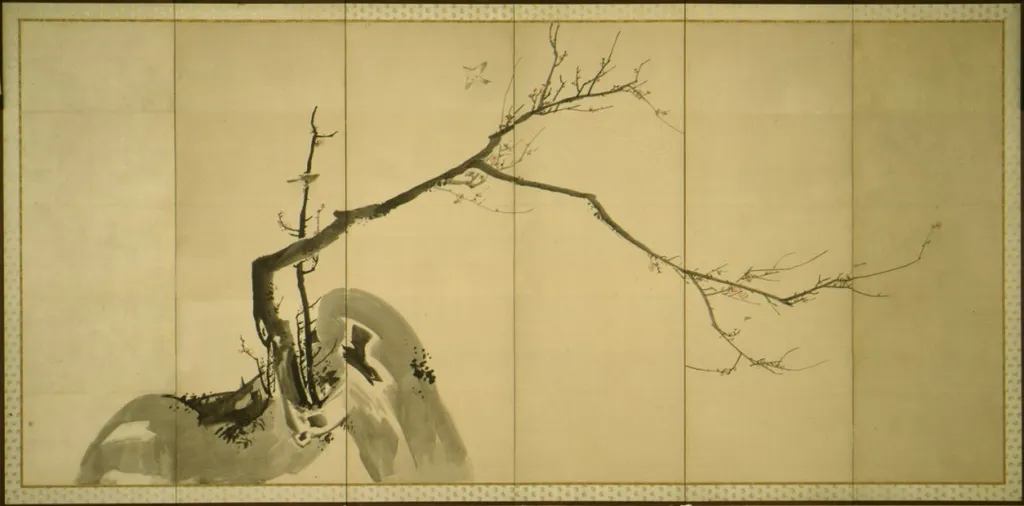
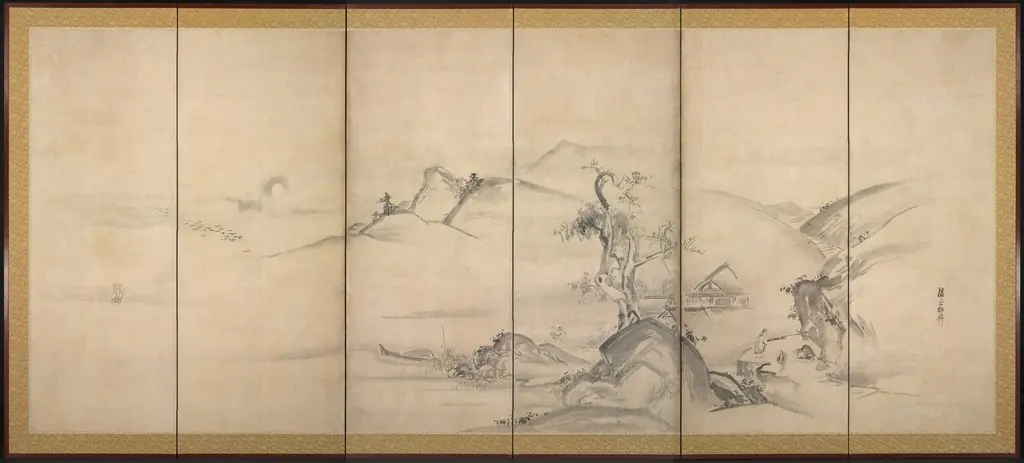
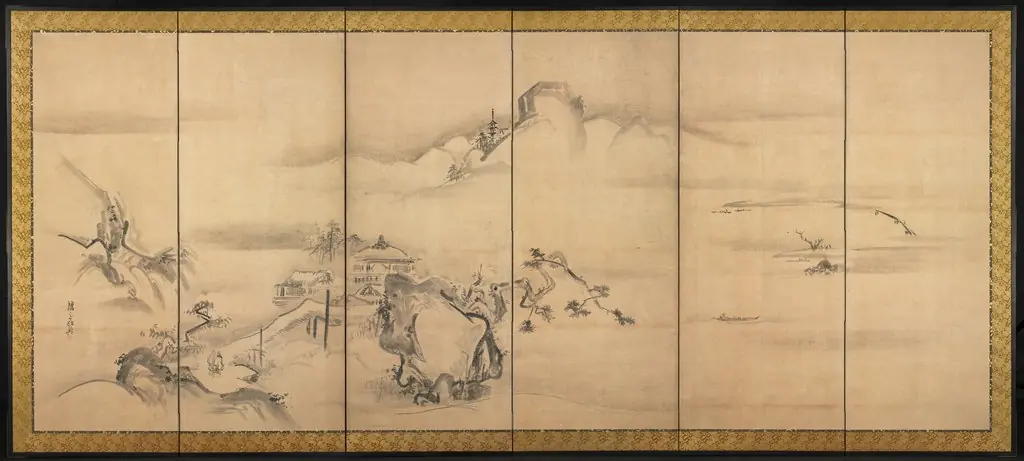
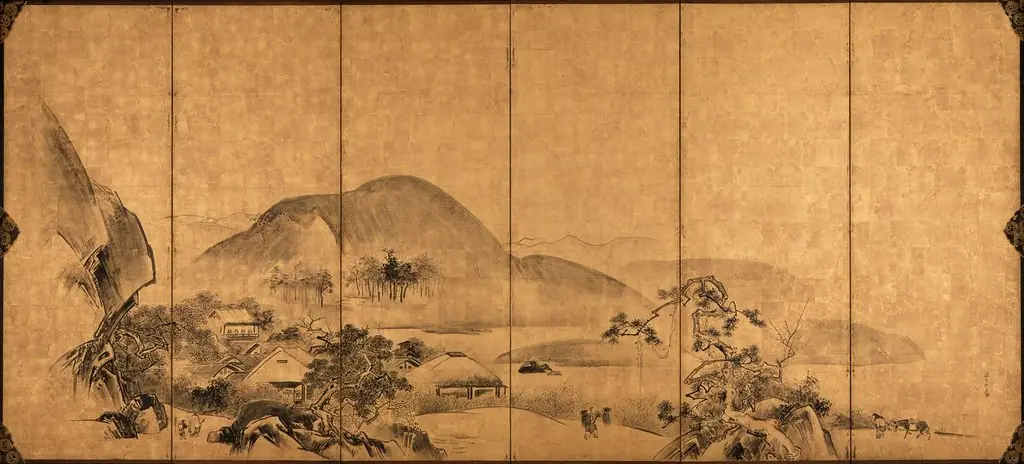
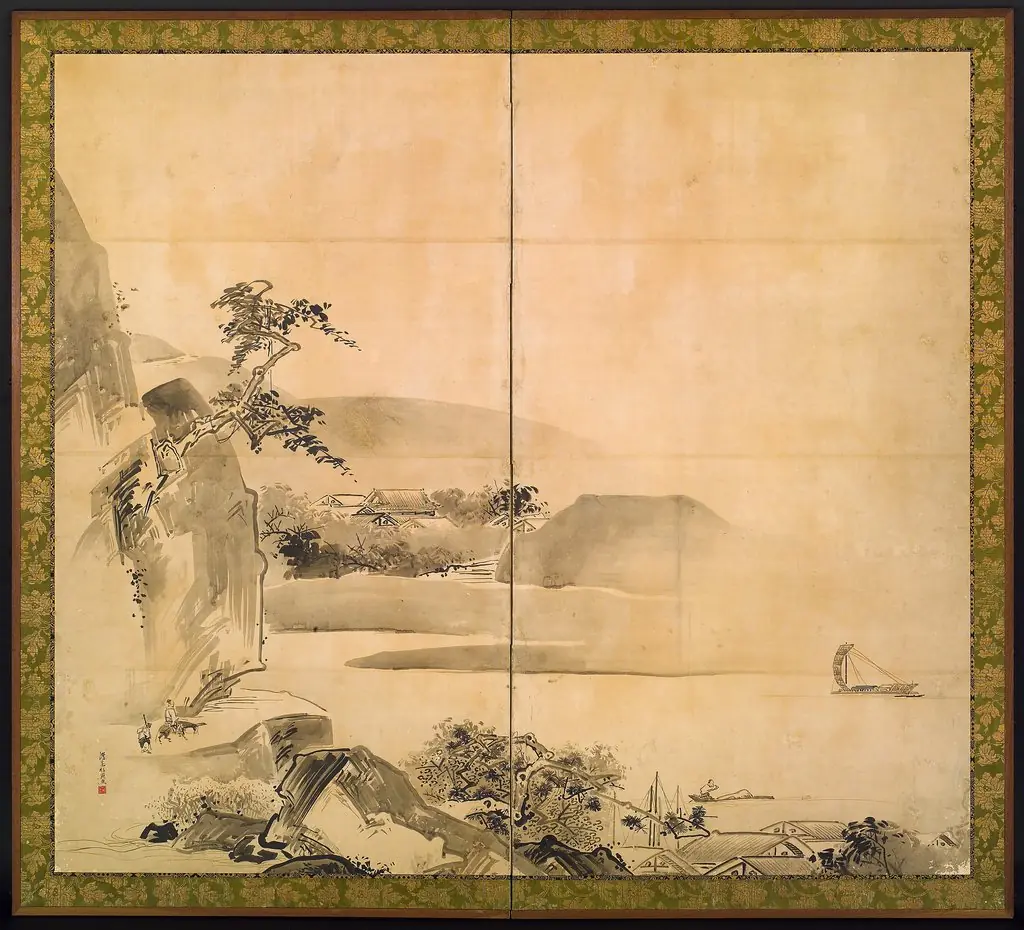
Plum Trees is an unspecified painting by the Rococo painting artist Watanabe Shikō 渡辺始興. It dates from 1750 and is held in the collection of the Los Angeles County Museum of Art.
About this work
Overview
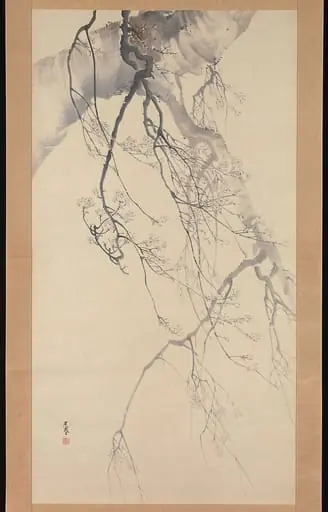
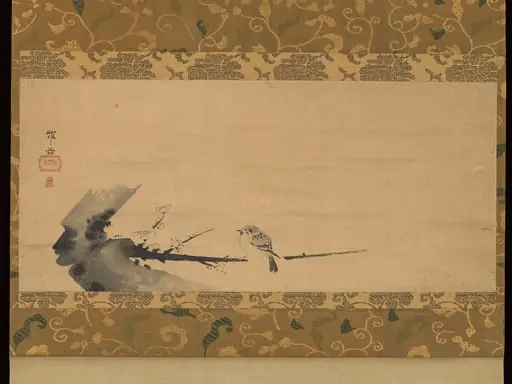
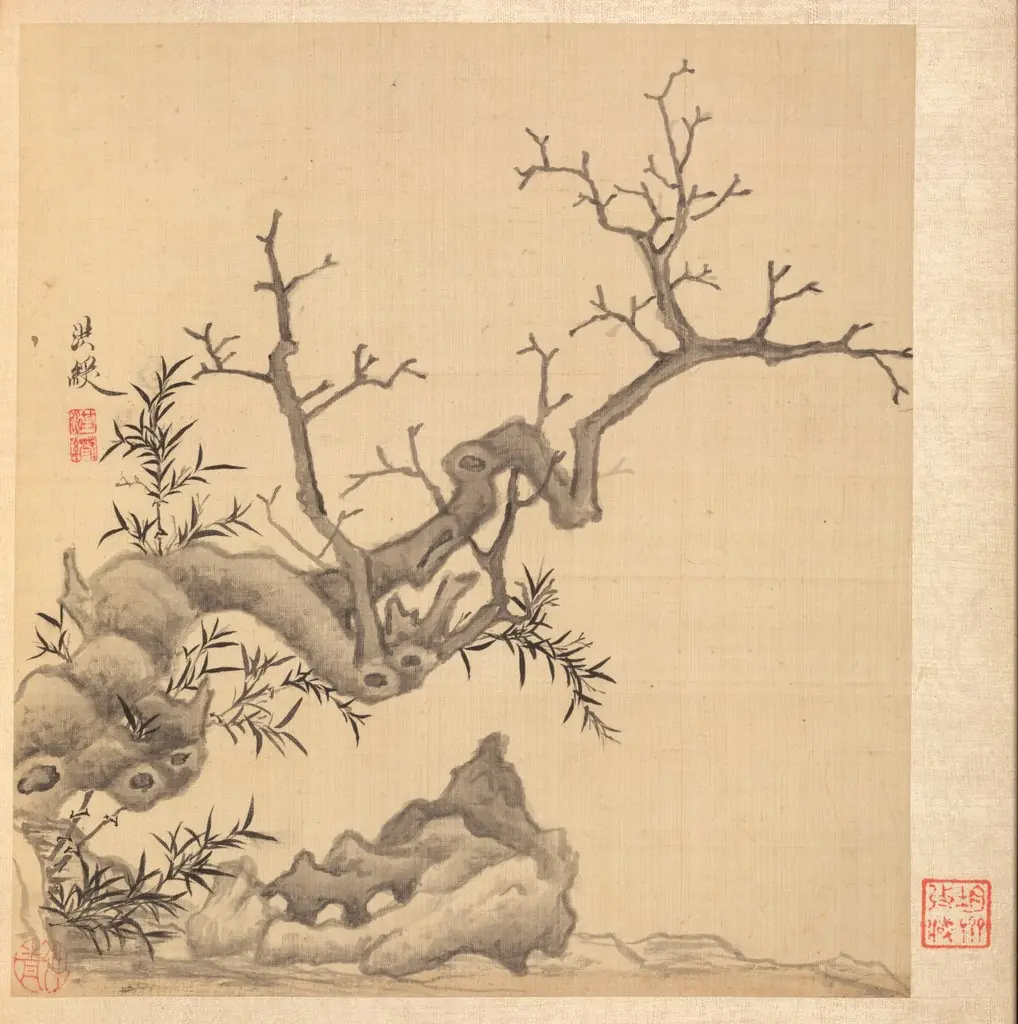
Plum Trees, painted around 1750 by Watanabe Shikō, is a monochrome ink work on paper that captures a single bare branch in winter. The composition is minimal, with no horizon or context beyond the branch and a pale, unmodulated background. Its quiet presence reflects the aesthetic values of Japanese literati painting, emphasizing restraint and natural form over decorative detail.
Subject & Meaning
The subject is a plum tree in early bloom, a traditional symbol in East Asian art representing endurance and the arrival of spring. The sparse blossoms on the gnarled branch suggest resilience amid winter’s chill. Rather than celebrating abundance, the painting conveys quiet anticipation — a moment of transition, where life stirs beneath stillness.
Technique & Style
Shikō employs bold, fluid brushwork to define the branch’s twisted form, using varying ink densities to suggest texture and weight. Subtle ink splatters and dry-brush effects add tactile depth without ornamentation. The extensive use of negative space isolates the branch, directing focus to its rhythm and the delicate balance between absence and presence.
History & Provenance
The painting entered the collection of the Los Angeles County Museum of Art through the museum’s early acquisitions of Japanese ink paintings. Its provenance prior to the 20th century is not fully documented, but its style aligns with the literati tradition of 18th-century Japan, where artists like Shikō drew inspiration from Chinese models and personal expression over formal commission.
Context
Watanabe Shikō worked during a period when Japanese artists increasingly engaged with Chinese literati ideals, valuing personal expression over courtly refinement. Plum Trees reflects this shift — a solitary branch, painted with scholarly restraint, embodies the literati’s reverence for nature as a mirror of inner character and philosophical contemplation.
Legacy
The painting remains a quiet example of Edo-period ink aesthetics, admired for its emotional subtlety rather than technical showmanship. It continues to inform contemporary understandings of Japanese monochrome painting, illustrating how minimal means can evoke profound natural and spiritual resonance without embellishment.
Artist & collection
Artist
Watanabe Shikō painted delicate, ink-washed scenes on folding screens and scrolls in early-18th-century Japan.