Artwork
Studies of Upas and Maple Trees
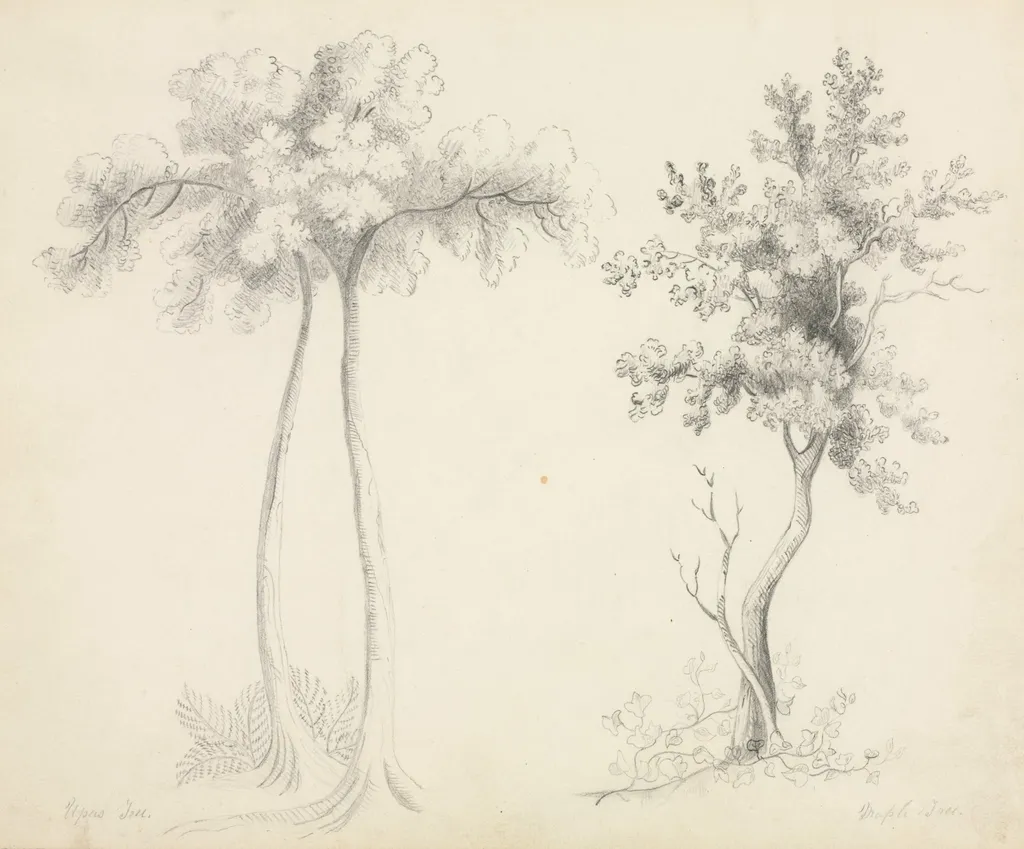
Studies of Upas and Maple Trees is a drawing by the Romanticist artist Mary Altha Nims. It dates from 1804 and is held in the collection of the Cleveland Museum of Art.
About this work
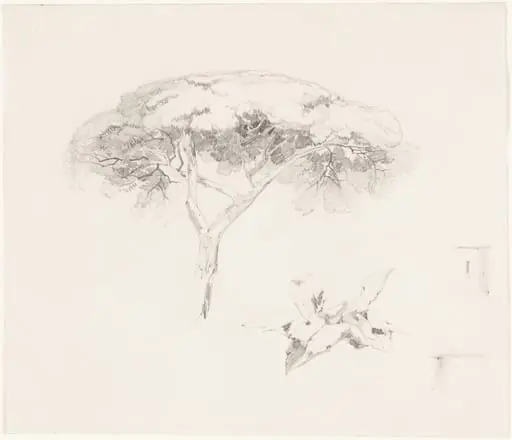
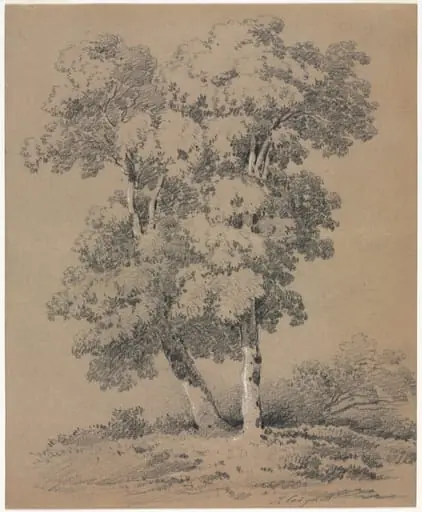
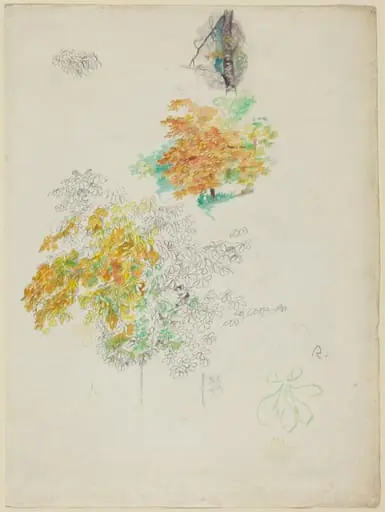
This painting shows two trees with detailed leaves and branches. The upas tree has twisted, gnarly limbs. The maple tree has bright red leaves.
Mary Altha Nims painted this in the 1800s. She was one of the few women botanical artists back then.
Watch how she mixes greens and reds in the leaves. It’s subtle but sharp.
Look up Mary Altha Nims (American, 1817–1907) next.
Overview
Studies of Upas and Maple Trees, a drawing by Mary Altha Nims from circa 1804, is part of The Cleveland Museum of Art's collection. The work depicts two distinct tree species in meticulous detail.
Subject & Meaning
The drawing contrasts an upas tree, characterized by its twisted and gnarled limbs, with a maple tree distinguished by its vibrant red foliage. This juxtaposition may highlight the artist's interest in botanical accuracy and the aesthetic appeal of contrasting natural forms.
Technique & Style
Nims employs a nuanced color palette, subtly blending various greens while accentuating the maple's red leaves, demonstrating her skill in capturing the specificity of each species through precise rendering of leaves and branches.
History & Provenance
Created in the early 19th century, this work is notable for being produced by one of the era's few female botanical artists. Mary Altha Nims (1817–1907) was an American artist, though the piece predates her birth year as stated, suggesting a potential anomaly in the recorded date.
Context
The drawing reflects the botanical art traditions of its time, emphasizing detailed representation of plant life. As a female artist in a male-dominated field, Nims' work contributes to the history of women's contributions to botanical illustration.
Legacy
Studies of Upas and Maple Trees contributes to the legacy of early 19th-century botanical art, with Nims' work being recognized for its precision and the rarity of female representation in the field during that era.
Artist & collection