Artwork
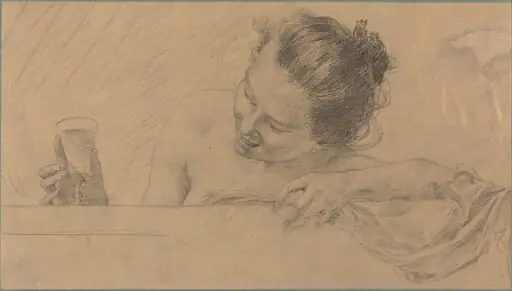
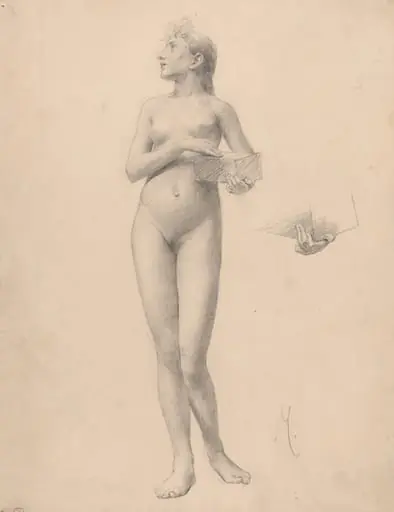
Female Nude with a Platter
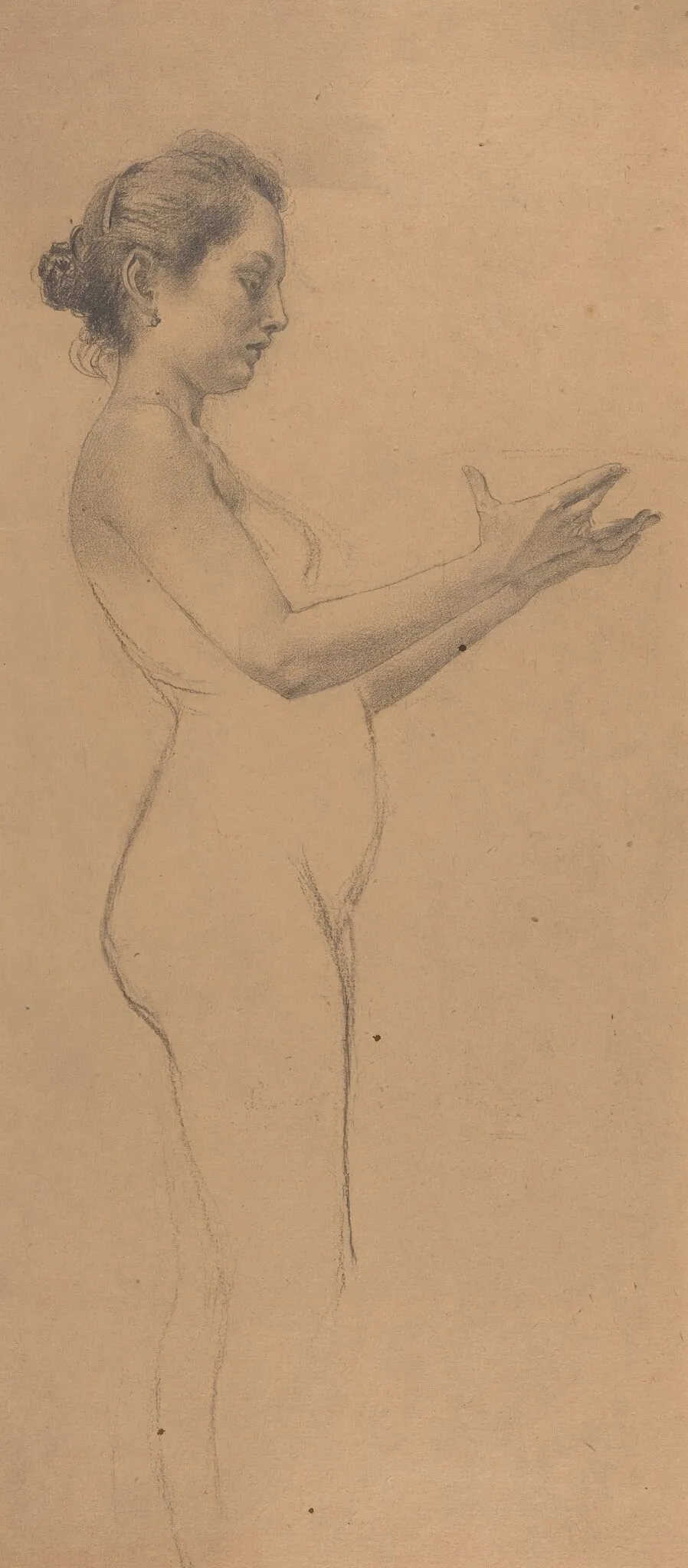
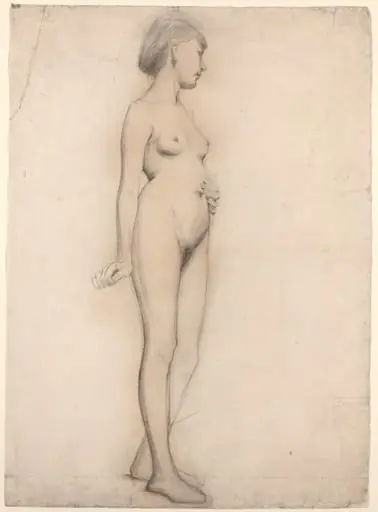
Female Nude with a Platter is a graphite drawing by the Impressionist artist Karel Vitezslav Masek. It dates from 1898 and is held in the collection of the National Gallery of Art.
About this work
Overview
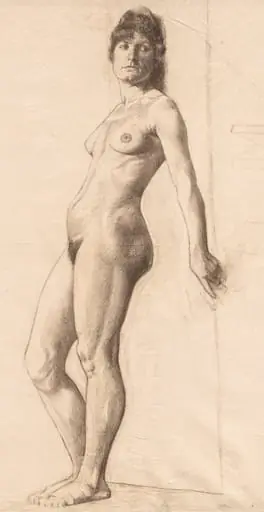
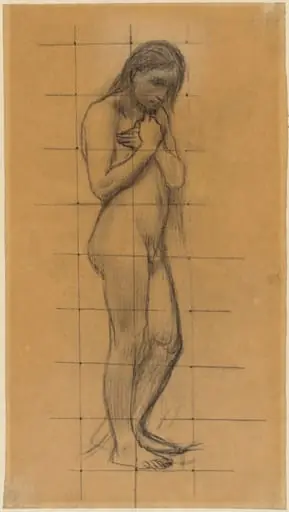
Karel Vitezslav Masek’s drawing titled *Female Nude with a Platter* was executed in 1898. Rendered in graphite on a brown paperboard, the work measures the artist’s interest in quick, gestural studies of the human figure. The composition presents a standing woman, her torso turned slightly toward the viewer, offering a shallow dish with one hand while the other rests near her waist.
Subject & Meaning
The figure is depicted nude, emphasizing the natural curvature of the body rather than individualized features. By holding a platter, the pose suggests a moment of service or offering, yet the absence of narrative detail directs attention to the study of posture, balance, and the interplay of weight across the limbs.
Technique & Style
Masek employs loose, varying graphite strokes that range from light to dark, creating a soft modeling of form against the warm-toned paper. The lines are swift, capturing the silhouette and movement rather than fine surface texture. Minimal facial detail and a lack of background keep the focus on the anatomical study, a common approach in academic figure drawing.
History & Provenance
Created at the close of the 19th century, the drawing reflects the pedagogical practices of art academies, where students produced rapid sketches to hone observational skills. While specific ownership records are scarce, the work is catalogued among Masek’s surviving drawings, indicating its preservation within collections that document his oeuvre.
Context
During the 1890s, European artists increasingly turned to realistic representation of everyday subjects, often using life studies to explore anatomy and light. Masek’s drawing aligns with this realist tendency, serving both as a technical exercise and as a visual record of the era’s emphasis on truthful depiction of the human form.
Artist & collection