Artwork
Saint Lawrence
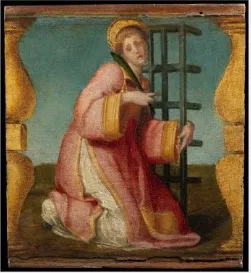
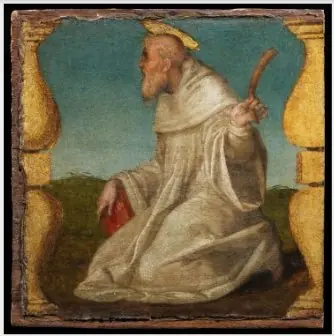
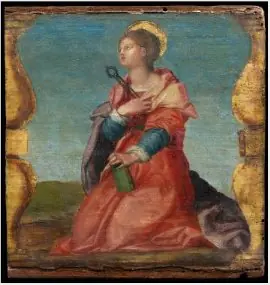
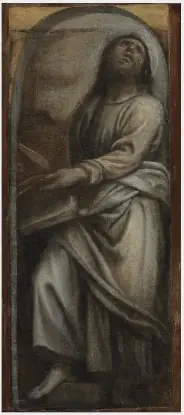
Saint Lawrence is an unspecified painting by the Mannerist artist Maso da San Friano. It dates from 1561 and is held in the collection of the National Gallery of Ireland.
About this work
Overview
Painted around 1561 by Maso da San Friano, an artist active in Florence, this work portrays Saint Lawrence, a Christian deacon and martyr. Executed in the Mannerist tradition, the painting reflects the period’s interest in stylized form and emotional intensity. It is currently held in the National Gallery of Ireland, where it remains one of the few documented works by the artist.
Subject & Meaning
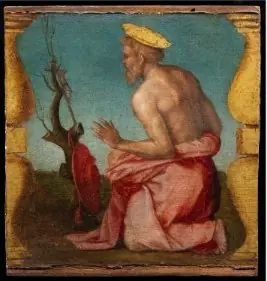
The figure depicts Saint Lawrence, traditionally shown at the moment of his martyrdom by roasting on a gridiron. Here, he kneels before a structure resembling a metal grate, evoking his death without literal depiction of fire. His posture conveys quiet devotion rather than agony, aligning with Mannerist tendencies to emphasize spiritual composure over physical suffering.
Technique & Style
The composition employs elongated forms and a restrained palette of pink, yellow, and blue to create a sense of elevated stillness. The figure’s draped robe and the architectural framing suggest a stage-like setting, typical of Mannerist spatial manipulation. Brushwork is precise but not overly detailed, favoring symbolic clarity over naturalism.
History & Provenance
Maso da San Friano, born Tomaso D’Antonio Manzuoli, was a lesser-known Florentine painter whose career centered on religious commissions.
The painting’s early history is undocumented, but it entered the National Gallery of Ireland’s collection in the 19th century. Maso da San Friano, born Tomaso D’Antonio Manzuoli, was a lesser-known Florentine painter whose career centered on religious commissions. This work is among the few securely attributed to him, offering insight into provincial Mannerist practice in mid-16th-century Tuscany.
Context
Created during the Counter-Reformation, the image reflects Catholic efforts to reinforce saintly veneration through visual piety. While Rome and Venice embraced dramatic Baroque intensity, Florentine artists like Maso retained a more restrained, contemplative approach. The painting’s formal composition and muted tones align with the era’s preference for devotional clarity over theatricality.
Legacy
Though Maso da San Friano left few surviving works, this painting contributes to understanding the diversity of Mannerist expression beyond major centers. Its preservation in Dublin underscores the reach of Italian religious art in European collections. The work remains a quiet example of how regional artists adapted stylistic trends to serve local devotional needs.
Artist & collection
Artist
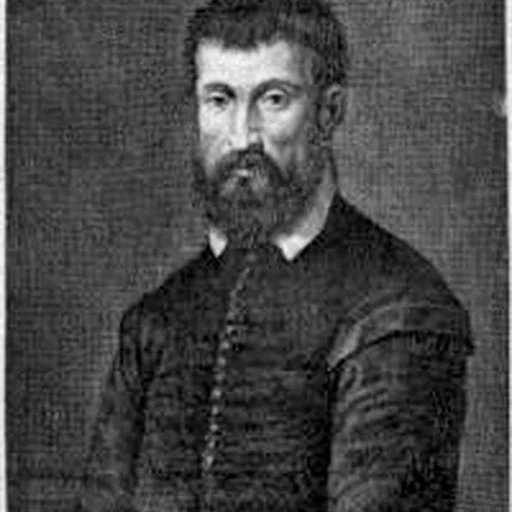
Maso da San Friano (1536–1571) was an Italian painter active in Florence. His real name was Tomaso D'Antonio Manzuoli. He was born in San Friano and died in Florence.