Artwork
Saint Jerome
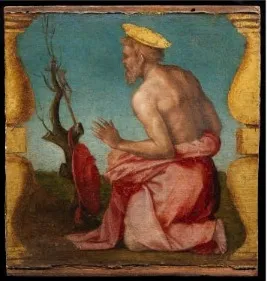
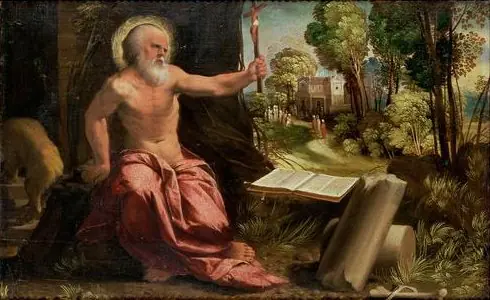
Saint Jerome is an unspecified painting by the Mannerist artist Maso da San Friano. It dates from 1561 and is held in the collection of the National Gallery of Ireland.
About this work
Overview
Painted around 1561 by Maso da San Friano, a Florentine artist of the mid-16th century, this work portrays Saint Jerome in a quiet, introspective moment.
Painted around 1561 by Maso da San Friano, a Florentine artist of the mid-16th century, this work portrays Saint Jerome in a quiet, introspective moment. Executed in the Mannerist style, the painting emphasizes emotional stillness over dramatic action. It is currently held in the National Gallery of Ireland, where it represents a modest yet thoughtful example of religious painting from the period.
Subject & Meaning
The figure of Saint Jerome, a Church Father known for translating the Bible into Latin, is shown in a posture of silent devotion. Bare-chested and clad in a red robe with a yellow hat, he raises his hands as if in prayer or meditation. The barren tree beside him may symbolize spiritual austerity or the passage of time, reinforcing the theme of contemplative solitude central to his scholarly and ascetic life.
Technique & Style
The painting employs a restrained palette of muted tones against a pale blue sky, enhancing its tranquil mood. Figures are rendered with elongated proportions and subtle modeling, typical of Mannerist aesthetics. The composition is deliberately simplified, with minimal background detail, directing focus to the saint’s introspective expression and gesture, reflecting a preference for inner emotion over narrative complexity.
History & Provenance
The painting’s early history is undocumented, but it entered the collection of the National Gallery of Ireland in the 19th century. Its attribution to Maso da San Friano, a lesser-known Florentine painter, reflects scholarly consensus based on stylistic comparison with other works from his circle. It has remained largely unaltered since its creation, preserving its original composition and tonal harmony.
Context
Created during the Counter-Reformation, this image aligns with the Church’s emphasis on personal piety and scriptural study. While grand altarpieces dominated public spaces, smaller devotional works like this one catered to private reflection. Maso’s approach, though unassuming, resonates with contemporary Florentine trends favoring emotional restraint and intellectual gravitas in religious imagery.
Legacy
Though Maso da San Friano did not achieve widespread fame, this painting endures as a quiet testament to the devotional sensibilities of mid-16th-century Florence. Its understated elegance and focus on inner life offer insight into how religious ideals were conveyed through subtle visual means, influencing later generations of artists seeking spiritual depth over theatricality.
Artist & collection
Artist
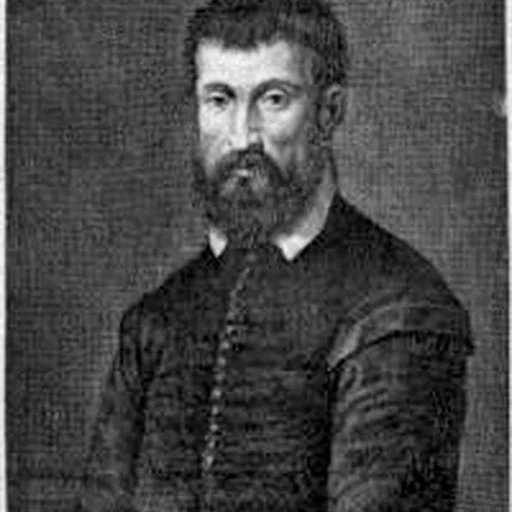
Maso da San Friano (1536–1571) was an Italian painter active in Florence. His real name was Tomaso D'Antonio Manzuoli. He was born in San Friano and died in Florence.

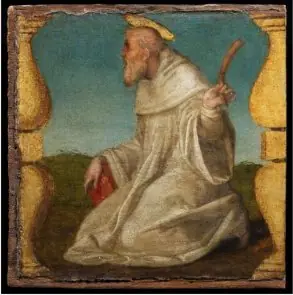
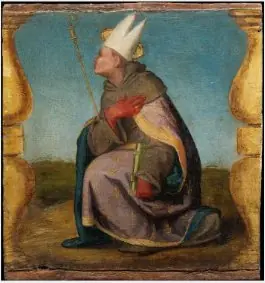
 Saint Jerome
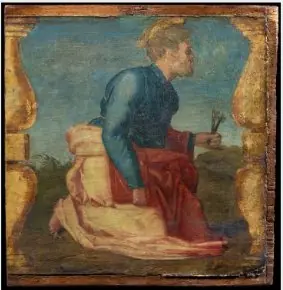 Saint Peter
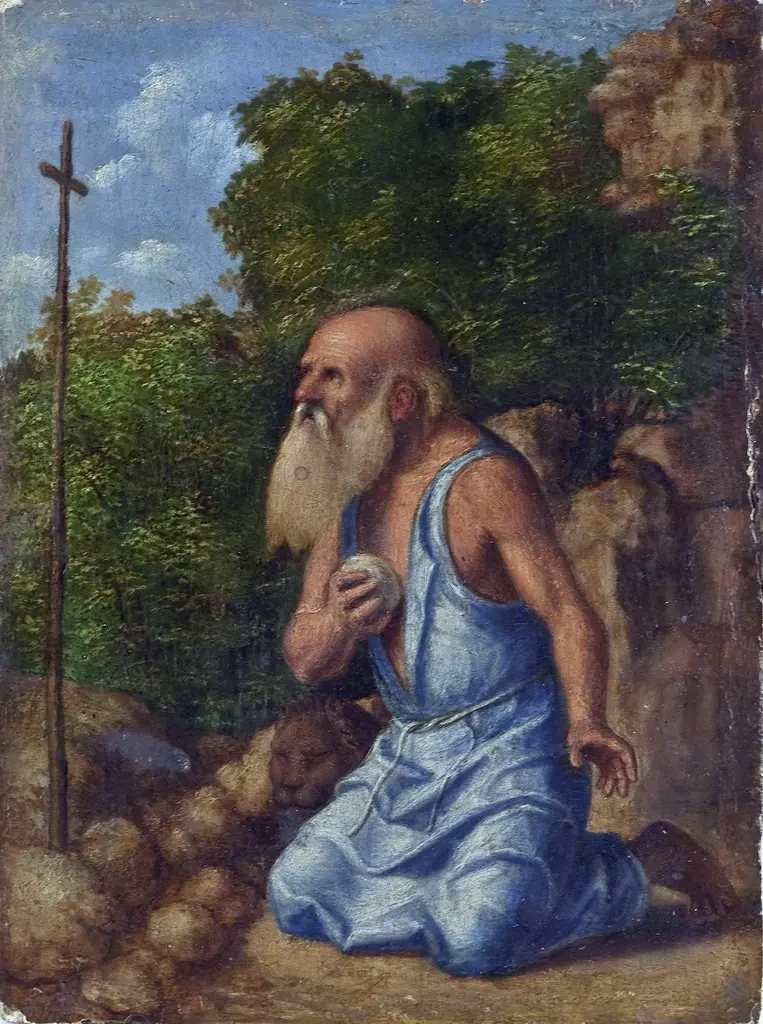 St Jerome in the Desert
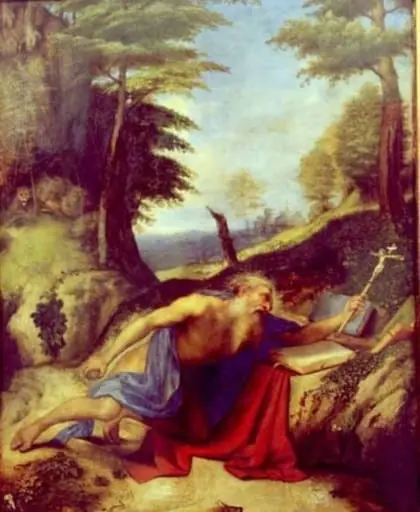 Sfântul Ieronim în meditație
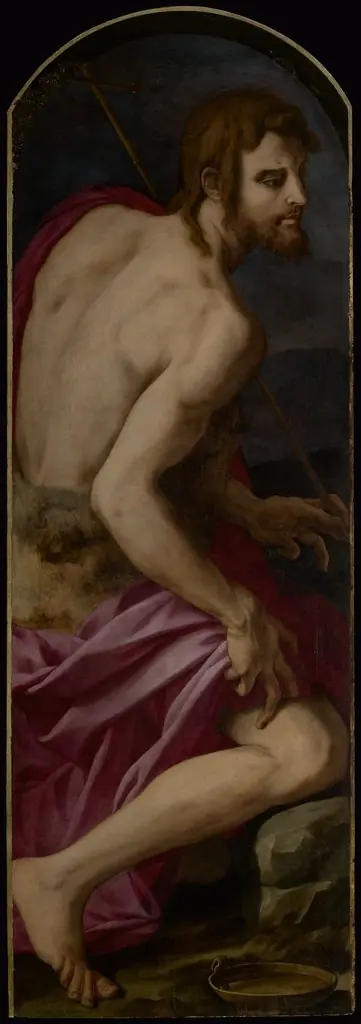 St. John the Baptist
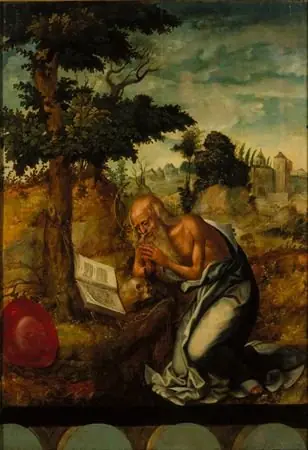 São Jerónimo
![The Crucifixion with the Virgin, Saint John, Saint Jerome, and Saint Mary Magdalene [left panel], by Pietro Perugino](https://artifactworldgallery.com/img/pietro-perugino--the-crucifixion-with-the-virgin-saint-john-saint-jerome-and--1017dec17318baa5-w320.webp) The Crucifixion with the Virgin, Saint John, Saint Jerome, and Saint Mary Magdalene [left panel]
The Crucifixion with the Virgin, Saint John, Saint Jerome, and Saint Mary Magdalene [left panel]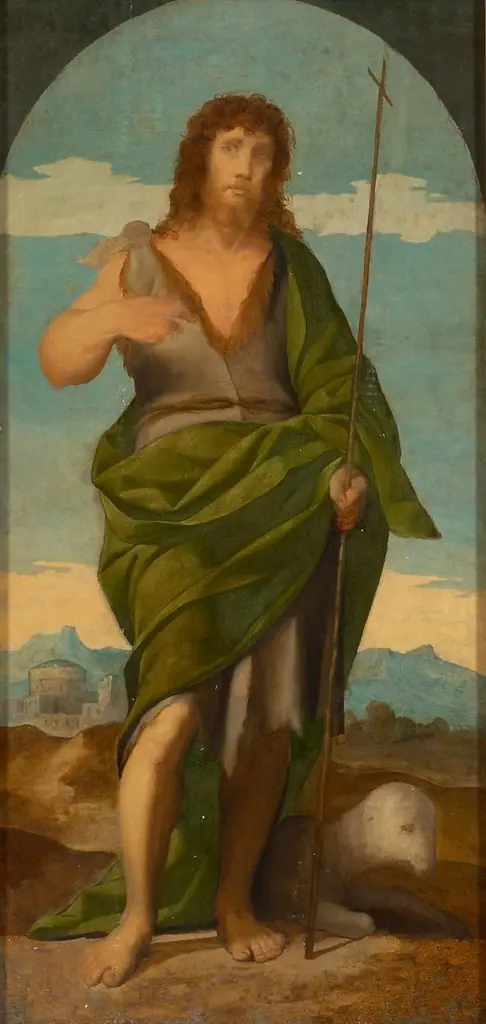 John the Baptist
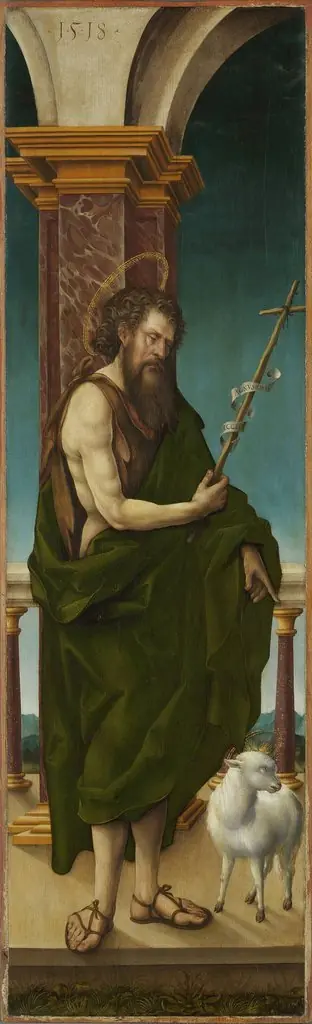 Johannesaltar, Flügelaußenseite: Hl. Johannes der Täufer
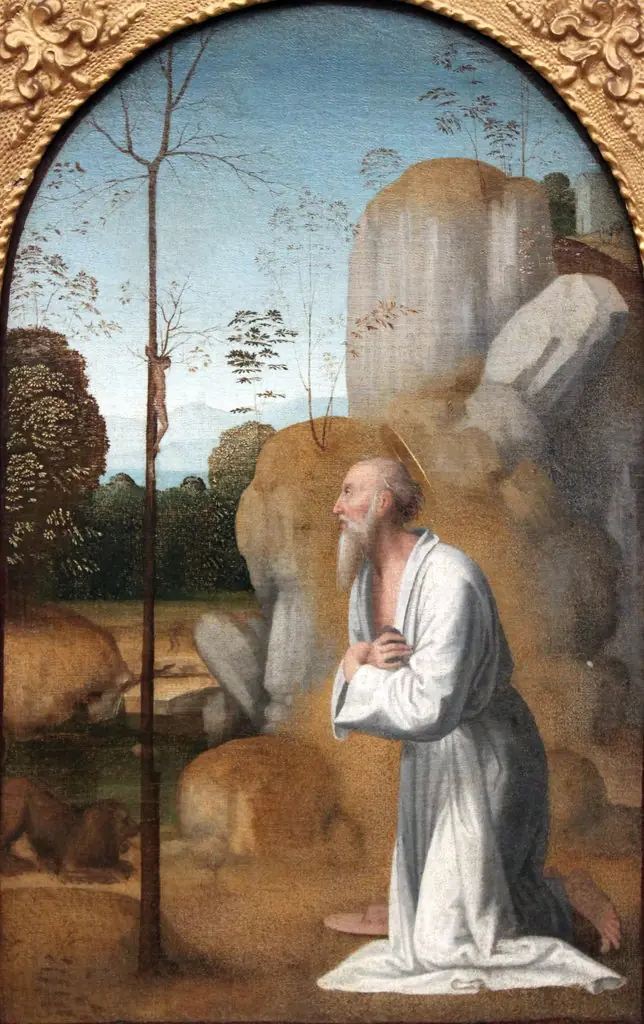 Penitent saint Jerome
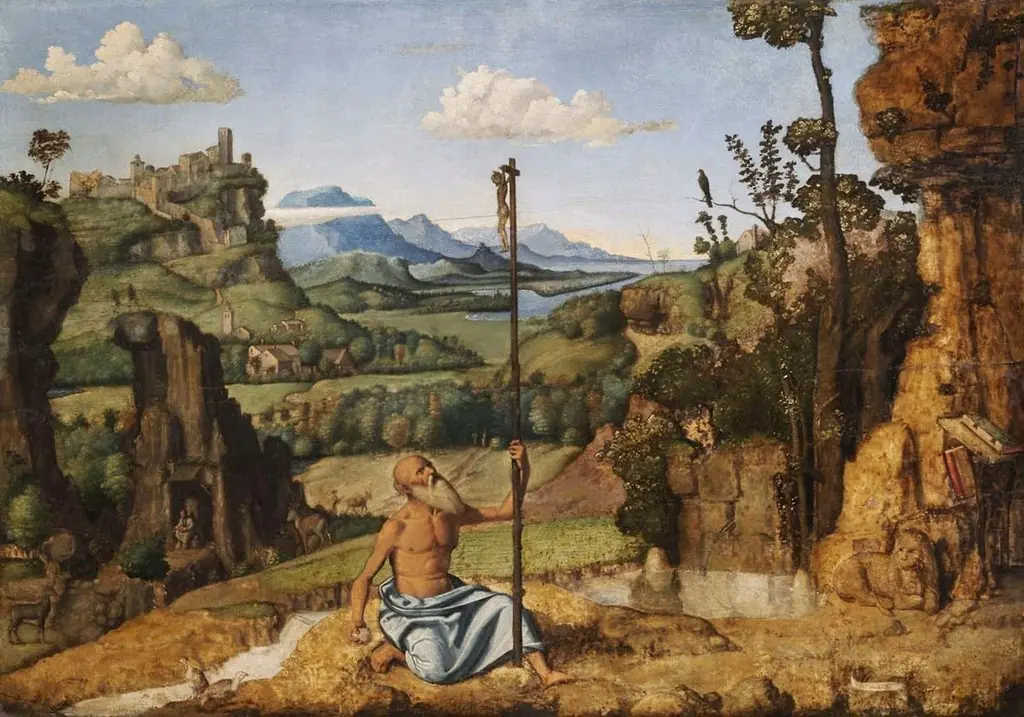 The Penitent St Jerome in the Wilderness