Artwork
Les divers pourtraicts et figures VII
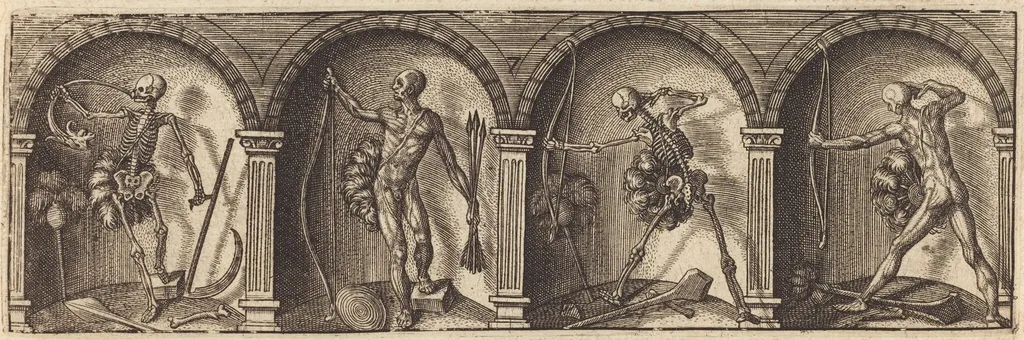
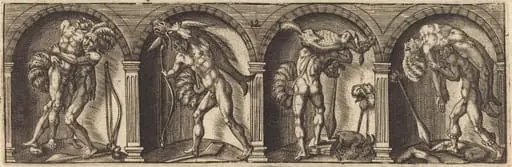
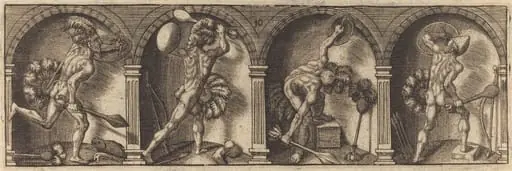
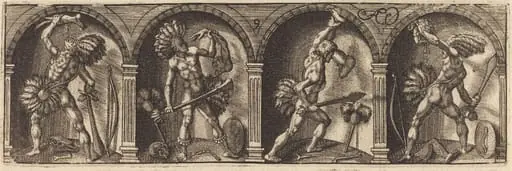
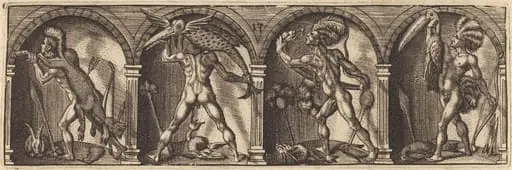
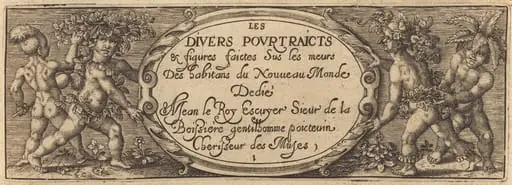
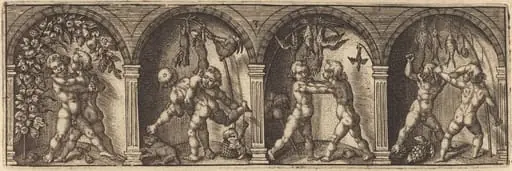
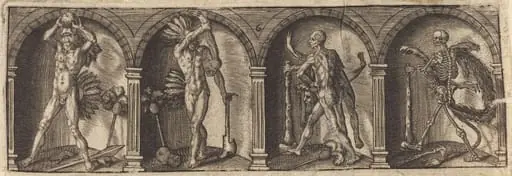
Les divers pourtraicts et figures VII is an ink print by the Baroque artist Master AD. It dates from 1600 and is held in the collection of the National Gallery of Art.
About this work
Overview
The composition relies on precise line work and contrast to structure its narrative, typical of early 17th-century Northern European printmaking traditions.
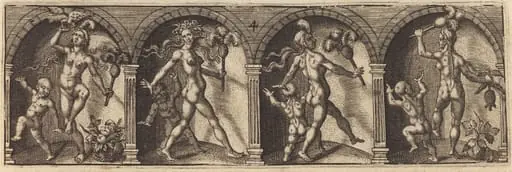
Created around 1600 by the artist known as Master AD, this engraving is part of a series titled Les divers pourtraicts et figures. It presents four figures arranged within three arched frames, blending human and skeletal forms to convey a moral theme. The composition relies on precise line work and contrast to structure its narrative, typical of early 17th-century Northern European printmaking traditions.
Subject & Meaning
The image juxtaposes a living man, holding a scroll and standing firm, with three skeletons in varied poses. One skeleton leans on a shovel, another grips a sword, and the third holds a broken hourglass beside a crumbling pillar. The mirroring of postures between the living figure and the dead suggests a meditation on mortality, implying that human ambition and knowledge are transient in the face of death.
Technique & Style
Master AD employed fine, controlled engraving lines to define form and depth. Sharp contrasts between light and shadow enhance the dramatic tension, while the precise rendering of textures—fabric, bone, stone—demonstrates technical mastery. The arched frames unify the figures, guiding the viewer’s eye across the scene and reinforcing the compositional balance of life and decay.
History & Provenance
The print originates from a series produced in the late 16th or early 17th century, likely in the Low Countries or Germany, where such allegorical prints circulated among educated audiences. Though the artist’s full identity remains uncertain, the work reflects the influence of Northern Mannerism and the popularity of memento mori imagery in print culture of the period.
Context
This engraving emerged during a time when religious and philosophical themes dominated visual culture, particularly in Protestant regions where imagery served as moral instruction. The theme of vanitas—life’s fleeting nature—was common in prints, books, and paintings, often used to encourage contemplation and piety amid growing secularism and scientific inquiry.
Legacy
As part of a broader tradition of allegorical prints, this work contributed to the visual language of mortality in early modern Europe. Its clear symbolism and technical precision influenced later engravers and illustrators who sought to convey ethical messages through disciplined graphic forms, preserving its relevance in the history of printmaking.
Artist & collection