Artwork
Ornament
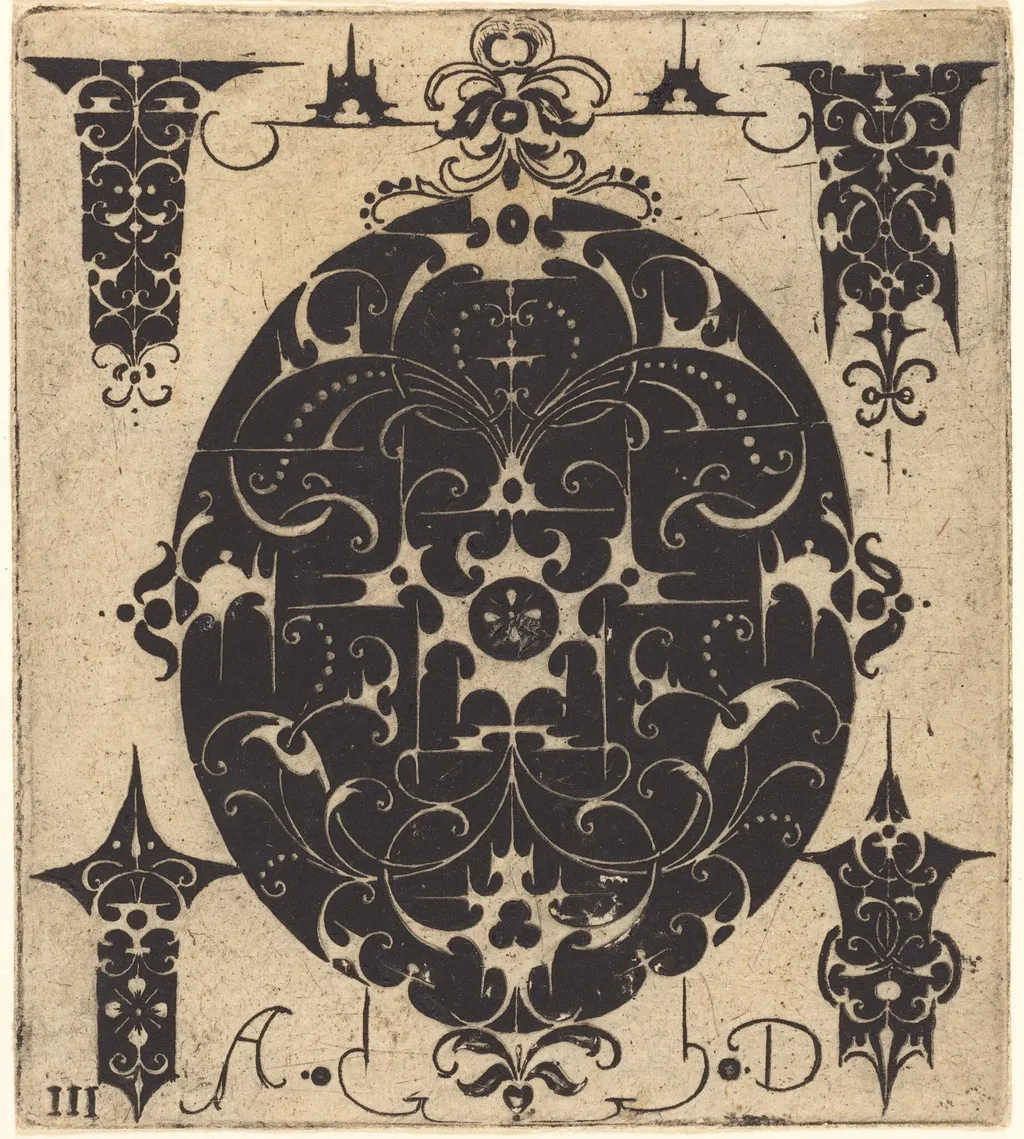
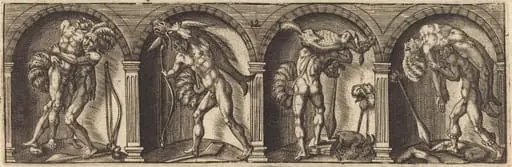
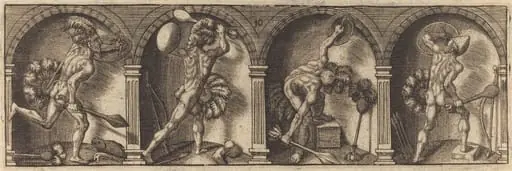
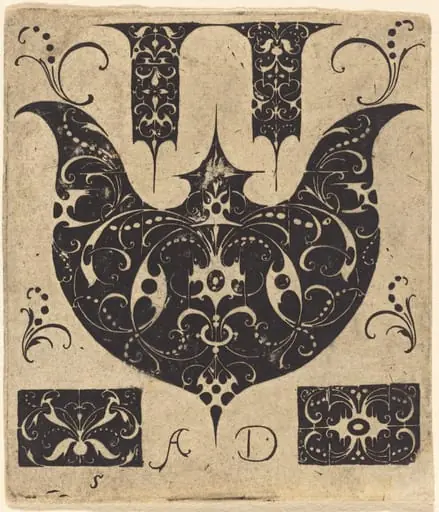
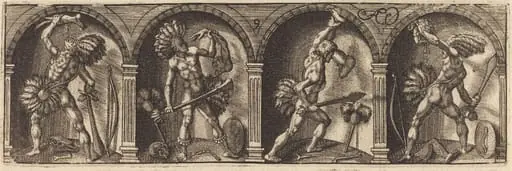
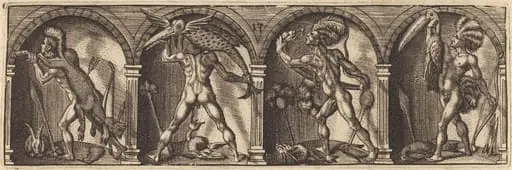
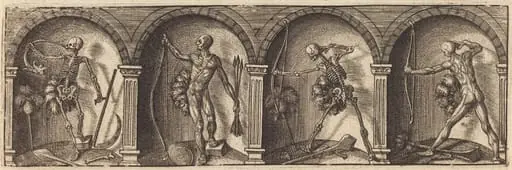
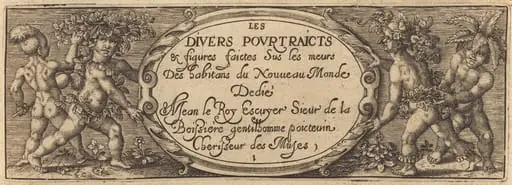
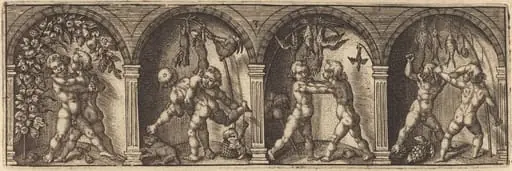
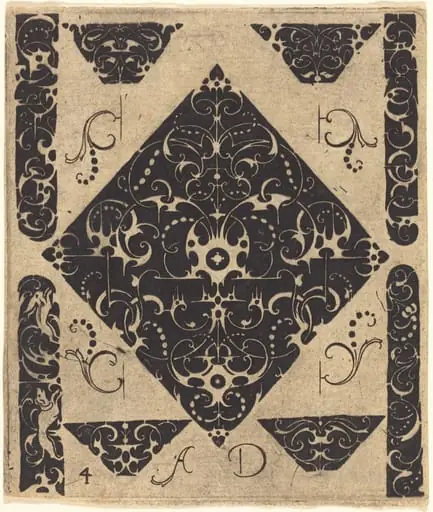
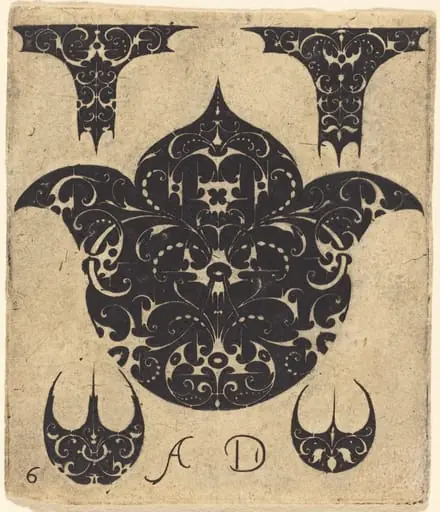
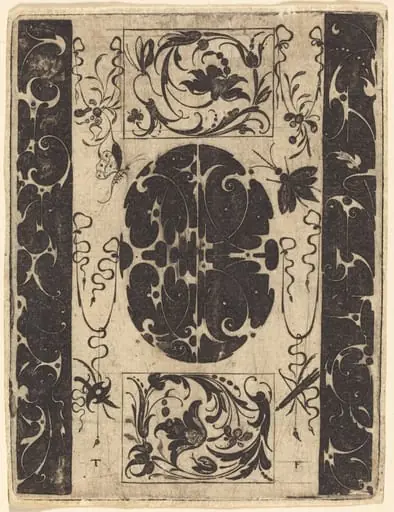
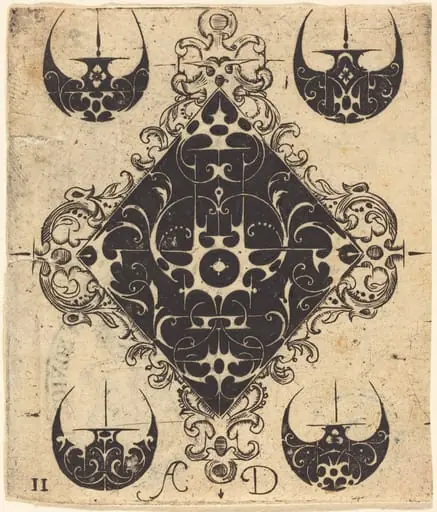
Ornament is an ink print by the Renaissance artist Master AD. It dates from 1564 and is held in the collection of the National Gallery of Art.
About this work
Overview
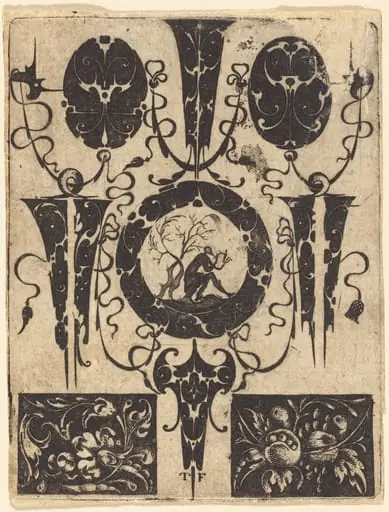
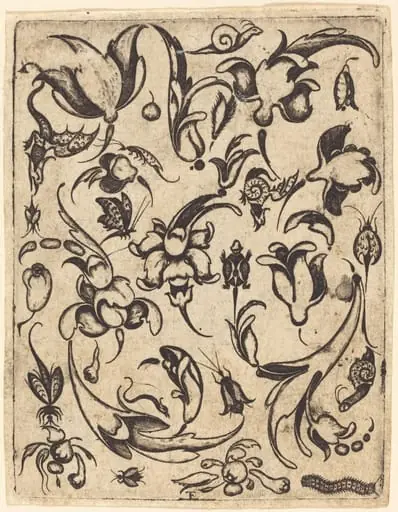
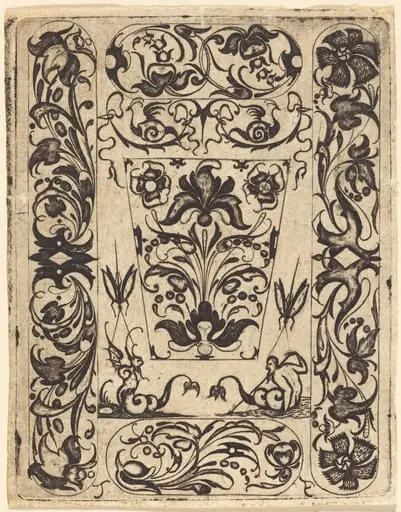
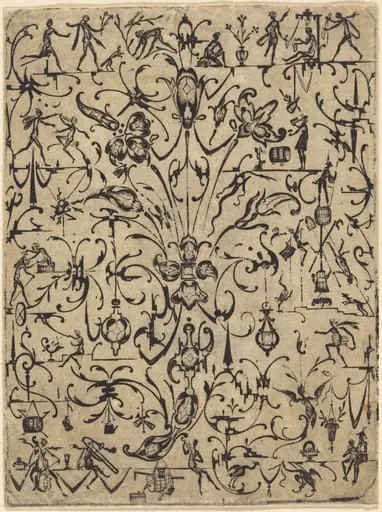
Created in 1564 by an artist known as Master AD, this engraving is a densely composed print featuring elaborate vegetal motifs interwoven with human faces. Executed in fine lines on metal, the work belongs to the tradition of decorative prints used as models for artisans. Its title, *Ornament*, belies its complexity, as the design resists simple categorization as mere embellishment.
Subject & Meaning
The work invites prolonged observation, transforming decoration into a visual riddle that challenges the viewer to locate and interpret the hidden figures.
The composition blends scrolling vines and foliage with subtly embedded facial features, some barely discernible, others more pronounced. These faces appear to emerge from or vanish into the plant forms, suggesting a playful interplay between nature and humanity. The work invites prolonged observation, transforming decoration into a visual riddle that challenges the viewer to locate and interpret the hidden figures.
Technique & Style
Master AD employed fine-line engraving to achieve extraordinary detail, with each leaf vein and facial contour meticulously incised into the copper plate. The density of the patterning reflects a Northern Renaissance preference for intricate surface treatment, akin to the work of Albrecht Dürer. The print’s tactile quality arises from the precision of the lines, which suggest texture and depth despite the flatness of the medium.
History & Provenance
The engraving was produced during a period when ornamental prints circulated widely among craftsmen and artists as design sources. Though the identity of Master AD remains obscure, his works were likely used in workshops for metalwork, textiles, and architecture. The print survives in a limited number of impressions, with one known example held in the collection of the National Gallery of Art in Washington, D.C.
Context
In mid-16th-century Europe, ornamental prints served practical functions in design transmission, yet many also carried symbolic or allegorical layers. This piece aligns with a broader trend of embedding human forms within natural motifs, a device found in Mannerist art and Northern European decorative traditions. Its creation reflects the blurred boundary between utility and artistic expression in Renaissance workshop culture.
Legacy
Though not widely attributed to a major named artist, Master AD’s *Ornament* exemplifies the sophistication of anonymous printmakers who shaped visual culture through detail and invention. Its influence can be traced in later decorative arts, where the integration of human and botanical elements persisted. The work endures as a quiet testament to the intellectual labor behind seemingly functional art forms.
Artist & collection