Artwork
The Adoration of the Magi
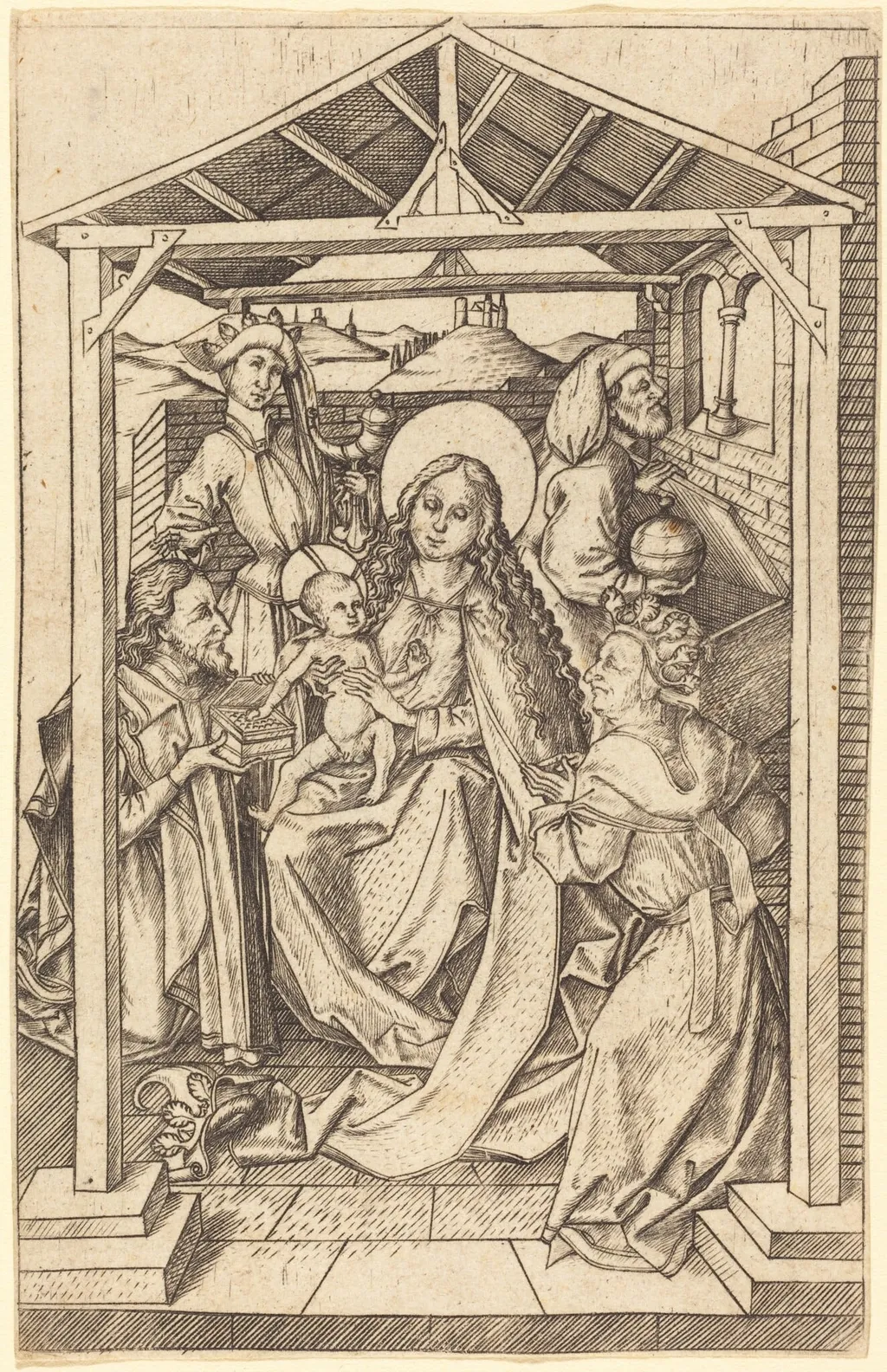
The Adoration of the Magi is an ink print by the Renaissance artist Master E.S.. It dates from 1462 and is held in the collection of the National Gallery of Art. Created around 1462, this engraving portrays the biblical episode of the Magi presenting gifts to the infant Jesus.
About this work
Overview
Created around 1462, this engraving portrays the biblical episode of the Magi presenting gifts to the infant Jesus. The composition is set within a modest timber structure with a sloping roof, surrounded by a small townscape rendered in fine detail. Figures are arranged around a central woman holding the child, their gestures and expressions conveying reverence and focus.
Subject & Meaning
The work illustrates the traditional Christian narrative of the Three Wise Men’s homage, emphasizing themes of devotion and the recognition of divine birth. The central placement of the mother and child underscores the intimate human aspect of the event, while the kneeling donor and surrounding onlookers reflect the communal acknowledgment of the newborn’s significance.
Technique & Style
Executed in copper engraving, the image relies on meticulous cross‑hatching of parallel lines to model light and shadow, giving volume to garments and faces despite the monochrome medium. The line work is crisp, with a strong linear quality characteristic of late Gothic printmaking, and the background architecture is rendered with precise, miniature detailing.
History & Provenance
Attributed to the anonymous German goldsmith known only by the monogram E.S., the print marks an early milestone in German old‑master print production. Recognized as the first major German artist to work extensively in engraving, the piece was widely reproduced and circulated, influencing subsequent generations of printmakers.
Context
The engraving emerges from the late Gothic period in Germany, a time when printmaking began to spread beyond manuscript illumination. Its religious subject aligns with contemporary devotional practices, and the work’s distribution reflects the growing market for portable, reproducible images that could reach a broader audience beyond elite patrons.
Artist & collection

Artist
Master E. S. (c. 1420 – c. 1468; previously known as the Master of 1466) is an unidentified German engraver, goldsmith, and printmaker of the late Gothic period. He was the first major German artist of old master prints…

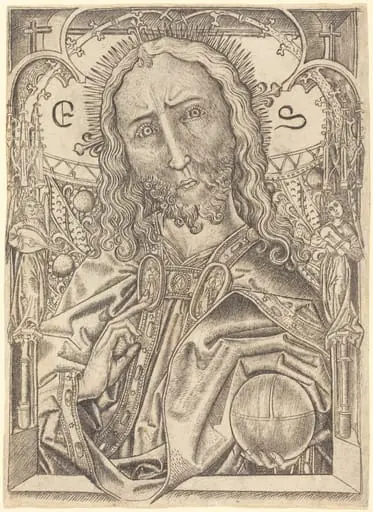
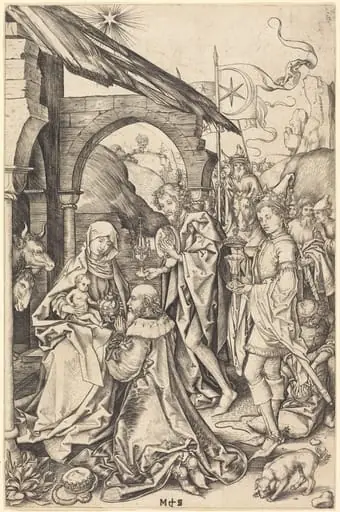 The Adoration of the Magi
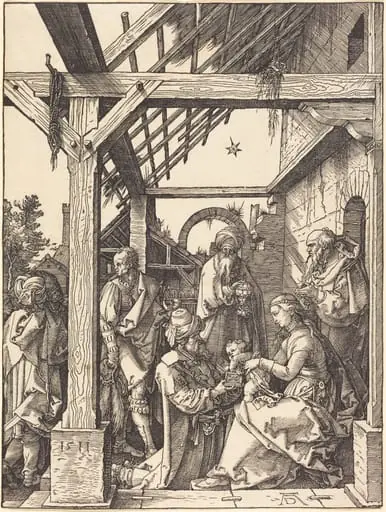 The Adoration of the Magi
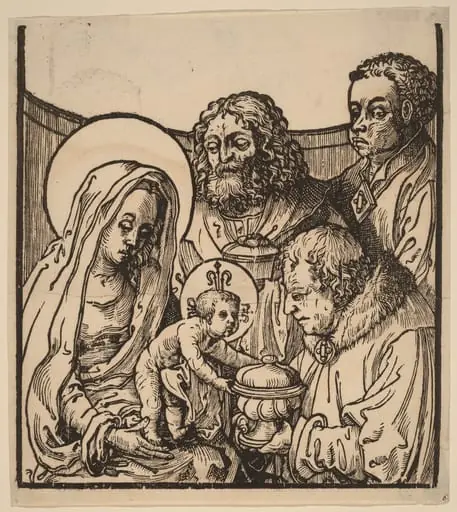 The Adoration of the Magi
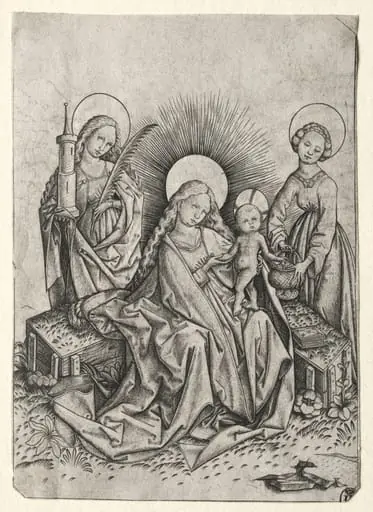 Madonna and Child in a Garden between St. Barbara and st. Dorothy
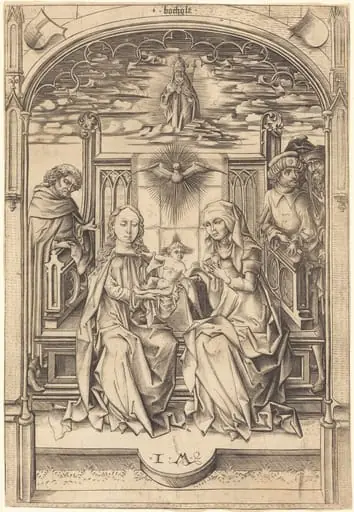 The Holy Family
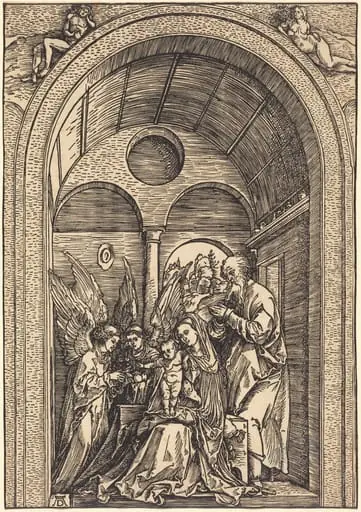 The Holy Family with Two Angels in a Vaulted Hall
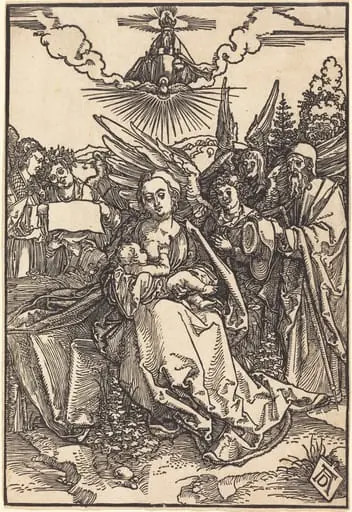 The Holy Family with Five Angels
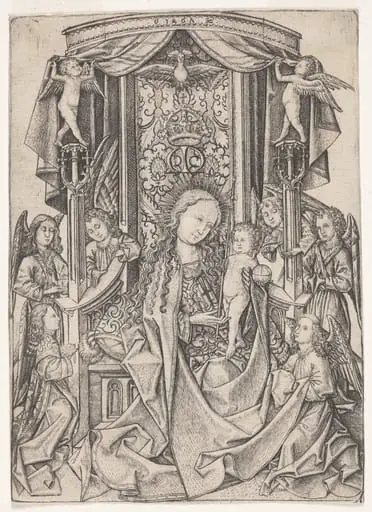 Madonna Enthroned with Eight Angels
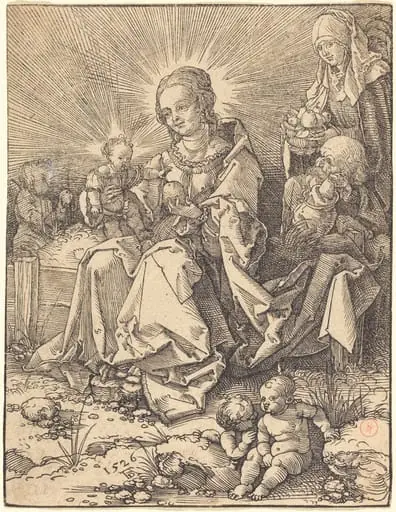 The Holy Family on a Grassy Bench
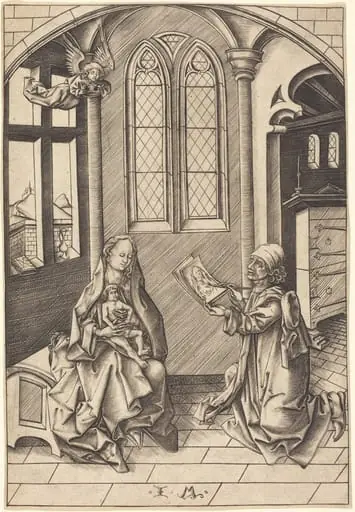 Saint Luke Drawing a Portrait of the Virgin
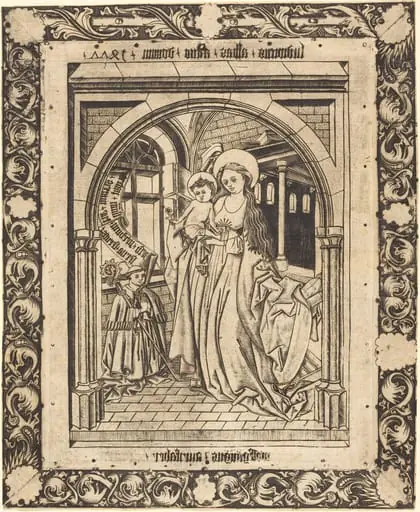 The Madonna and Child with the Abbot Ludwig von Churchwalden