Artwork
Saint Mark
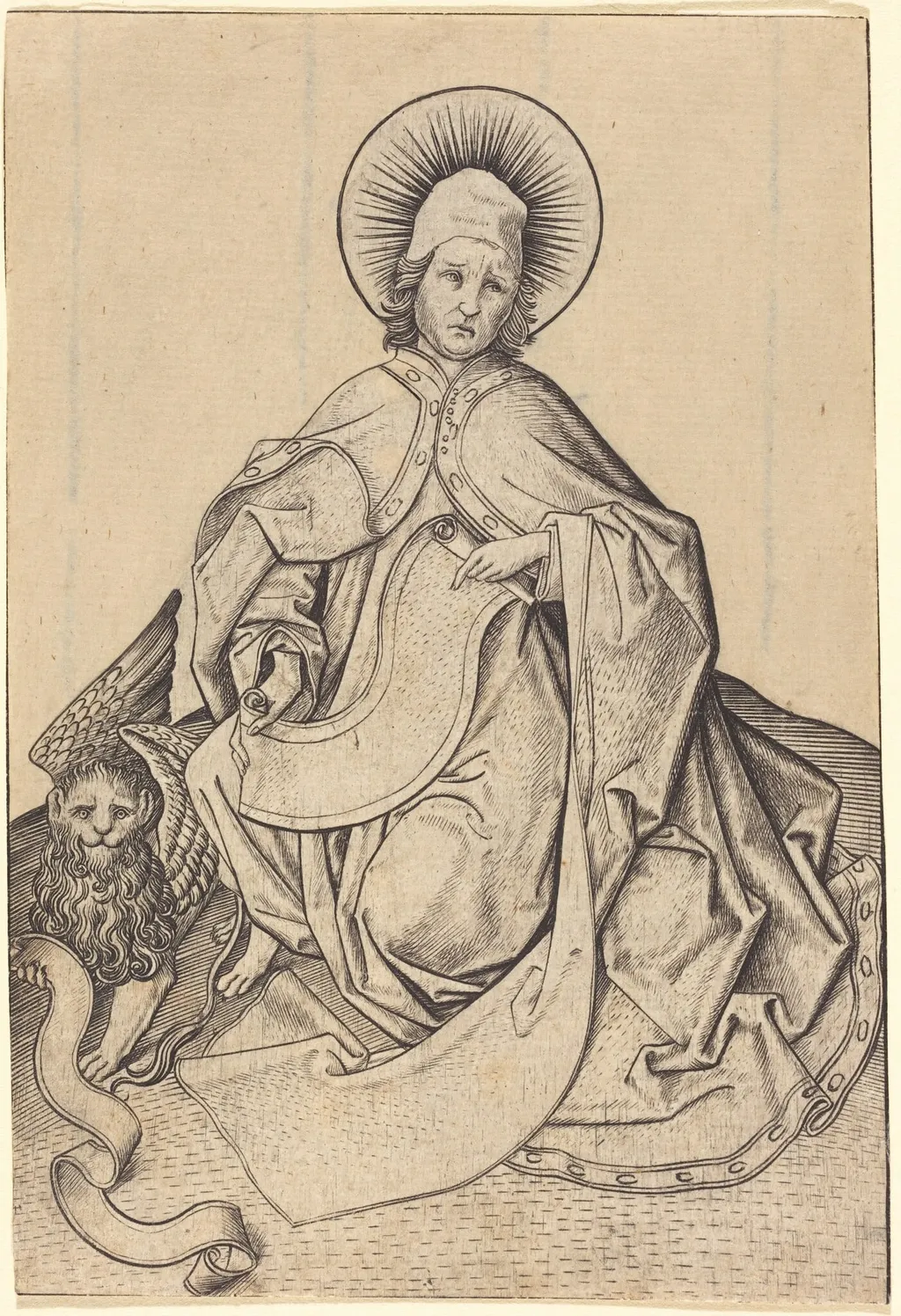
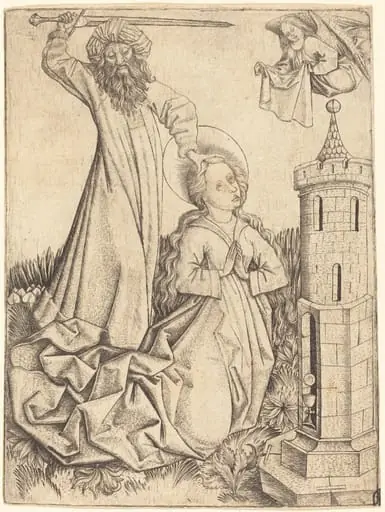
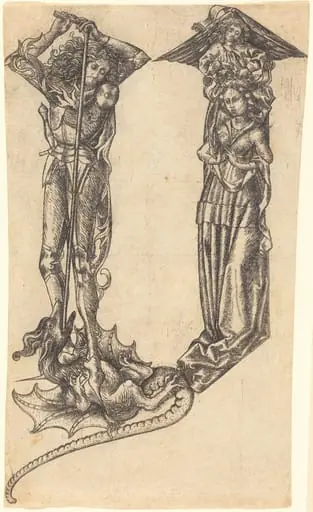
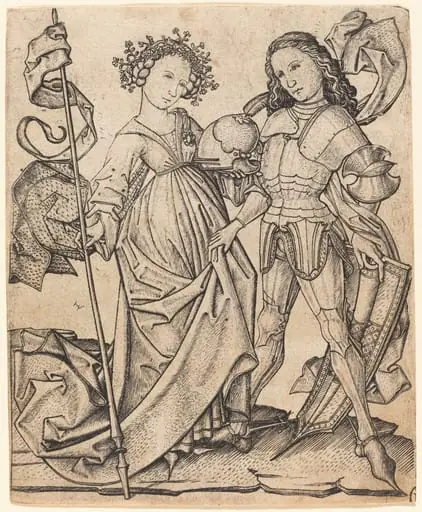
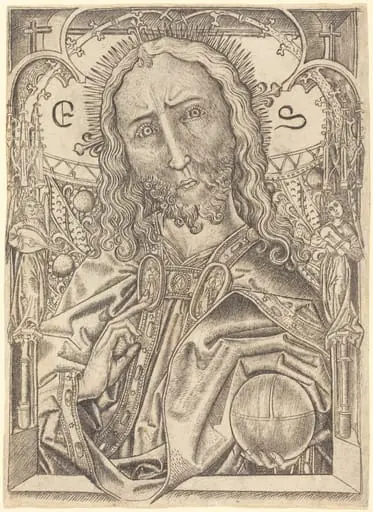
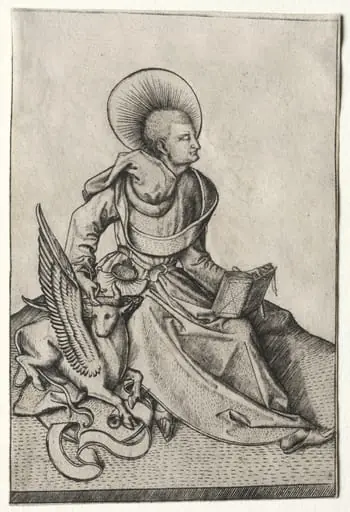
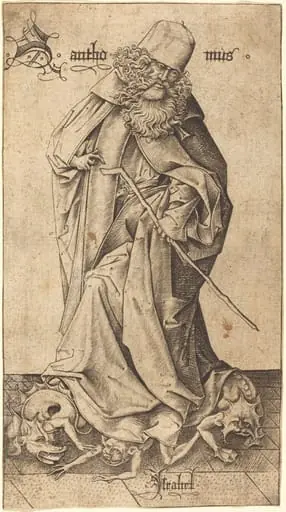
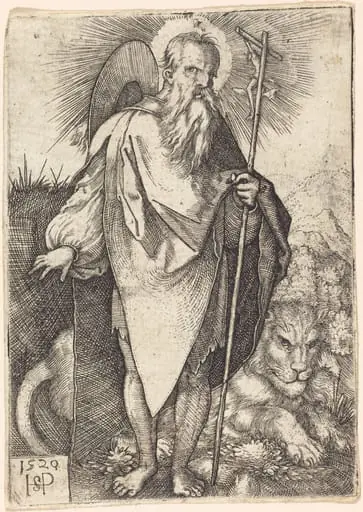
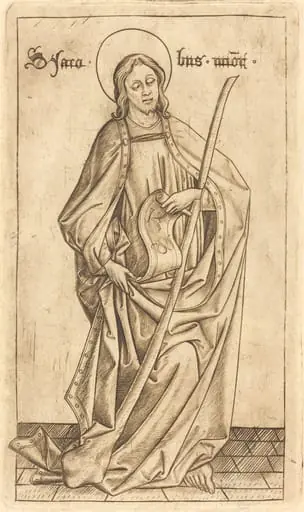
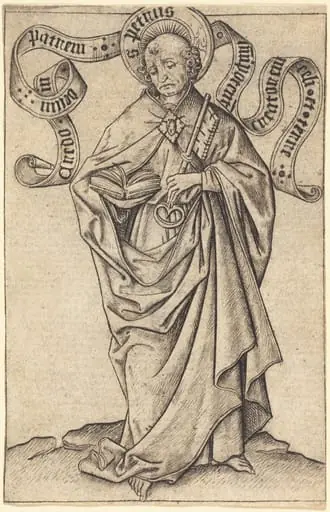
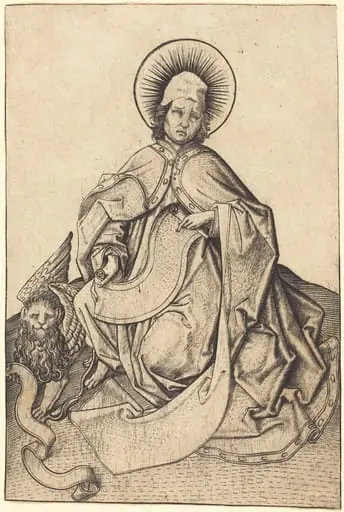
Saint Mark is an ink print by the Renaissance artist Master E.S.. It dates from 1462 and is held in the collection of the National Gallery of Art.
About this work
Overview
Saint Mark is an engraving created by Master E. S., an unidentified German engraver and goldsmith, around 1462. It represents a religious figure, Saint Mark, in a detailed and expressive late Gothic style.
Subject & Meaning
The engraving depicts Saint Mark, identifiable by the accompanying winged lion, his traditional attribute. The serene composition conveys reverence, with the saint shown in contemplative pose, emphasizing spiritual calm.
Technique & Style
Master E. S. employed fine lines to achieve depth and texture, notably in the folds of the saint's robe and the lion's fur. This meticulous technique was innovative for its time, showcasing the artist's skill in metal plate engraving.
History & Provenance
As the first major German old master printmaker, Master E. S. pioneered the inclusion of initials (E. S.) on prints. His works were widely copied, indicating significant influence on 15th-century printmaking.
Context
Created in the late Gothic period, Saint Mark reflects the era's artistic values, emphasizing detailed realism and religious themes. The work's popularity among contemporaries highlights the growing demand for religious imagery in printed form.
Legacy
Saint Mark contributed to the establishment of printmaking as a respected medium in 15th-century Germany. Master E. S.'s techniques and style influenced subsequent generations of printmakers, leaving a lasting impact on the development of the craft.
Artist & collection

Artist
Master E. S. (c. 1420 – c. 1468; previously known as the Master of 1466) is an unidentified German engraver, goldsmith, and printmaker of the late Gothic period. He was the first major German artist of old master prints…