Artwork
The Visitation
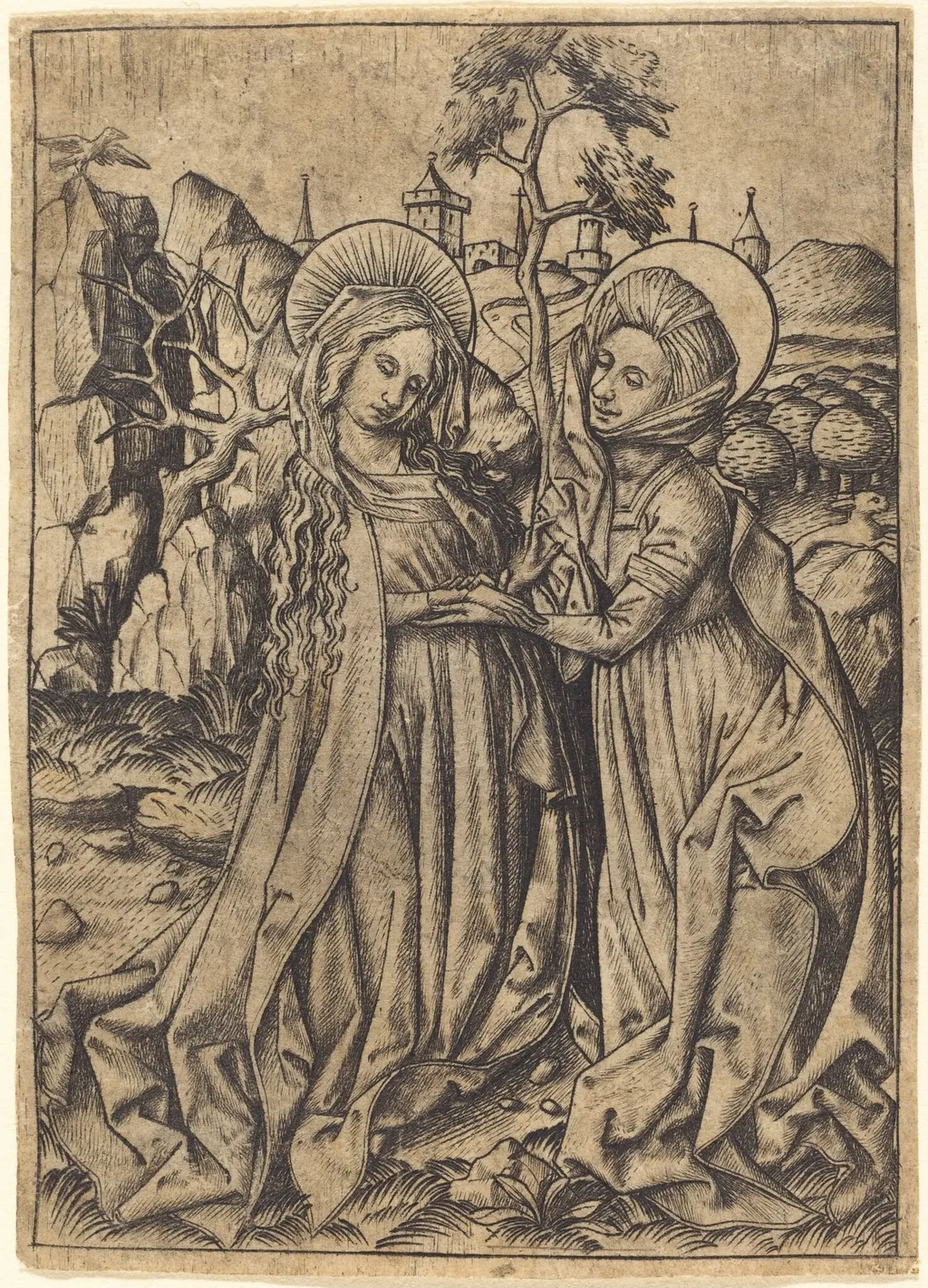
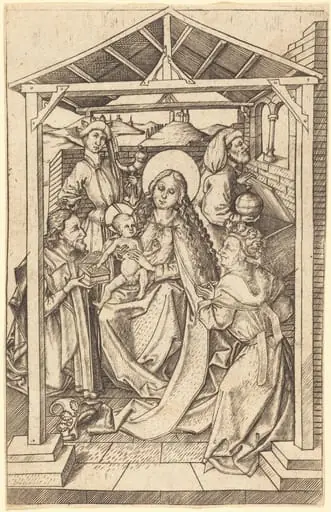
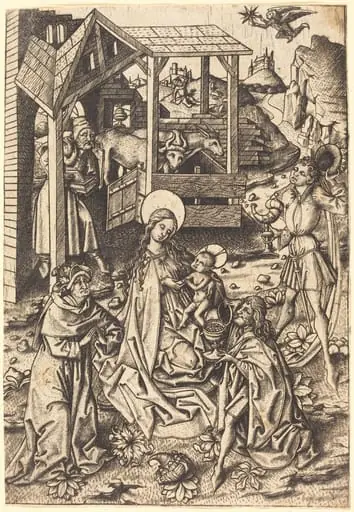
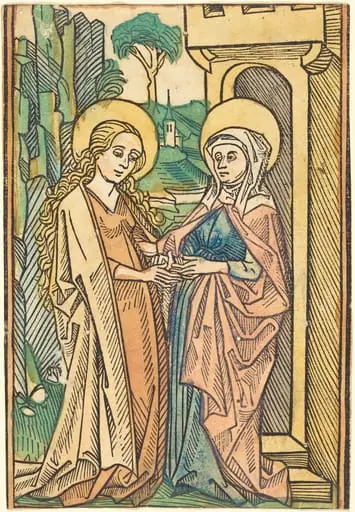
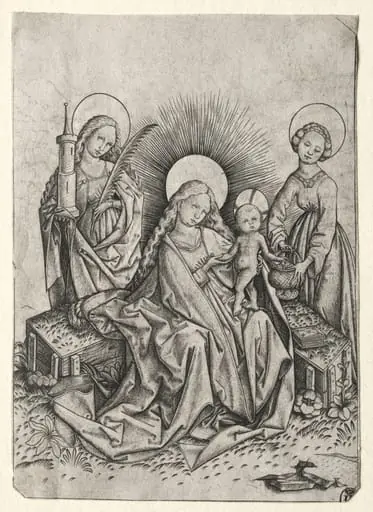
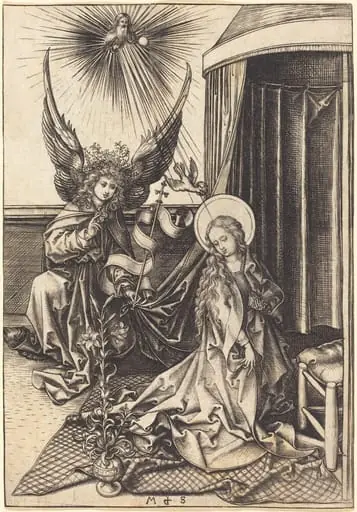
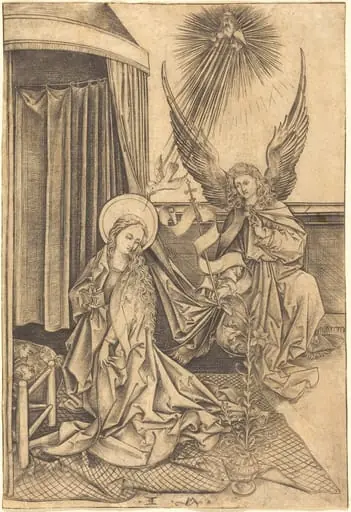
The Visitation is an ink print by the Renaissance artist Master E.S.. It dates from 1455 and is held in the collection of the National Gallery of Art.
About this work
Overview
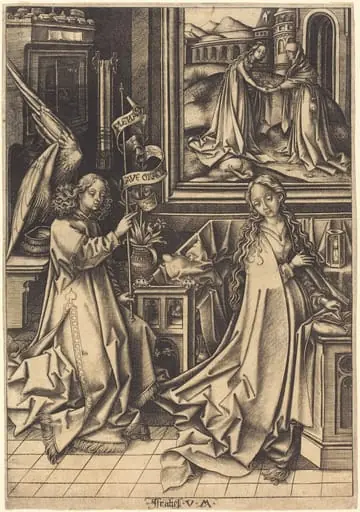
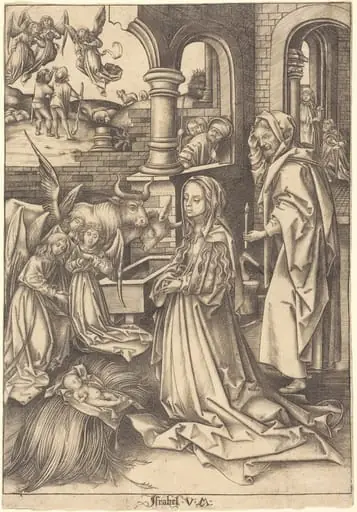
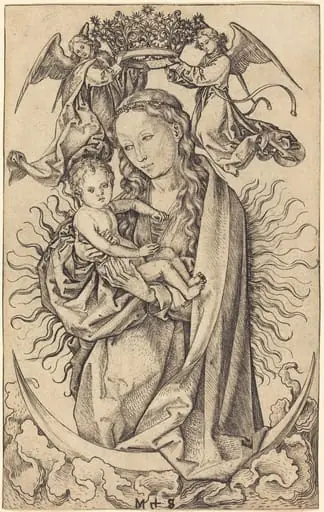
The Visitation is an engraving created by Master E. S., an anonymous German artist, around 1455. This work establishes Master E. S. as a pivotal figure in early German printmaking, notably for being among the first to sign his initials on his prints.
Subject & Meaning
The engraving illustrates the biblical Visitation scene, where the Virgin Mary visits her pregnant cousin Elizabeth. The composition features the two haloed women in a serene, rocky landscape, conveying a sense of calm and intimacy.
Technique & Style
Executed through the metal-engraving technique, the print relies on meticulously scratched lines to achieve depth and texture. Characteristic of Master E. S.'s style, dense parallel lines are used to render shadows and details, evident in the women’s robes and the background landscape.
History & Provenance
Created circa 1455, The Visitation marks an early milestone in the development of old master prints in Germany. Despite the artist's significance, their identity remains unknown, referred to only by their initials 'E. S'.
Context
Emerging from the late Gothic period, this engraving reflects the era's artistic tendencies while also showcasing the burgeoning technique of printmaking, which would go on to influence widespread artistic dissemination.
Legacy
As the work of the first major German print artist to use signed initials, The Visitation sets a precedent for attribution practices in printmaking. It also highlights the medium's capability for detailed, expressive religious narratives.
Artist & collection

Artist
Master E. S. (c. 1420 – c. 1468; previously known as the Master of 1466) is an unidentified German engraver, goldsmith, and printmaker of the late Gothic period. He was the first major German artist of old master prints…