Artwork
Vulcan and the Cyclopes Forging Arrows
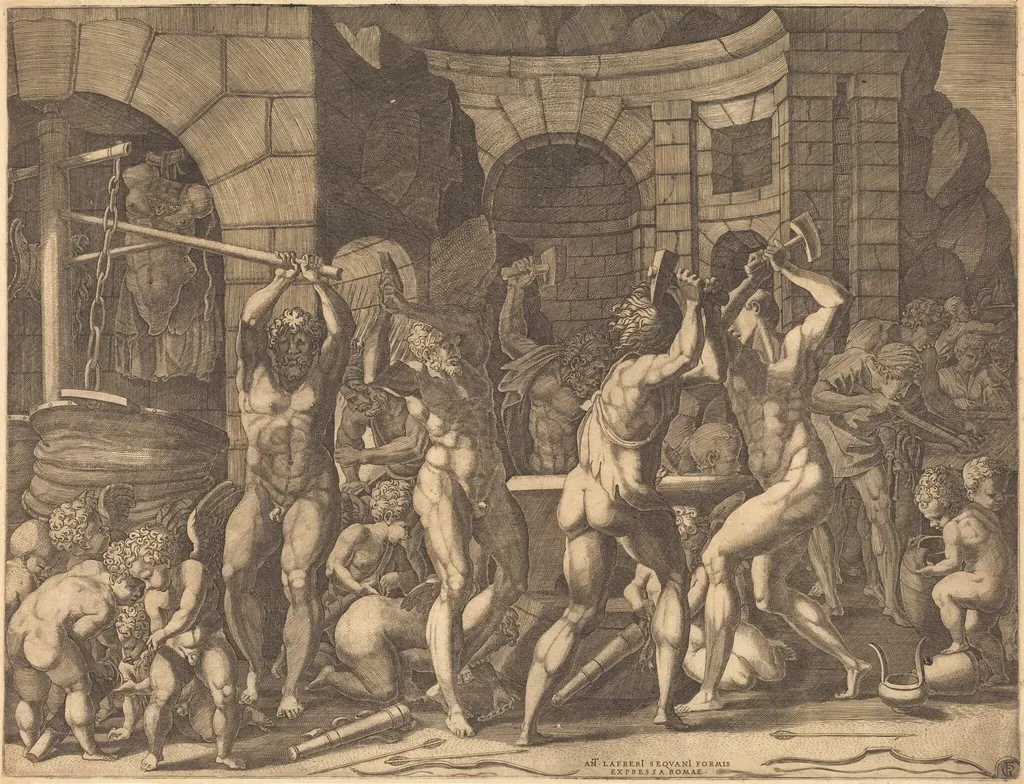
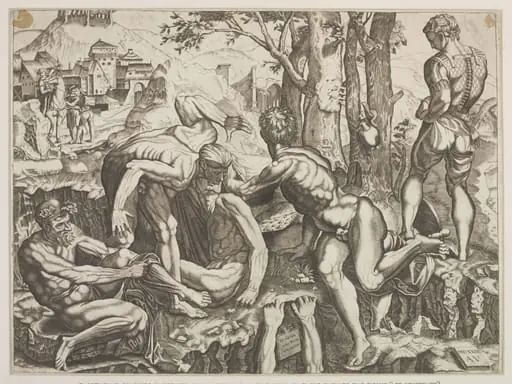
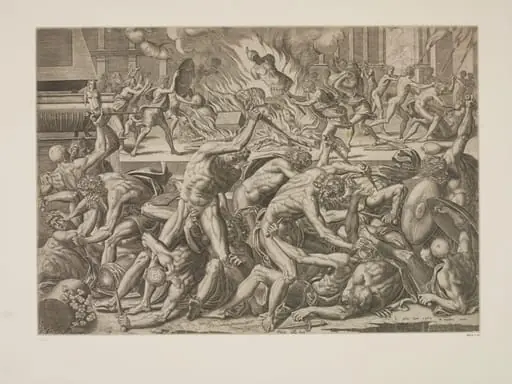
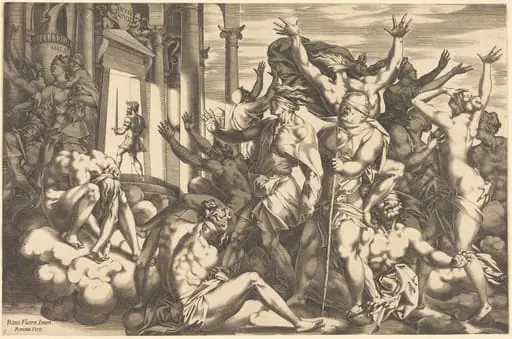
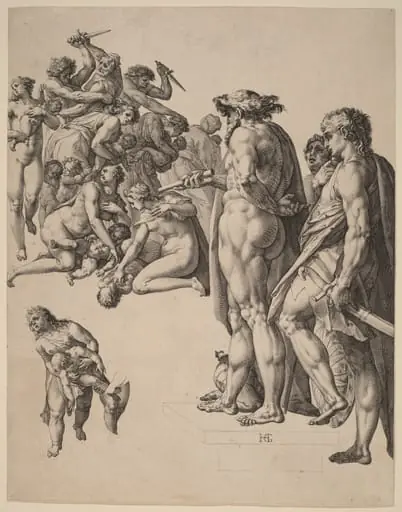
Vulcan and the Cyclopes Forging Arrows is an ink print by the Renaissance artist Master FG. It dates from 1526 and is held in the collection of the National Gallery of Art.
About this work
Overview
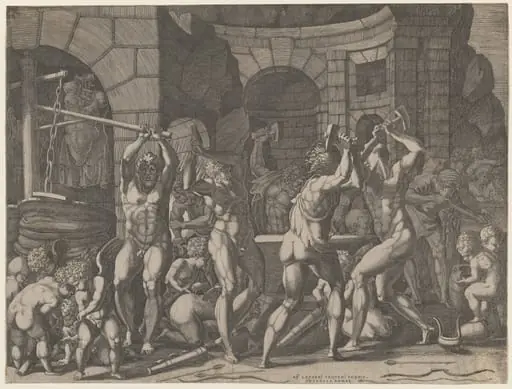
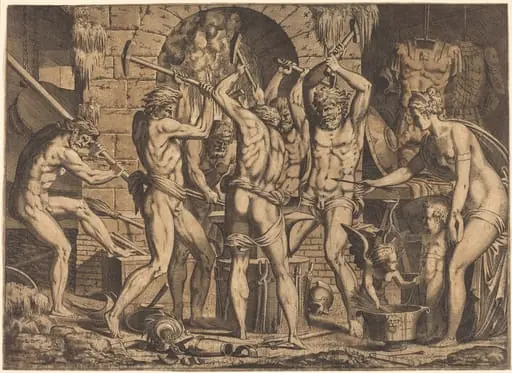
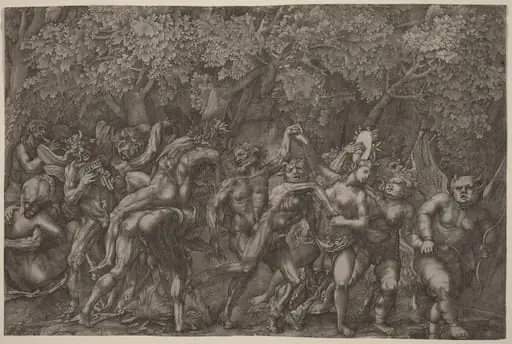
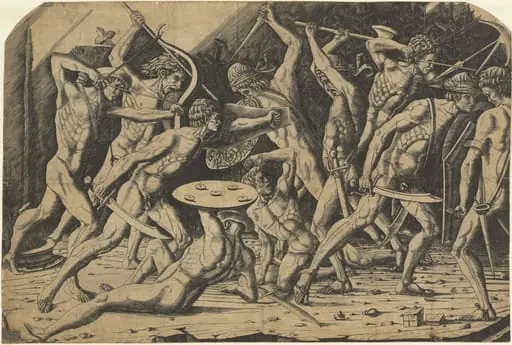
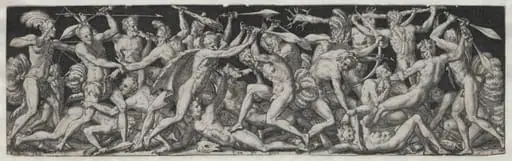
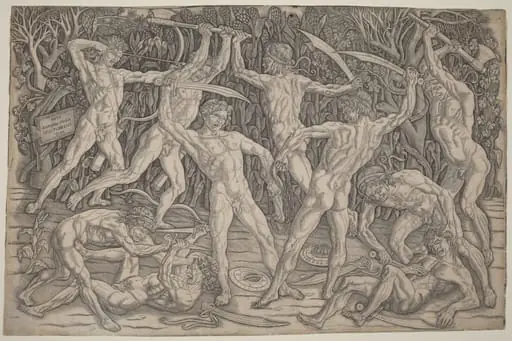
Created in 1526, this engraving by Master FG depicts a bustling industrial scene centered on the mythological forge of Vulcan. The composition captures multiple figures engaged in the laborious task of crafting weapons, rendered entirely in black ink through fine, controlled lines. The absence of color emphasizes tonal contrast and texture, characteristic of Renaissance printmaking techniques.
Subject & Meaning
The scene illustrates Vulcan, the Roman god of fire and metalwork, alongside his cyclopic assistants forging arrows.
The scene illustrates Vulcan, the Roman god of fire and metalwork, alongside his cyclopic assistants forging arrows. Though mythological, the setting resembles a real artisanal workshop, blending divine narrative with human labor. The focus on collective effort and physical exertion suggests a reverence for craftsmanship, possibly reflecting contemporary ideals of skilled labor in early 16th-century Europe.
Technique & Style
The artist employed fine, parallel hatching and cross-hatching to model form and depth, relying solely on line density to suggest shadow and volume. Tools, muscles, and rocky surfaces are defined through meticulous, repetitive strokes. The tight, crowded composition enhances the sense of motion and heat, while the lack of background detail focuses attention on the figures and their labor.
History & Provenance
The print is attributed to Master FG, an anonymous engraver active in the early 1500s, likely working in southern Germany or northern Italy. Few works by this hand survive, and this piece is among the most detailed. Its early 16th-century date places it within a period when engraved prints were widely circulated, serving both artistic and instructional purposes.
Context
During the Renaissance, mythological themes were frequently adapted to celebrate human skill and industry. This engraving aligns with a broader trend of depicting workshops and labor, influenced by growing interest in mechanics and metallurgy. The detailed rendering of tools and gestures reflects contemporary observations of real blacksmiths, merging classical myth with empirical observation.
Legacy
Though not widely known today, the engraving exemplifies the technical precision and narrative ambition of early printmakers. Its emphasis on texture and movement influenced later artists exploring industrial and mythological subjects. As a rare surviving work by Master FG, it remains a valuable document of Renaissance print culture and the visual representation of labor.
Artist & collection