Artwork
The Massacre of the Innocents
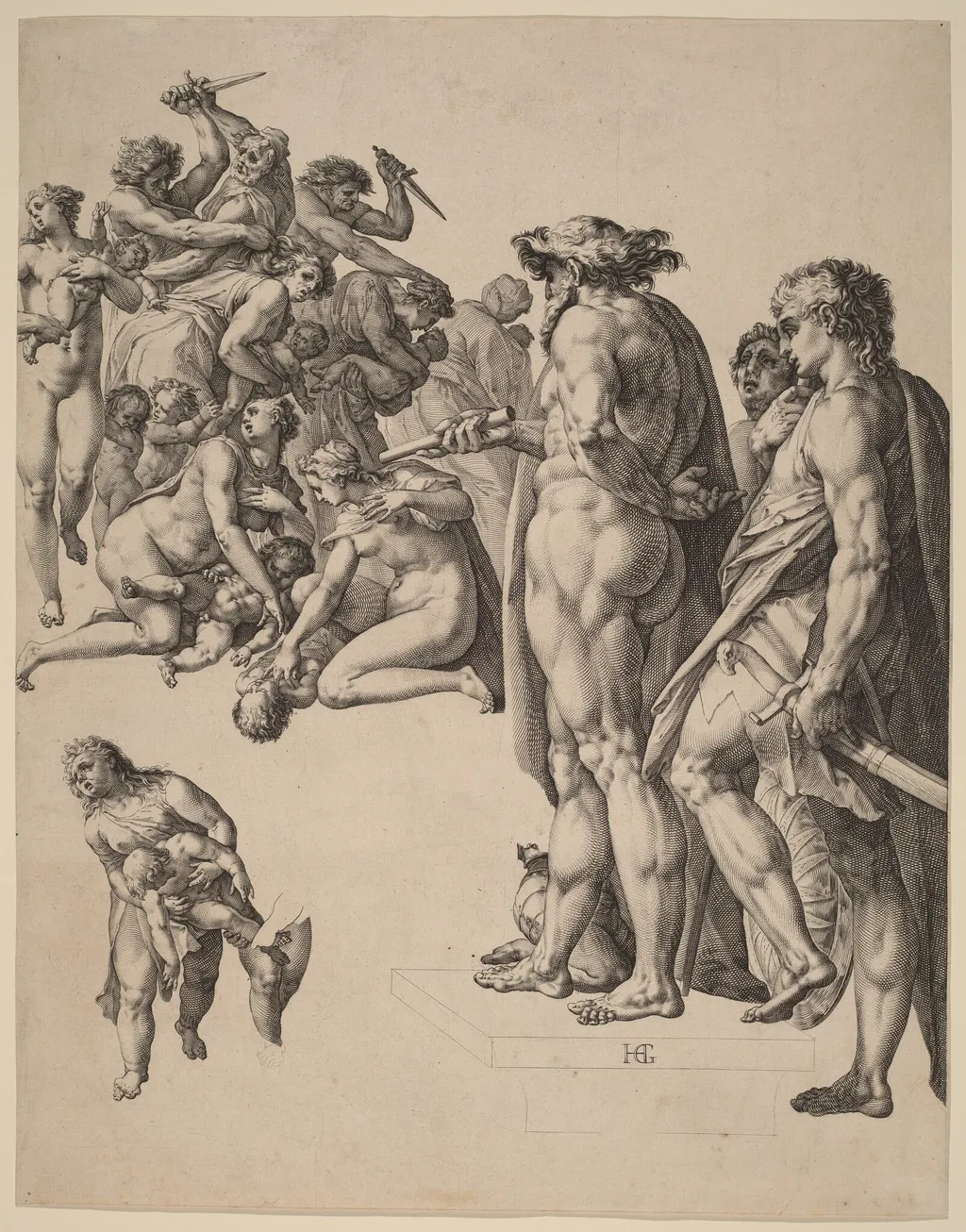
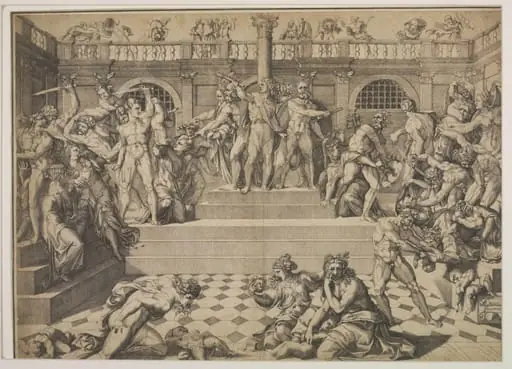
The Massacre of the Innocents is an ink print by the Renaissance artist Hendrik Goltzius. It dates from 1586 and is held in the collection of the National Gallery of Art.
About this work
Overview
Created around 1586, *The Massacre of the Innocents* is an engraving on laid paper by Hendrick Goltzius, a German-born artist active in the Dutch Republic.
Created around 1586, *The Massacre of the Innocents* is an engraving on laid paper by Hendrick Goltzius, a German-born artist active in the Dutch Republic. As one of the most accomplished printmakers of his era, Goltzius elevated engraving beyond reproduction to a vehicle for original, emotionally charged narratives. This work exemplifies his technical precision and command of the medium, establishing a benchmark for Northern Mannerist printmaking.
Subject & Meaning
The scene depicts the biblical slaughter of infants ordered by King Herod, rendered with visceral intensity. Central to the composition is a towering figure wielding a sword, surrounded by writhing bodies—mothers clutching children, limbs contorted in despair. The absence of overt religious symbolism shifts focus to human suffering, emphasizing brutality over divine narrative. Goltzius transforms the story into a universal meditation on violence and helplessness.
Technique & Style
Goltzius employed fine, deeply incised lines to model form and generate dramatic contrasts of light and shadow. His handling of the burin creates dense textures in fabric, flesh, and hair, lending the figures a sculptural presence. The composition’s tight clustering and exaggerated musculature reflect Northern Mannerist tendencies, while the controlled precision of the engraving reveals his mastery over the metal plate’s resistance and the ink’s tonal range.
History & Provenance
The print was produced during Goltzius’s mature period in Haarlem, when his reputation drew collectors across Europe. It circulated widely through printsellers, influencing contemporaries and later engravers. Though no early ownership records are documented, its survival in multiple institutional collections attests to its early and enduring circulation among connoisseurs of graphic art in the late 16th and early 17th centuries.
Context
In the decades following the Protestant Reformation, religious imagery in the Northern Netherlands shifted toward secular and moral themes. While biblical subjects remained, they were increasingly treated with psychological realism rather than doctrinal clarity. Goltzius’s work aligns with this trend, using classical forms and intense emotion to engage viewers on a human level, independent of ecclesiastical authority.
Legacy
Goltzius’s engraving set a new standard for narrative complexity and technical ambition in printmaking. His dynamic figures and intricate line work became models for subsequent generations of engravers, both in the Netherlands and beyond. Though later styles favored softer tones and looser handling, this work remained a reference point for those seeking to convey physical and emotional intensity through the engraved line.
Artist & collection
Artist
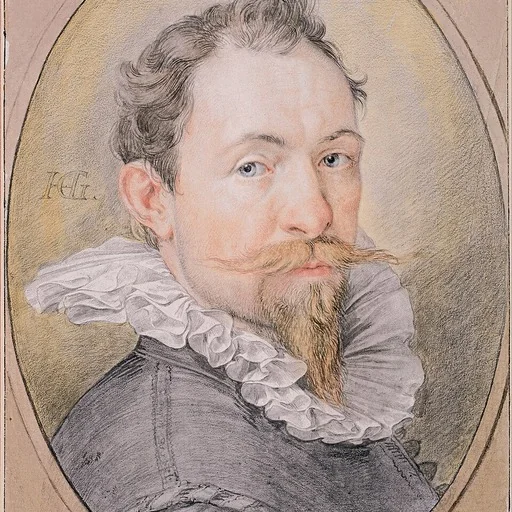
Hendrick Goltzius (German: , Dutch: ; né Goltz; January or February 1558 – 1 January 1617) was a German-born Dutch printmaker, draftsman, and painter.

 Murder of the Innocents
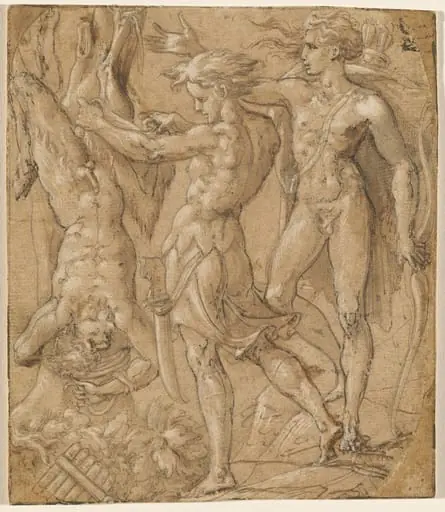 The Flaying of Marsyas
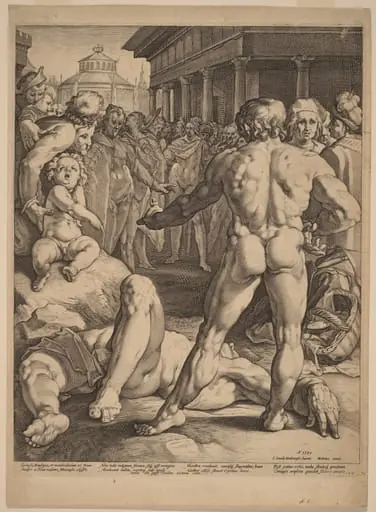 The Fight between Ulysses and Irus
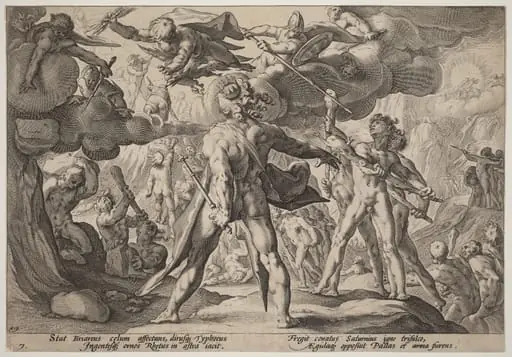 The Giants Climbing the Heavens
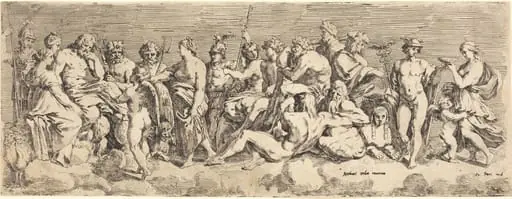 The Admission of Psyche to Olympia
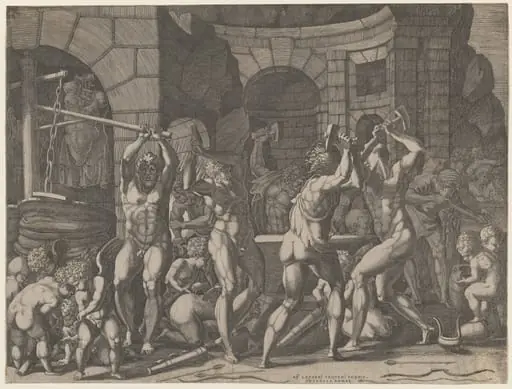 Vulcan and Cyclops Forging Cupid's Arrows
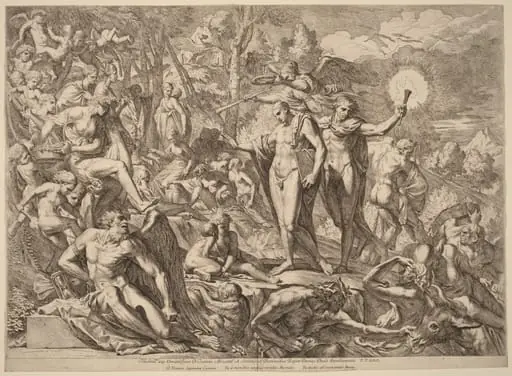 Parnassus
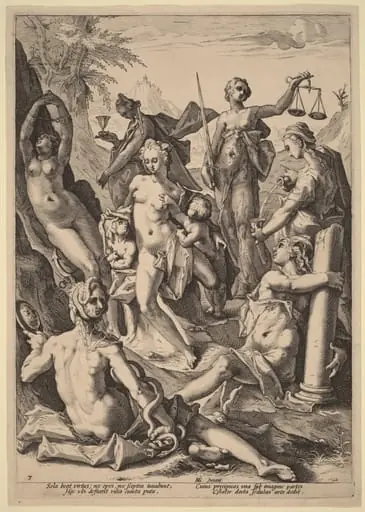 The Seven Virtues
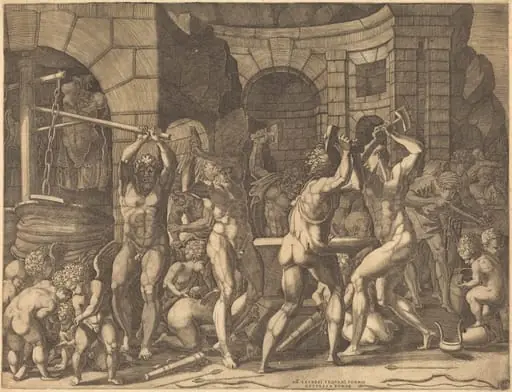 Vulcan and the Cyclopes Forging Arrows
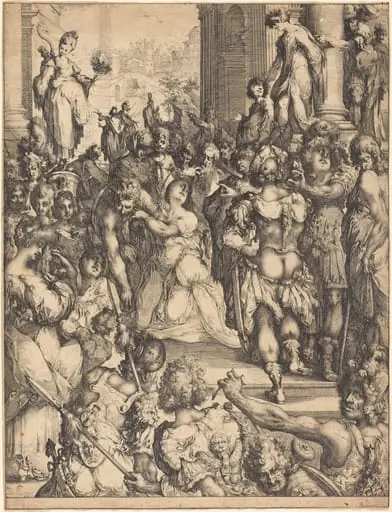 Martyrdom of Saint Lucy
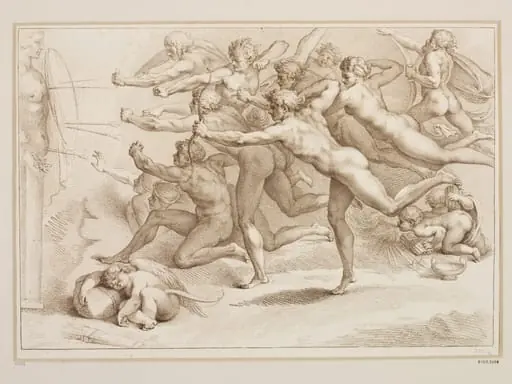 The Archers
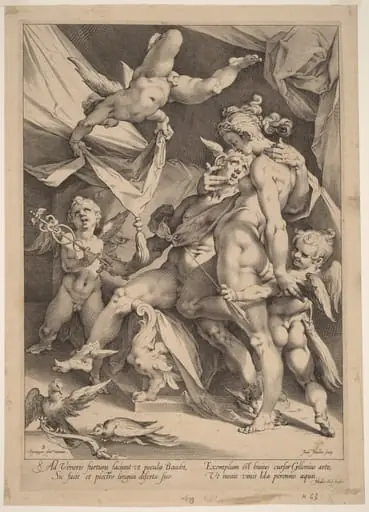 Venus and Mercury