Artwork
Jupiter Defeating the Giants
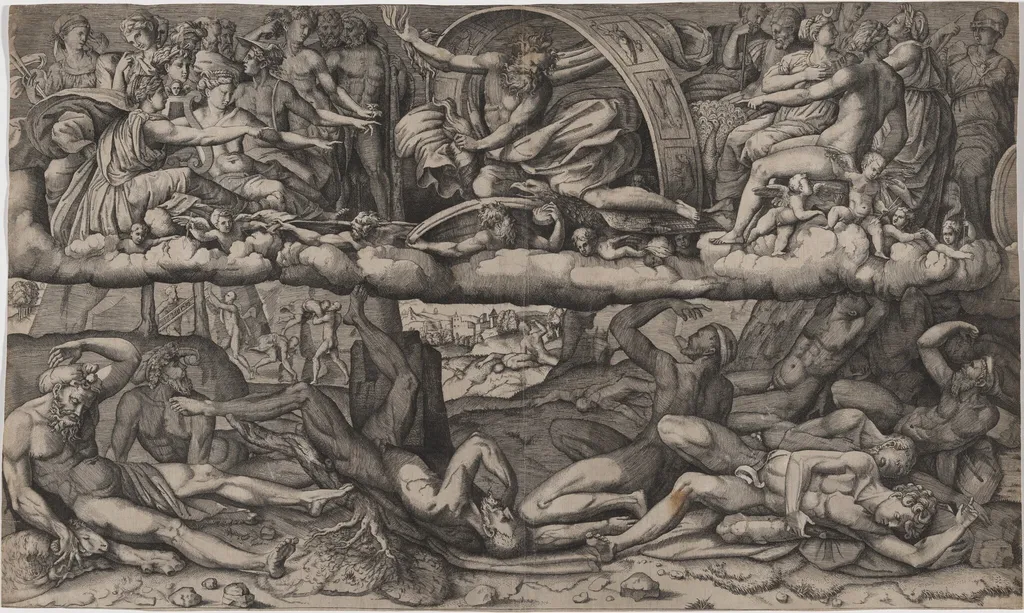
Jupiter Defeating the Giants is an ink print by the Renaissance artist Master FG. It dates from 1544 and is held in the collection of the National Gallery of Art.
About this work
Overview
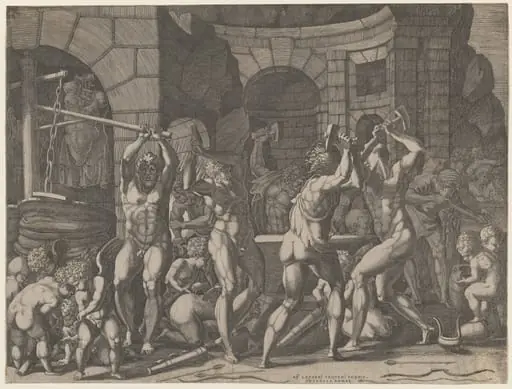
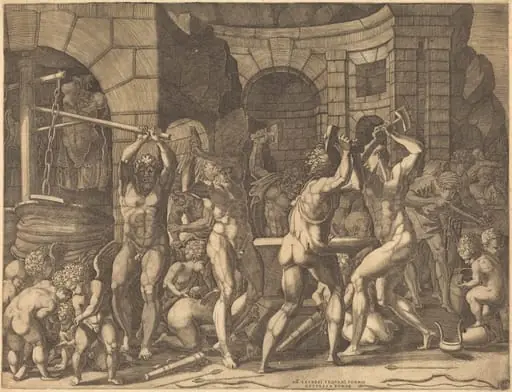
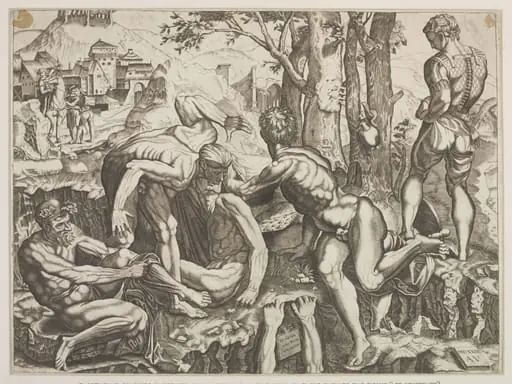
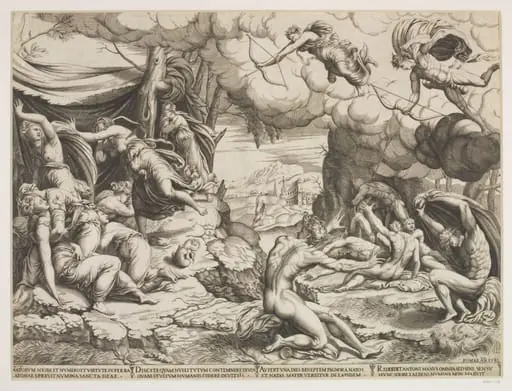
Created around 1544, this copperplate engraving on laid paper is attributed to the anonymous artist known as Master FG. The print is part of the collection of the National Gallery of Art in Washington, D.C. It depicts a tumultuous mythological battle in which the supreme deity subdues a group of colossal beings, rendered with intricate line work that fills the entire surface.
Subject & Meaning
The chaotic arrangement underscores themes of cosmic order overcoming rebellion.
The composition illustrates a scene from classical mythology in which the chief god confronts the Giants, a race of formidable beings who challenged divine authority. Central to the image is a massive figure crushed beneath a falling slab of rock, while surrounding figures—part human, part bestial—reach toward the heavens or clash with one another. The chaotic arrangement underscores themes of cosmic order overcoming rebellion.
Technique & Style
The engraving relies on dense cross‑hatching and layered incisions to generate a range of tonal values, from deep shadows to delicate textures. Sharp, intersecting lines create a sense of movement and depth, especially in the swirling clouds and the tangled bodies. Small details, such as a miniature town visible through a low window, are rendered with fine stippling, expanding the visual narrative beyond the immediate foreground.
History & Provenance
Attributed to the enigmatic Master FG, the work dates to the mid‑sixteenth century, a period when printmaking was increasingly used to disseminate mythological subjects. It entered the National Gallery of Art’s holdings through a 20th‑century acquisition, though earlier ownership records remain sparse, reflecting the limited documentation typical of prints from this era.
Context
The image reflects the Renaissance fascination with classical antiquity and the moral allegories derived from myth. By portraying the defeat of the Giants, the print aligns with contemporary themes of divine justice and the triumph of order over chaos, motifs frequently explored in the visual culture of the period.
Artist & collection