Artwork
The Annunciation
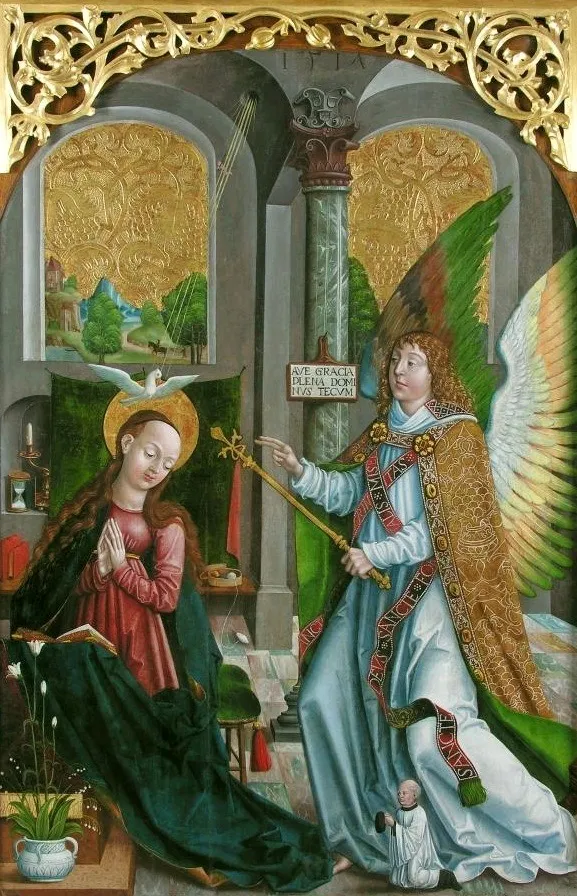
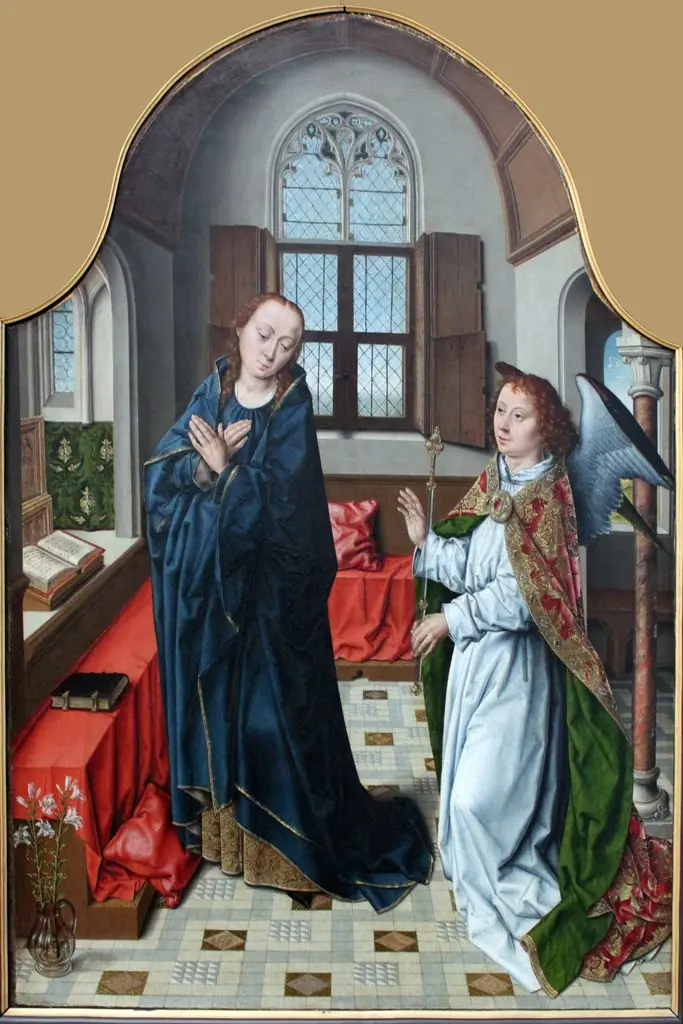
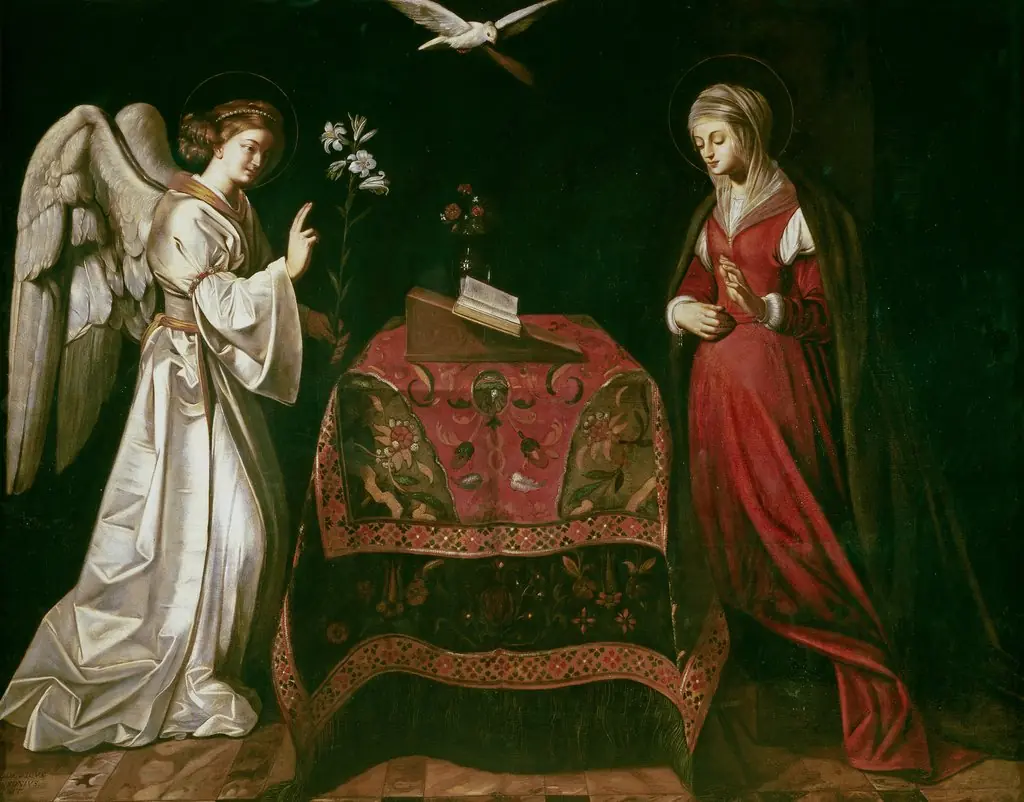
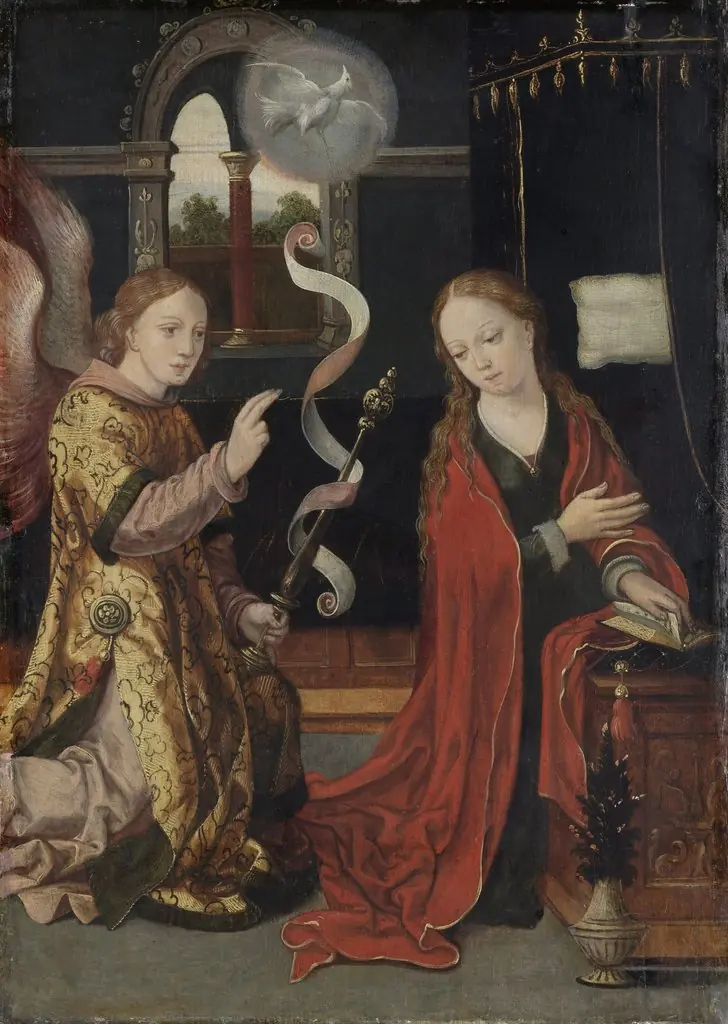
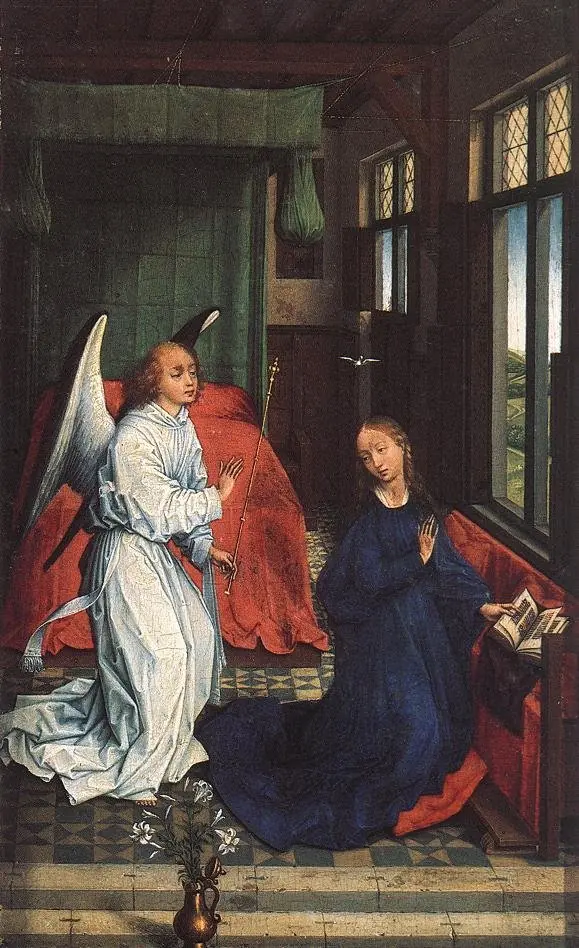
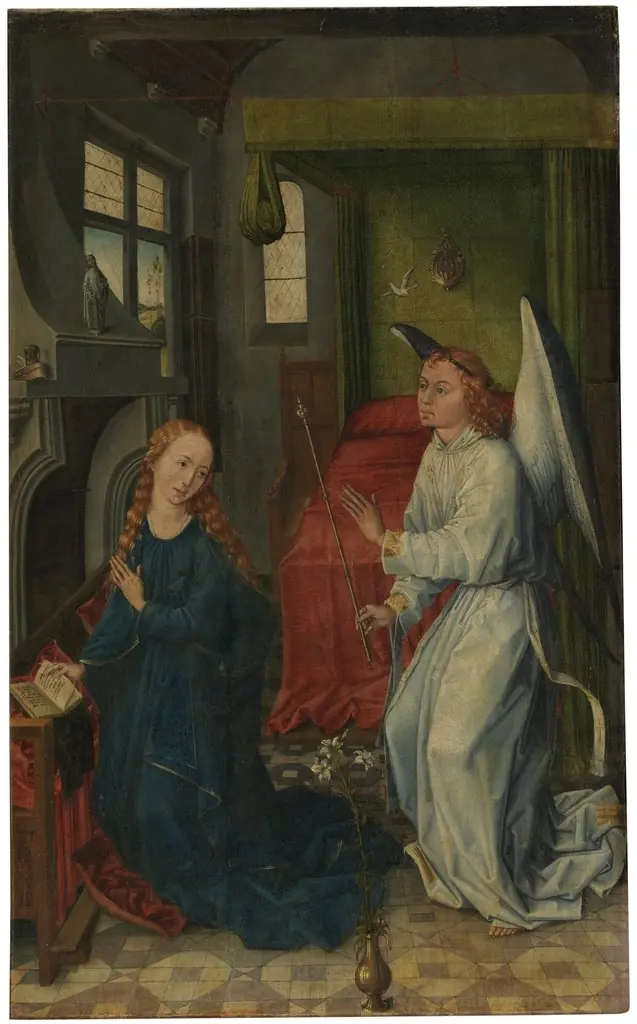
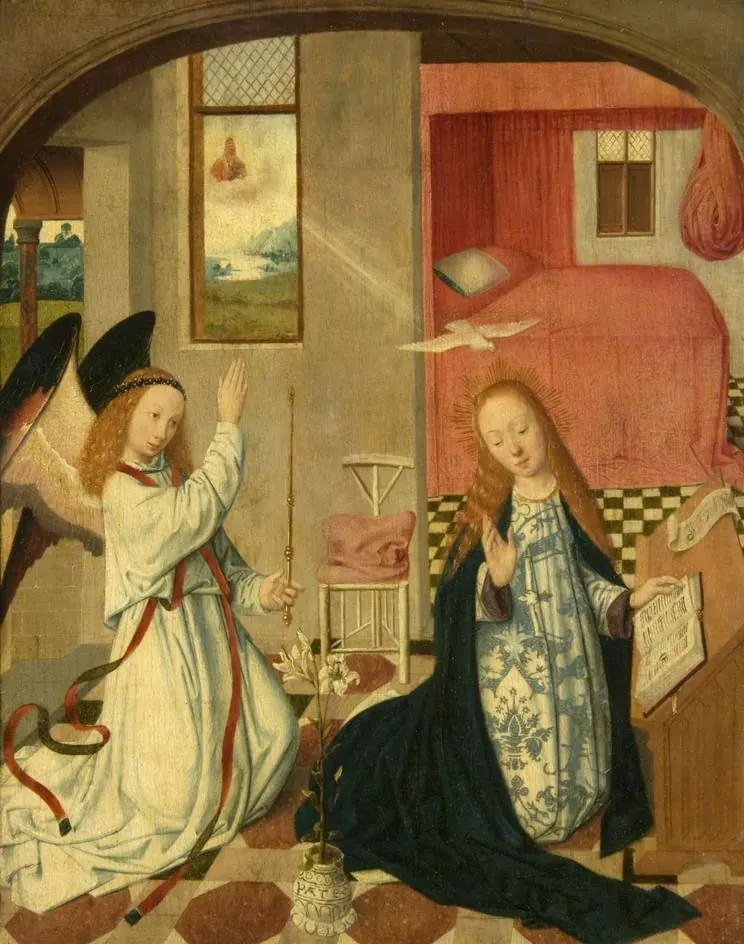
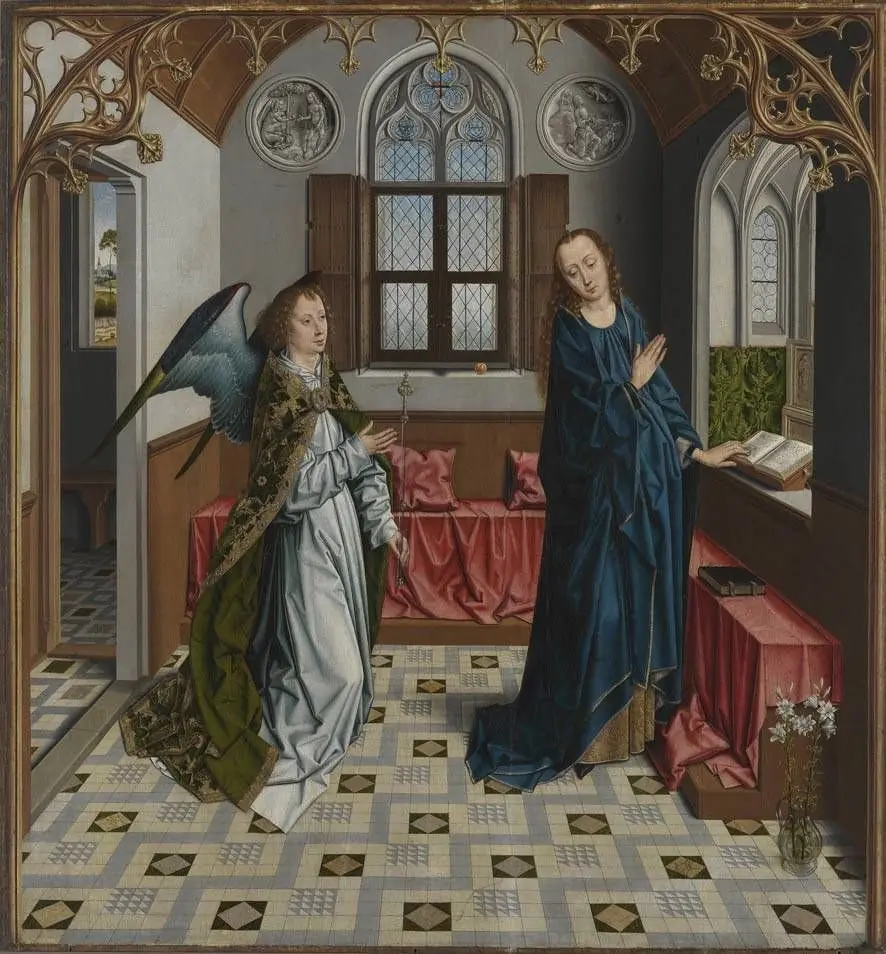
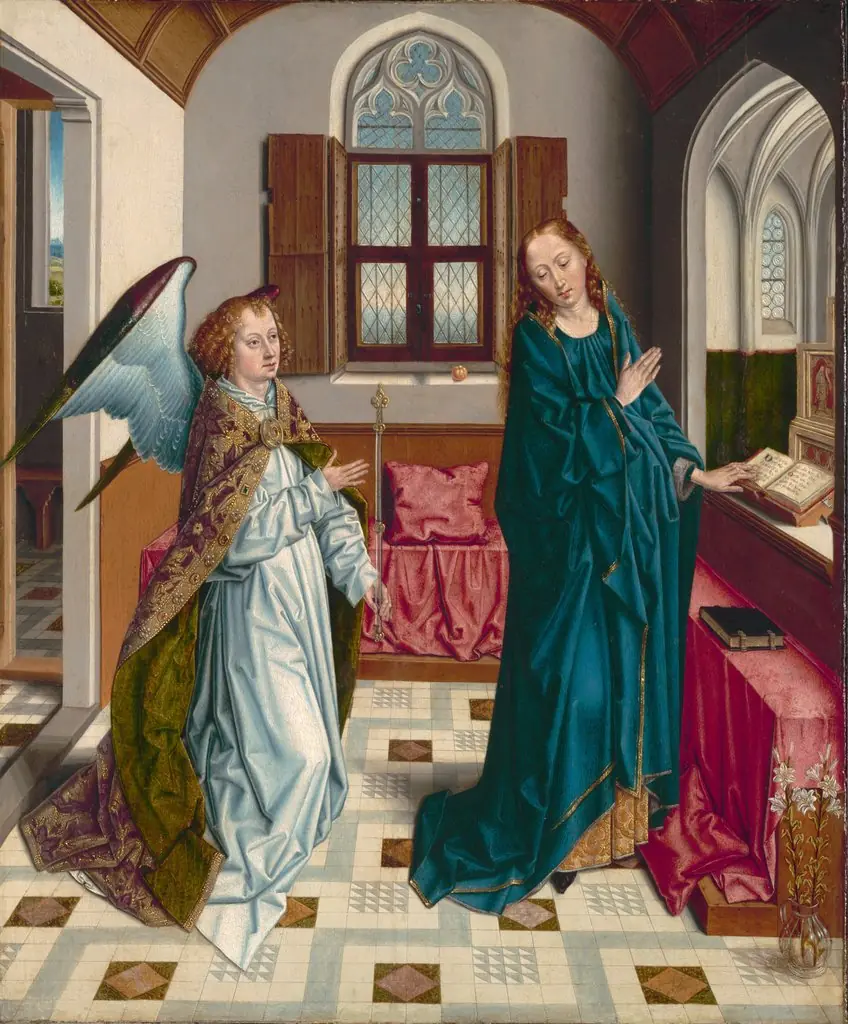
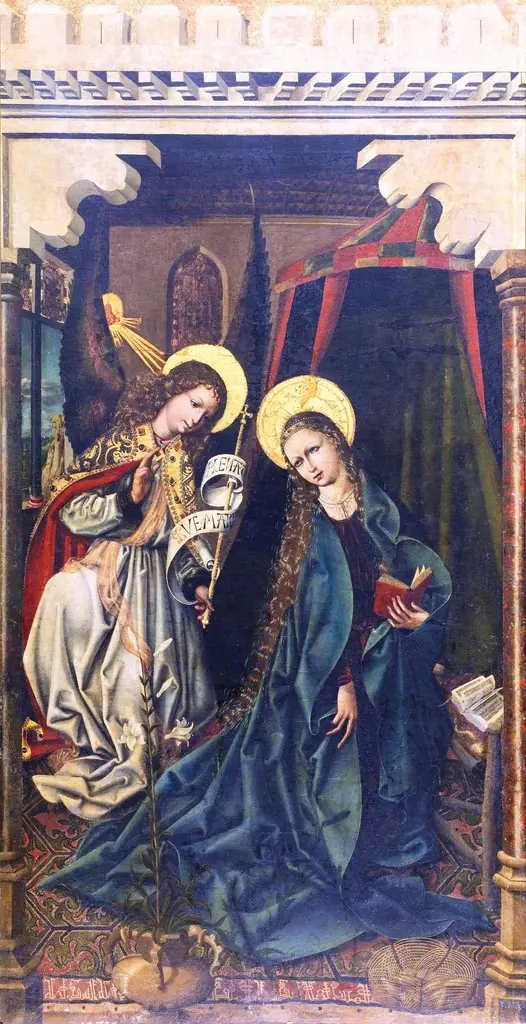
The Annunciation is a tempera painting by the Northern Renaissance artist Master Georgius. It dates from 1517 and is held in the collection of the National Museum in Kraków. Created in 1517, this tempera on panel work serves as the central image of a three‑part altarpiece.
About this work
Overview
Created in 1517, this tempera on panel work serves as the central image of a three‑part altarpiece. The composition presents the biblical moment of the Annunciation, with the Virgin Mary and the archangel Gabriel rendered in a confined interior space. The piece now belongs to the collection of the Czartoryski Museum in Kraków, where it is displayed as a distinct panel from its original ensemble.
Subject & Meaning
The scene depicts Mary dressed in a red garment beneath a green cloak, her hands clasped in prayer as she bows before the angel.
The scene depicts Mary dressed in a red garment beneath a green cloak, her hands clasped in prayer as she bows before the angel. Gabriel, robed in white with a gold mantle, extends a staff and points to a small Latin inscription reading “Ave Gracia.” The priest who commissioned the work, Jakub Monopedes, is shown kneeling at Gabriel’s feet, linking the devotional act to the forthcoming Passion through a fragment of a Good Friday funeral prayer embroidered on the angel’s stole.
Technique & Style
Executed in tempera, the painting achieves fine detail through layered pigment and careful brushwork. The artist rendered the folds of Mary’s cloak and the intricate feathering of Gabriel’s wings with a high degree of realism, while the marble column and arched windows provide a restrained architectural backdrop. The use of gold highlights on the halo and staff adds a luminous quality typical of early sixteenth‑century Central European devotional art.
History & Provenance
Signed with the initial “G,” referencing the Latin Georgius, the work was originally the central panel of a triptych made for St. Michael’s Chapel at Wawel Castle. The side panels survived separately and are now housed in the Holy Cross Church in Kraków. Over the centuries the central panel entered the Czartoryski Museum’s holdings, where it remains part of the museum’s medieval and Renaissance collection.
Context
The altarpiece was commissioned by Jakub Monopedes, a priest whose inclusion in the scene underscores the personal piety and liturgical function of the work. By integrating a fragment of the Good Friday prayer on the angel’s stole, the painting anticipates Christ’s Passion, linking the moment of the Incarnation to the future suffering central to Christian theology. This theological layering reflects the devotional practices of early sixteenth‑century Poland.
Artist & collection
Artist
Master Jerzy, Jerzy, Georgius or Jurek Almanus was a guild painter of unknown origin, active in Kraków between 1501 and 1520.