Artwork
The Adoration of the Shepherds
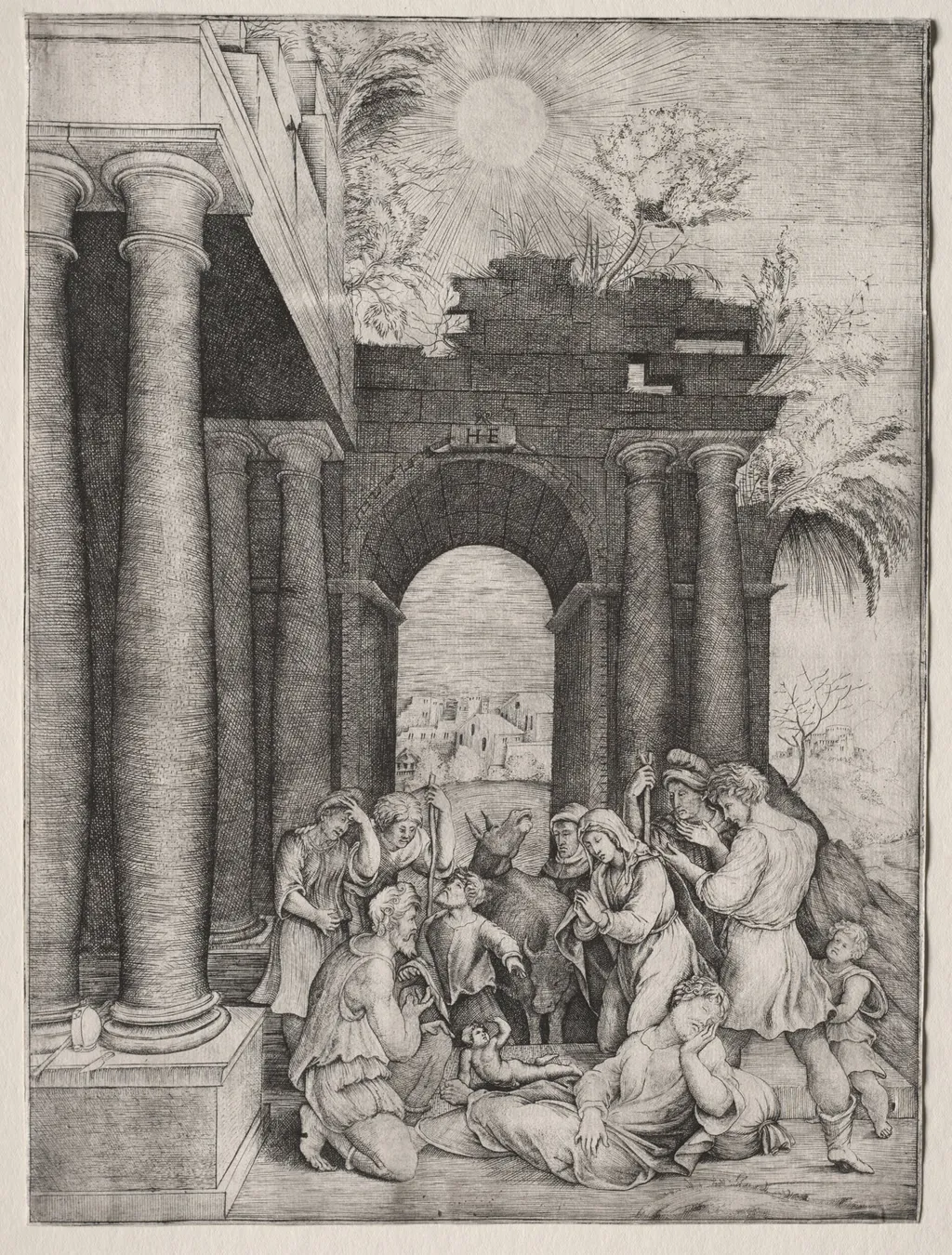
The Adoration of the Shepherds is a print by the Renaissance artist Master H. E.. It dates from 1504 and is held in the collection of the Cleveland Museum of Art. Created around 1504, this etching by Master H.
About this work
Overview
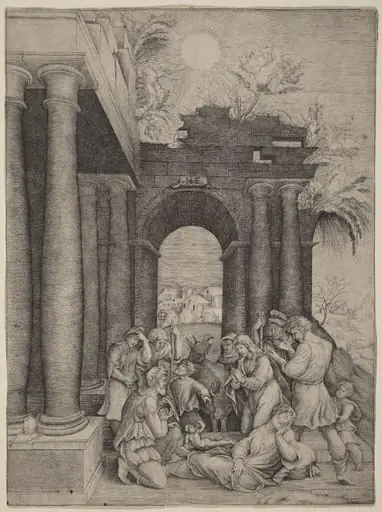
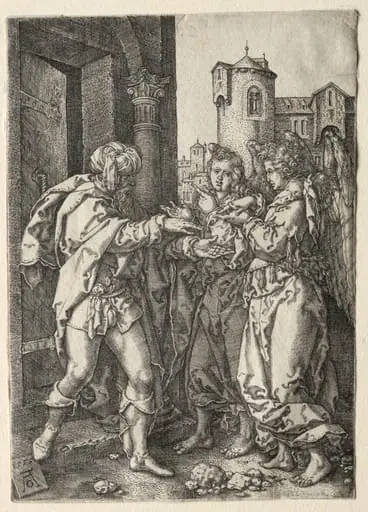
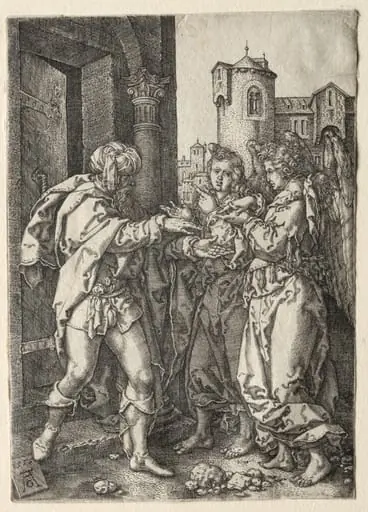
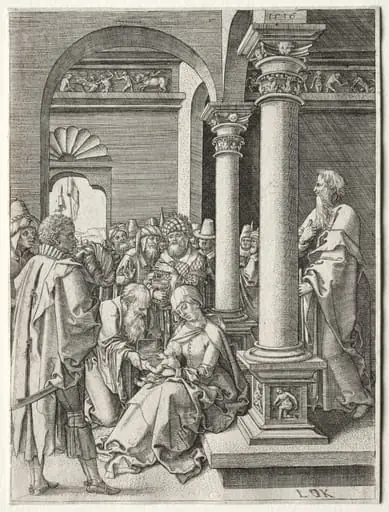
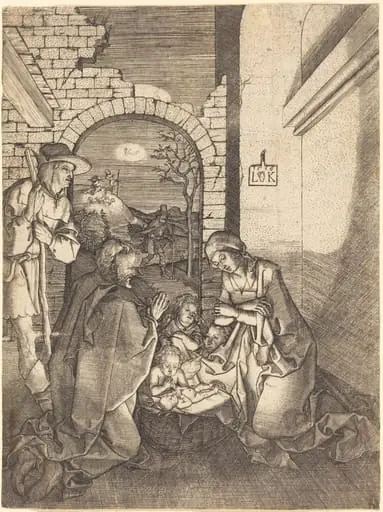
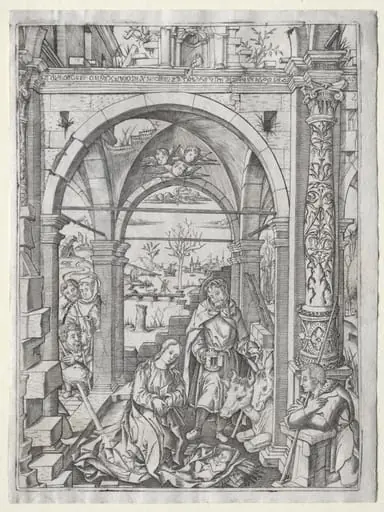
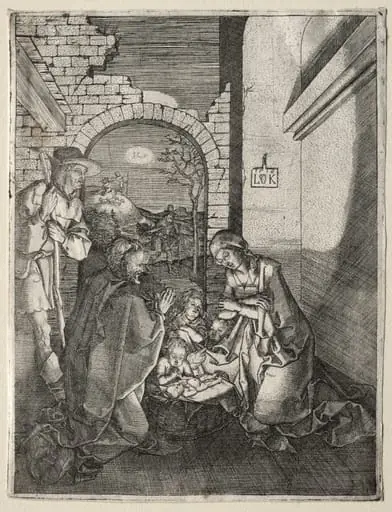
Created around 1504, this etching by Master H. E. depicts the biblical moment when shepherds arrive to witness the newborn Christ. Rendered in fine linear detail, the scene unfolds in a shallow courtyard framed by classical architecture. The composition directs attention toward the central figures through controlled contrasts of light and dark, a hallmark of early Renaissance printmaking.
Subject & Meaning
The scene portrays shepherds responding to the announcement of Christ’s birth, as described in the Gospel of Luke. Figures kneel, reach, or gaze with varied expressions—some in awe, others in quiet concern—emphasizing the human dimension of the divine event. The infant, held by the Virgin lying on the ground, anchors the narrative, reinforcing themes of humility and revelation.
Technique & Style
The artist employed etching to achieve sharp, precise lines and subtle tonal gradations. A strong directional light source casts deep shadows, isolating the central group and enhancing emotional intensity. This use of chiaroscuro, though more commonly associated with painting, was adapted here to create depth and focus within the constraints of monochrome printmaking.
History & Provenance
The print entered the collection of The Cleveland Museum of Art through documented acquisitions in the 20th century. Its attribution to Master H. E.—a pseudonym for an unidentified Northern Renaissance artist—reflects scholarly consensus based on stylistic comparison with other works of the period. No earlier provenance records are widely established.
Context
Produced during the early 16th century, this print reflects the growing interest in religious subjects among Northern European printmakers. Artists like Master H. E. responded to devotional demand by translating monumental compositions into accessible formats. The inclusion of classical architectural elements signals the era’s fusion of Christian themes with humanist aesthetics.
Legacy
Though the artist’s identity remains obscure, this work exemplifies the technical sophistication of early Renaissance etching. Its composition influenced later printmakers who sought to convey spiritual narratives through dramatic lighting and intimate groupings. The print endures as a quiet but significant example of devotional imagery in printed form.
Artist & collection