Artwork
The Nativity
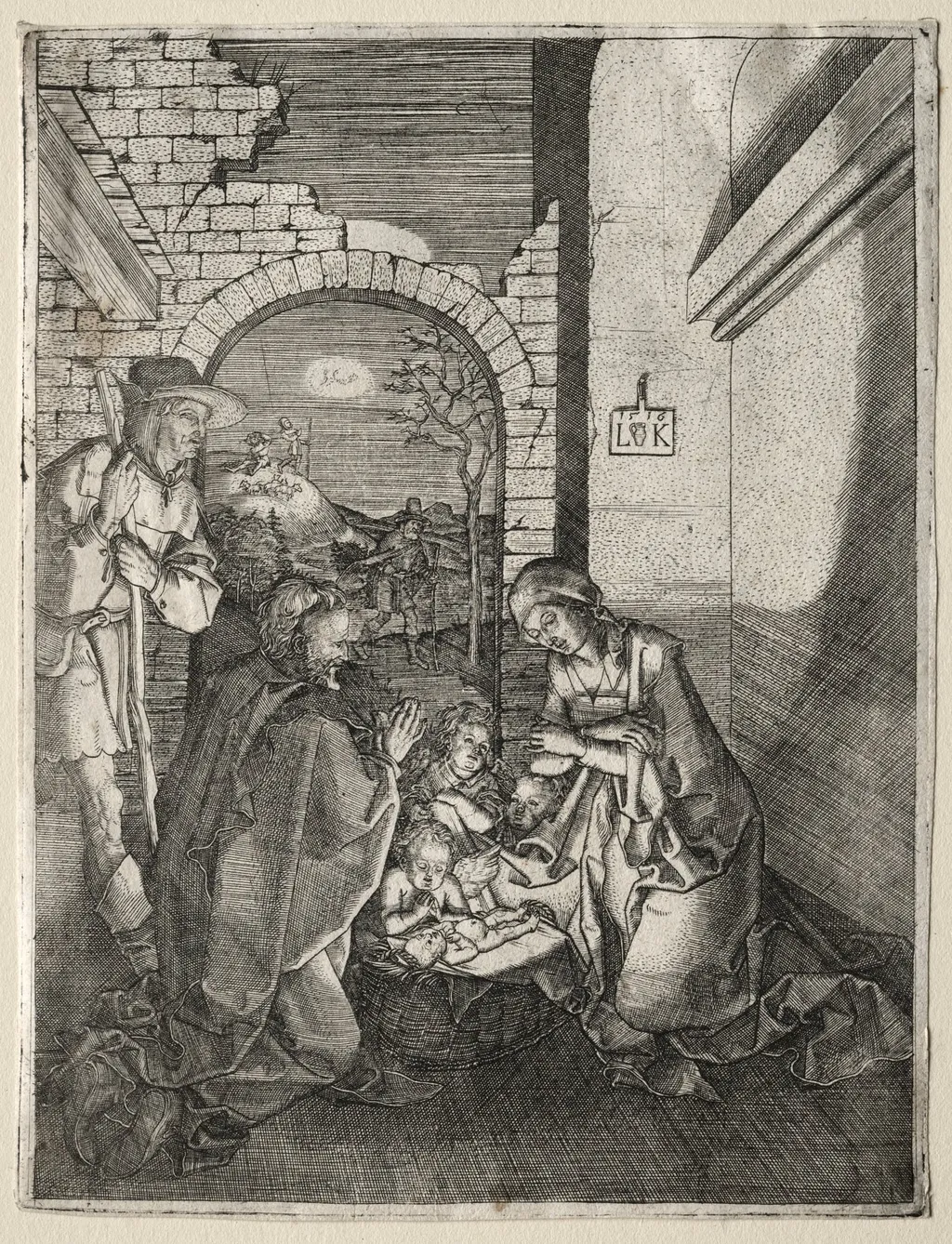
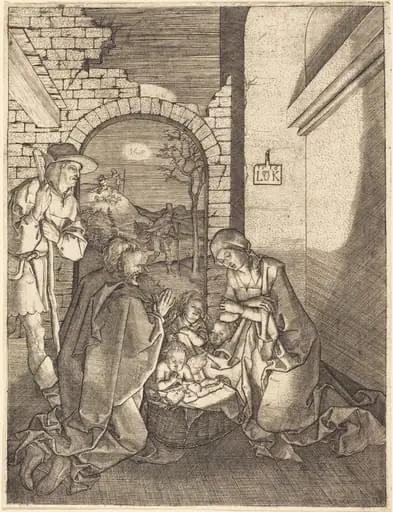
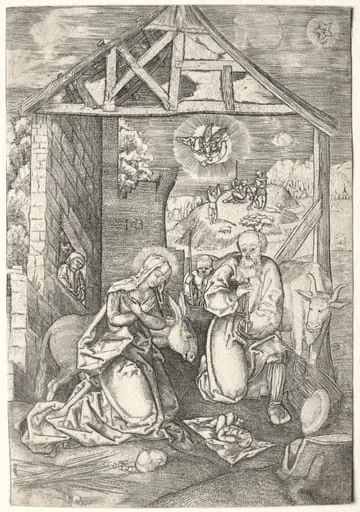
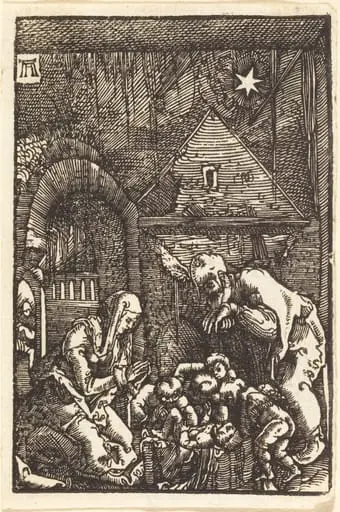
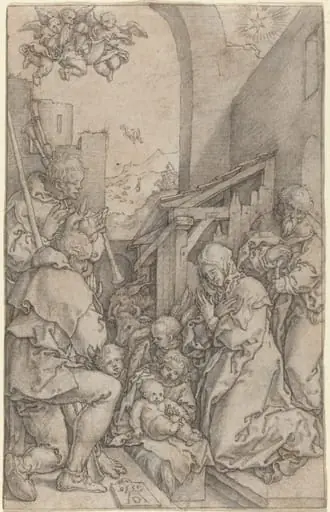
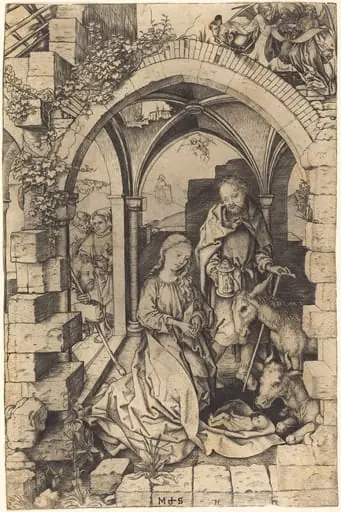
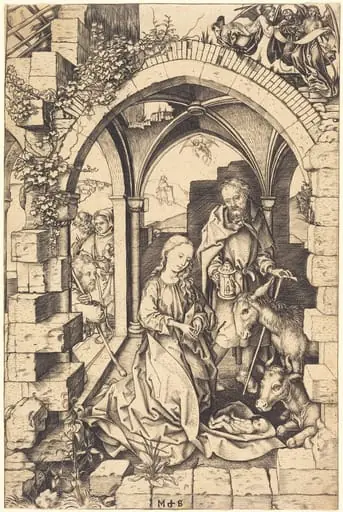
The Nativity is a print by the Renaissance artist Ludwig Krug. It dates from 1516 and is held in the collection of the Cleveland Museum of Art.
About this work
Overview
Ludwig Krug, a German goldsmith and engraver active in the early 1500s, produced *The Nativity* in 1516 as a printed image rather than a painting.
Ludwig Krug, a German goldsmith and engraver active in the early 1500s, produced *The Nativity* in 1516 as a printed image rather than a painting. Though often mistaken for a painted work, it is a meticulously detailed engraving. The piece resides in the Cleveland Museum of Art’s collection and reflects Krug’s skill in translating sacred themes into fine graphic art, a domain where he was highly regarded alongside contemporaries like Wenzel Jamnitzer.
Subject & Meaning
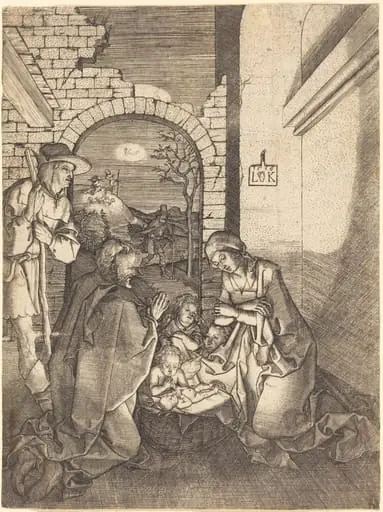
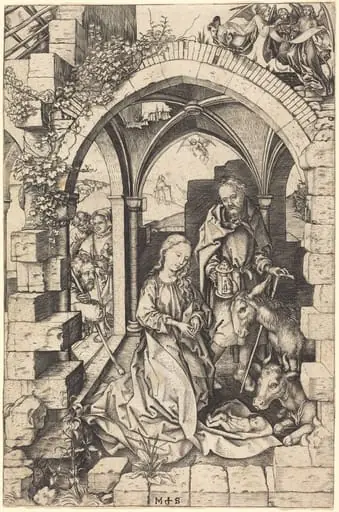
The scene depicts the birth of Christ in a modest stable, with Mary kneeling beside the manger, her gaze fixed on the infant, and Joseph standing nearby in quiet contemplation. The absence of grandeur emphasizes humility and devotion, aligning with devotional ideals of the period. Animals rest nearby, their presence underscoring the earthliness of the moment. The composition invites quiet reflection, focusing on the intimate bond between mother and child amid sparse surroundings.
Technique & Style
Krug employed fine-line engraving to render texture and light with precision. Subtle gradations of shadow and tone define the forms of the figures and the rough surfaces of the stable, creating a sense of volume without overt chiaroscuro. The lines are controlled and deliberate, characteristic of goldsmith training, where detail and clarity were paramount. The background is minimally suggested, directing attention to the central group with restrained elegance.
History & Provenance
Created in 1516, the print emerged during a period of flourishing print culture in southern Germany. Krug’s reputation as a goldsmith lent credibility to his graphic works, which circulated among religious patrons and collectors. The print entered the Cleveland Museum of Art’s collection in the 20th century, where it is preserved as an example of early 16th-century German engraving and devotional imagery.
Context
In early 16th-century Germany, religious prints served as accessible tools for private devotion, especially as the Reformation reshaped spiritual practice. Krug’s work reflects the enduring appeal of traditional Nativity imagery even amid growing theological change. His training as a goldsmith informed his precision, distinguishing his engravings from those of purely graphic artists and aligning them with the craftsmanship valued in urban artisan circles.
Legacy
Krug’s *The Nativity* stands as a testament to the convergence of sacred subject matter and artisanal excellence in Renaissance Germany. While not widely reproduced or celebrated in popular discourse, it remains a significant example of how goldsmiths extended their technical mastery into printmaking. The work contributes to the broader understanding of how devotional imagery was produced and consumed outside major artistic centers.
Artist & collection

Artist
Ludwig Krug (1488 – 1532) was a German goldsmith, engraver, and sculptor. Together with Wenzel Jamnitzer, he is considered among the most important goldsmiths of the 16th century in what is now Germany.