Artwork
Solomon Worshipping False Gods
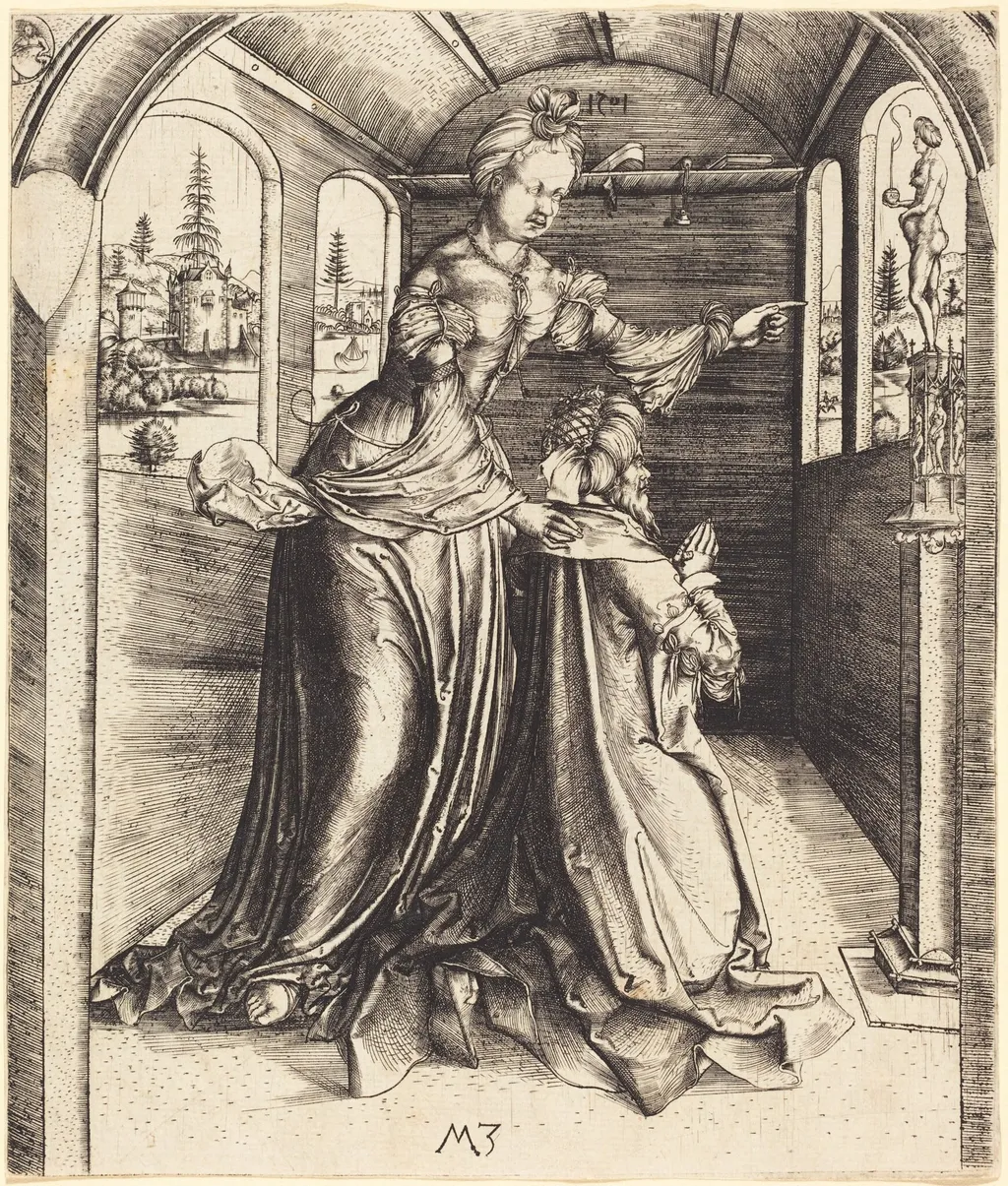
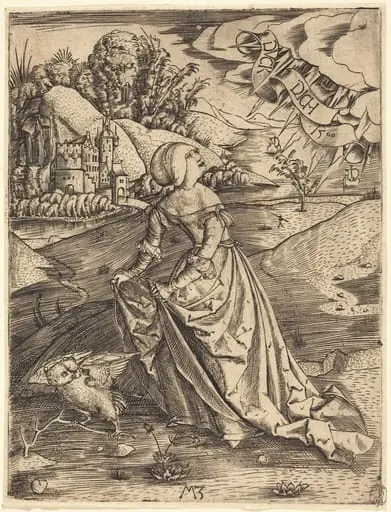
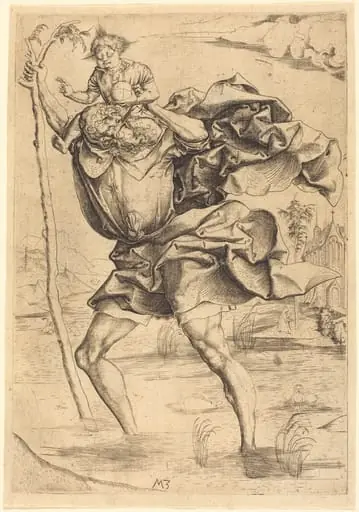
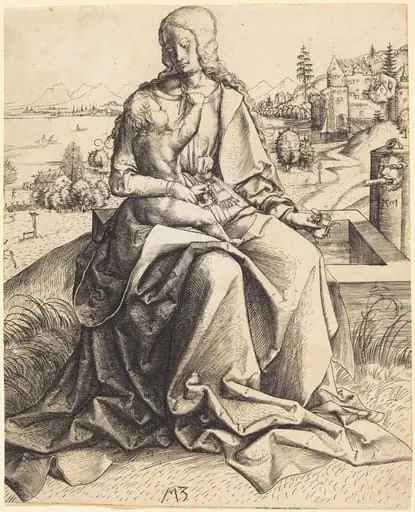
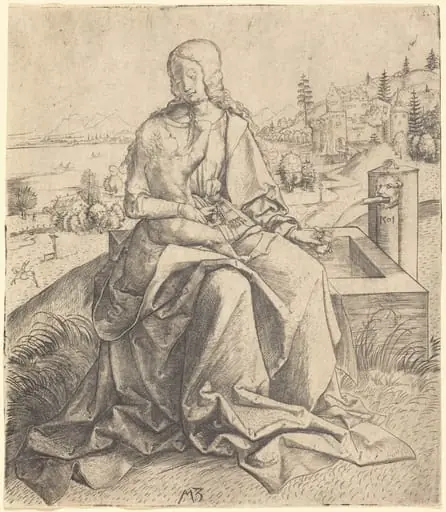
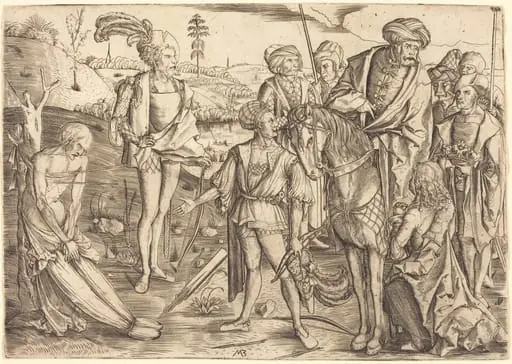
Solomon Worshipping False Gods is an ink print by the Renaissance artist Master MZ. It dates from 1501 and is held in the collection of the National Gallery of Art.
About this work
Overview
Created in 1501 by Master MZ, this engraving on laid paper depicts Solomon in a moment of religious transgression. Rendered with precise linear technique, the image combines devotional posture with symbolic narrative elements. The composition is tightly controlled, using fine, intersecting lines to model form and space, characteristic of early 16th-century German printmaking.
Subject & Meaning
Solomon, robed and kneeling, prays before an arched altar, his hands clasped in apparent devotion. Yet the scenes behind him—a castle, a ship, and a classical statue—hint at worldly distractions. These elements allude to biblical accounts of his later idolatry, suggesting a tension between piety and temptation. The image functions as a moral warning, not a celebration of kingship.
Technique & Style
The artist employs dense cross-hatching and parallel lines to generate tonal depth and fabric texture. Shadows are built incrementally, mimicking the chiaroscuro of painted compositions. The sharp, controlled lines reflect the precision possible in copperplate engraving, allowing intricate detail in both figure and background without loss of clarity.
History & Provenance
The print is attributed to Master MZ, an anonymous engraver active in southern Germany around 1500. Few of his works survive, and this piece is among the most clearly dated. Its survival in multiple institutional collections suggests early circulation among collectors and clergy interested in moral allegory and technical virtuosity.
Context
In early 16th-century Europe, religious prints often served didactic purposes, illustrating biblical warnings for private devotion. Solomon’s fall from grace was a frequent subject, resonating with reformist critiques of idolatry. Engravings like this one bridged the gap between manuscript illumination and mass-produced imagery, reaching literate lay audiences.
Legacy
Master MZ’s use of linear modeling influenced later engravers in the Northern Renaissance. Though not widely known today, his technique contributed to the development of tonal engraving as a means of narrative expression. This work remains a quiet example of how printmakers translated theological themes into visual language through disciplined draftsmanship.
Artist & collection