Artwork
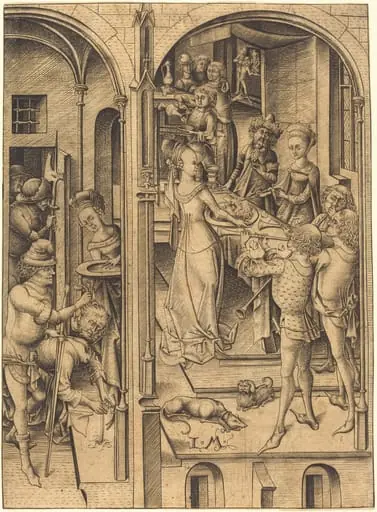
The Death of Lucretia
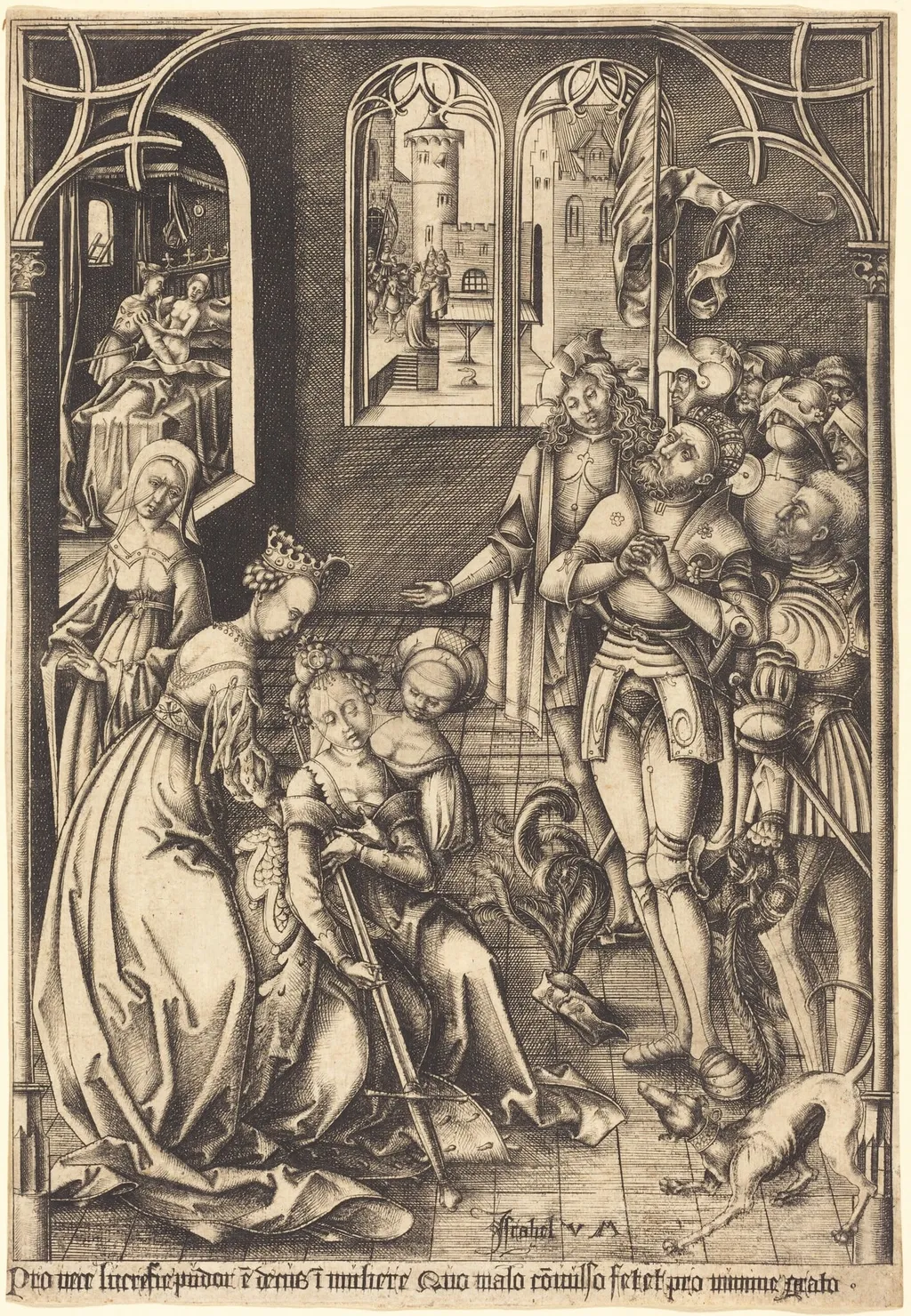
The Death of Lucretia is an ink print by the Renaissance artist Israhel van Meckenem. It dates from 1502 and is held in the collection of the National Gallery of Art.
About this work
Overview
Israël van Meckenem, a German goldsmith and printmaker active in the late fifteenth century, produced an engraving titled *The Death of Lucretia* around 1502. The work belongs to the tradition of Renaissance prints that illustrate classical narratives, and it presents the moment of Lucretia’s self‑inflicted death following the assault by Sextus Tarquinius.
Subject & Meaning
The image captures the tragic climax of the Roman legend: Lucretia, having been violated, turns a dagger upon herself. Blood streams onto a white sheet beneath her, while a figure—presumably a witness—peeks from behind a curtain, his expression one of alarm. The composition underscores themes of honor, violation, and the moral consequences that the story historically invoked.
Technique & Style
The crisp, cross‑hatched lines create a stark contrast between the luminous background and the darkened figures, emphasizing the drama of the scene.
Executed in fine line engraving, the print demonstrates van Meckenem’s characteristic attention to surface detail. He enriches the composition with intricate patterns on textiles and architectural elements, adding depth beyond the earlier model he copied. The crisp, cross‑hatched lines create a stark contrast between the luminous background and the darkened figures, emphasizing the drama of the scene.
History & Provenance
Van Meckenem, recognized as the most prolific fifteenth‑century engraver with over six hundred prints, often reproduced works by contemporaries such as Albrecht Dürer. *The Death of Lucretia* is a reinterpretation of an earlier engraving by another artist; van Meckenem retained the basic pose but introduced additional decorative details. The print circulated widely in the early sixteenth century, contributing to the spread of the Lucretia narrative across Northern Europe.
Context
The subject of Lucretia’s suicide was a popular motif in Renaissance visual culture, serving as a moral exemplar of virtue and civic duty. By the turn of the sixteenth century, Northern artists were increasingly engaging with classical antiquity, and van Meckenem’s print reflects this intellectual climate, merging Germanic engraving traditions with Italianate humanist themes.
Artist & collection
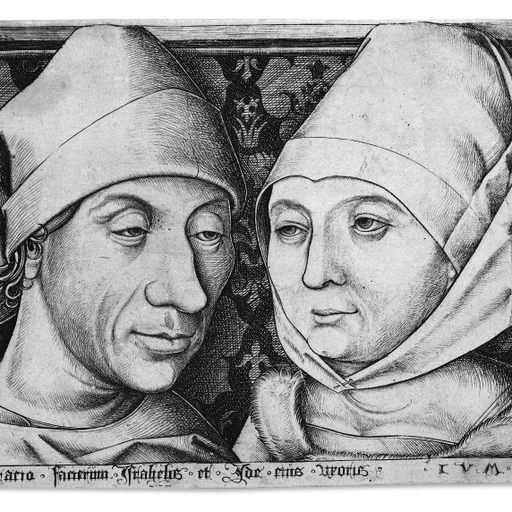
Artist
Israhel van Meckenem (c. 1445 – 10 November 1503), also known as Israhel van Meckenem the Younger, was a German printmaker and goldsmith, perhaps of a Dutch family origin. He was the most prolific engraver of the…