Artwork
Woman with the Owl
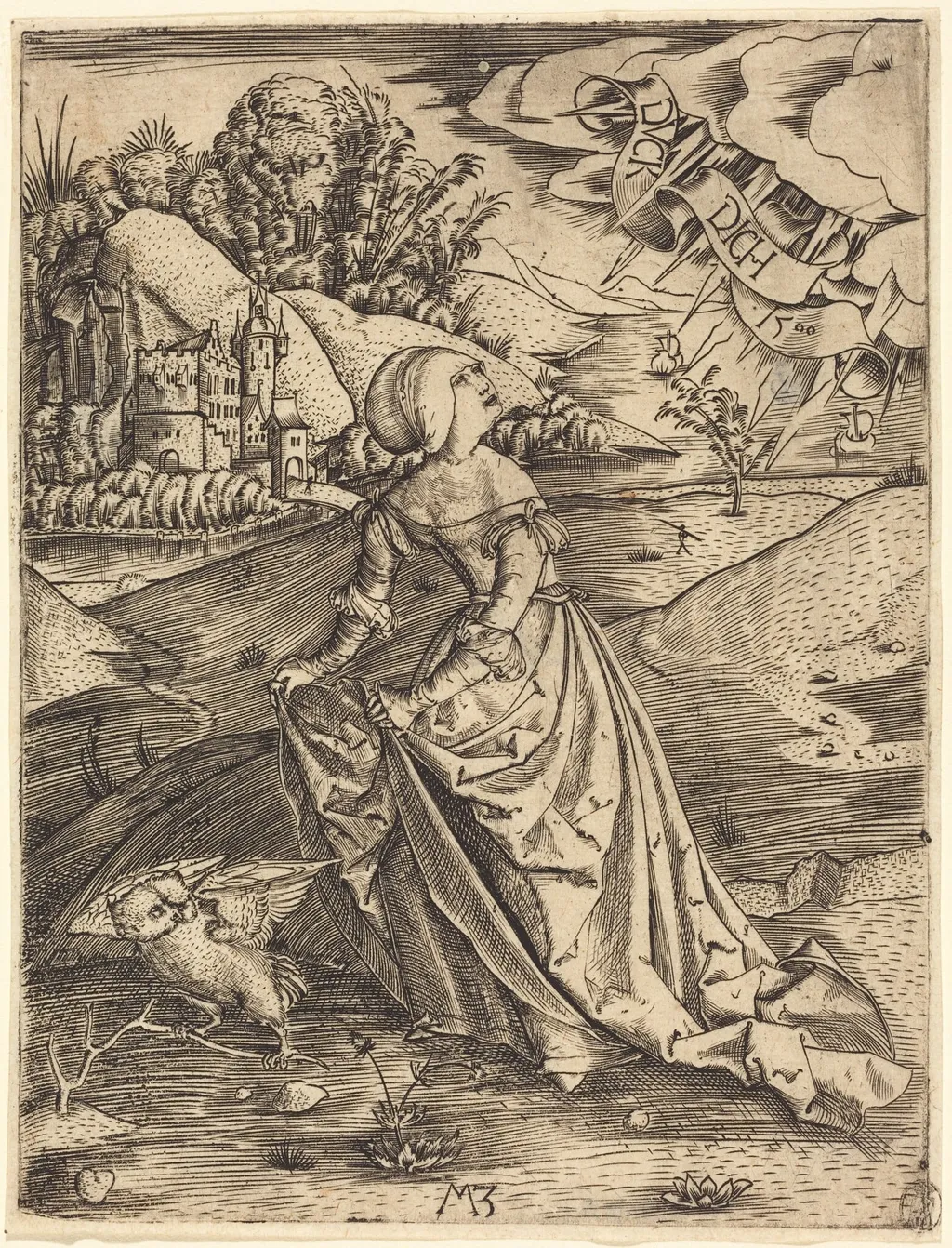
Woman with the Owl is an ink print by the Renaissance artist Master MZ. It dates from 1500 and is held in the collection of the National Gallery of Art.
About this work
Overview
Executed on laid paper, the work belongs to a small body of prints attributed to this enigmatic figure, whose identity remains unconfirmed.
Woman with the Owl is a copperplate engraving produced around 1500 by an artist known as Master MZ. Executed on laid paper, the work belongs to a small body of prints attributed to this enigmatic figure, whose identity remains unconfirmed. The image presents a solitary female figure in a quiet landscape, surrounded by symbolic elements that invite interpretive reading rather than literal narrative.
Subject & Meaning
The central figure, a woman dressed in detailed Renaissance attire, holds a folded cloth and gazes toward a banner bearing unreadable script. An owl perches nearby, while a flower and a distant structure complete the scene. These elements—bird, bloom, text, and fabric—likely form an allegorical composition, possibly referencing themes of contemplation, transience, or moral instruction, common in early 16th-century Northern European prints.
Technique & Style
Master MZ employed fine, precise lines to render the woman’s garments, capturing the texture of woven fabric through delicate hatching and cross-contouring. The landscape recedes with softer, sparser strokes, creating spatial depth. The contrast between the intricate foreground and the muted background reflects a deliberate hierarchy of focus, emphasizing the figure’s introspective presence over her surroundings.
History & Provenance
The print survives in a limited number of impressions, typical of early Renaissance engravings. It was likely circulated among educated patrons in southern Germany or northern Italy, where such allegorical imagery found an audience. No definitive record of its original commission exists, but its technical quality suggests it was produced for a discerning, possibly humanist, clientele.
Context
Created during a period of flourishing print culture in Central Europe, the work aligns with the rise of secular and symbolic imagery in engravings. While religious themes dominated, artists like Master MZ increasingly explored moral and philosophical subjects through quiet, symbolic scenes. The use of allegory here reflects broader intellectual currents of the time, influenced by humanist thought and devotional literature.
Legacy
Though Master MZ’s oeuvre is small and his identity obscure, Woman with the Owl exemplifies the sophistication of early 16th-century German engraving. The print’s nuanced symbolism and technical precision influenced later artists working in the same medium, contributing to the development of narrative and allegorical printmaking in the decades before Dürer’s mature works gained wider recognition.
Artist & collection


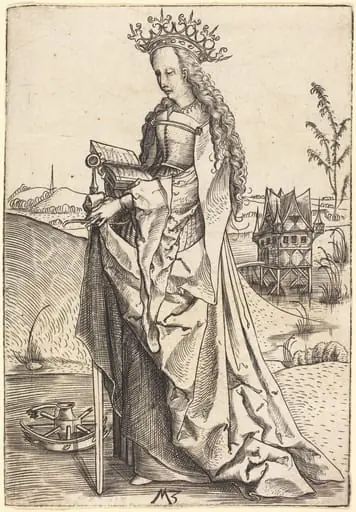 Saint Catherine
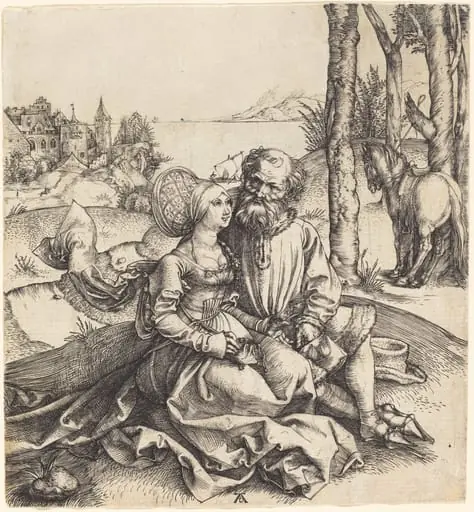 The Ill-Assorted Couple
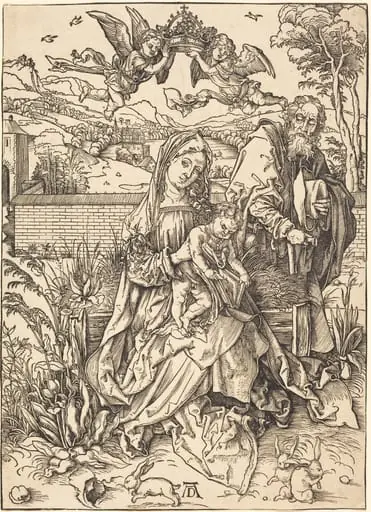 The Holy Family with the Three Hares
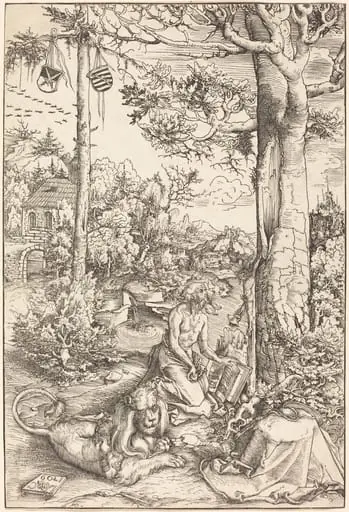 The Penitence of Saint Jerome
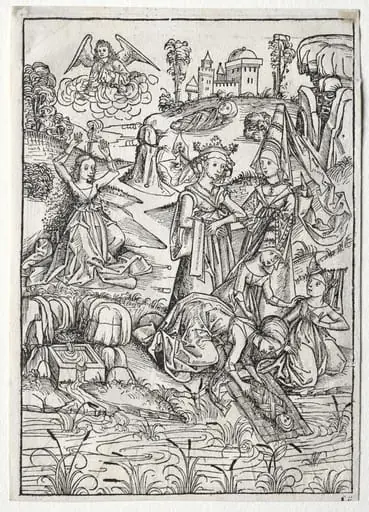 Der Schatzbehalter: Moses Found by Pharaoh's Daughter (recto)
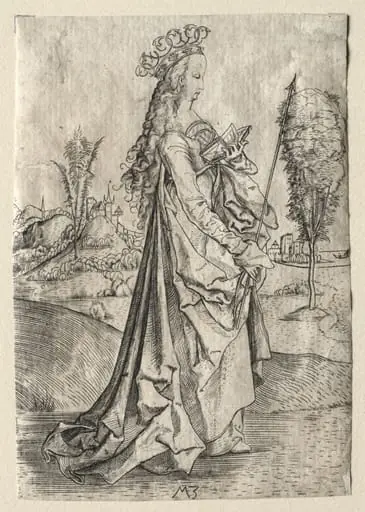 St. Ursula
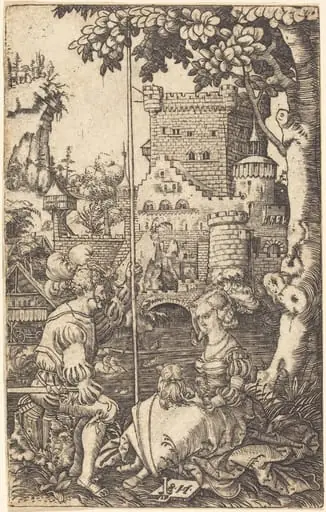 Knight and Lady
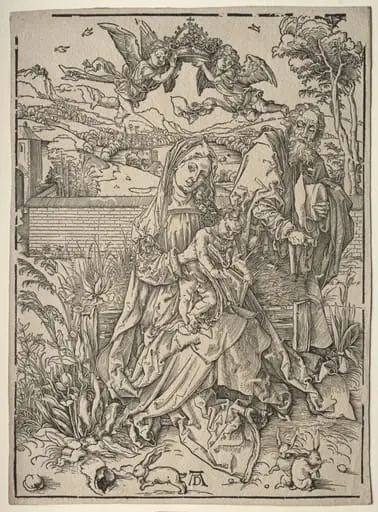 Holy Family with the Three Hares
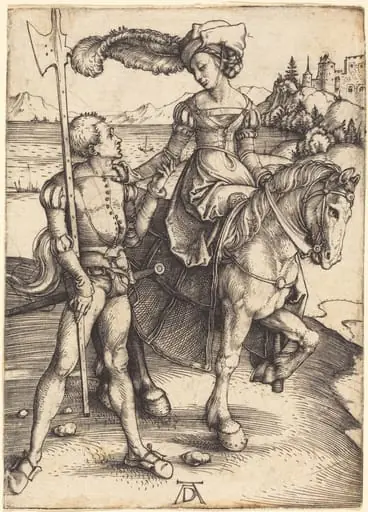 Lady on Horseback and the Lansquenet
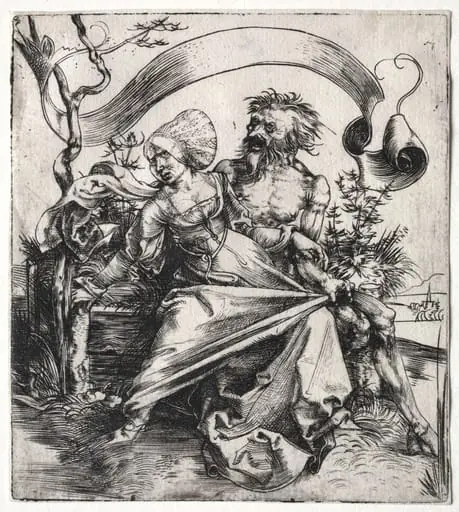 The Ravisher
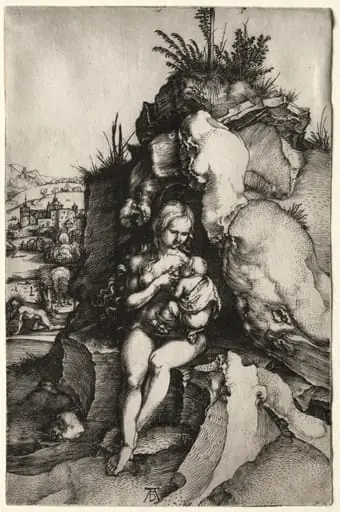 The Penance of St. John Chrysostom