Artwork
Beweinungsaltar: Beweinung Christi
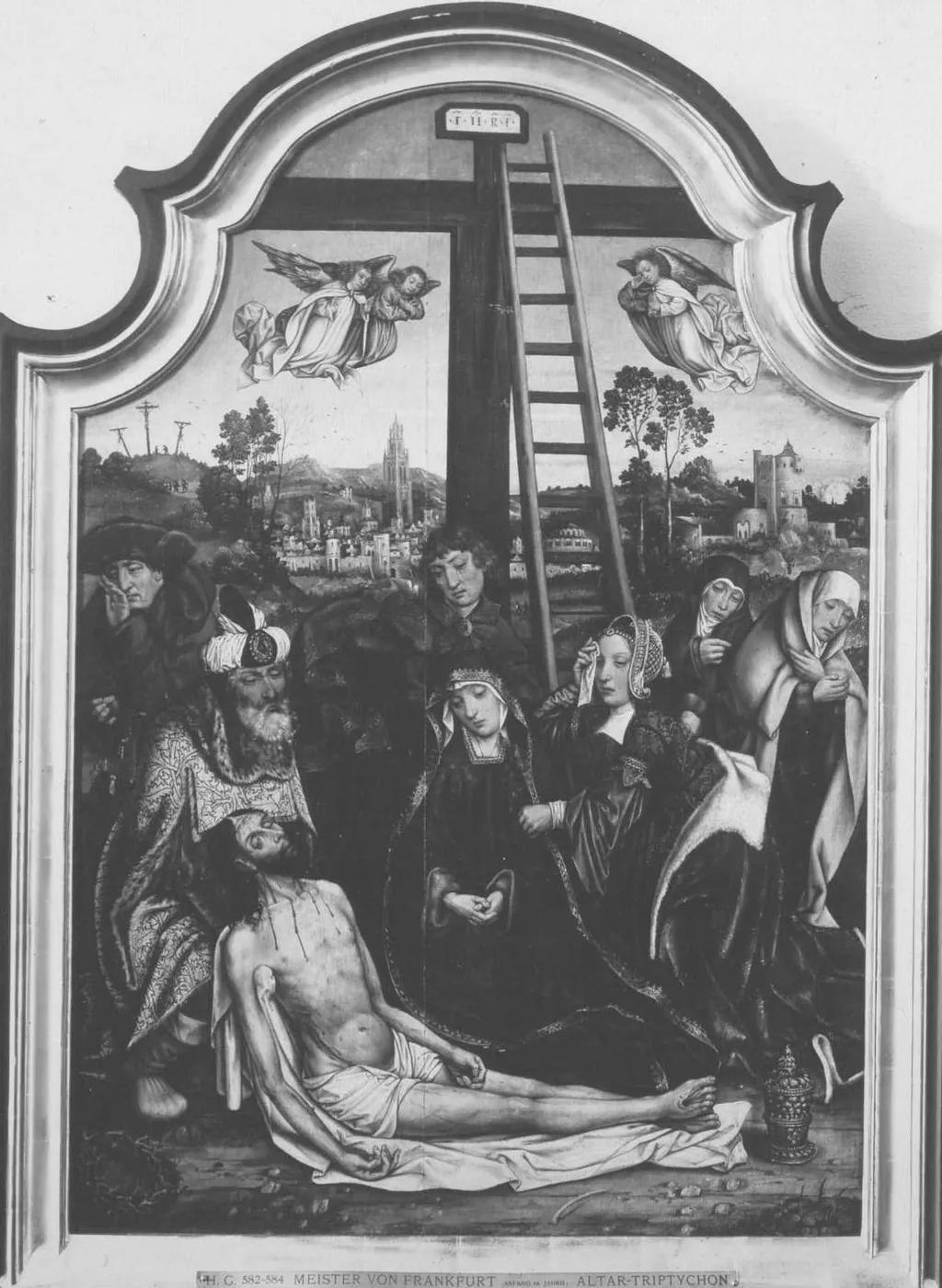
Beweinungsaltar: Beweinung Christi is an unspecified painting by the Northern Renaissance artist Master of Frankfurt. It dates from 1515 and is held in the collection of the Bavarian State Painting Collections.
About this work
Overview
It stands as a key example of religious art produced in Antwerp during this period, reflecting the devotional practices and artistic innovations of the time.
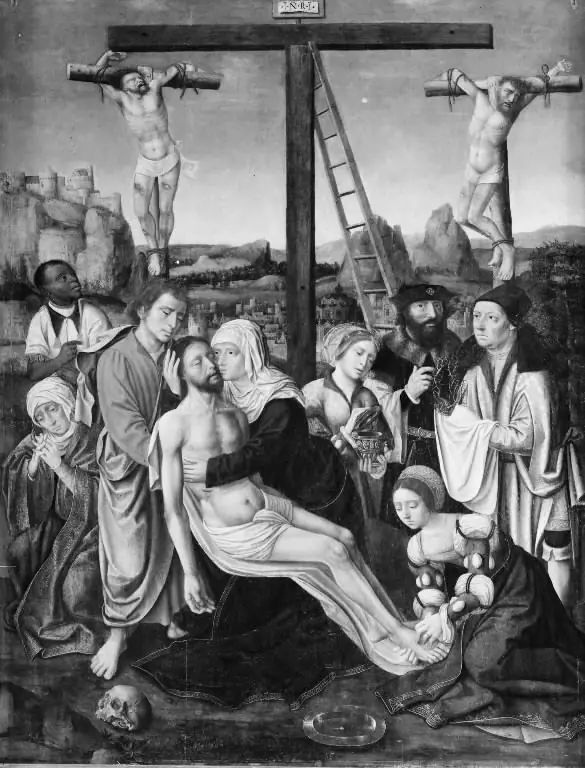
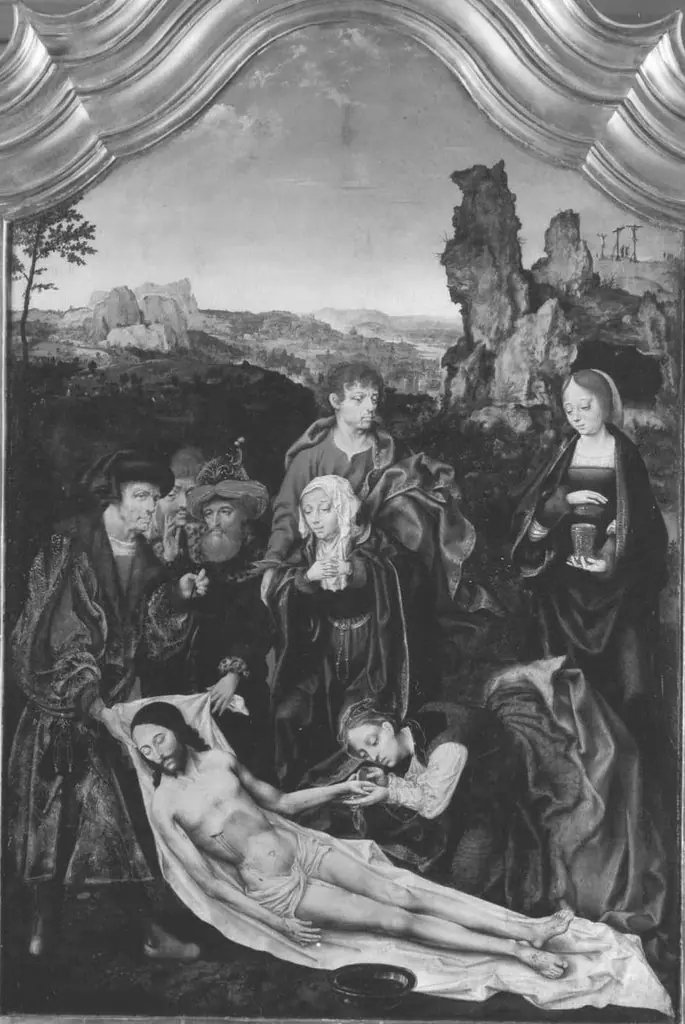
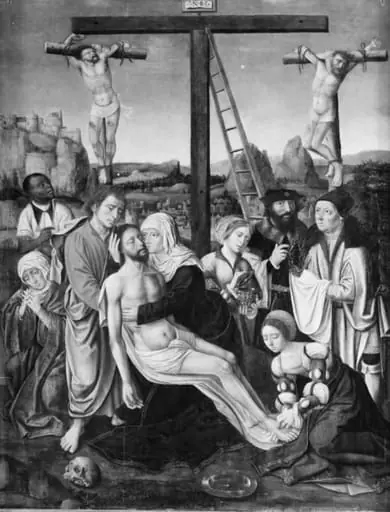
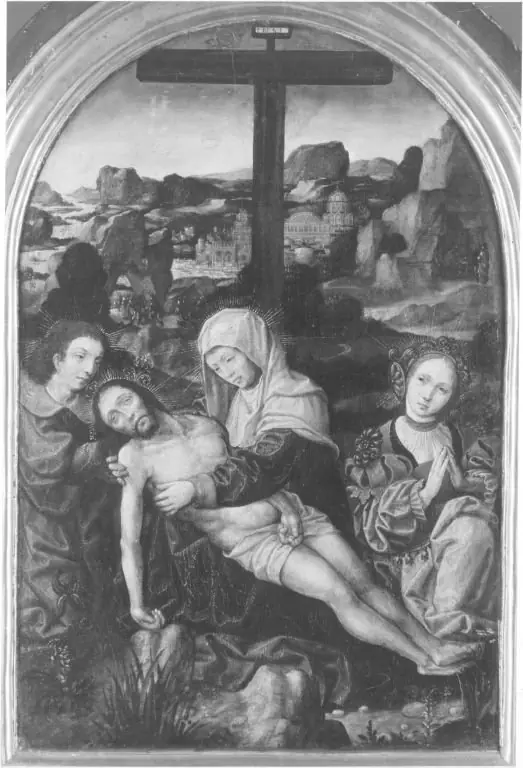
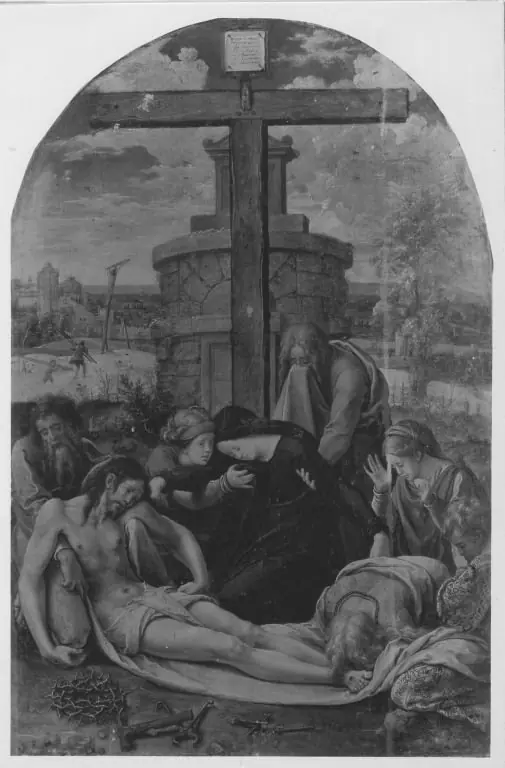
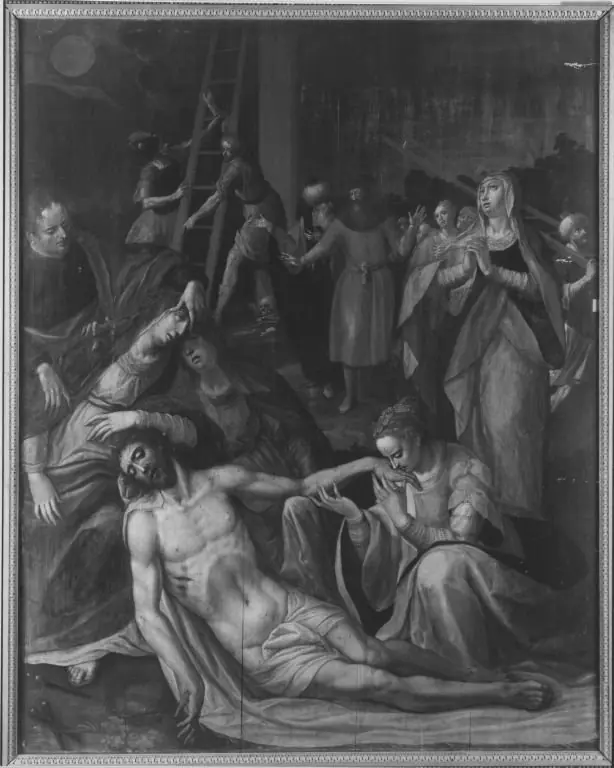
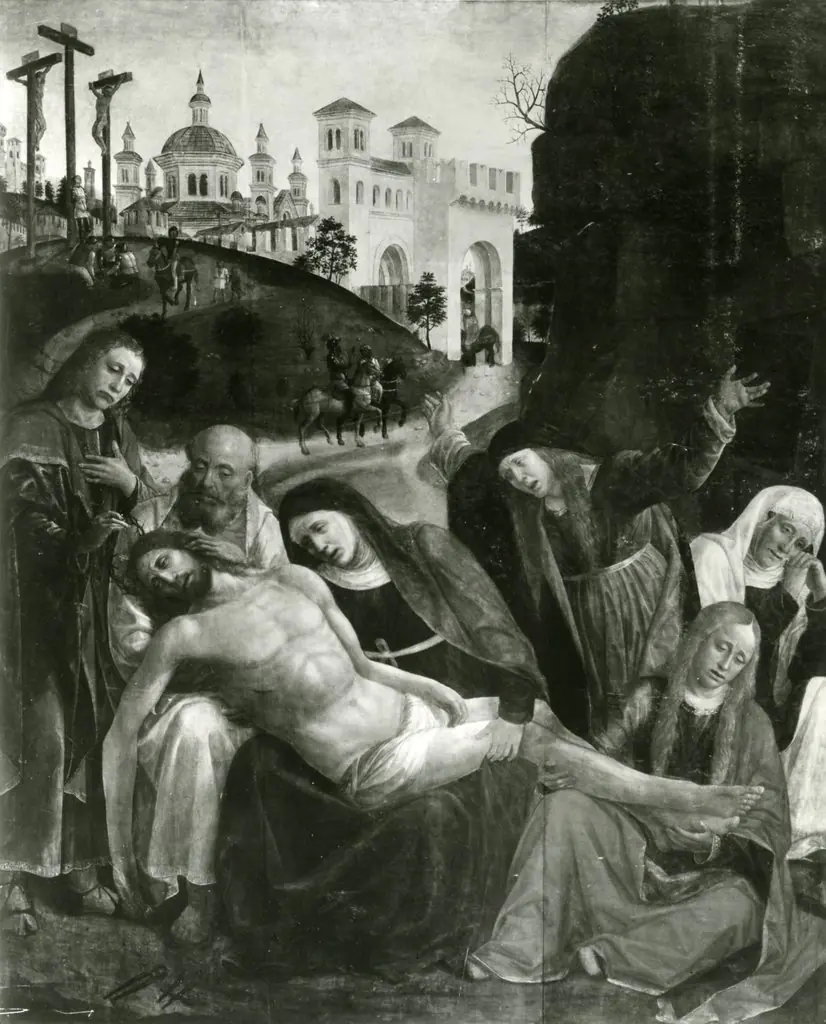
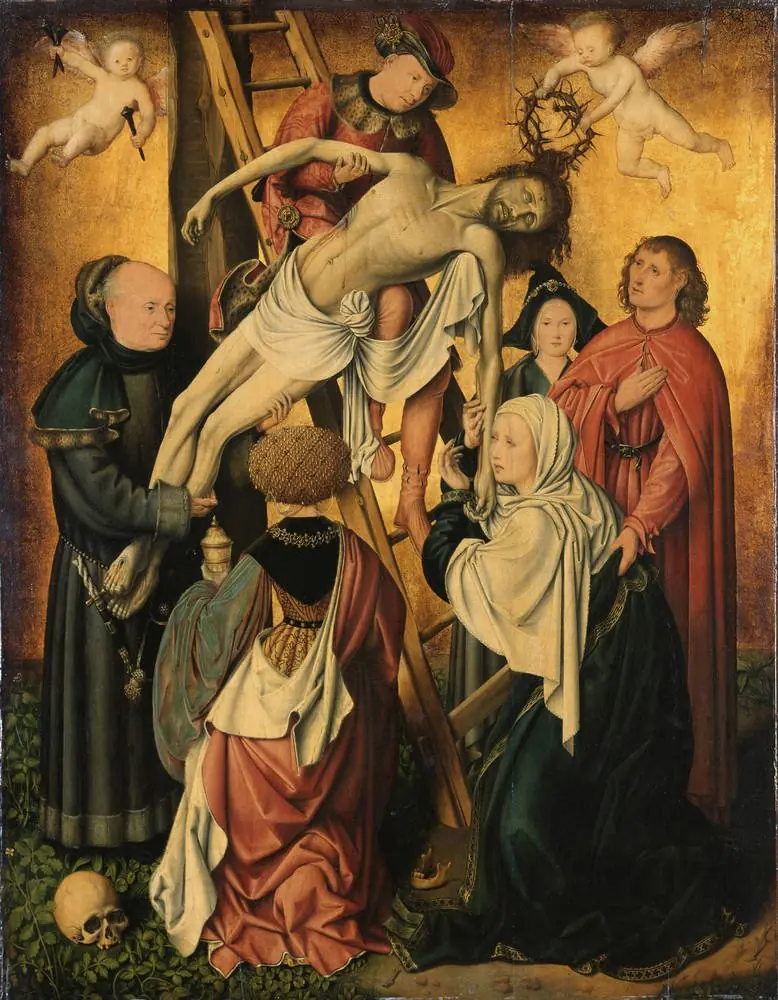
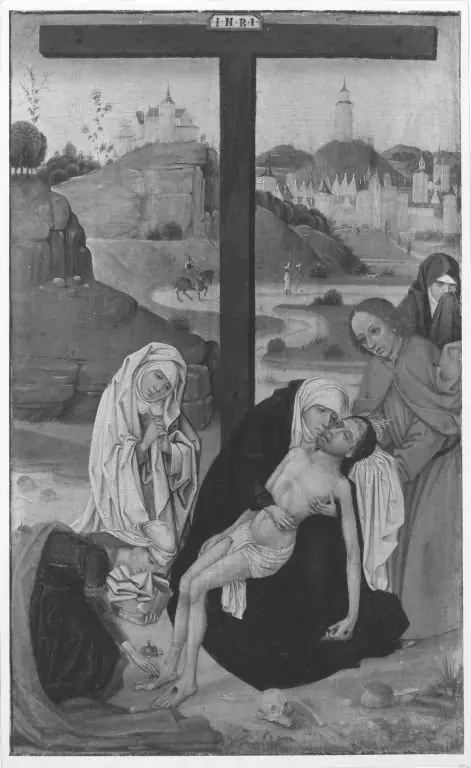
Created between 1511 and 1515 by the Master of Frankfurt, the Beweinungsaltar (Lamentation Altarpiece) is a significant work of the Northern Renaissance. The central panel depicts the Lamentation of Christ, a somber scene where the deceased body of Jesus lies on the ground, wrapped in a white shroud with his head tilted back. He is surrounded by a group of mourners, including the Virgin Mary and other figures, who express profound grief through bowed heads and anguished gestures. The composition is tightly arranged, focusing the viewer's attention on the emotional intensity of the moment rather than a broad landscape. Painted in oil on wood, the work demonstrates the artist's characteristic attention to detail, particularly in the rendering of textures and the expressive faces of the figures. This altarpiece represents the Master of Frankfurt's mature style, blending Flemish traditions with the emerging humanist sensibilities of the early 16th century. It stands as a key example of religious art produced in Antwerp during this period, reflecting the devotional practices and artistic innovations of the time.
Subject & Meaning
The composition centers on the dead body of Christ, swaddled in a white shroud and lying on the ground. Figures surrounding him—likely the Virgin Mary, disciples, and mourners—are shown in various states of grief, their bowed heads and downcast gazes emphasizing the solemnity of the moment.
Technique & Style
The artist employs a restrained palette and careful modeling of light and shadow to give the figures a three‑dimensional presence. Subtle chiaroscuro highlights the contours of the bodies, while the background landscape recedes behind a muted skyline, creating a contemplative atmosphere.
History & Provenance
Attributed to the Master of Frankfurt, an unidentified painter active in the early 1500s, the panel entered the Alte Pinakothek’s holdings in the 19th century. Its provenance before that remains undocumented, typical of many works by this elusive artist.
Context
The Lamentation was a common theme in Northern Renaissance devotional art, intended to invite personal reflection on Christ’s suffering. The inclusion of a distant cityscape and angels above the scene reflects contemporary iconographic conventions that link earthly sorrow with heavenly consolation.
Artist & collection


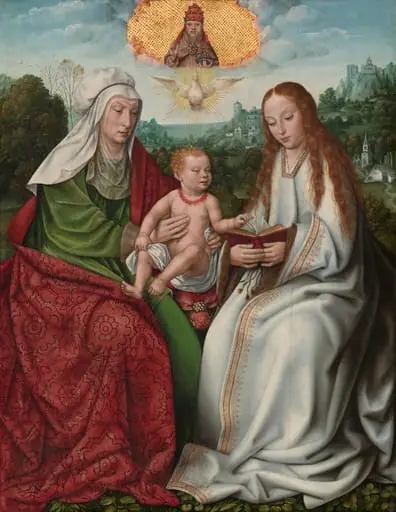 Saint Anne with the Virgin and the Christ Child
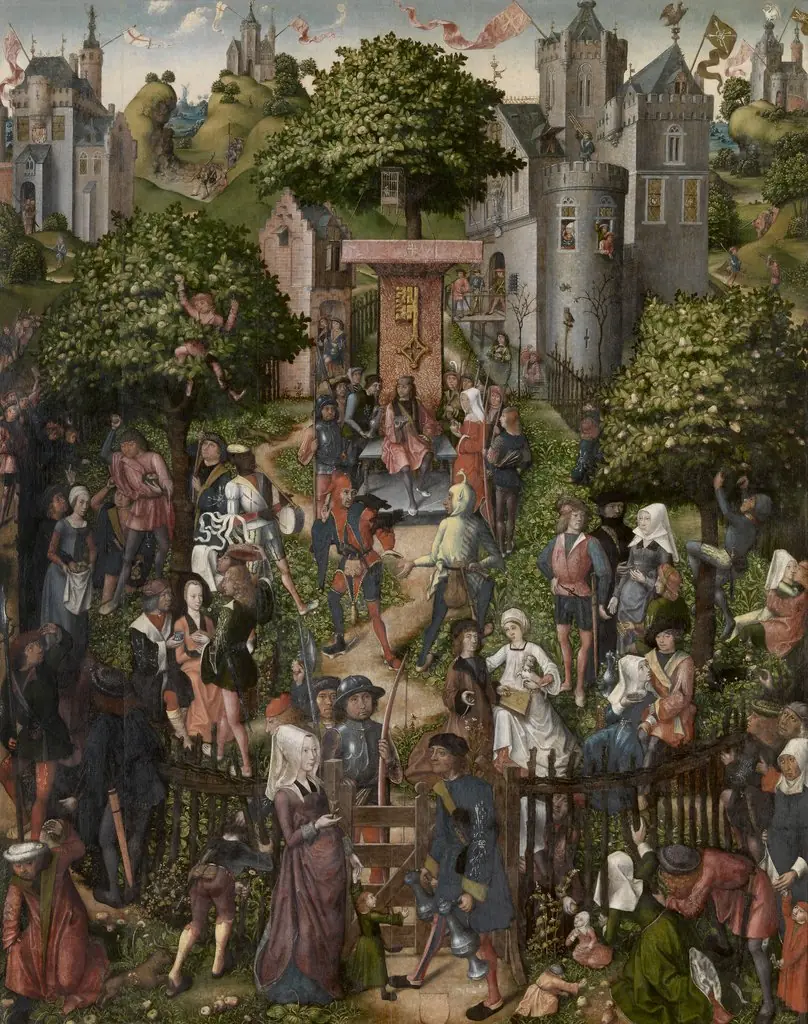 Festival of the Archers
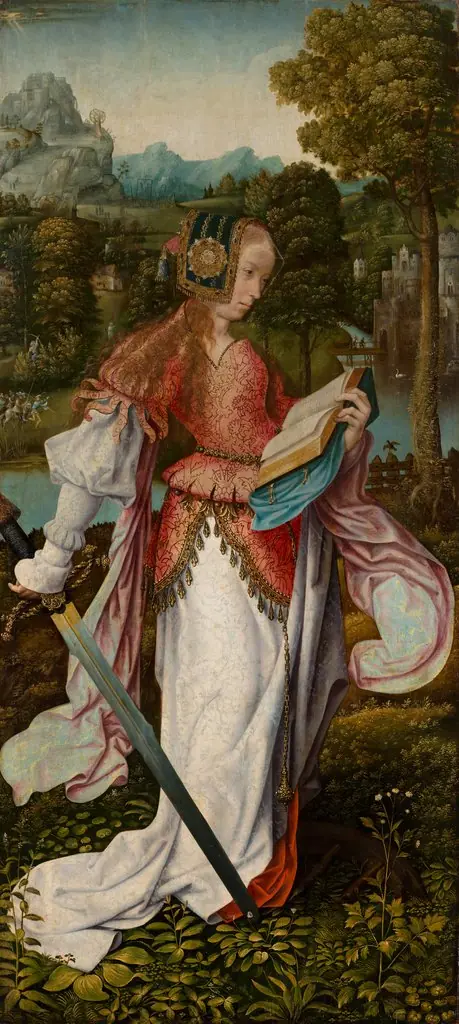 Saint Catherine
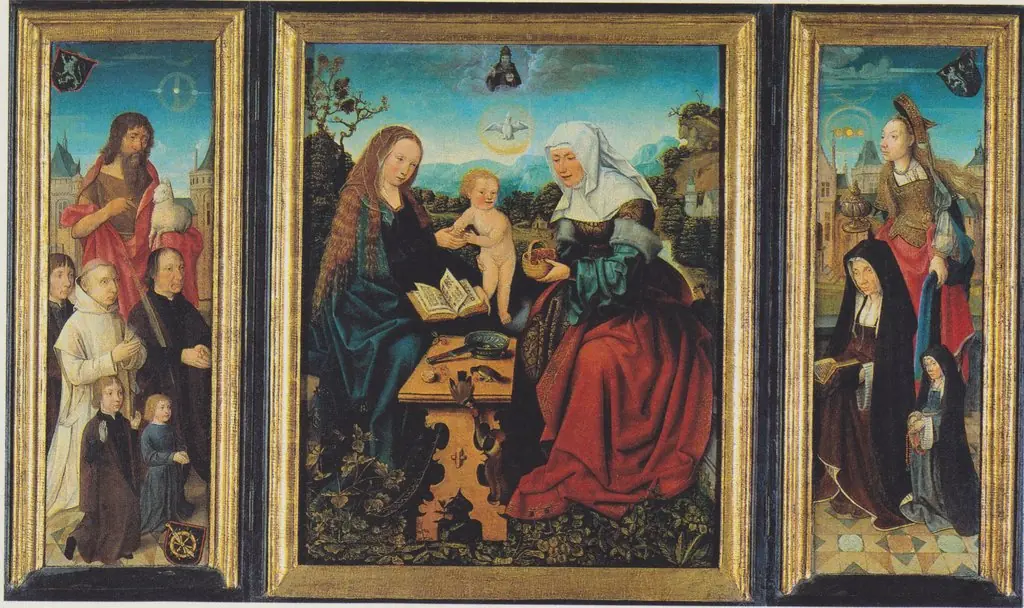 Portrait of Dirck van Heemskerck van Beest & sons with John the Baptist, Madonna and Child with St Anne, and Gertruid van Diemen & daughter with Mary Magdalene
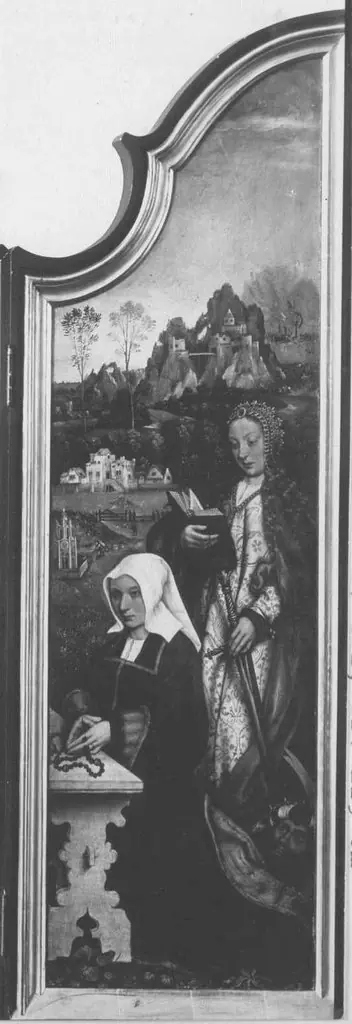 Beweinungsaltar: Hl. Katharina mit Stifterin
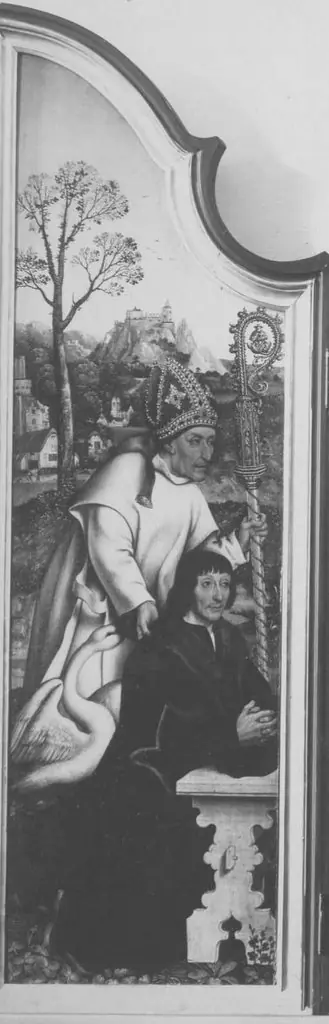 Beweinungsaltar: Hl. Hugo von Lincoln mit Stifter
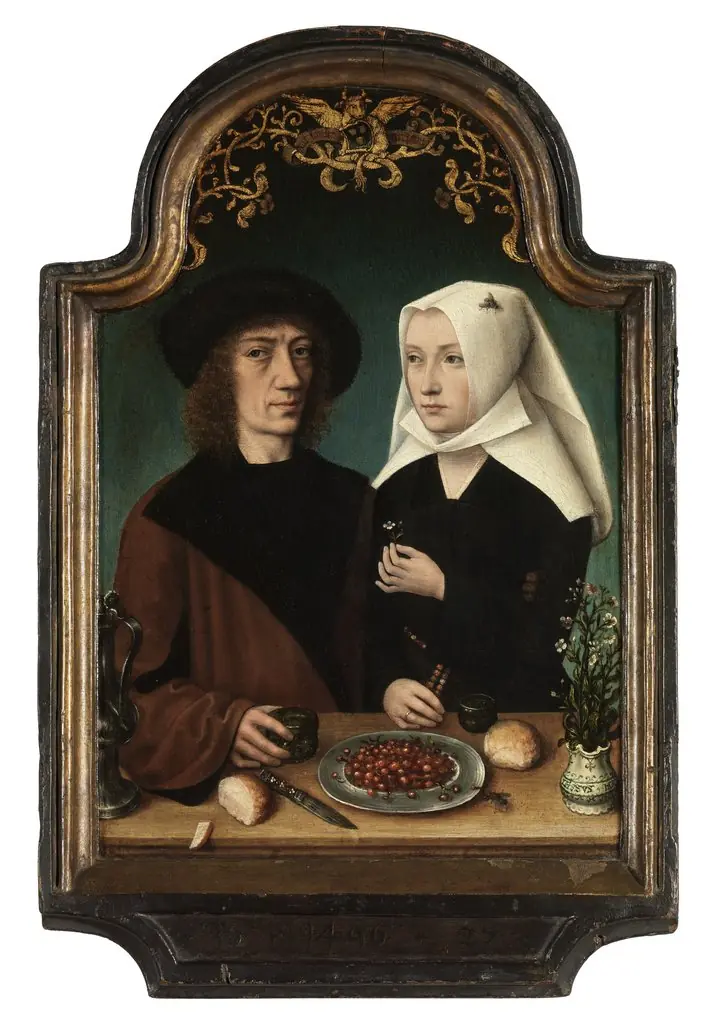 The Painter and his Wife
 The Adoration of the Magi