Artwork
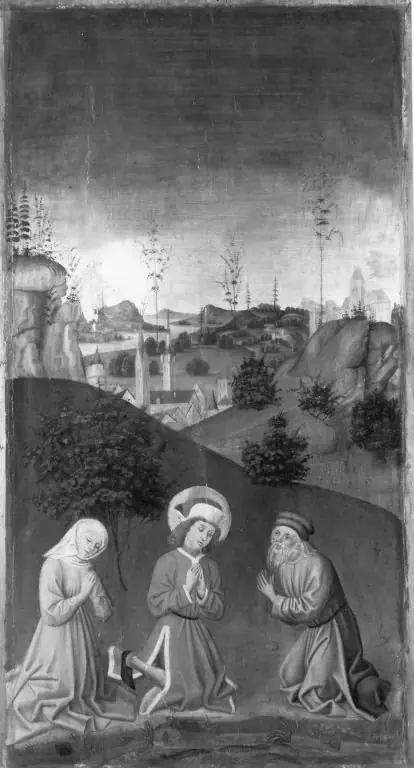
Second Kirchheim clan altar: Memelia and Enim with Servatius
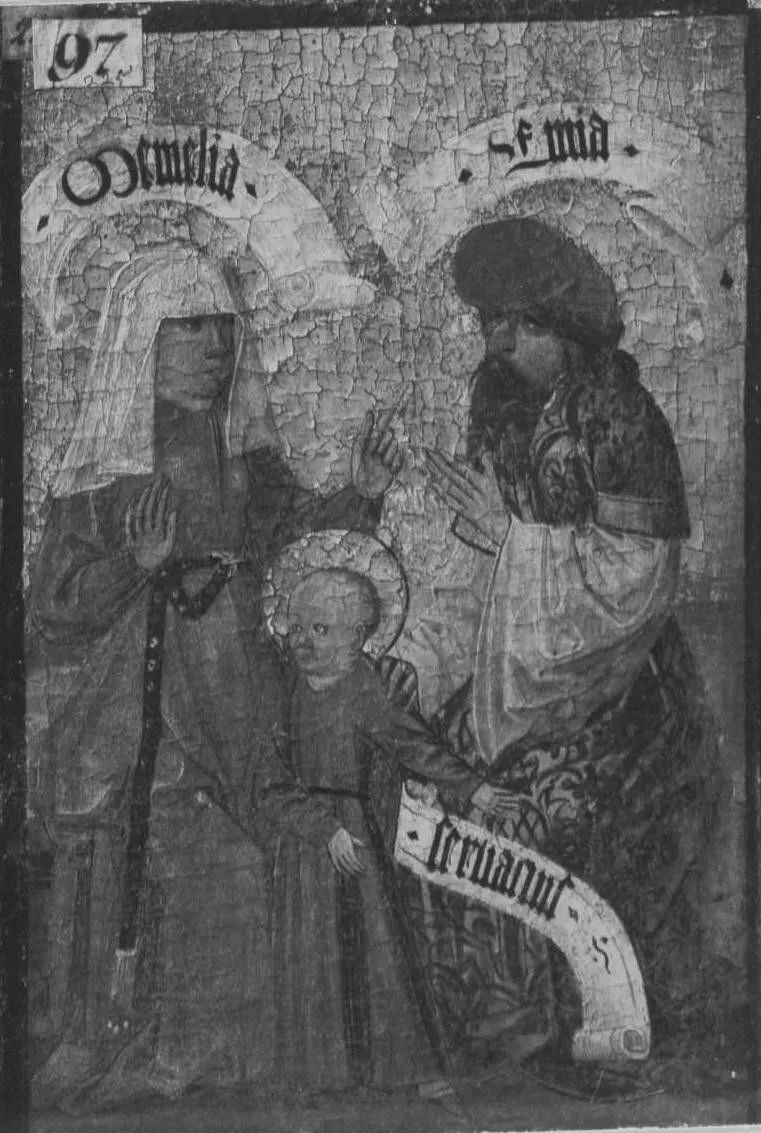
Second Kirchheim clan altar: Memelia and Enim with Servatius is an unspecified painting by the Northern Renaissance artist Master of Kirchheim. It dates from 1500 and is held in the collection of the Bavarian State Painting Collections.
About this work
Overview
Created around 1500 by the anonymous Master of Kirchheim, this panel is part of the second Kirchheim clan altar and is now in Munich’s Alte Pinakothek. The work presents a compact trio of holy figures arranged against a shadowy, craggy backdrop, typical of late‑Gothic devotional imagery.
Subject & Meaning
The leftmost figure is Memelia, a cloaked woman clutching a staff, likely representing a local patroness. At the centre kneels a child saint, identified by his halo as the youthful John the Evangelist, gazing upward in reverence. To the right stands Saint Servatius, a bearded local saint, his hands raised in benediction and his own curved staff emphasizing his episcopal authority.
Technique & Style
Executed in tempera on panel, the painting employs a muted palette and chiaroscuro to model the figures against the stark, rocky terrain. The delicate rendering of the halos and the subtle gradations of light reflect the transitional aesthetics between the International Gothic and emerging Renaissance sensibilities in southern Germany.
History & Provenance
Originally commissioned for the Kirchheim family’s private altar, the panel remained in the region until it entered the collection of the Alte Pinakothek in the 19th century. Its attribution to the Master of Kirchheim rests on stylistic parallels with other works linked to this workshop.
Context
Saint Servatius, venerated in the Rhineland, and the youthful Saint John were common intercessors in devotional panels intended for private chapels. The inclusion of Memelia, a likely local devotee, underscores the personalized nature of the altar, blending communal saintly protection with individual piety.
Artist & collection
Artist
This German painter around 1500 made small devotional panels packed with named saints and donors.

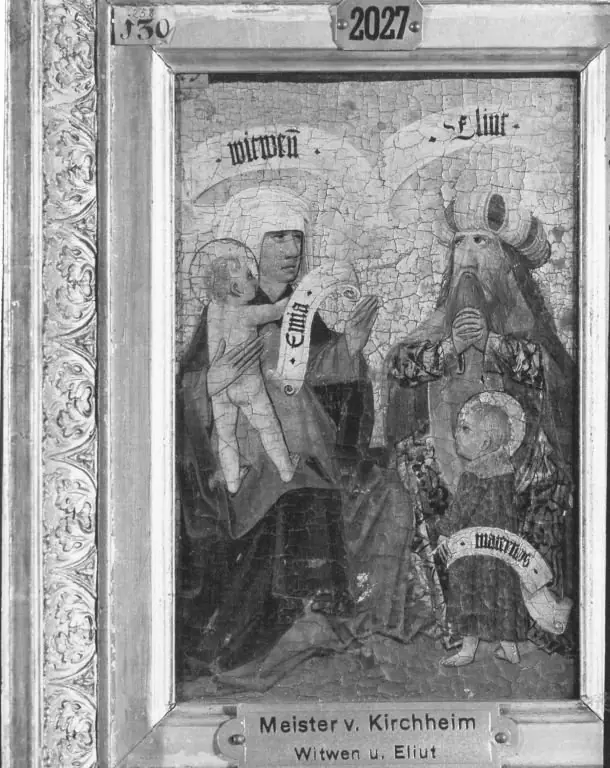 Witwen and Eliut with Emira and Maternus
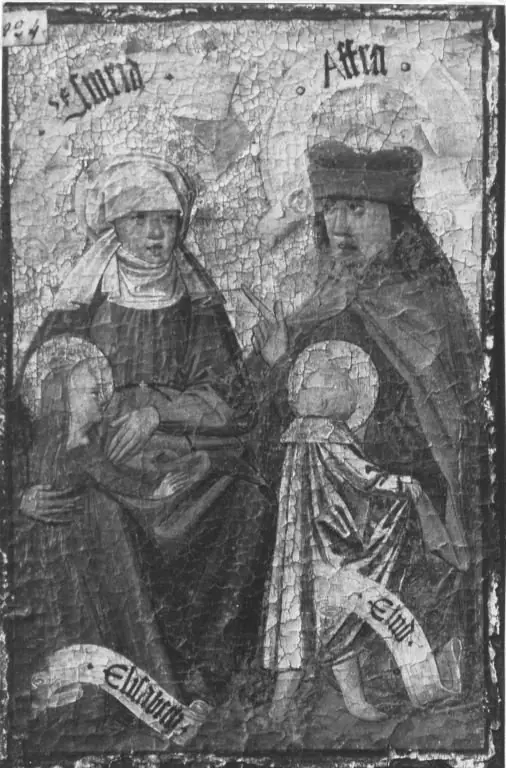 Zweiter Kirchheimer Sippenaltar: Esmeria und Afra mit Elisabeth und Eliud
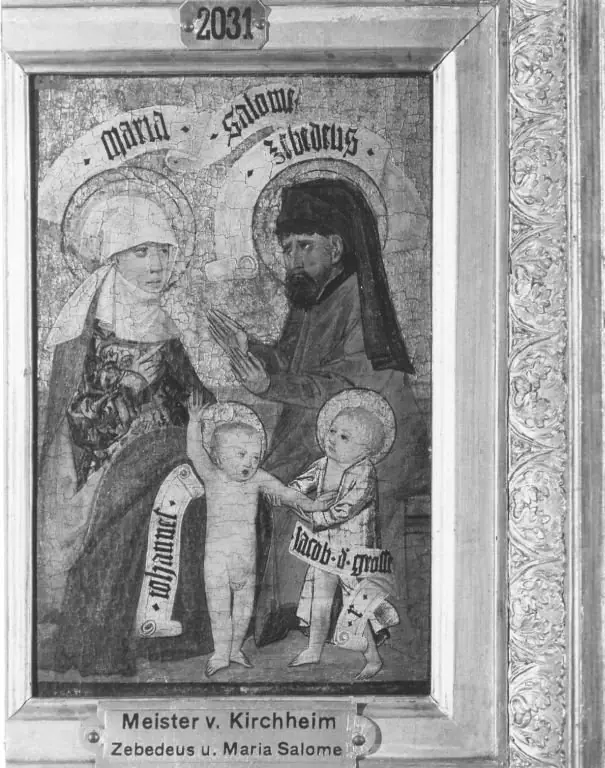 Zebedeus and Maria Salome with John and James the Greater
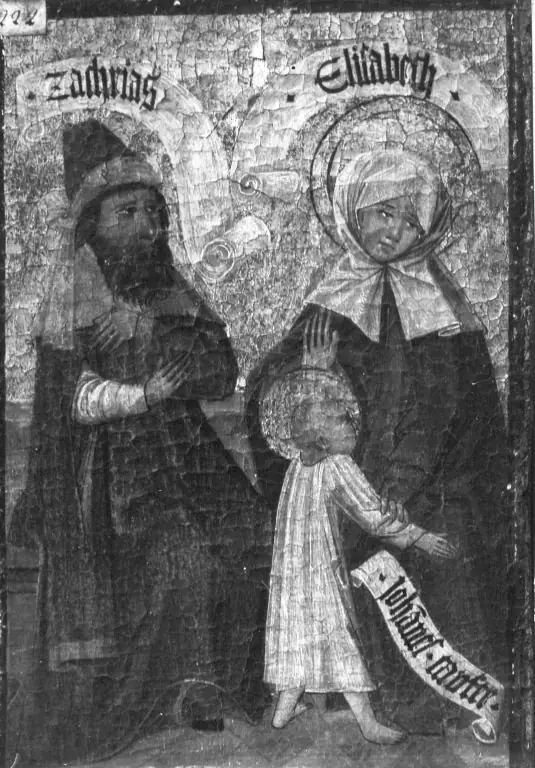 Zweiter Kirchheimer Sippenaltar: Zacharias und Elisabeth mit dem Johannesknaben
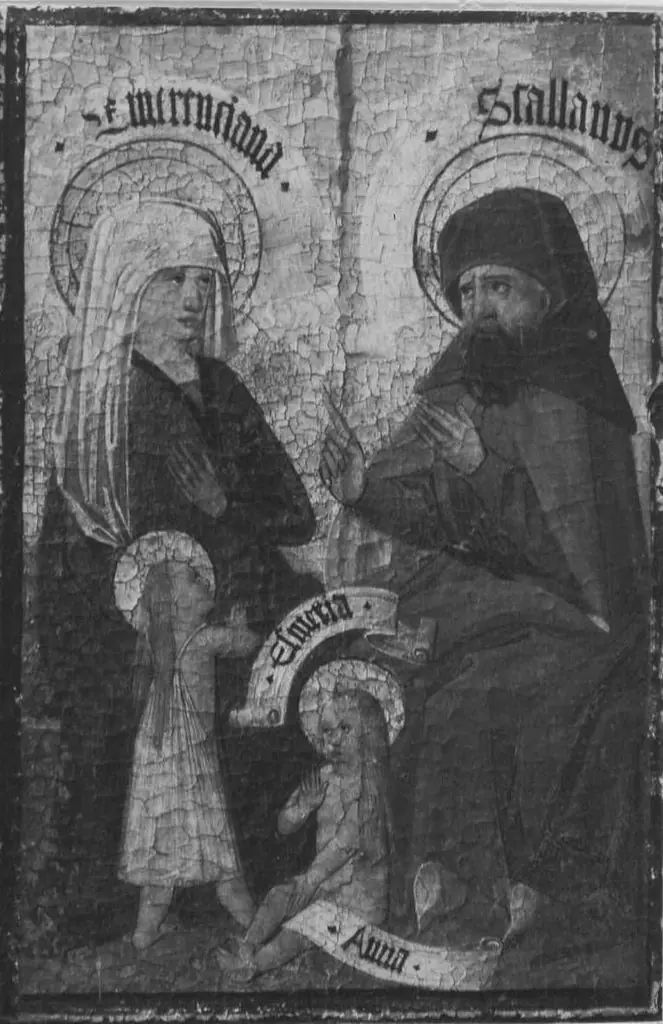 Zweiter Kirchheimer Sippenaltar: Emerentia und Stolanus mit Esmeria und Anna