Artwork
The Story of Lucretia
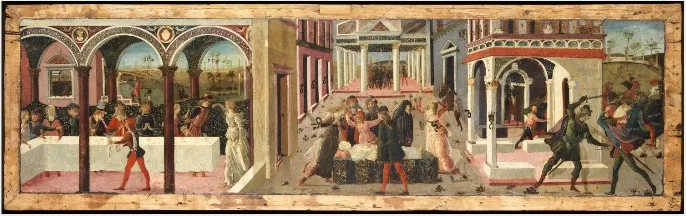
The Story of Lucretia is an unspecified painting by the Mannerist artist Master of Marradi. It dates from 1550 and is held in the collection of the National Gallery of Ireland.
About this work
Overview
Painted around 1550 by the artist known as the Master of Marradi, this work illustrates the tragic tale of Lucretia across three sequential scenes.
Painted around 1550 by the artist known as the Master of Marradi, this work illustrates the tragic tale of Lucretia across three sequential scenes. Executed in tempera on panel, it is part of the collection at the National Gallery of Ireland. The composition unfolds horizontally, dividing the narrative into distinct episodes without spatial continuity, a common approach in late medieval and early Renaissance storytelling panels.
Subject & Meaning
The painting recounts the Roman legend of Lucretia, a noblewoman who, after being assaulted by a prince, took her own life to preserve her honor. The left panel shows a banquet where the prince first observes her; the center depicts her suicide, surrounded by grieving men; the right portrays the uprising against tyranny that follows. The sequence underscores themes of virtue, violation, and political consequence in classical moral tales.
Technique & Style
The artist employs flat, saturated colors with minimal modeling or chiaroscuro, emphasizing outlines over depth. Figures are arranged against ornamental red and gold backgrounds, typical of decorative panel painting from central Italy. Details like fabric folds and facial expressions are rendered with crisp, linear precision, reflecting a transitional style between Gothic conventions and emerging Renaissance naturalism.
History & Provenance
Attributed to the Master of Marradi, an anonymous painter active in Tuscany during the mid-16th century, the work likely originated as part of a larger decorative cycle. It entered the National Gallery of Ireland’s collection in the 20th century, though its earlier ownership remains undocumented. Its survival suggests it was valued as a devotional or didactic object before becoming a historical artifact.
Context
Created during a period when Italian art increasingly favored classical narratives, this panel reflects the enduring appeal of Roman moral stories among regional patrons. Though influenced by larger Florentine and Sienese traditions, its simplified forms and lack of perspective indicate a provincial workshop adapting established themes for local audiences, possibly for private devotion or civic instruction.
Legacy
The painting stands as a modest example of narrative panel painting from a lesser-known regional school. It preserves a visual tradition of sequential storytelling that preceded the dominance of single-scene compositions. While not widely studied, it contributes to understanding how classical myths were interpreted and transmitted through vernacular artistic practices in Renaissance Italy.
Artist & collection

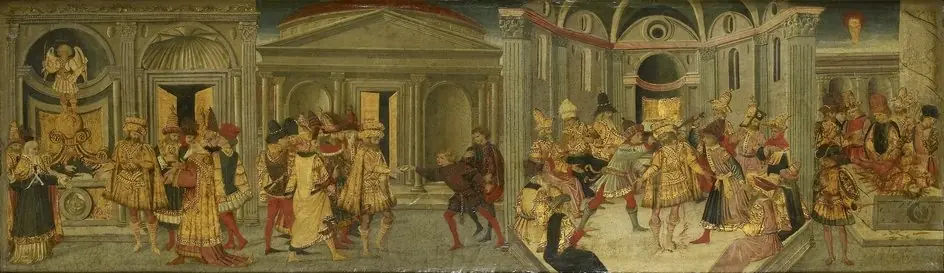 The Assassination and Funeral of Julius Caesar
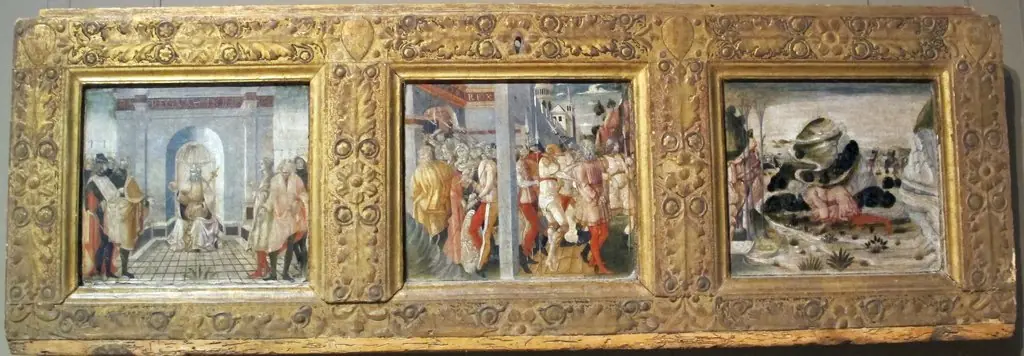 Scenes from the Life of King Nebuchadnezzar
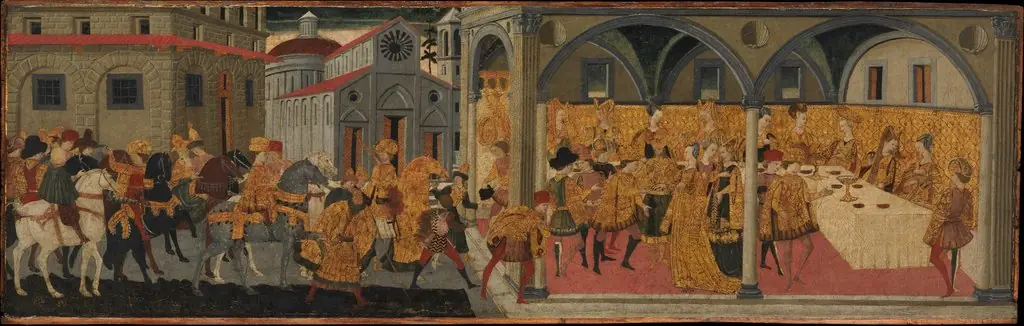 The Story of Esther
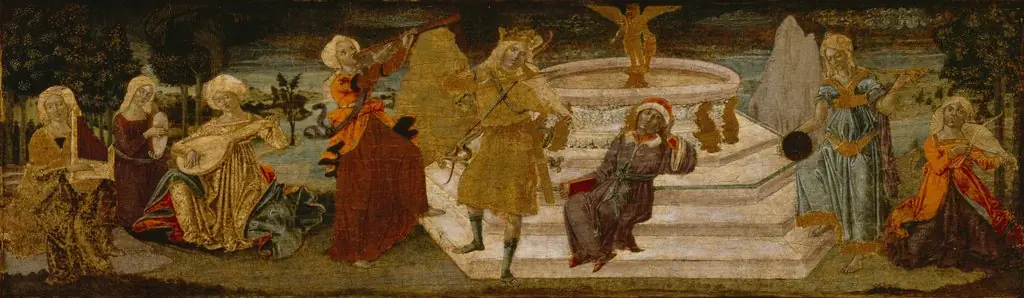 Apollo and the Muses
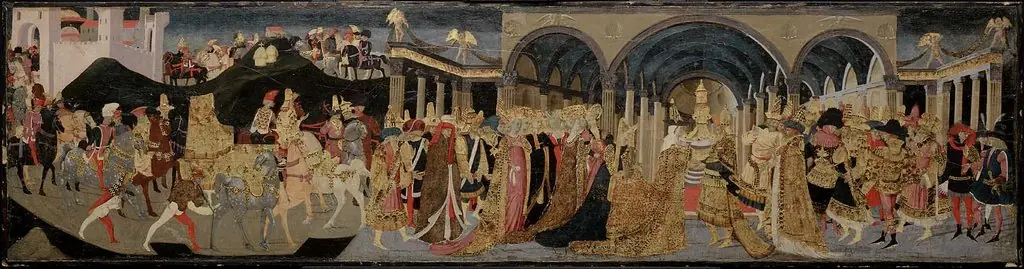 Meeting of Solomon and the Queen of Sheba
 Königin von Saba vor Salomon
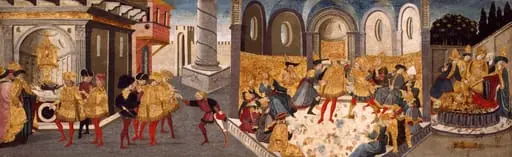 The Assassination and Funeral of Julius Caesar
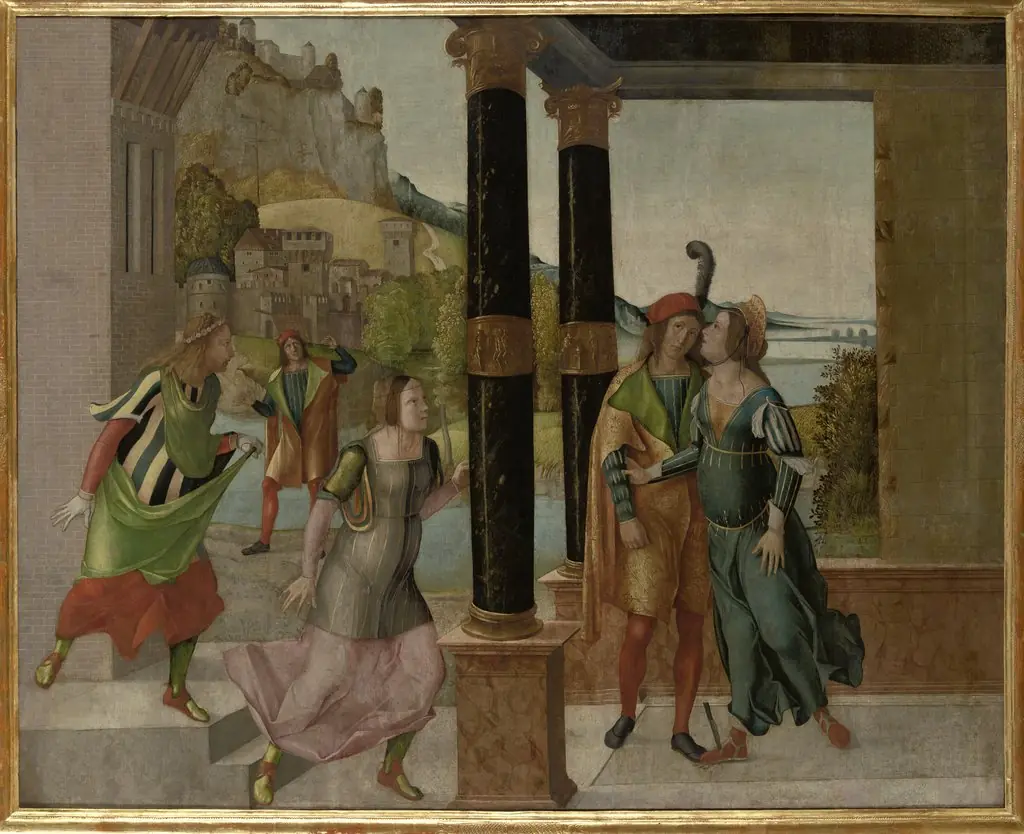 Brutus and Porcia
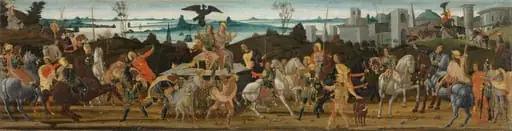 Tarquinius Priscus Entering Rome
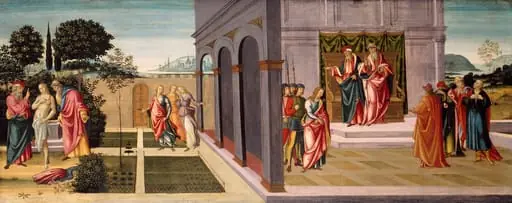 Susanna and the Elders in the Garden, and the Trial of Susanna before the Elders
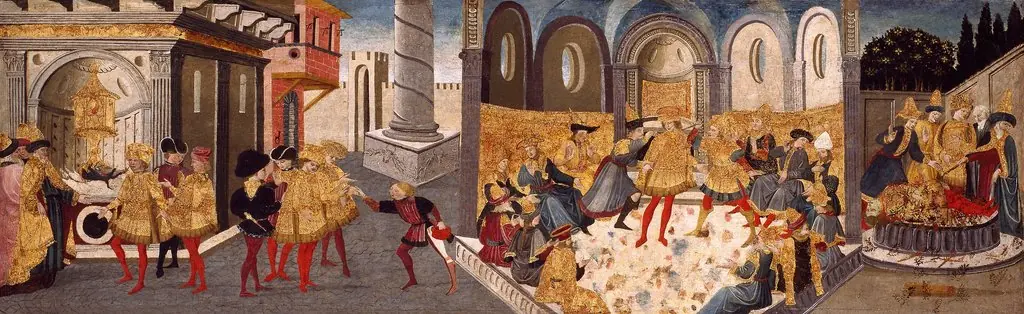 The Assassination and Funeral of Julius Caesar
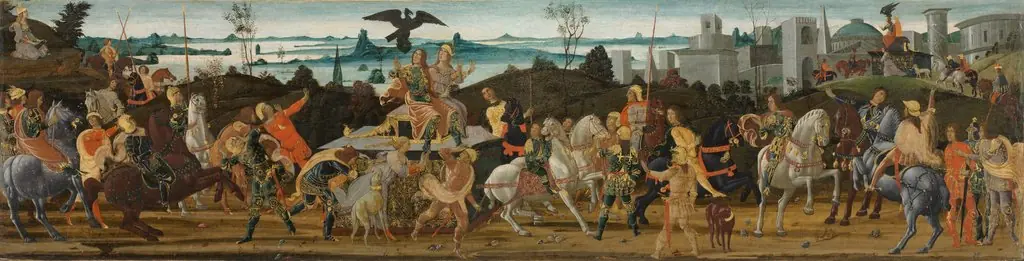 Tarquinius Priscus Entering Rome