Artwork
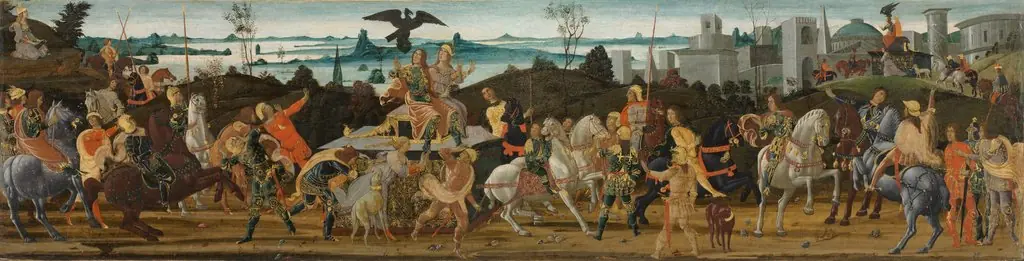
Tarquinius Priscus Entering Rome
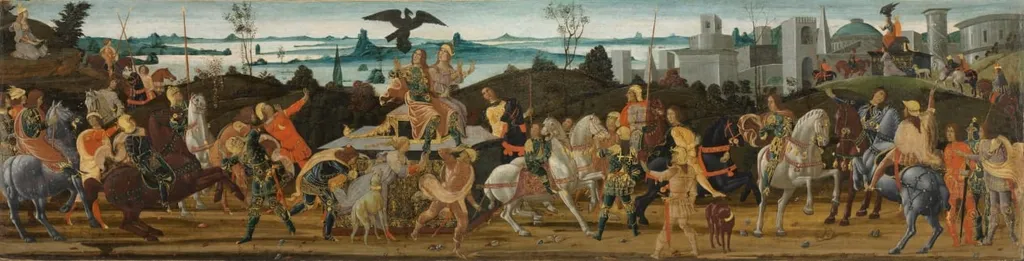
Tarquinius Priscus Entering Rome is an unspecified painting by the Early Renaissance artist Jacopo da Sellaio. It dates from 1470 and is held in the collection of the Cleveland Museum of Art. This panel painting originated as the front of a 15th-century Italian bridal chest before being removed and framed.
About this work
The artist painted it to last—bright colors, careful folds in the clothes, even the way light hits the horse’s flank.
A man on a white horse rides into a walled city, surrounded by soldiers and cheering crowds. A woman in red points ahead, her face calm and knowing.
This painting was once the front of a wooden chest given to a bride in 1400s Italy. The scene shows a Roman king’s lucky arrival, read as a lesson in wifely support. The artist painted it to last—bright colors, careful folds in the clothes, even the way light hits the horse’s flank.
Look up other works about Italy, late 15th century to see how artists told stories on furniture.
Overview
This panel painting originated as the front of a 15th-century Italian bridal chest before being removed and framed. It depicts a pivotal moment in Roman history: the auspicious entry of Tarquinius Priscus into Rome, foreseen and interpreted by his wife, the Etruscan prophetess Tanaquil.
Subject & Meaning
The scene illustrates Tanaquil’s prophetic interpretation of an eagle’s actions with Tarquinius’s hat as a good omen for his entry. Tanaquil serves as a model of a supportive and dutiful wife, a theme relevant to its original context as a bridal chest decoration.
Technique & Style
Characterized by bright, enduring colors and meticulous details, such as the folds in clothing and the play of light on the horse’s flank, the painting showcases the artist’s attention to durability and narrative clarity.
History & Provenance
Originally part of a wooden bridal chest in 15th-century Italy, the panel was later detached and framed. Its history reflects the practice of adorning marital furniture with scenes of ancient triumph and moral lessons.
Context
The work is part of a late 15th-century Italian tradition of illustrating historical and moral narratives on furniture, often drawing from ancient Roman themes and motifs associated with triumphal processions and sarcophagi.
Legacy
While specific lasting impacts or direct influences are not detailed, the painting contributes to the understanding of how Renaissance artists used narrative storytelling on domestic objects to convey moral and historical themes.
Artist & collection
Artist
Jacopo del Sellaio (1441/42–1493) was an Italian painter of the early Renaissance, active in his native Florence.

 Julius Caesar and the Crossing of the Rubicon (scene from the story of Alexander the Great)
 Darius Marching to the Battle of Issus
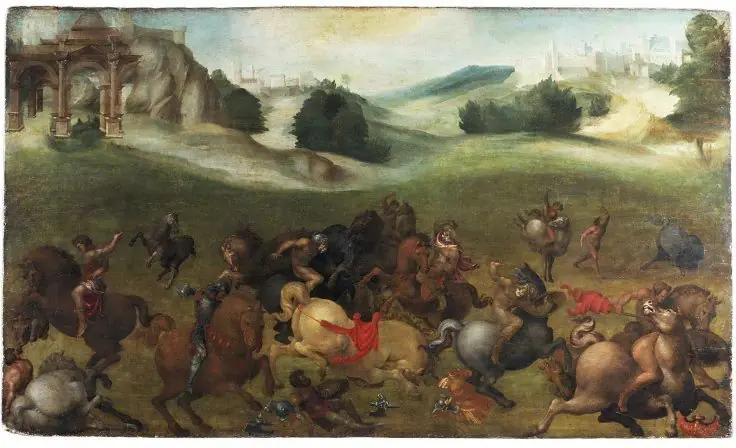 the conversion of St Paul
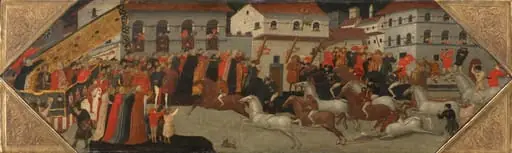 Panel from a Cassone: The Race of the Palio in the Streets of Florence
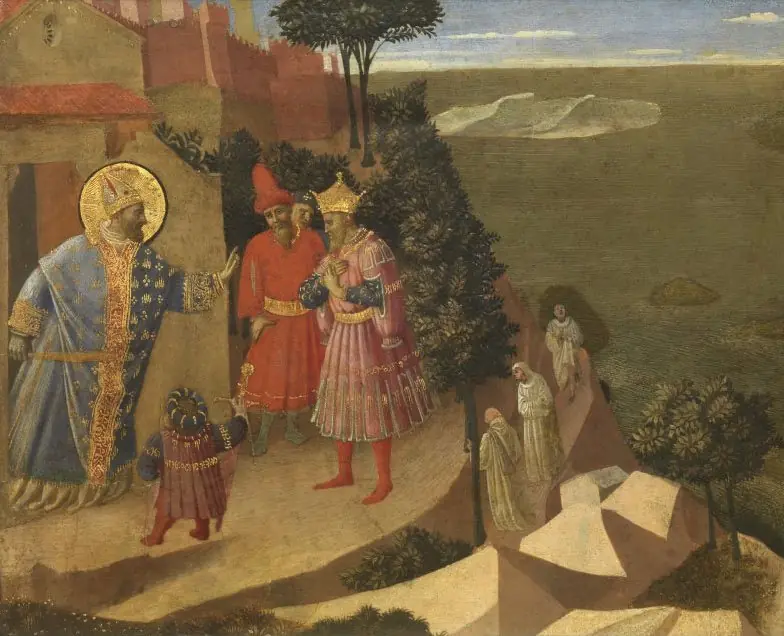 Saint Romuald Forbidding Entry to the Monastery to Emperor Otton III
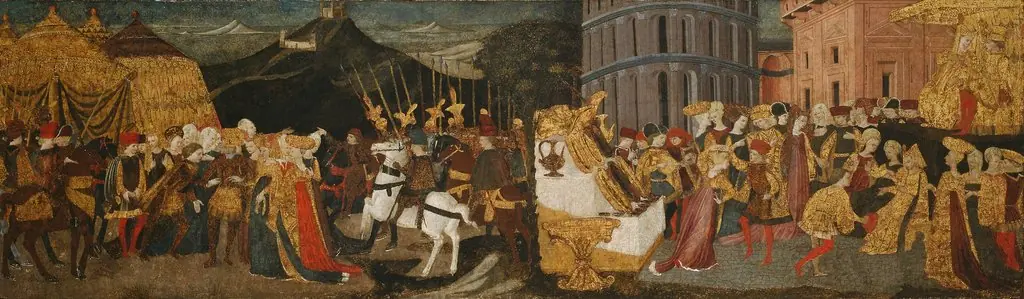 The Continence of Scipio
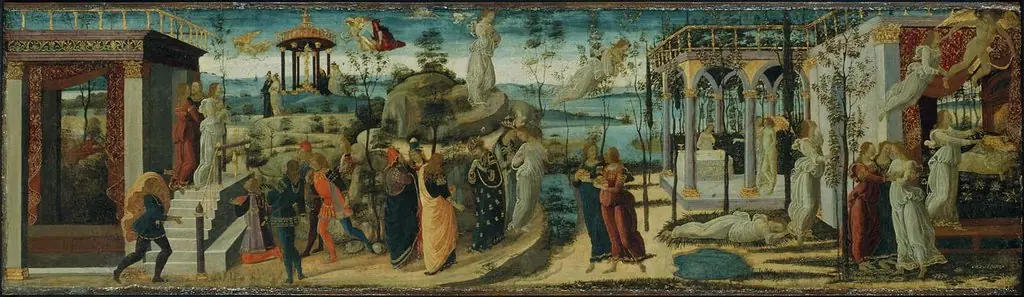 Story of Psyche
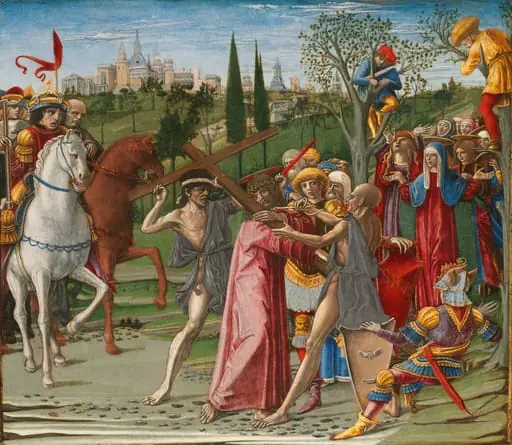 Christ Carrying the Cross
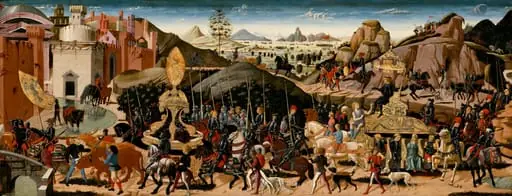 The Triumph of Camillus
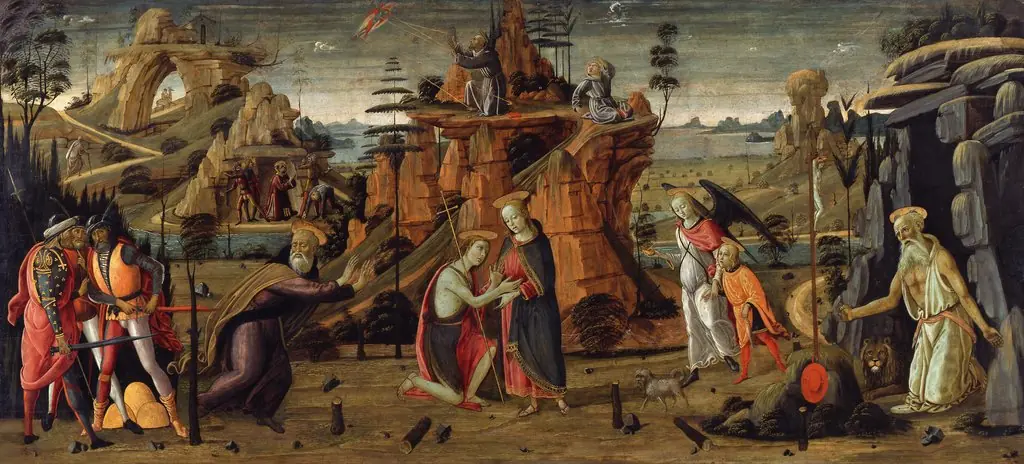 Landscape with biblical scenes and scenes from the legends of saints