Artwork
Enthroned Virgin and Child, with Saints Paul, Peter, Clare of Assisi, Mary Magdalene, Barbara, Catherine of Alexandria, John the Baptist, John the Evangelist, Agnes, Cecilia, Margaret of Antioch, and George
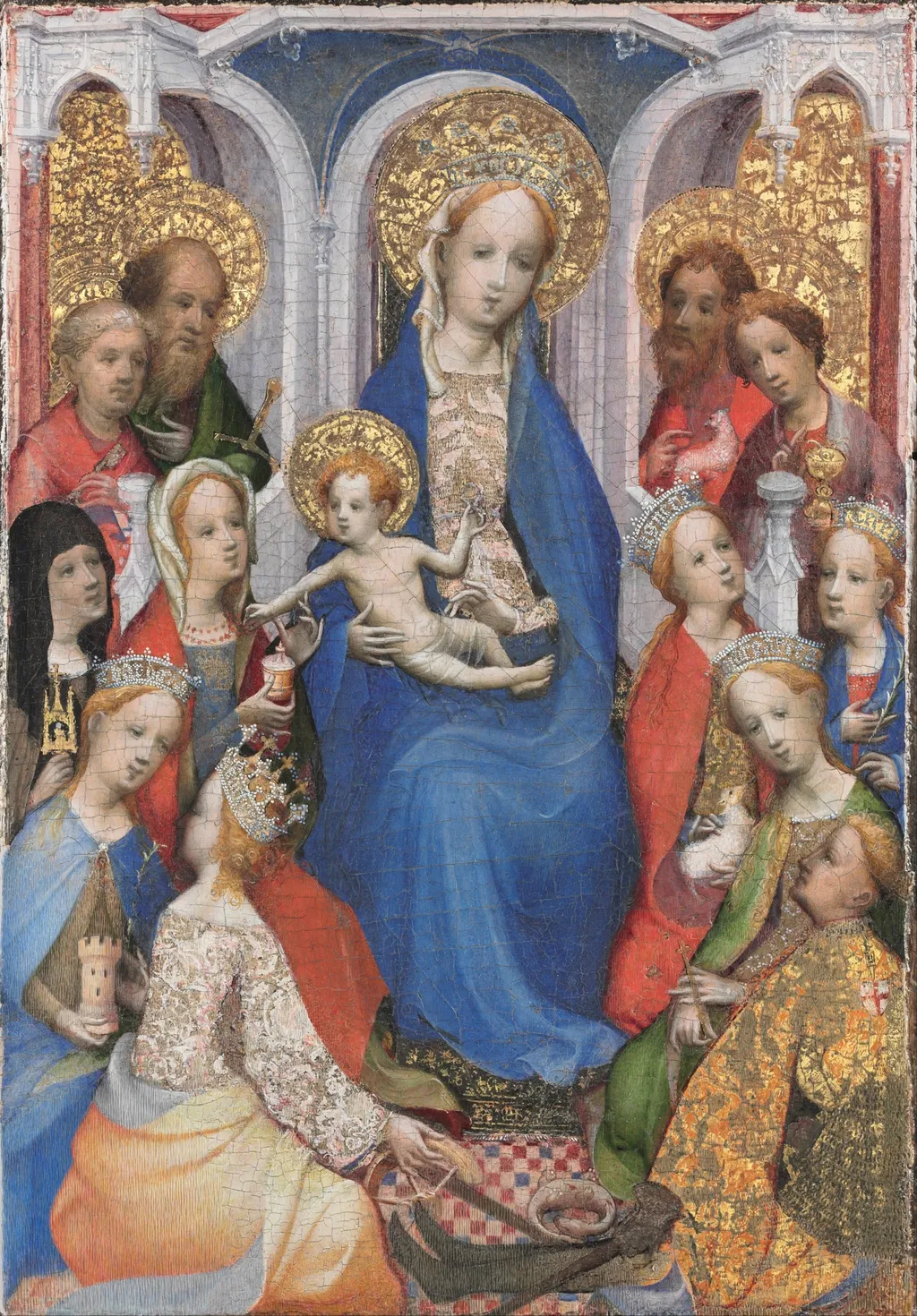
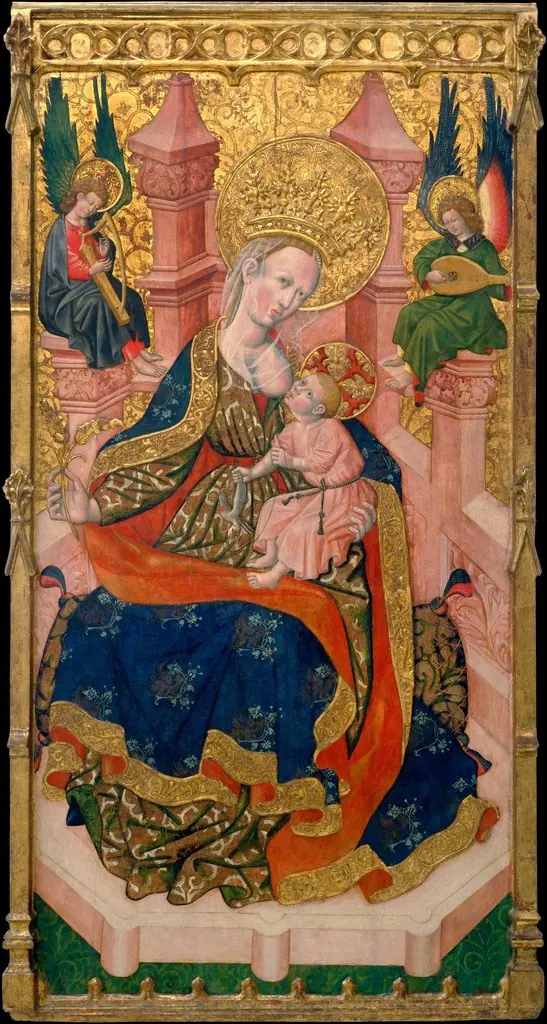
Enthroned Virgin and Child, with Saints Paul, Peter, Clare of Assisi, Mary Magdalene, Barbara, Catherine of Alexandria, John the Baptist, John the Evangelist, Agnes, Cecilia, Margaret of Antioch, and George is an oil painting by the Northern Renaissance artist Master of Saint Veronica. It dates from 1400 and is held in the collection of the Philadelphia Museum of Art. Created around 1400, this oil on panel presents the Virgin Mary enthroned with the infant Christ at her side.
About this work
Overview
The figures occupy a dark blue backdrop framed by white arches, each rendered in vivid, individualized costume.
Created around 1400, this oil on panel presents the Virgin Mary enthroned with the infant Christ at her side. She is crowned and draped in a blue mantle, while a host of saints—Paul, Peter, Clare of Assisi, Mary Magdalene, Barbara, Catherine of Alexandria, John the Baptist, John the Evangelist, Agnes, Cecilia, Margaret of Antioch, and George—assemble around the throne. The figures occupy a dark blue backdrop framed by white arches, each rendered in vivid, individualized costume.
Subject & Meaning
The central focus on the Virgin and Child underscores their intercessory role, while the surrounding saints represent a spectrum of biblical and hagiographic authority. Figures such as Paul and Peter evoke apostolic foundations, whereas female saints like Catherine and Clare highlight piety and martyrdom. Their collective gaze toward Mary and the infant reinforces a devotional hierarchy, inviting viewers to contemplate the sanctified community surrounding Christ.
Technique & Style
Executed in oil, the work displays the early Northern Renaissance’s attention to detail and rich coloration. The artist employs fine brushwork to delineate textures—silks, fur, and metal—creating a tactile sense of materiality. Modulated lighting models the figures against the deep blue background, while the architectural arches provide a spatial framework that balances the crowded composition without overwhelming the central figures.
History & Provenance
Attributed to the anonymous Master of Saint Veronica, the painting emerged in the early 15th‑century artistic milieu of the Low Countries. Its provenance traces to a private collection before being acquired by the Philadelphia Museum of Art, where it now resides as part of the museum’s European medieval holdings.
Context
The piece reflects the period’s devotional practice of assembling a “sacra conversazione,” a gathering of saints from various epochs sharing a unified space. Such compositions served both liturgical functions and private contemplation, often commissioned for chapels or wealthy patrons seeking intercession from a broad spectrum of holy figures.
Artist & collection


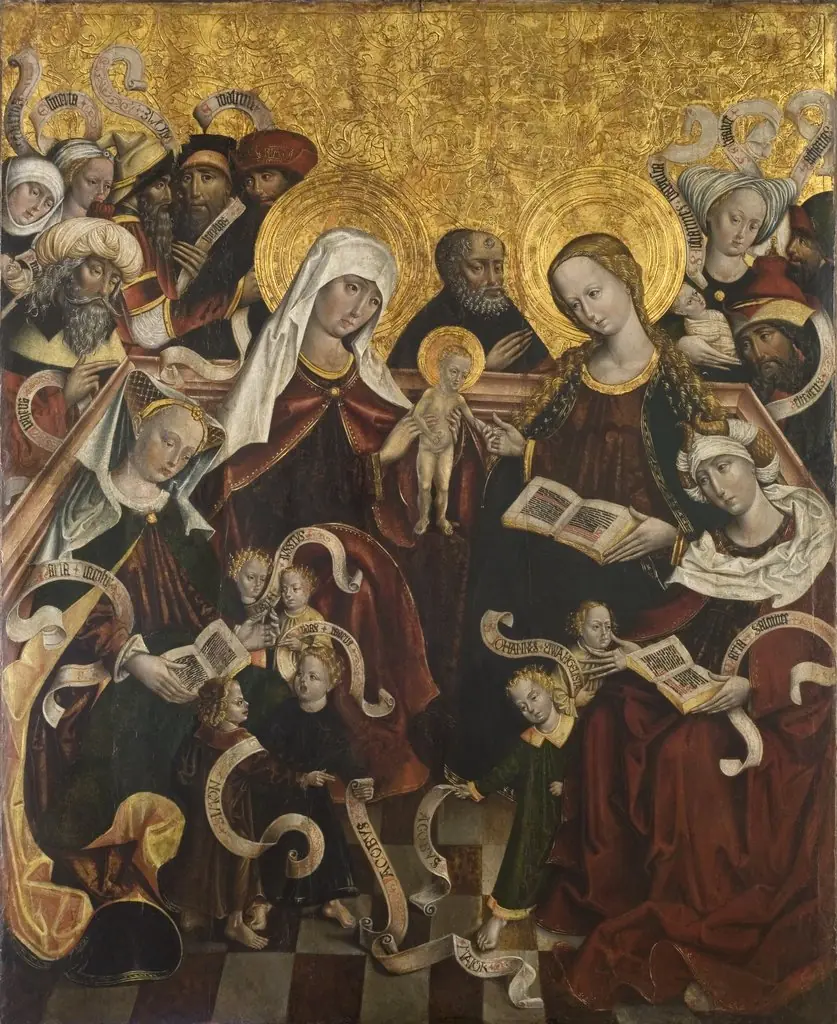 Family of the Virgin Mary, from Ołpiny
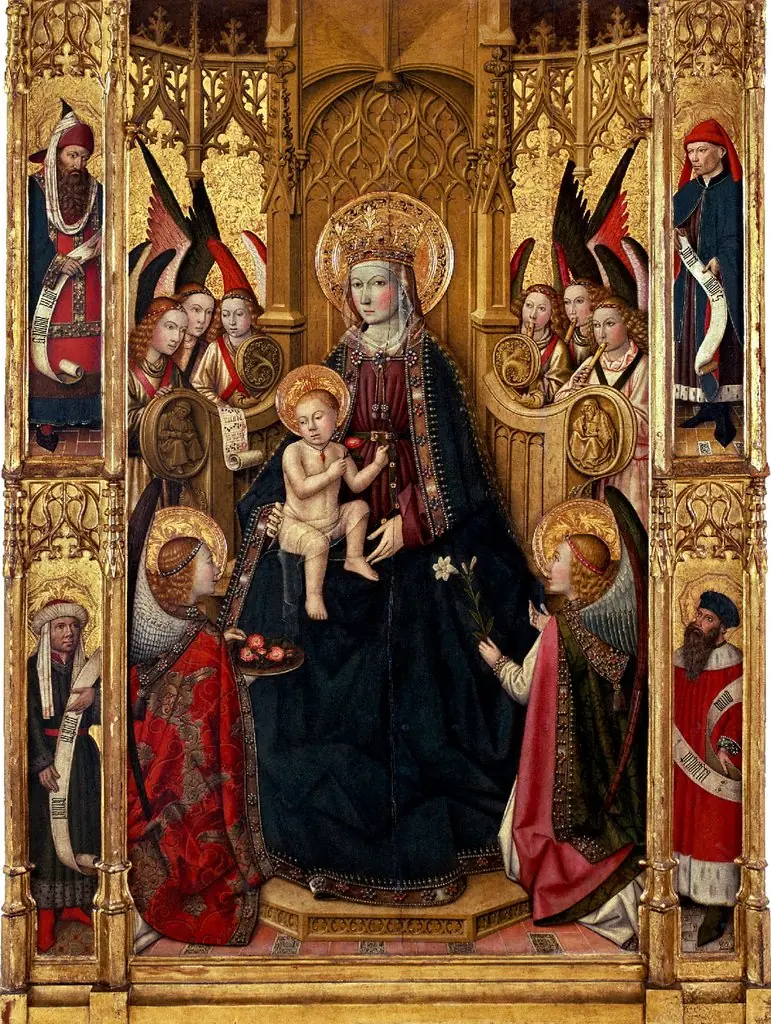 Madonna with child
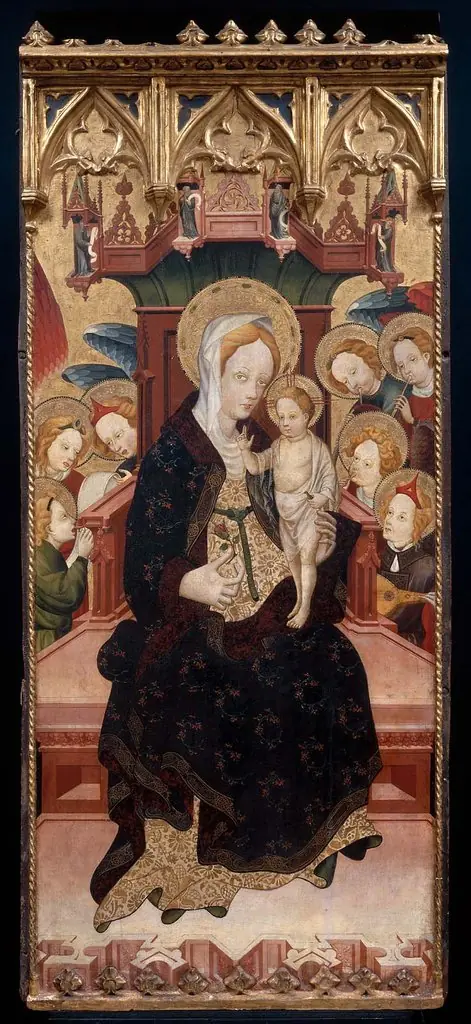 Virgin and Child Enthroned
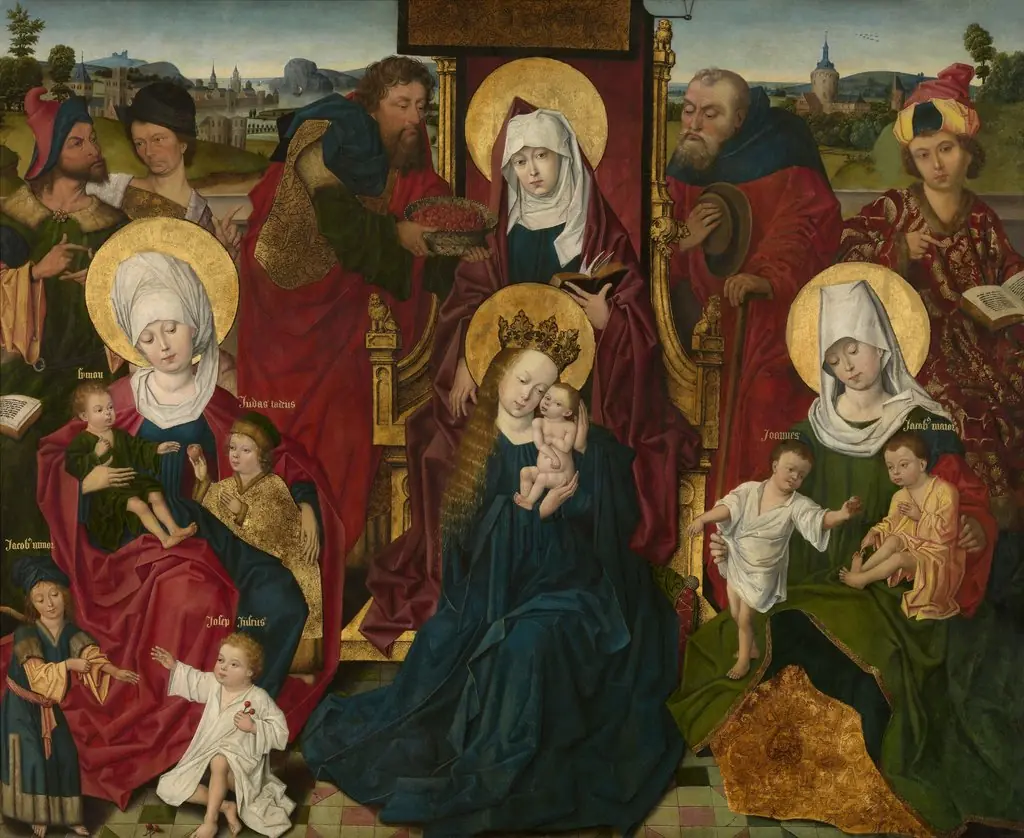 Holy Kinship
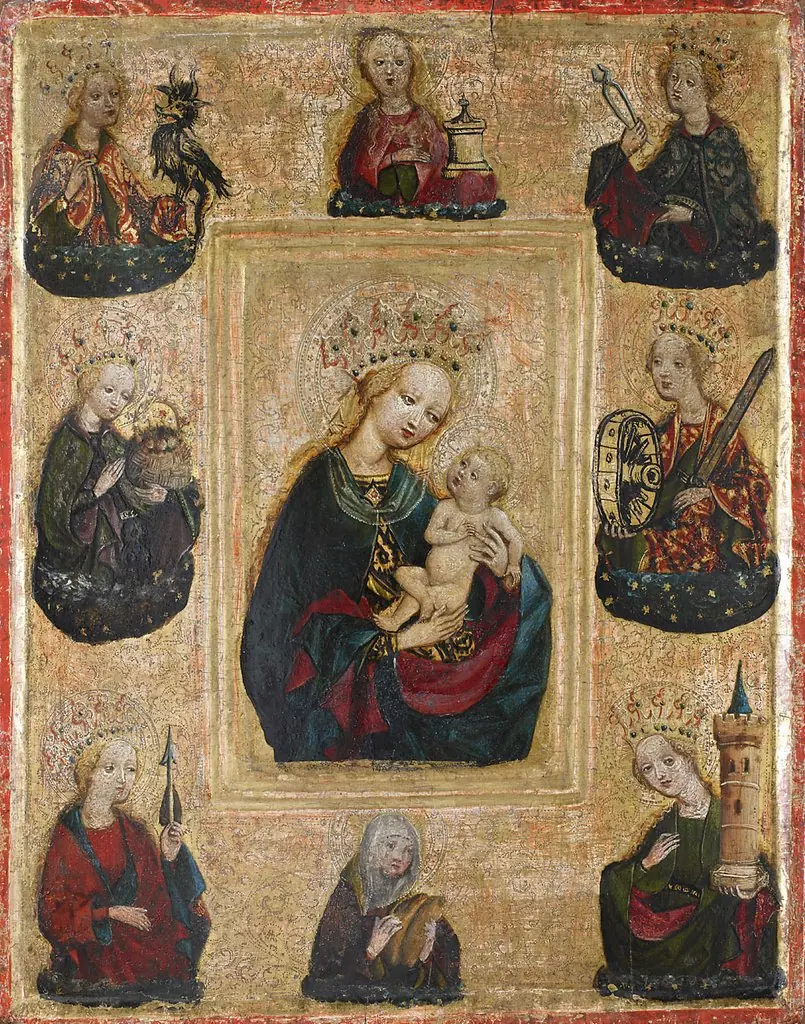 Maria mit Kind
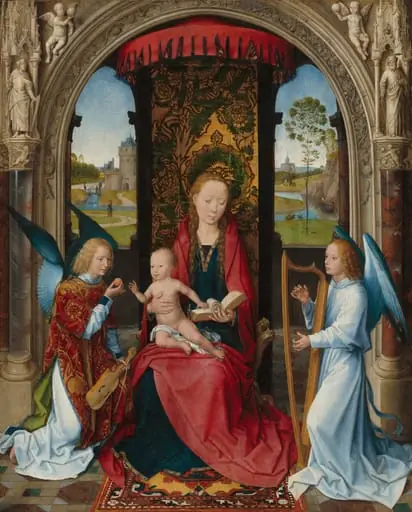 Madonna and Child with Angels
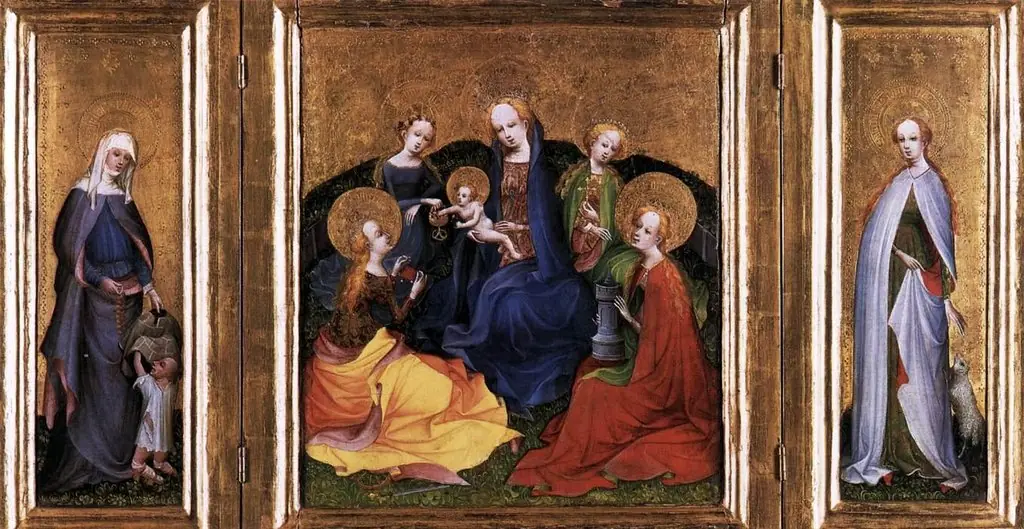 Triptych: Madonna and Child with Saints
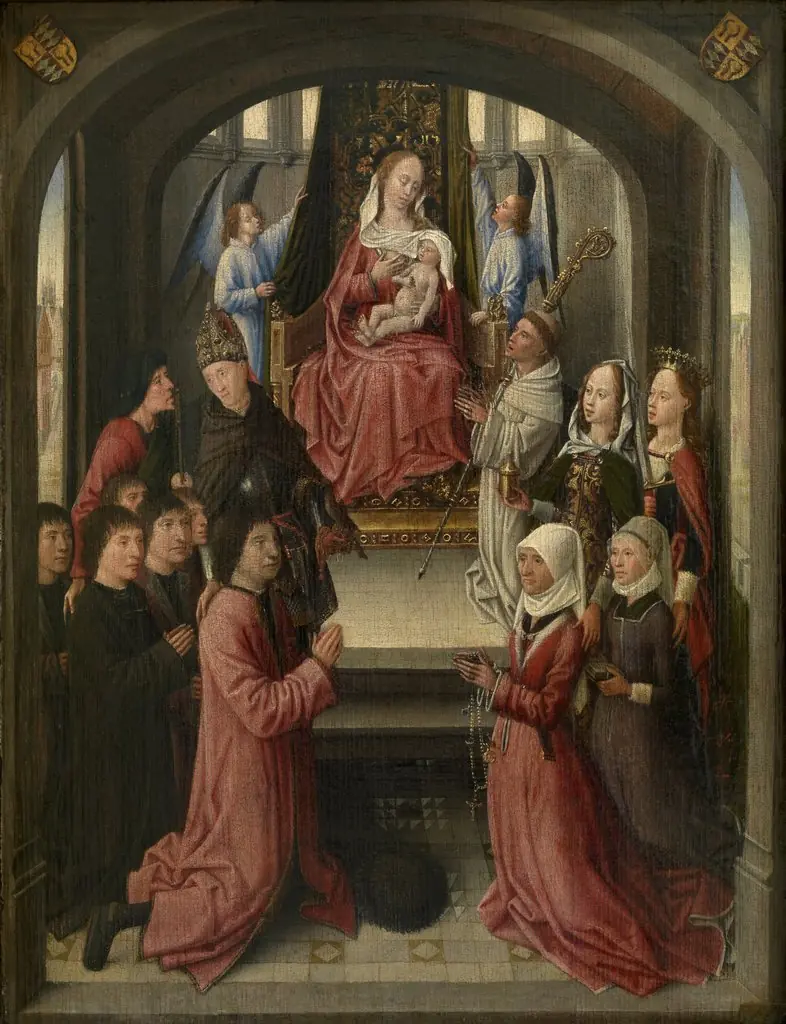 Lactatio of Saint Bernard of Clairvaux with Donors
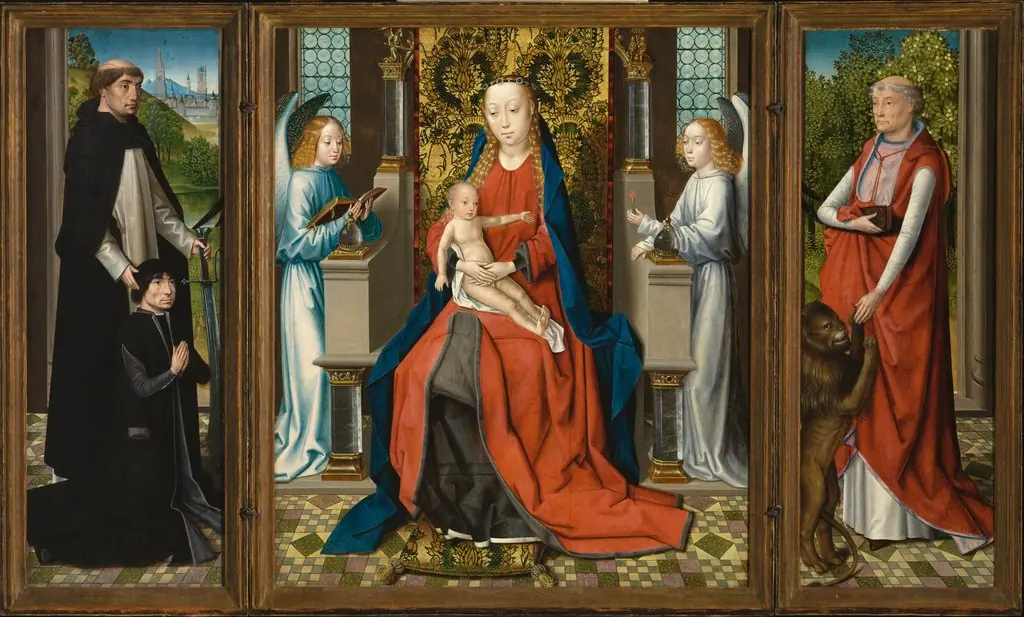 Triptych of Madonna and Child with Angels; Donor and His Patron Saint Peter Martyr; and Saint Jerome and His Lion
 Virgin Suckling the Child