Artwork
Christ and the Virgin Enthroned with Forty Saints
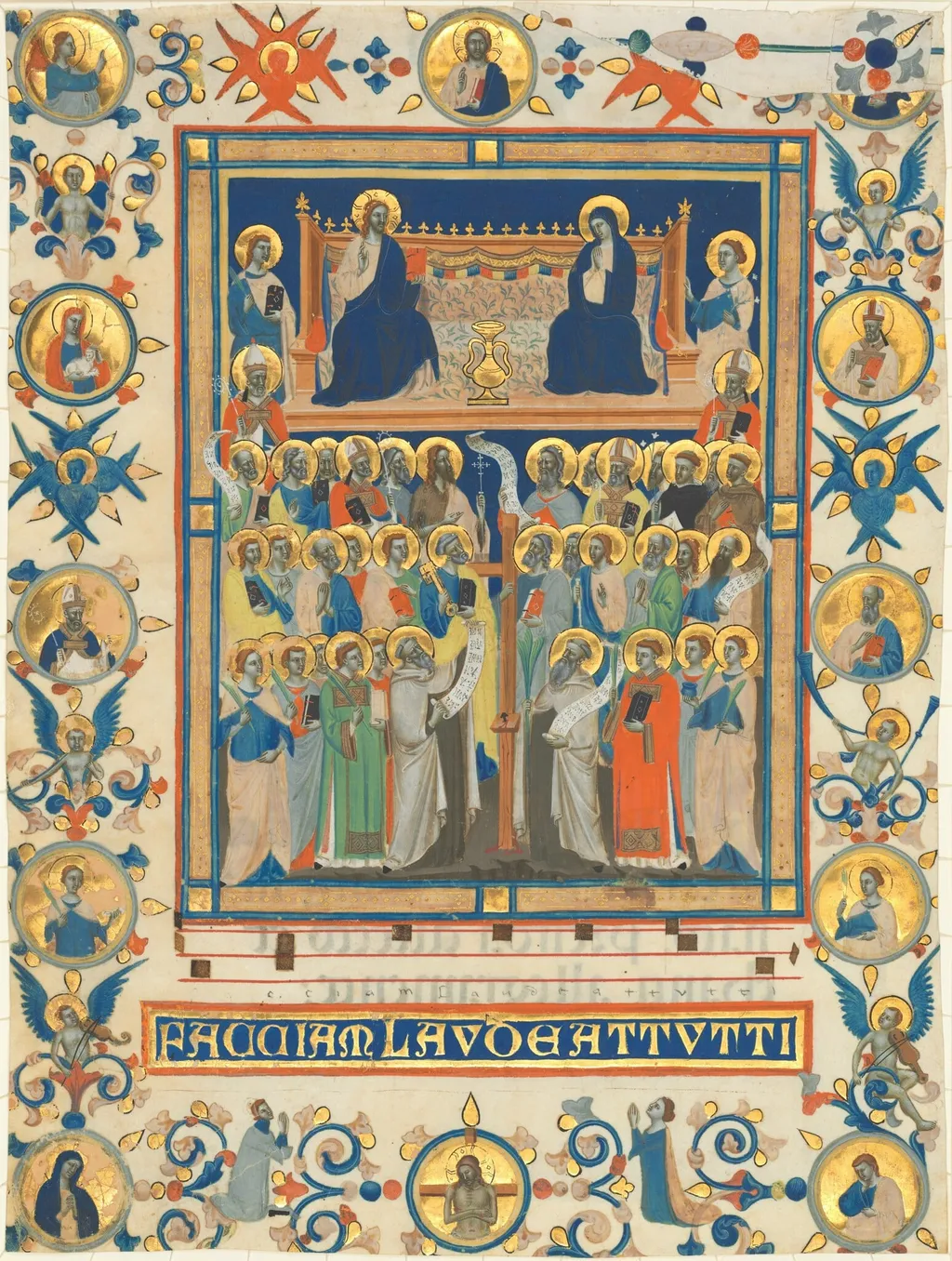
Christ and the Virgin Enthroned with Forty Saints is a drawing by Master of the Dominican Effigies. It dates from 1340 and is held in the collection of the National Gallery of Art.
About this work
Overview
Created around 1340, this vellum miniature by the anonymous Master of the Dominican Effigies depicts the enthroned Christ and the Virgin Mary surrounded by a congregation of forty saints. Executed in a richly colored palette of gold, deep blue and vivid red, the work functions as a devotional image intended for private or liturgical contemplation.
Subject & Meaning
At the composition’s centre, Christ holds a crown while the Virgin bears a book, symbols of sovereignty and divine wisdom. The surrounding saints, arrayed in varied robes and holding scrolls or texts, represent a heavenly court, reinforcing the theological hierarchy and intercessory role of the saints in medieval devotion.
Technique & Style
The miniature employs gold leaf and mineral pigments applied to fine vellum, creating a luminous surface that catches light. Halos rendered in gold surround each figure, while intricate ornamental borders filled with patterned motifs and star-like decorations frame the scene, reflecting the ornate aesthetic of 14th‑century Gothic manuscript art.
History & Provenance
Attributed to the Master of the Dominican Effigies, an artist active in the early 14th century, the piece likely originated in a Dominican context, suggested by the artist’s name and the devotional subject. The marginal inscription “BACCIAMLAVOETI” appears at the bottom, possibly indicating a patron, donor, or scribe associated with the work.
Context
The miniature belongs to a tradition of illuminated devotional images that circulated among monastic and ecclesiastical communities in medieval Italy. Its emphasis on a celestial assembly mirrors contemporary theological emphasis on the communion of saints and the intercessory power of the Virgin and Christ.
Legacy
Although the artist remains anonymous, the work exemplifies the sophisticated use of gold and vivid pigments in manuscript illumination, influencing later devotional miniatures. Its preservation offers insight into the visual language of sanctity and authority in early Gothic religious art.
Artist & collection


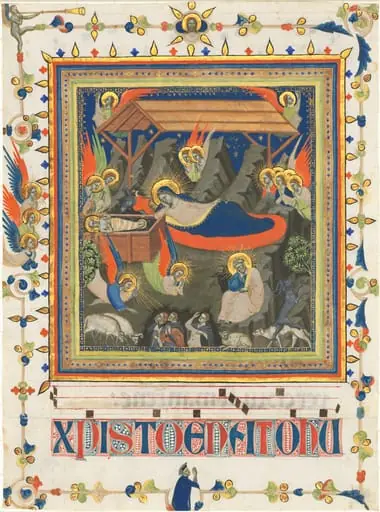
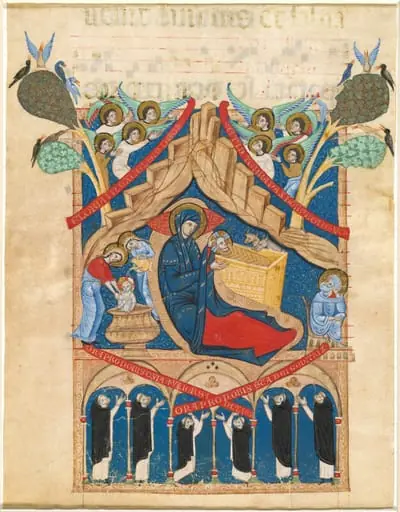 The Nativity with Six Dominican Monks
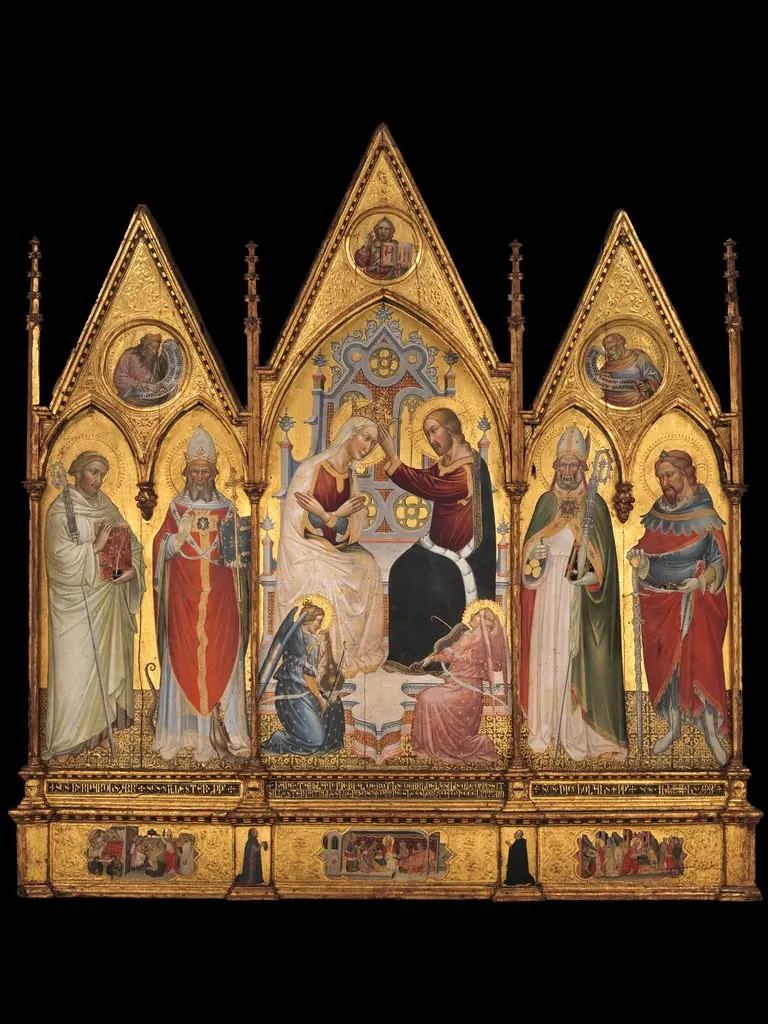 The Coronation of the Virgin, and Saints
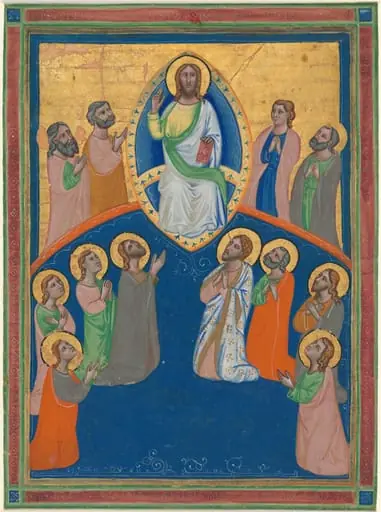 Christ in Majesty with Twelve Apostles
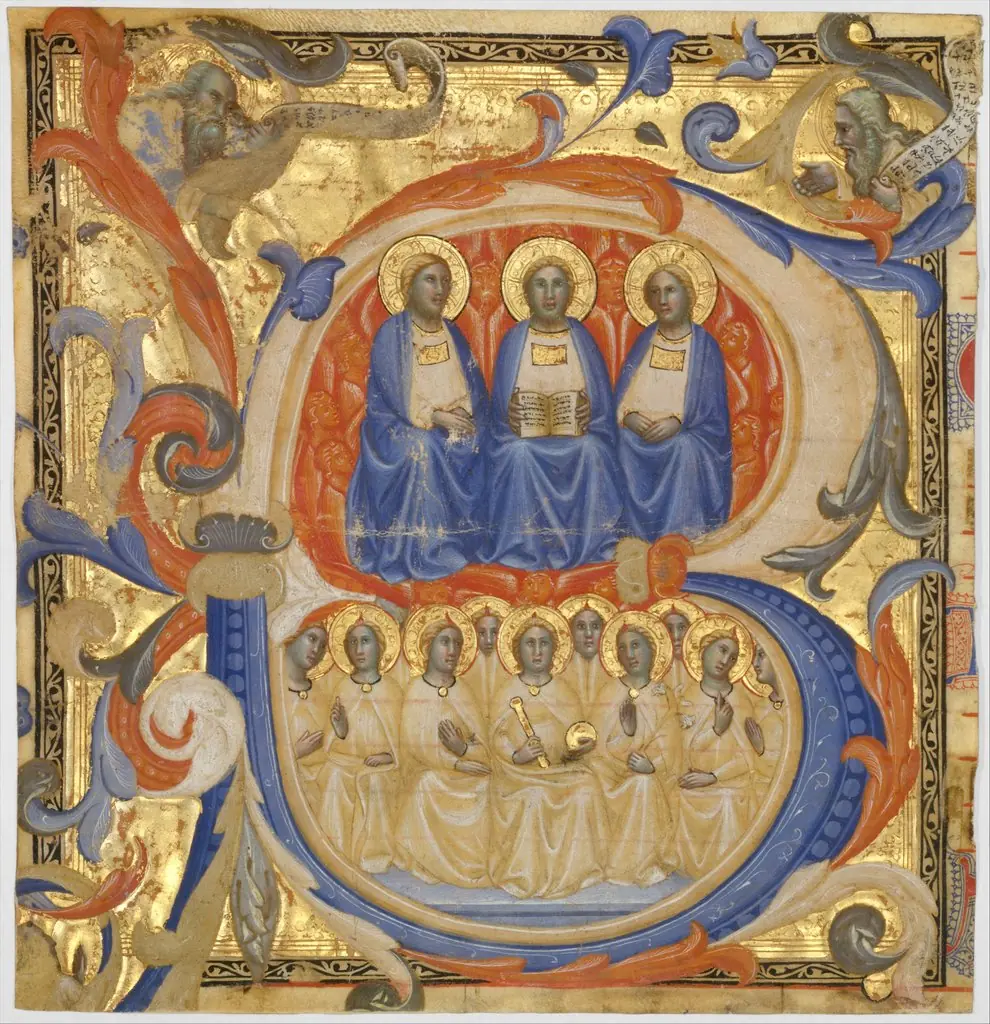 The Trinity in an Initial B
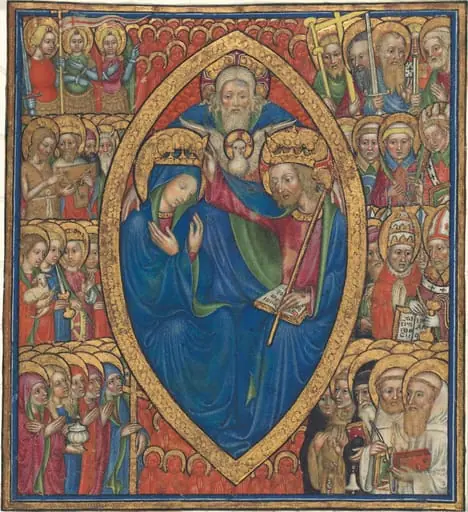 Coronation of the Virgin with the Trinity and Saints
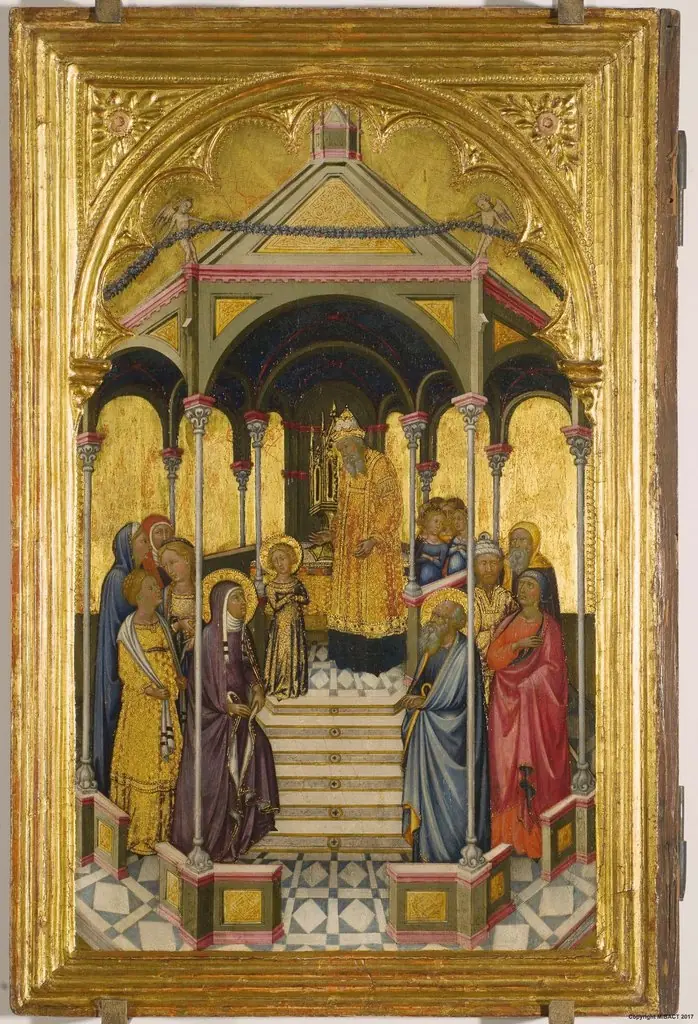 The Presentation of the Virgin at the Temple
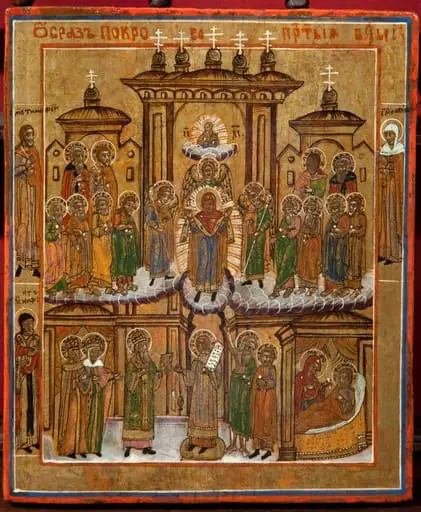 Acoperământul Maicii Domnului; Pocrovul
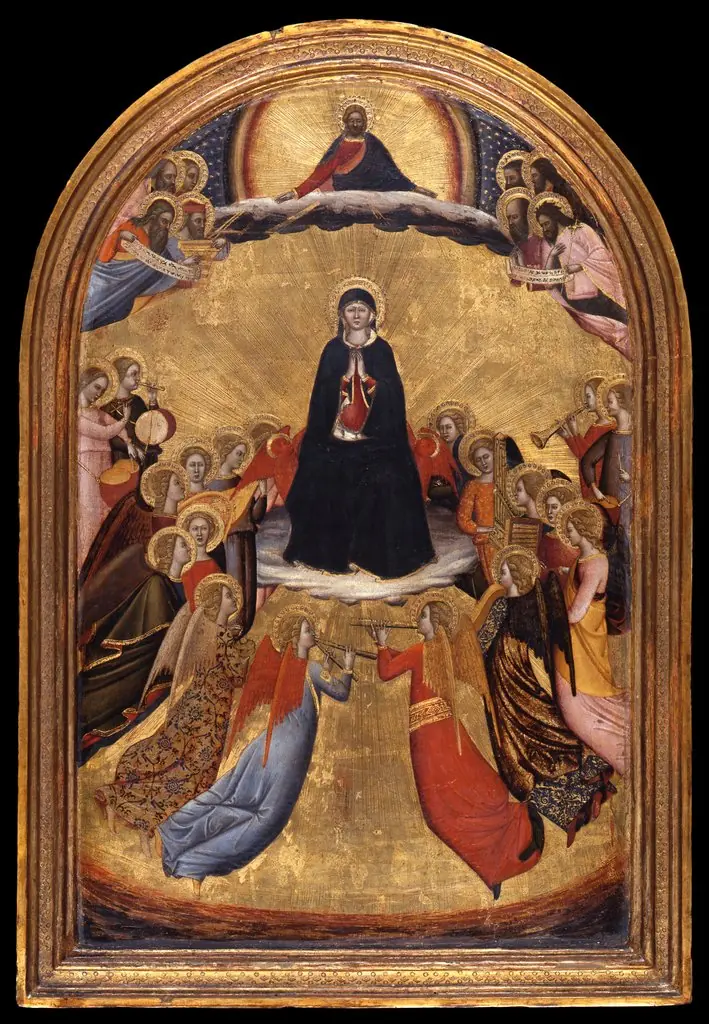 The ascension of Mary
 All Saints in an Initial E or O
 Christ on the Cross between the Virgin and St. John/ Madonna enthroned
 The Crucifixion
 The Crucifixion