Artwork
Coronation of the Virgin with the Trinity and Saints
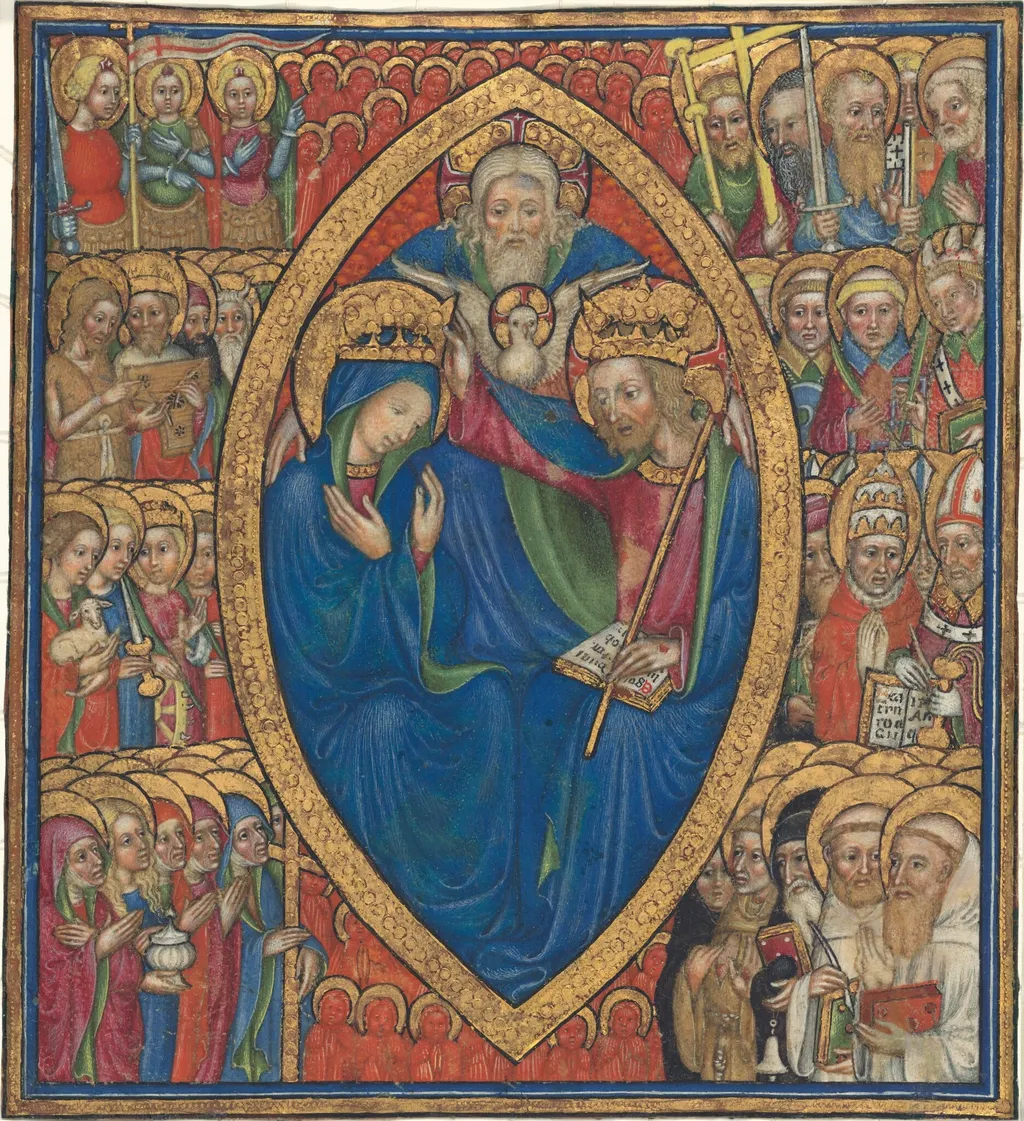
Coronation of the Virgin with the Trinity and Saints is a drawing by the Renaissance artist Olivetan Master. It dates from 1440 and is held in the collection of the National Gallery of Art.
About this work
Overview
Created around 1440 by the Olivetan Master, this miniature on vellum depicts the Coronation of the Virgin within a devotional context.
Created around 1440 by the Olivetan Master, this miniature on vellum depicts the Coronation of the Virgin within a devotional context. The scene is densely populated with figures arranged in orderly rows, framed by ornamental borders. Gold leaf highlights halos and architectural elements, while flat, saturated colors define the figures. The composition follows liturgical conventions of the period, emphasizing sacred hierarchy over naturalistic space.
Subject & Meaning
The central group shows the Trinity—God the Father, Christ, and the Holy Spirit—bestowing a crown upon the Virgin Mary. Surrounding figures include saints and angels, each identified by attributes such as books or swords, symbolizing their roles in divine order. All faces turn inward, reinforcing the ritual’s solemnity. The scene reflects medieval theology, where Mary’s elevation signifies her intercessory power and the unity of the heavenly court.
Technique & Style
The artist employed tempera and gold leaf on vellum, a common practice in manuscript illumination. Colors are applied in uniform, opaque layers without shading, creating a stylized, two-dimensional effect. Gold backgrounds and borders mimic the luminous quality of stained glass, enhancing the sacred atmosphere. Figures are rendered with precise, linear contours and minimal anatomical detail, prioritizing symbolic clarity over realism.
History & Provenance
This miniature likely originated in a liturgical book used by Olivetan monks, possibly for private devotion or monastic ceremonies. Its survival suggests it was carefully preserved, perhaps within a monastery library. The style aligns with late Gothic manuscript traditions in northern Italy, though the artist’s identity remains tied to a workshop rather than a documented individual.
Context
Produced during the early Renaissance, the work retains strong Gothic conventions, contrasting with emerging naturalism in painting. While secular art began exploring perspective and anatomy, religious manuscripts continued to favor symbolic composition and hierarchical scale. This piece reflects the enduring role of illuminated texts in monastic life, bridging devotional practice and artistic tradition.
Legacy
The miniature exemplifies the persistence of medieval visual language in religious contexts well into the 15th century. Though overshadowed by the innovations of Renaissance painting, such works influenced later altarpiece design and devotional imagery. Its preservation offers insight into the continuity of monastic artistic practices and the spiritual priorities of its time.
Artist & collection

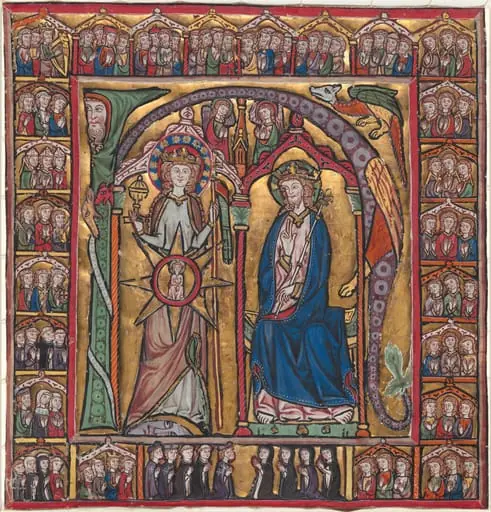 The Triumph of the Church
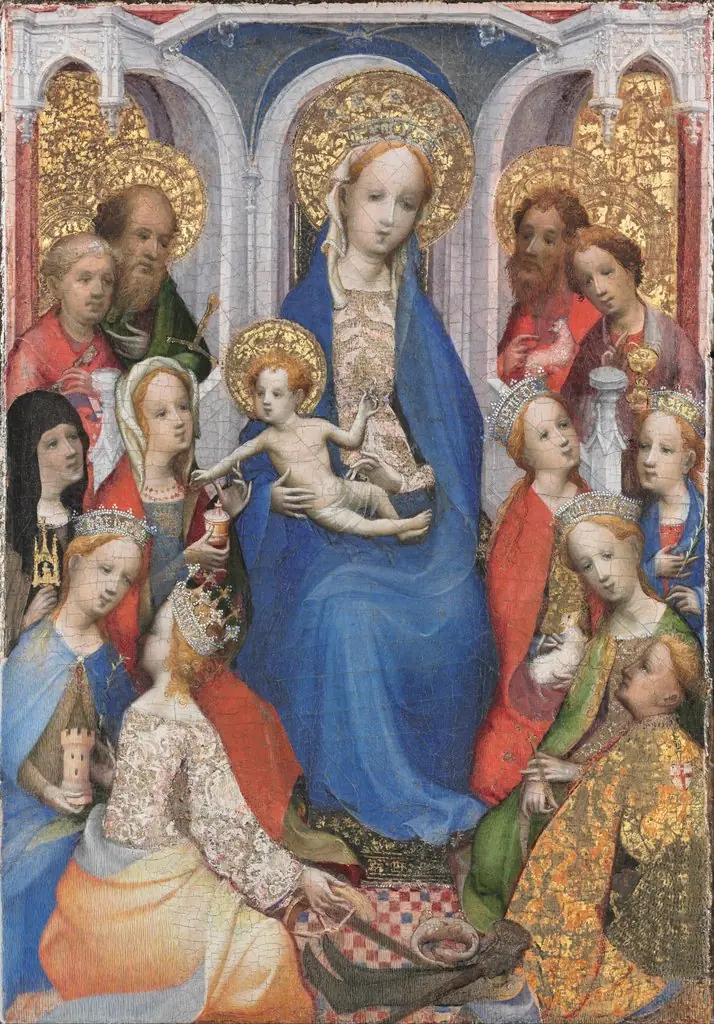 Enthroned Virgin and Child, with Saints Paul, Peter, Clare of Assisi, Mary Magdalene, Barbara, Catherine of Alexandria, John the Baptist, John the Evangelist, Agnes, Cecilia, Margaret of Antioch, and George
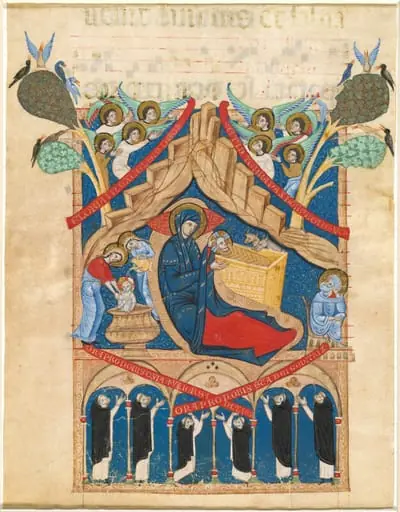 The Nativity with Six Dominican Monks
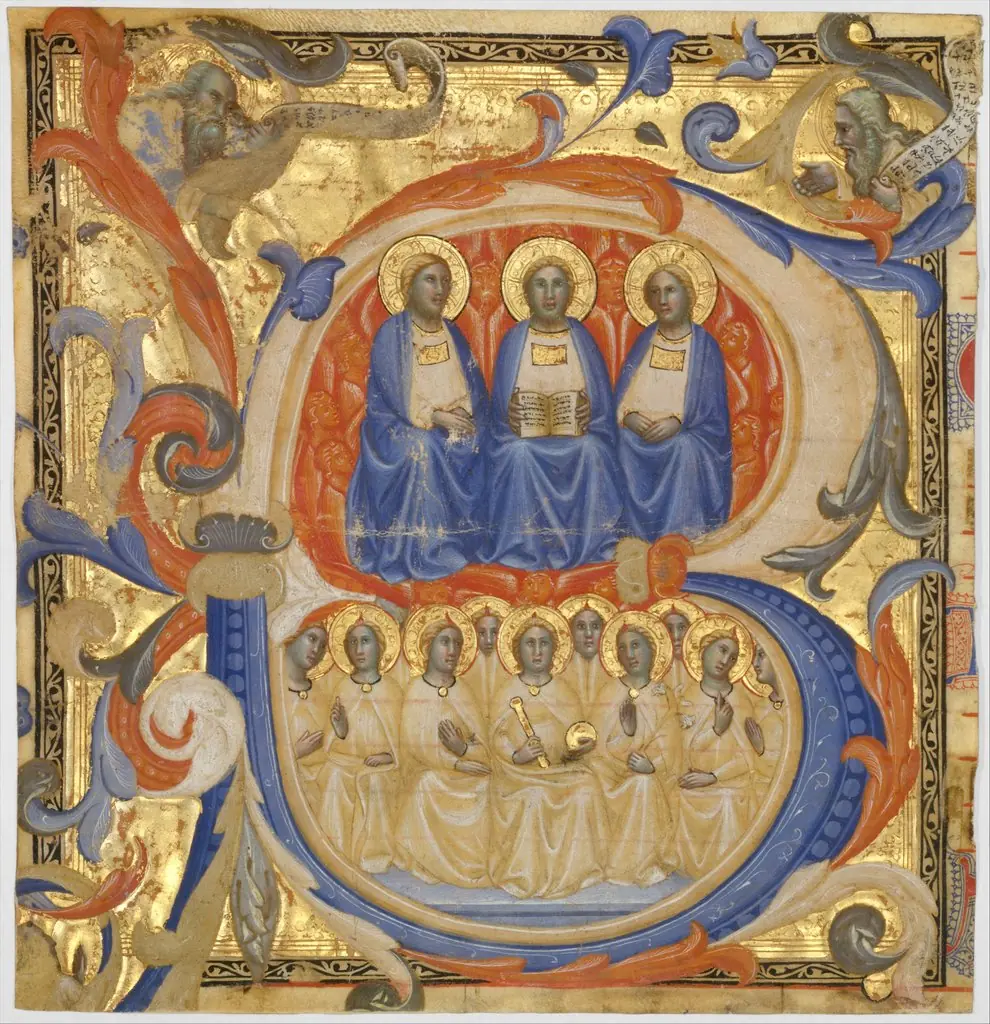 The Trinity in an Initial B
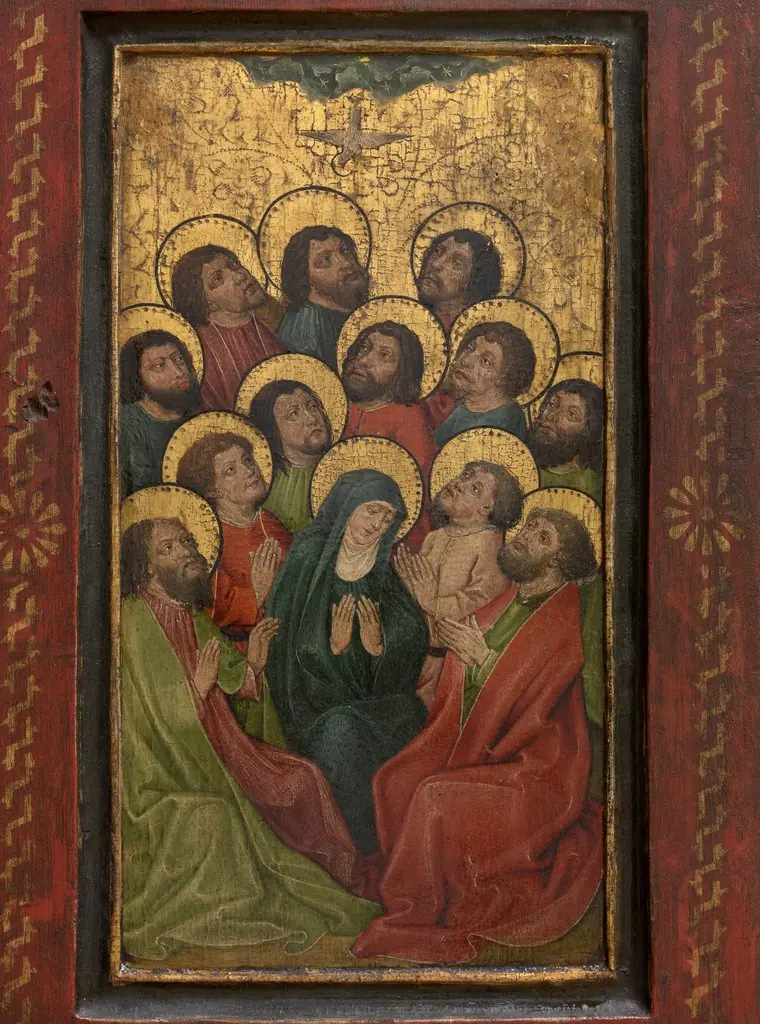 The Miracle of Pentecost
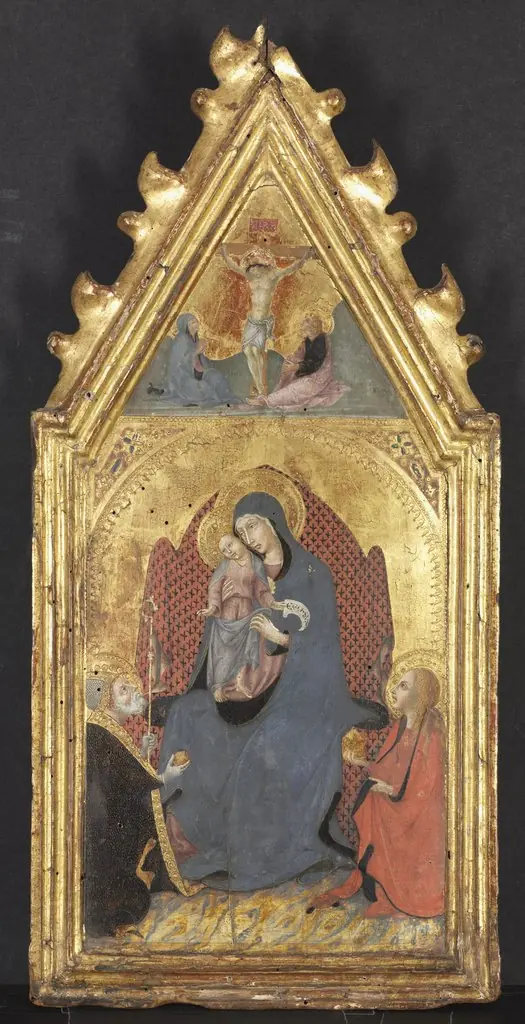 Virgin and Child Adored by Saints Mary Magdalene and Nicolas of Bari; Christ Crucified with the Virgin and Saint John the Evangelist
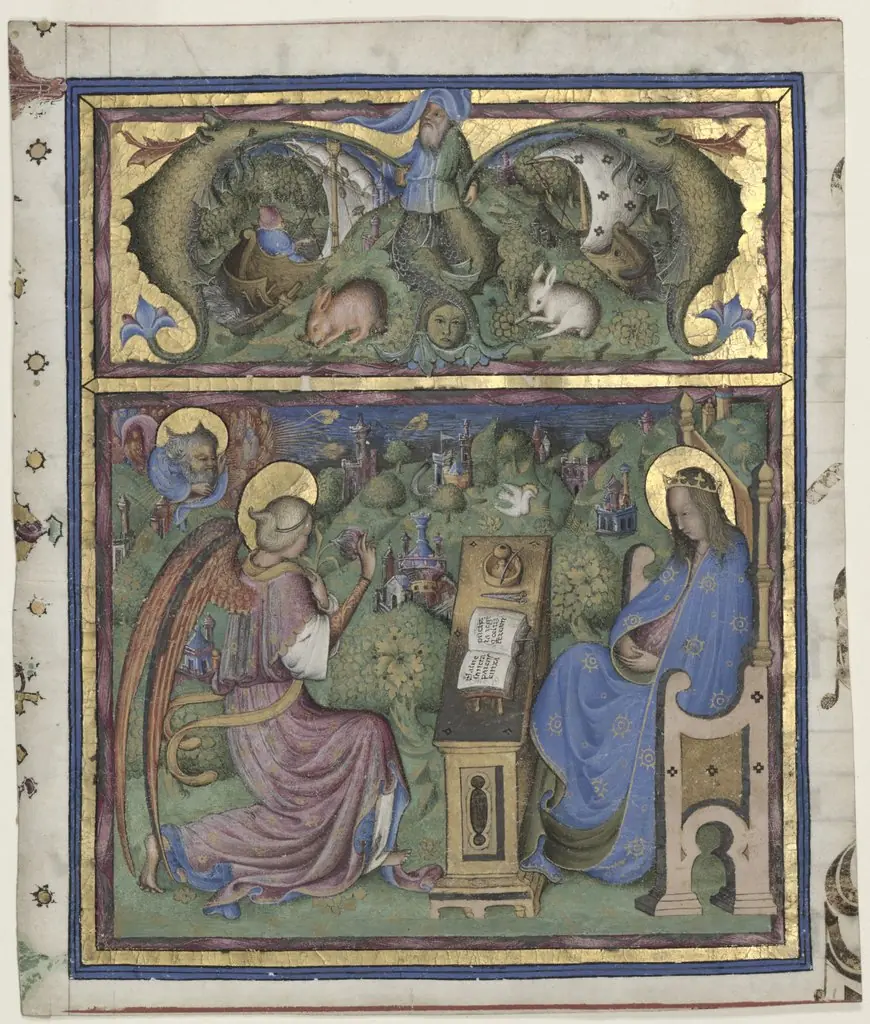 Annunciation
 Madonna and Child with Saints and Angels
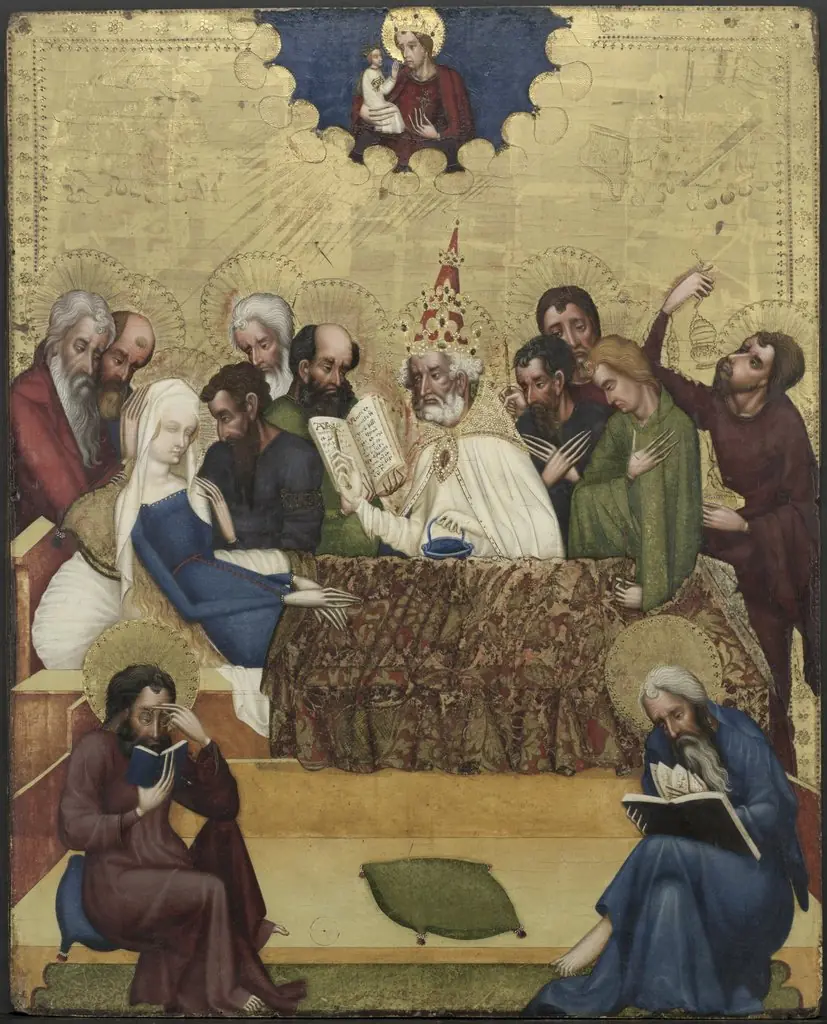 Death of the Virgin