Artwork
The Parable of the Tribute Money
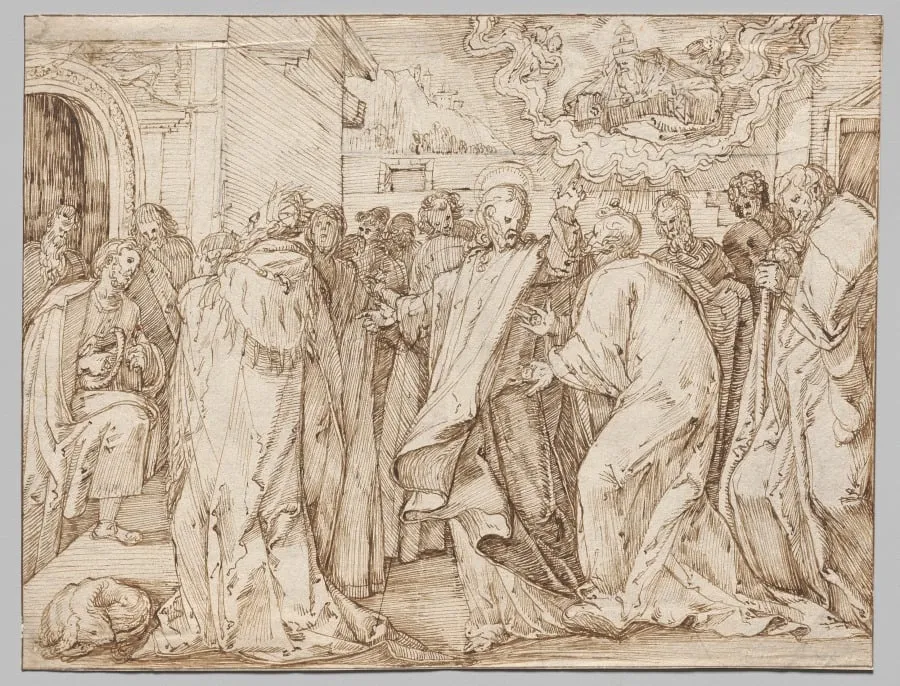
The Parable of the Tribute Money is a drawing by the Renaissance artist Master of the Egmont Albums. It dates from 1590 and is held in the collection of the Cleveland Museum of Art. This drawing illustrates the New Testament parable of the Tribute Money, exploring the balance between earthly and divine authority.
About this work
You see a crowded town square where Jesus stands in the middle, pointing up to God with one hand and down to a king with the other.
You see a crowded town square where Jesus stands in the middle, pointing up to God with one hand and down to a king with the other. People around him bow or kneel, some toward the king, some toward heaven.
The painting shows a Bible story about paying taxes—give to rulers what they ask, but keep faith in God. The artist packed the scene with tiny details: coins on the ground, fancy robes, and faces full of emotion.
To see more like this, look up *Netherlands, late 16th century*.
Overview
This drawing illustrates the New Testament parable of the Tribute Money, exploring the balance between earthly and divine authority. Christ stands centrally in a bustling civic square, gesturing simultaneously towards a regal figure and the divine presence above.
Subject & Meaning
The scene conveys Christ's teaching to 'render unto Caesar the things that are Caesar's' and 'unto God the things that are God's'. The crowd's varied postures and expressions reflect their dual allegiance to both worldly and spiritual powers.
Technique & Style
The artwork is characterized by meticulous attention to detail, evident in the depiction of coins, elaborate robes, and emotive facial expressions, hallmarks of late 16th-century Netherlands artistic traditions.
History & Provenance
Originating from the Netherlands in the late 16th century, this drawing reflects the period's penchant for illustrating parables across various mediums due to their relatability to everyday life and moral dilemmas.
Context
Created within a cultural climate where religious and political allegiances often intersected, the drawing would have resonated with its contemporary audience by visually addressing the nuances of obedience and faith.
Legacy
While specific impact on later art is not detailed, the drawing represents a enduring theme in Christian art, influencing the visual narrative of biblical stories in subsequent centuries.
Artist & collection

Artist
The Master of the Egmont Albums is the notname given to an unknown draughtsman of the Renaissance active at the end of the 16th century and early 17th century.

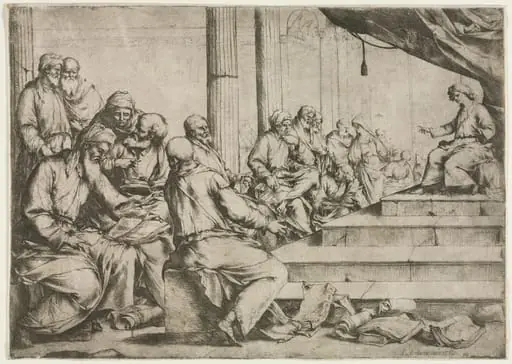 The Young Christ Teaching in the Temple
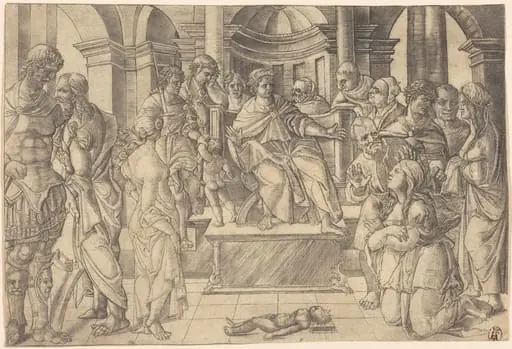 The Judgment of Solomon
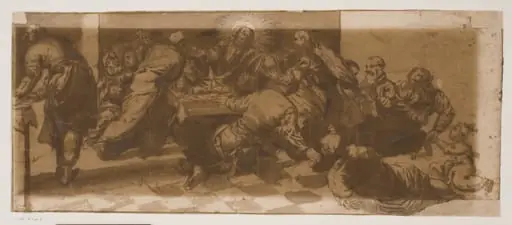 The Last Supper after the painting in San Polo, Venice
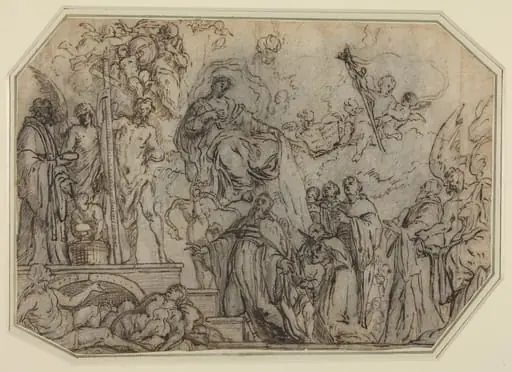 The Trinity and the Virgin Appearing to Ecclesiastics
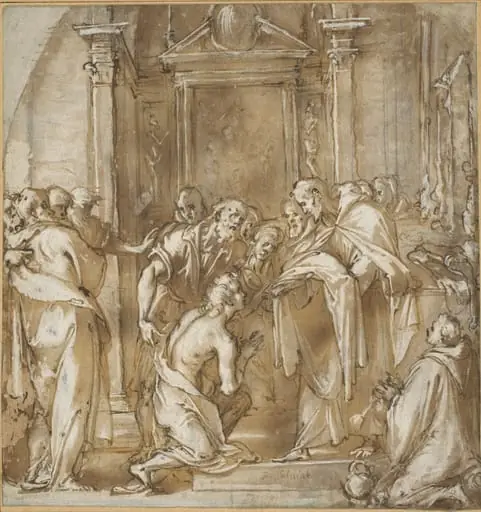 Saint Vincent Ferrer Taking His Vestments
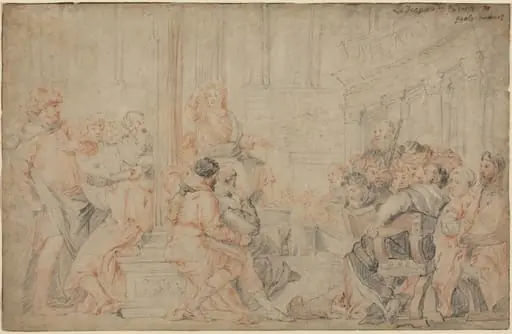 Christ among the Doctors
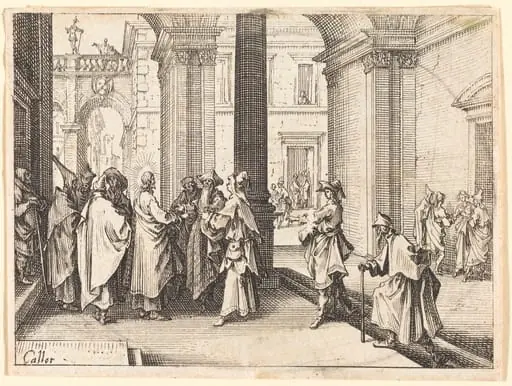 Caesar's Coin
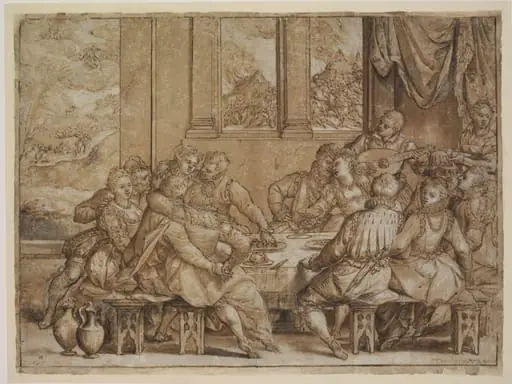 Mankind Feasting and Making Love, Awaiting the Last Judgement (‘the coming of the son of man’) (Matthew 24:37–42)
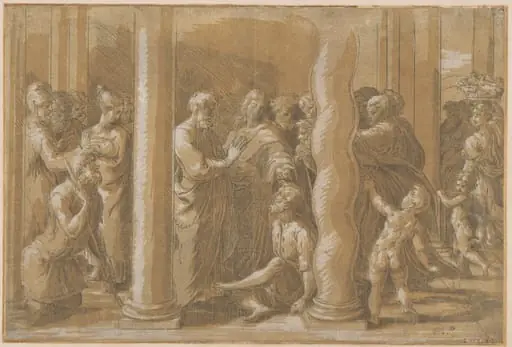 Saints Peter and John Healing the Lame Man at the Golden Gate
![Joseph and His Brother in Egypt [verso], by Italian 17th Century](https://artifactworldgallery.com/img/italian-17th-century--joseph-and-his-brother-in-egypt-verso--86cfb4fbb2662a76-w320.webp) Joseph and His Brother in Egypt [verso]
Joseph and His Brother in Egypt [verso]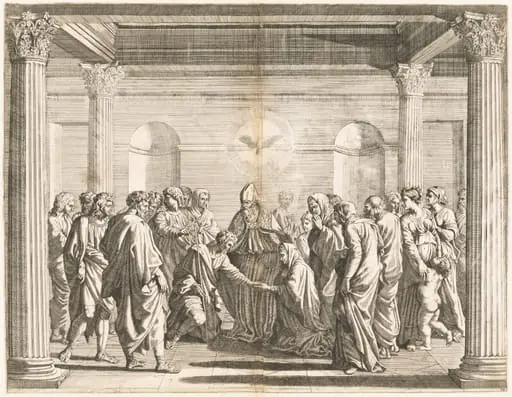 Marriage
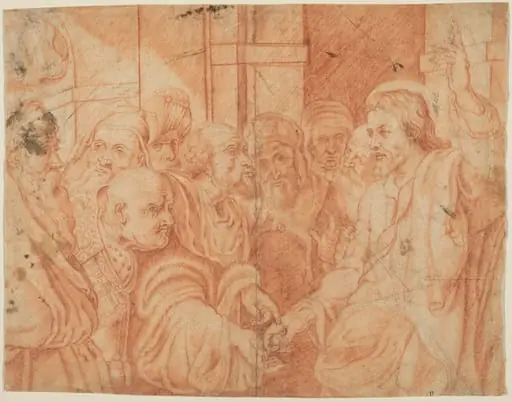 Tribute Money