Artwork
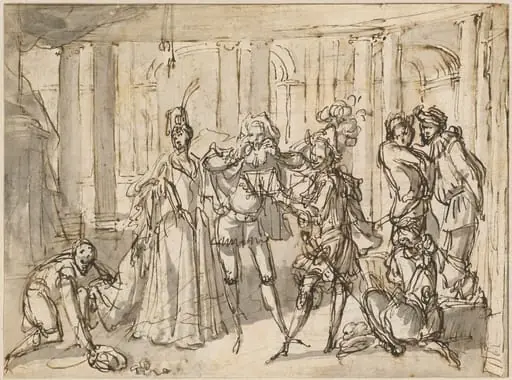
Joseph and His Brother in Egypt [verso]
![Joseph and His Brother in Egypt [verso], by Italian 17th Century, ink, 1601](https://artifactworldgallery.com/img/italian-17th-century--joseph-and-his-brother-in-egypt-verso--86cfb4fbb2662a76-w1024.webp)
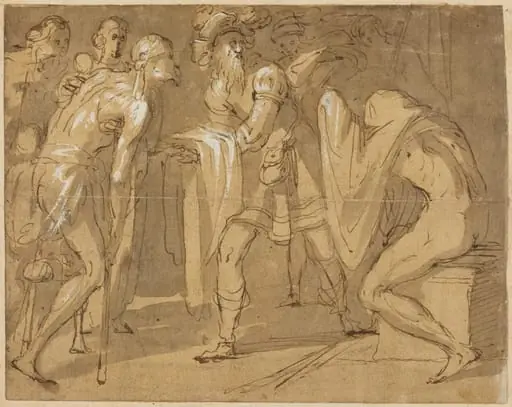
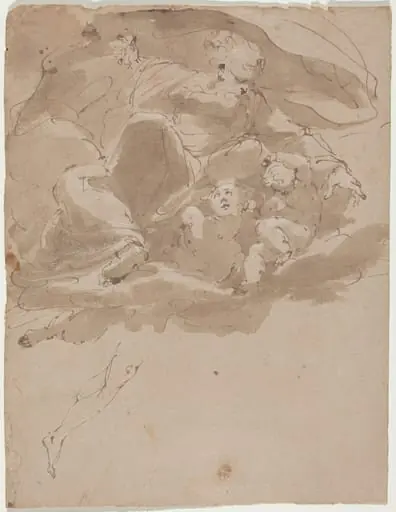
Joseph and His Brother in Egypt [verso] is an ink drawing by the Baroque artist Italian 17th Century. It dates from 1601 and is held in the collection of the National Gallery of Art. This drawing, executed in pen and brown ink with brown wash over red chalk on laid paper, depicts a biblical scene on its verso side.
About this work
You see two figures in a simple scene, one kneeling and the other standing.
The kneeling figure is Joseph, and the story is from the Bible. This drawing is interesting because it's done on the back of another work, which was a common practice to save paper.
Check out the work of artist: Italian 17th Century to see more like this.
Overview
This drawing, executed in pen and brown ink with brown wash over red chalk on laid paper, depicts a biblical scene on its verso side. Created by an Italian artist of the 17th century, it reflects a practical reuse of paper, a common practice among draftsmen seeking to conserve materials. The composition features two figures in a quiet, intimate moment, suggesting a narrative drawn from scripture.
Subject & Meaning
The scene illustrates Joseph and his brother in Egypt, likely referencing the moment of recognition after years of separation.
The scene illustrates Joseph and his brother in Egypt, likely referencing the moment of recognition after years of separation. Joseph, kneeling, may be revealing his identity to his sibling, a pivotal moment of reconciliation in the Book of Genesis. The simplicity of the gesture underscores emotional gravity over dramatic spectacle, aligning with devotional interpretations common in Counter-Reformation Italy.
Technique & Style
The artist employed red chalk for initial contours, refined with pen and brown ink, then layered with wash to model form and depth. The restrained palette and fluid lines emphasize clarity and emotional tone over detail. The use of layered media demonstrates a working method typical of preparatory drawings, where spontaneity and precision coexisted in service of narrative clarity.
History & Provenance
The drawing was created on the reverse of another sheet, a practical adaptation to the cost and scarcity of paper. Its survival as a standalone work suggests it was valued beyond its original function, possibly preserved as a study or devotional image. The absence of documented provenance before the modern era leaves its early ownership obscure.
Context
In 17th-century Italy, religious themes dominated artistic production, particularly in regions influenced by the Counter-Reformation. Artists often turned to biblical narratives for both spiritual reflection and compositional practice. Drawings like this, made on reused paper, reveal the everyday habits of studio work, where economy and artistry were intertwined.
Legacy
This drawing exemplifies the quiet discipline of draftsmanship in early modern Italy. Though not widely known, it contributes to understanding how artists engaged with scripture through intimate, economical means. Its survival offers insight into the material culture of artistic practice, where reuse was not merely frugal but integral to creative process.
Artist & collection

Artist
This Italian artist worked in the 17th century, making engravings, ink drawings, and oil paintings.

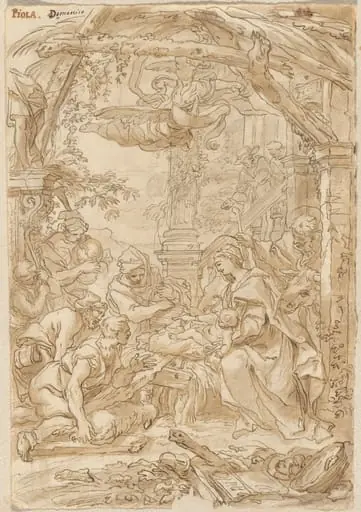
![The Adoration of the Magi [recto], by Donato Creti](https://artifactworldgallery.com/img/donato-creti--the-adoration-of-the-magi-recto--2cfd5d76b55e821e-w320.webp)
![Jacob and Rebecca before Isaac [recto], by French 18th Century](https://artifactworldgallery.com/img/french-18th-century--jacob-and-rebecca-before-isaac-recto--5393ee8d0dceb48c-w320.webp)