Artwork
Ein Khindt was gestorben ...
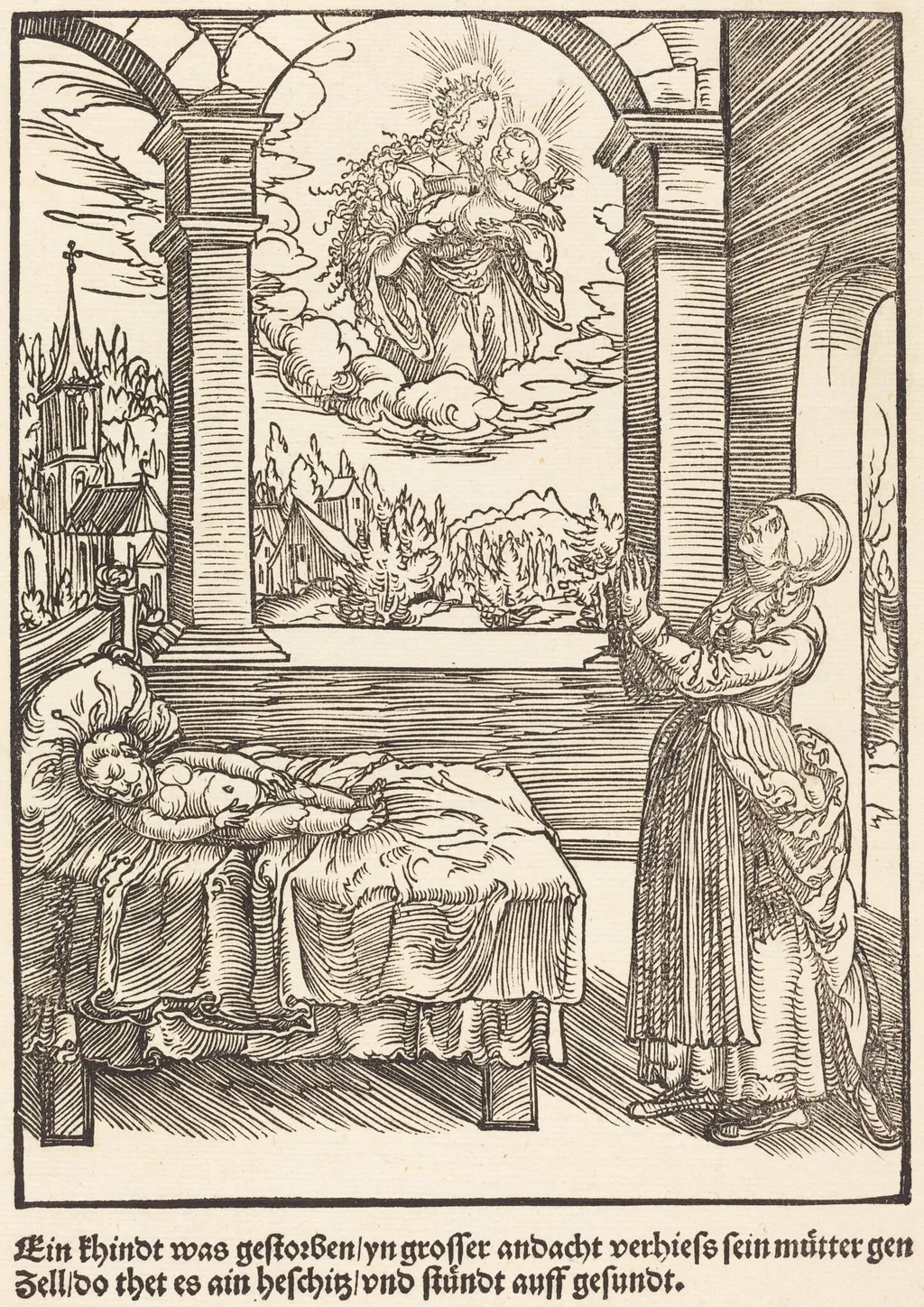
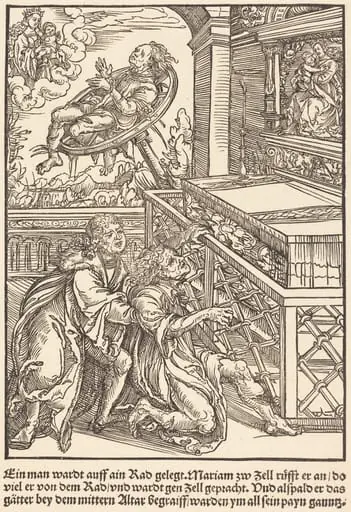
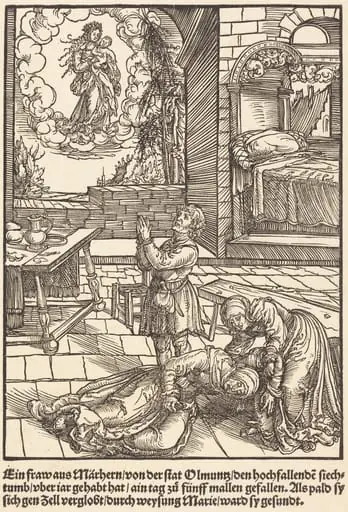
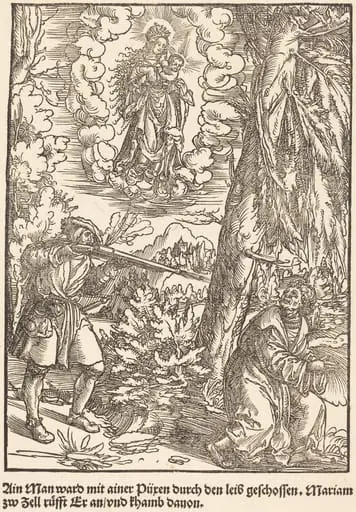
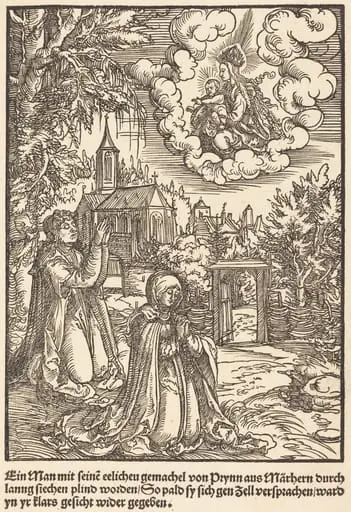
Ein Khindt was gestorben ... is an ink print by the Renaissance artist Master of the Miracles of Mariazell. It dates from 1503 and is held in the collection of the National Gallery of Art.
About this work
Overview
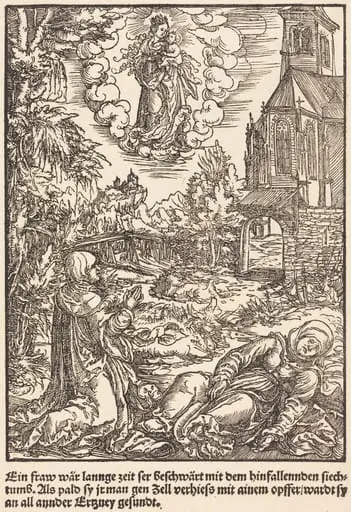
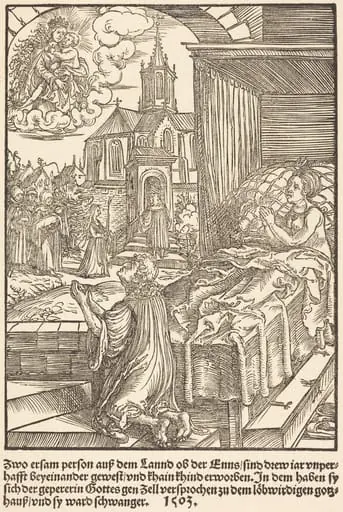
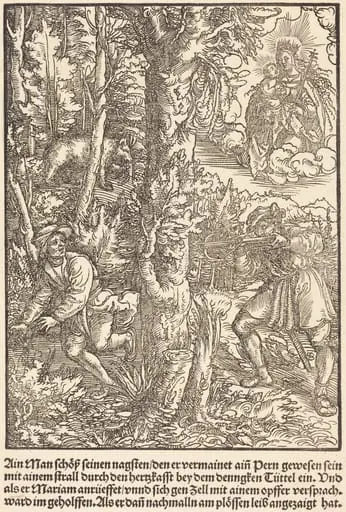
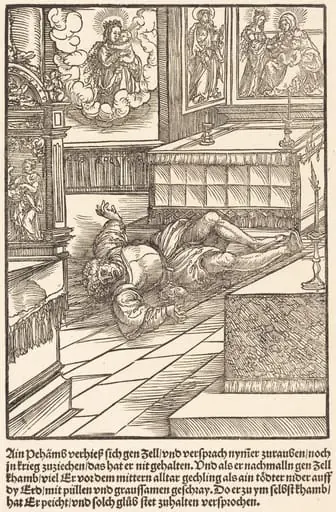
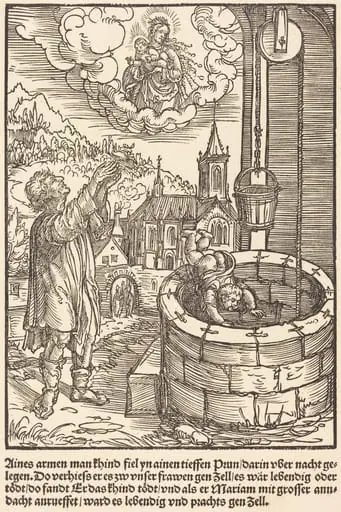
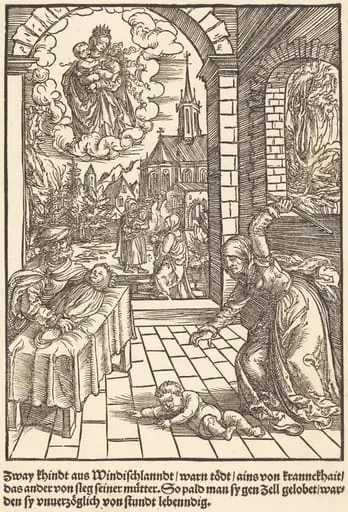
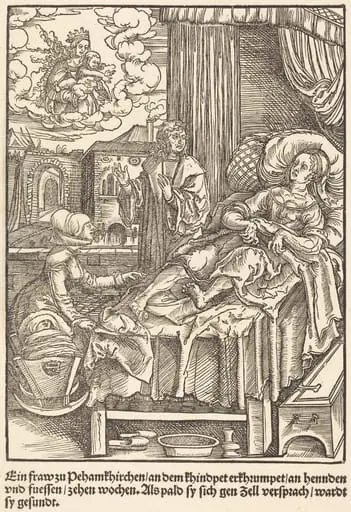
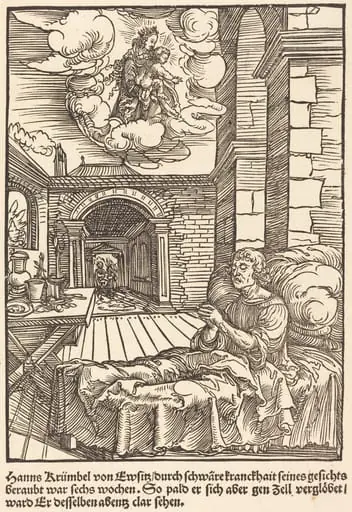
Created around 1503, this woodcut by the Master of the Miracles of Mariazell is a devotional print in black ink on laid paper.
Created around 1503, this woodcut by the Master of the Miracles of Mariazell is a devotional print in black ink on laid paper. It portrays a moment of spiritual intervention following a child’s death, combining earthly grief with celestial revelation. The composition centers on a grieving mother and the apparition of the Virgin and Child, rendered with fine linear precision typical of early 16th-century German printmaking.
Subject & Meaning
The scene illustrates a mother mourning her deceased child, cradling a second infant as a vision of the Virgin Mary and Jesus appears above. The apparition signifies divine comfort and the promise of salvation, reflecting contemporary beliefs in Marian intercession. The presence of the church steeple and landscape situates the miracle within a familiar, earthly context, reinforcing the idea that sacred grace enters daily life.
Technique & Style
The artist employed fine, controlled lines to define textures in fabric, bedding, and foliage, demonstrating mastery of woodcut engraving. Contrast is achieved through dense black areas and delicate hatching, particularly in the drapery and the luminous rays emanating from the heavenly figures. The sky is rendered with soft, graded lines to suggest cloud mass, while architectural details remain crisp, aligning with Renaissance attention to spatial and material realism.
History & Provenance
The print is attributed to an anonymous artist known as the Master of the Miracles of Mariazell, active in the early 1500s and likely based in Austria or southern Germany. It was produced as part of a series of devotional images tied to the pilgrimage site of Mariazell, where Marian miracles were widely venerated. Surviving impressions are rare, suggesting limited circulation among local religious communities.
Context
This image emerged during a period of heightened Marian devotion in Central Europe, coinciding with the rise of printed religious imagery. Woodcuts like this served as affordable tools for private prayer and communal instruction, especially in areas with limited access to painted altarpieces. The blending of domestic grief with supernatural vision reflects a broader trend in late medieval piety that emphasized personal, emotional encounters with the divine.
Legacy
Though the artist’s identity remains obscure, this print contributes to the understanding of regional print culture before the Reformation. Its emotional directness and technical refinement influenced later devotional imagery in the German-speaking world. As a surviving example of pre-Reformation popular piety, it offers insight into how ordinary believers engaged with sacred narratives through accessible visual media.
Artist & collection

Artist
Master of the Miracles of Mariazell
Master of the Miracles of Mariazell (1500–1503) was an artist.