Artwork
Ain erber man von Lanshuet ...
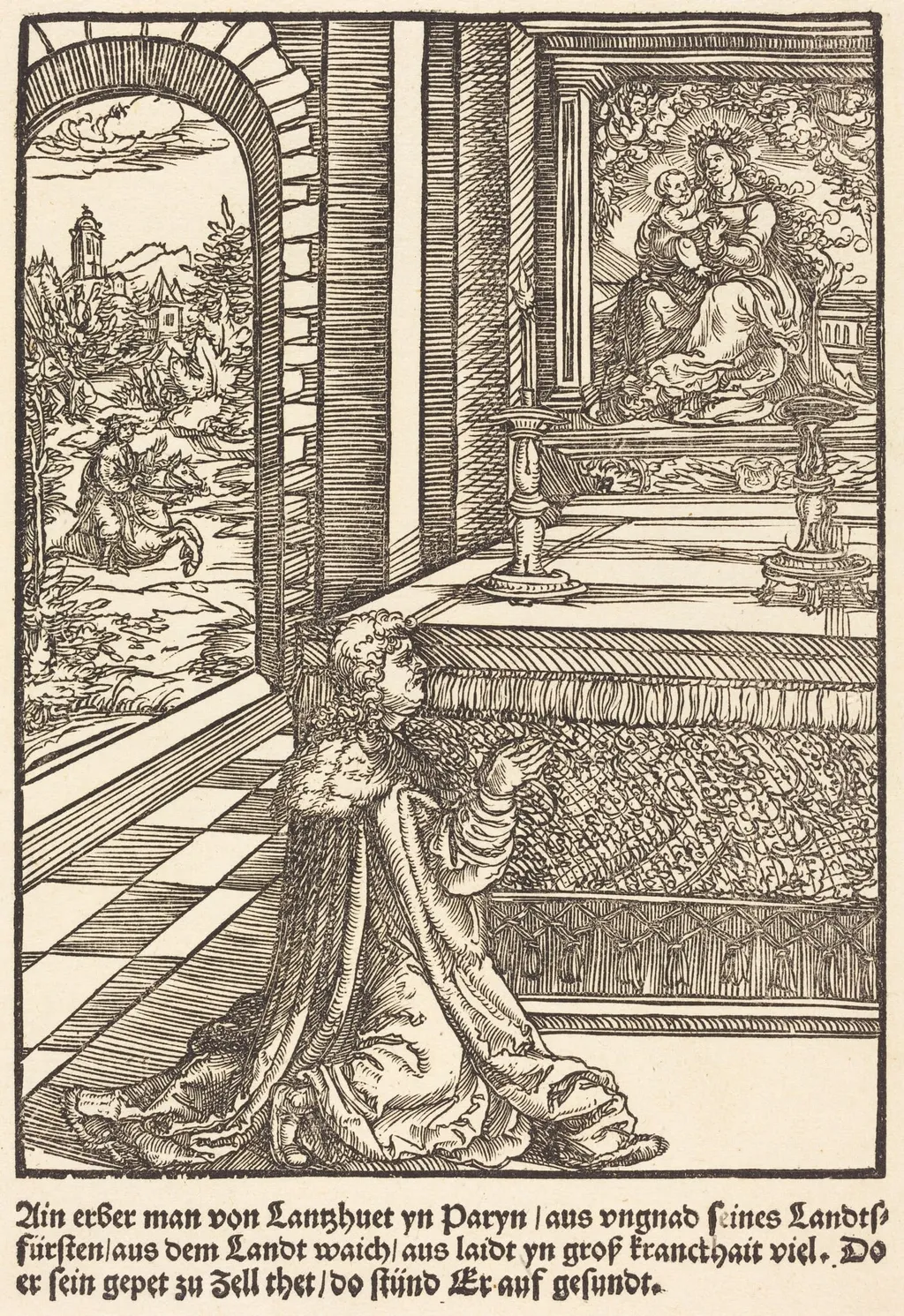
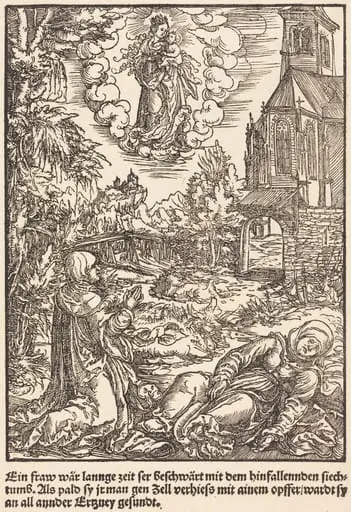
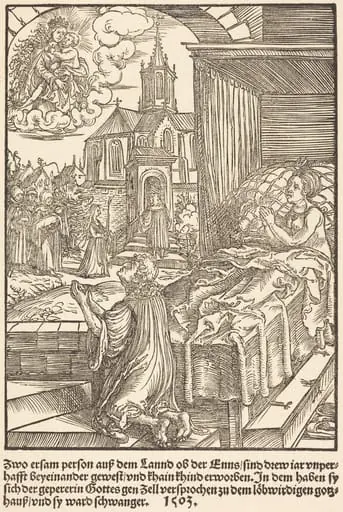
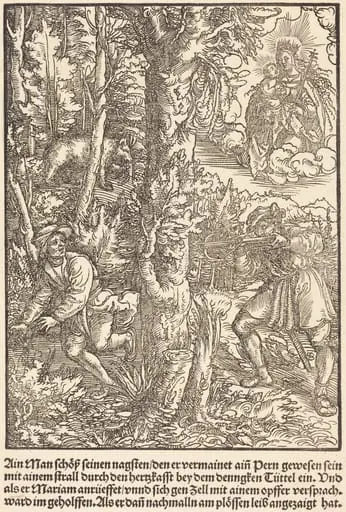
Ain erber man von Lanshuet ... is an ink print by the Renaissance artist Master of the Miracles of Mariazell. It dates from 1503 and is held in the collection of the National Gallery of Art. Ain erber man von Lanshuet .
About this work
Overview
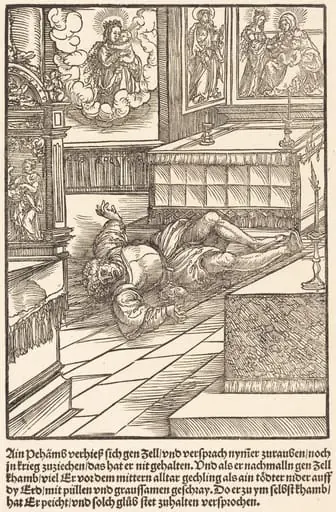
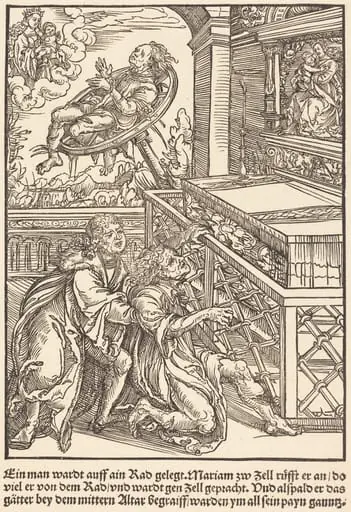
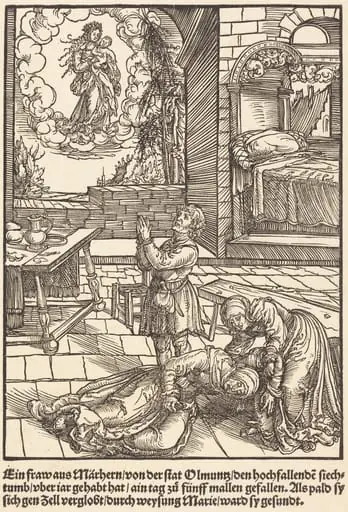
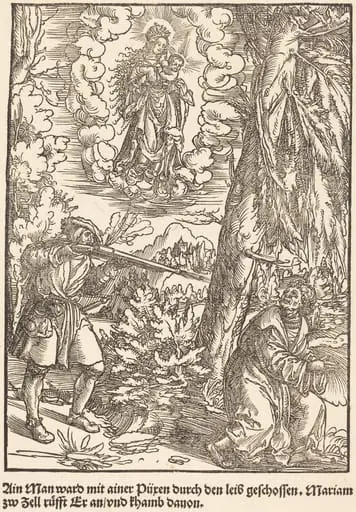
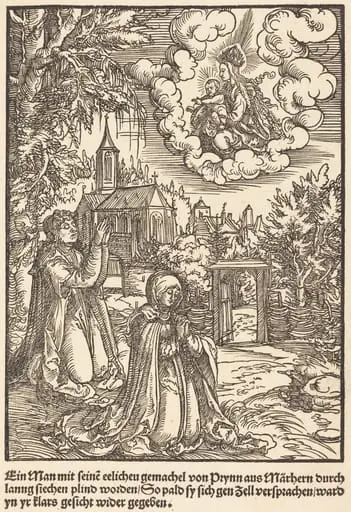
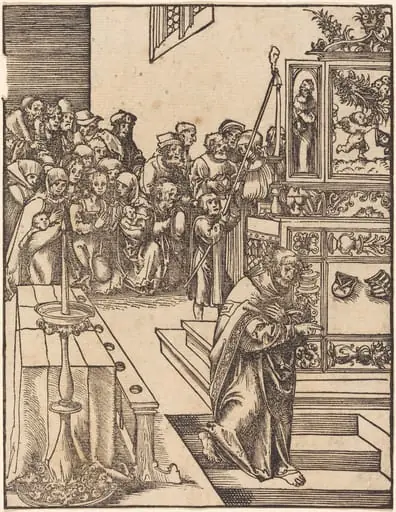
Ain erber man von Lanshuet ... is a woodcut print created around 1503 by the Master of the Miracles of Mariazell. The work depicts a devotional scene of a kneeling man in prayer before a framed image of the Virgin Mary and Child.
Subject & Meaning
The subject is a man in deep devotion, kneeling in prayer with clasped hands, gazing upwards at a wall-hung painting of the Virgin Mary and Child. A burning candle in front of the painting emphasizes the reverent atmosphere. The scene conveys a sense of quiet contemplation and personal piety.
Technique & Style
Executed as a woodcut on laid paper, the piece showcases the artist's mastery of the medium through intricate lines and nuanced shading, which impart texture and depth to the image. The checkered floor and visible landscape through a window add to the composition's complexity.
History & Provenance
Created circa 1503 by the Master of the Miracles of Mariazell, a artist known for works related to the Mariazell shrine. Specific provenance details are not provided in the available information.
Context
This woodcut reflects the devotional practices of the early 16th century, particularly the veneration of the Virgin Mary. The setting, with its religious image and candle, suggests a private chapel or a devout individual's personal space.
Legacy
The legacy of 'Ain erber man von Lanshuet ...' lies in its representation of early 16th-century devotional art and its attribution to the Master of the Miracles of Mariazell, contributing to the understanding of the artist's oeuvre and the religious art of the period.
Artist & collection

Artist
Master of the Miracles of Mariazell
Master of the Miracles of Mariazell (1500–1503) was an artist.