Artwork
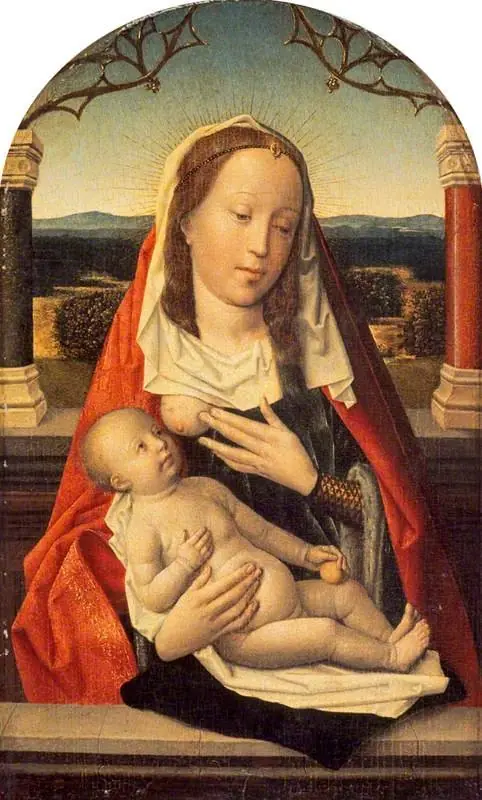
Virgin giving milk to the Child
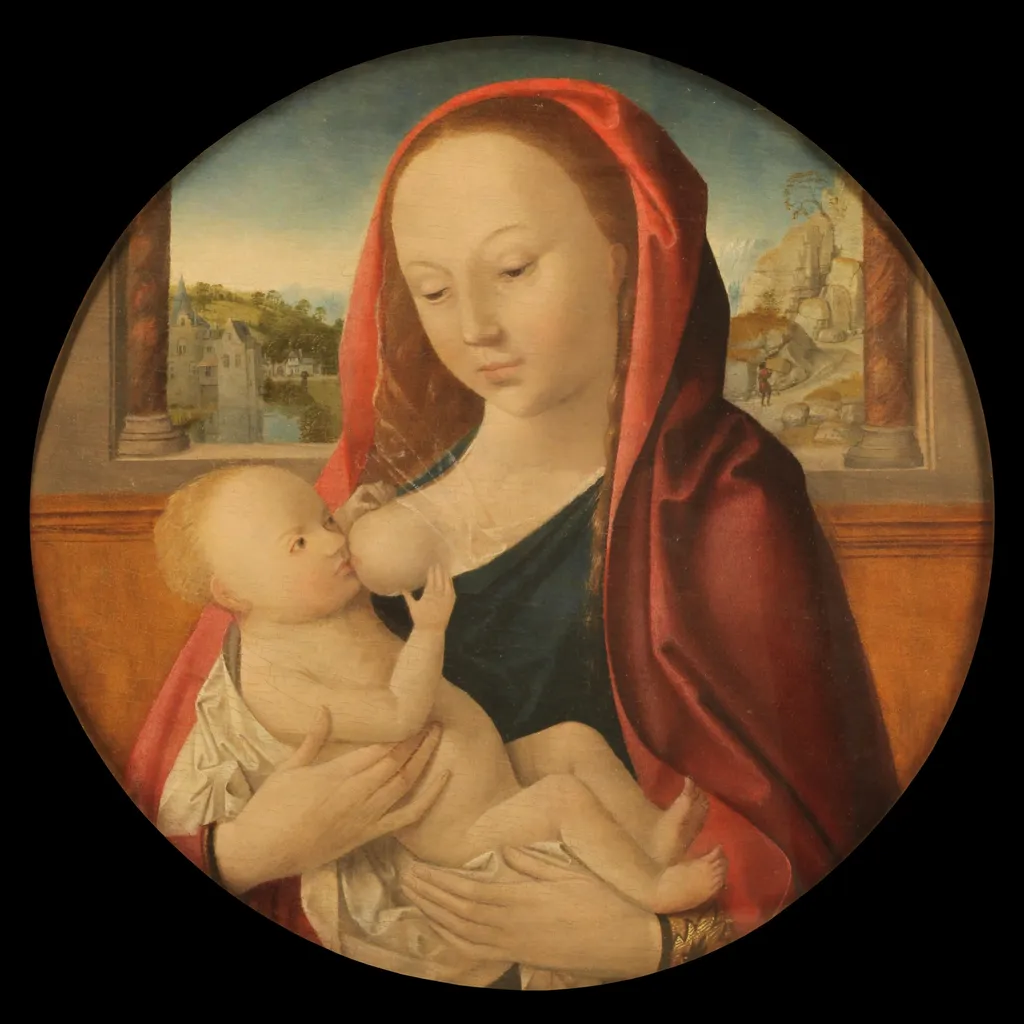
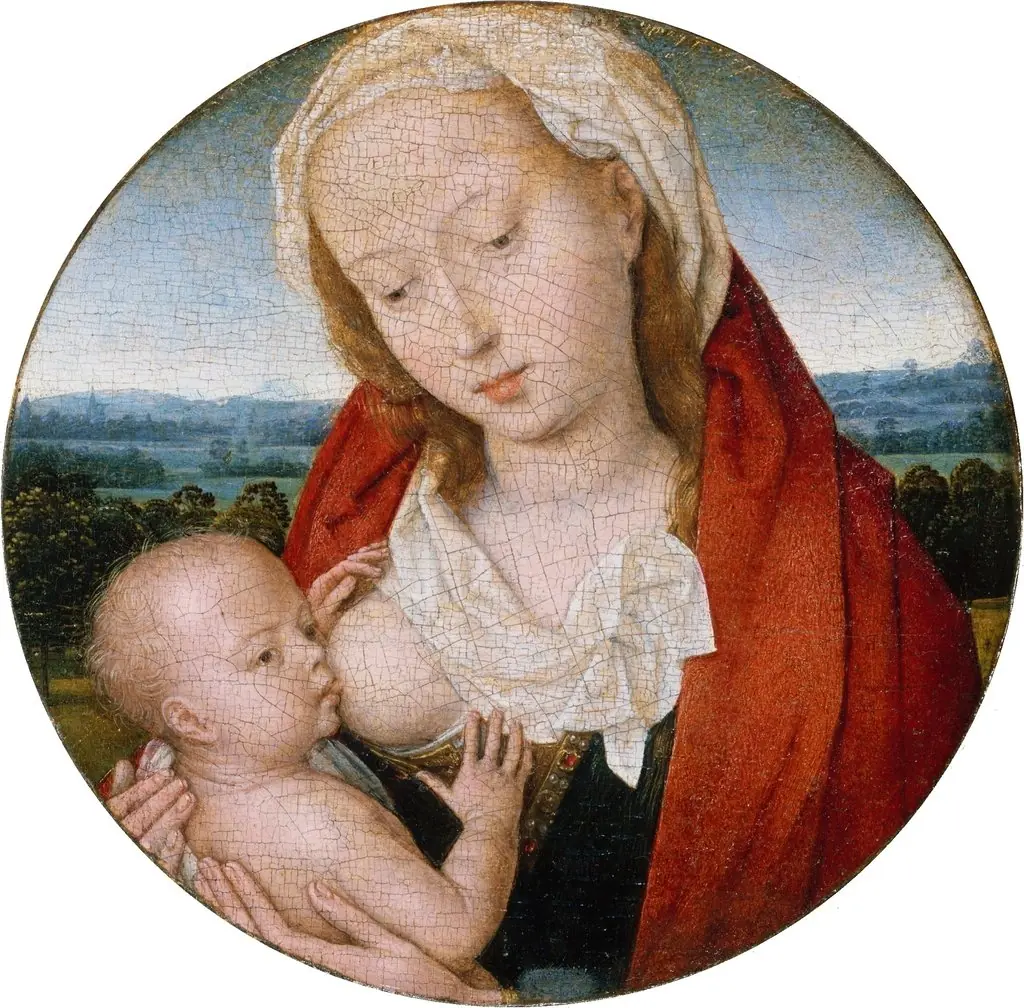
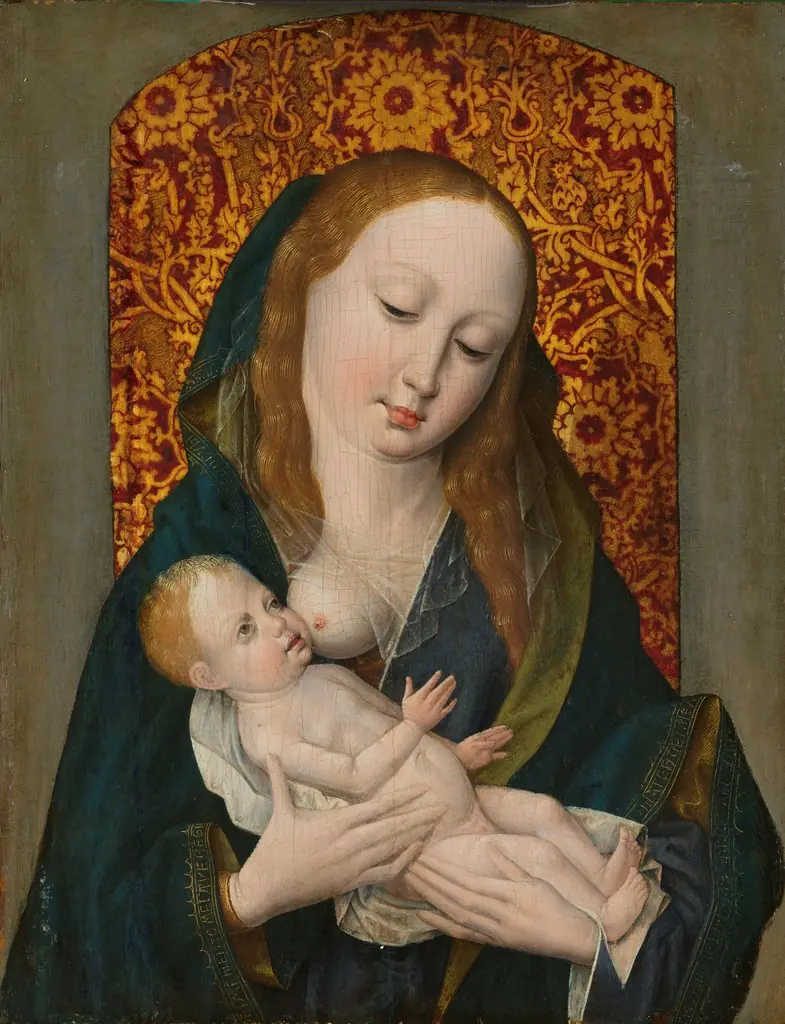
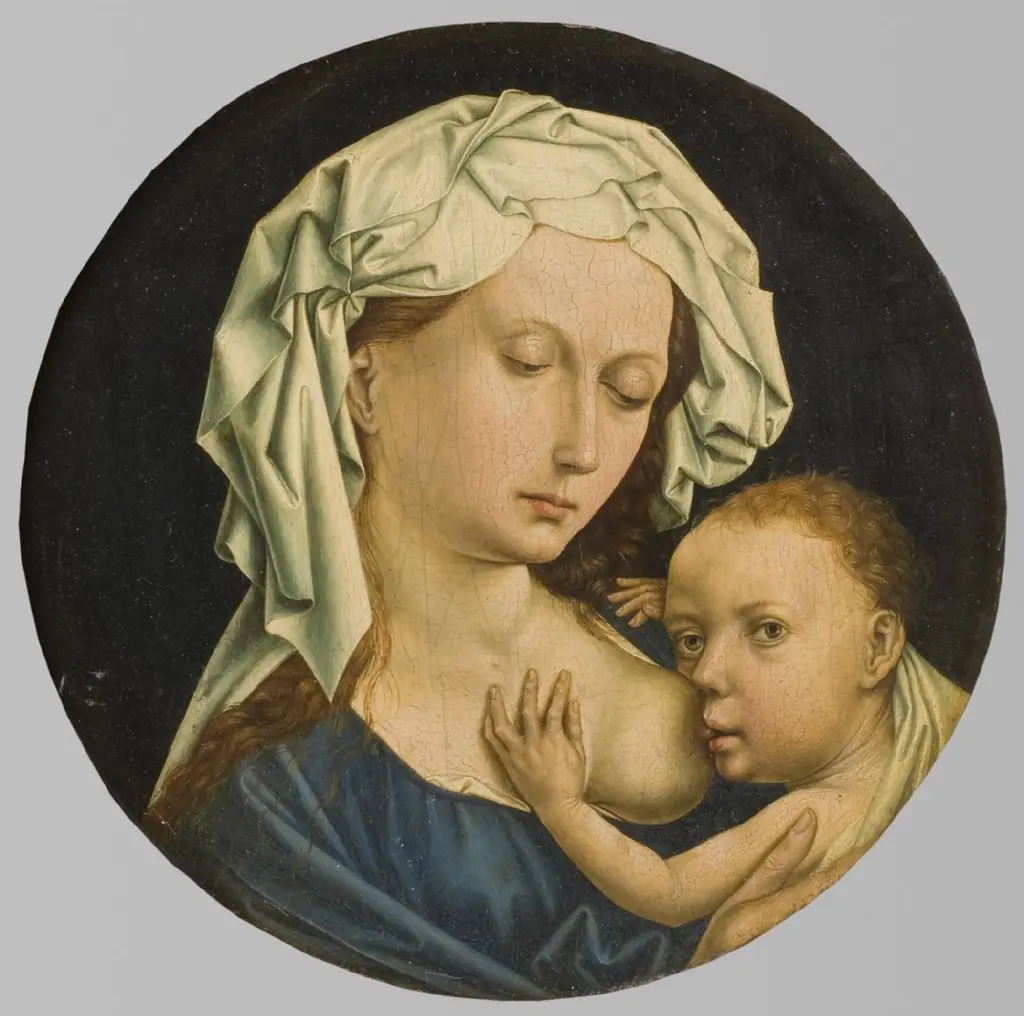
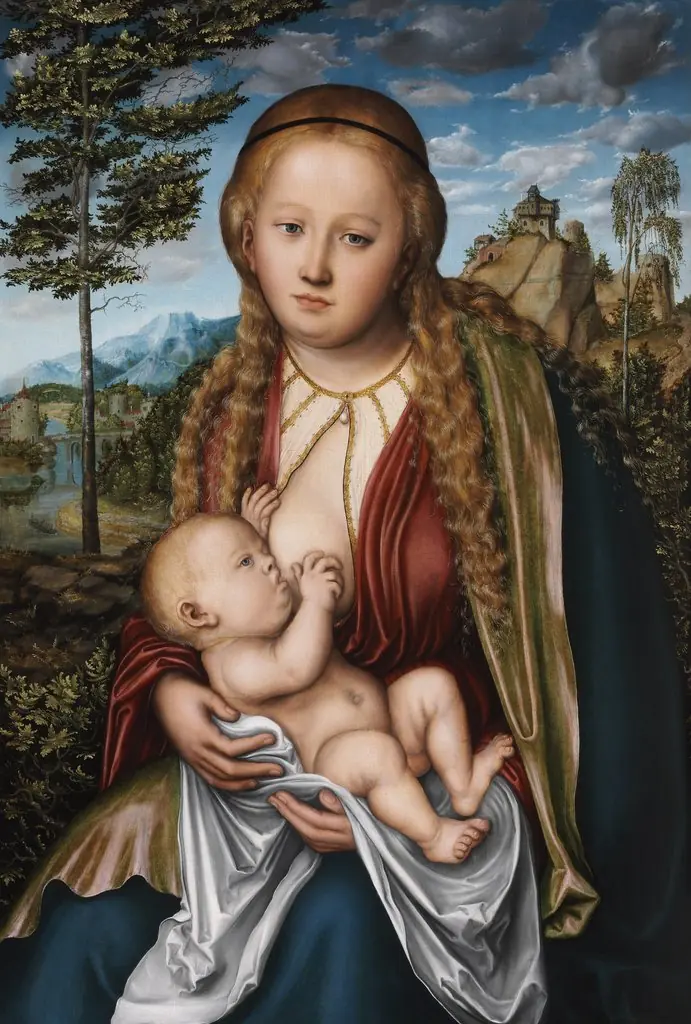
Virgin giving milk to the Child is an oil painting by the Northern Renaissance artist Master of the Plump-Cheeked Madonnas. It is held in the collection of the Museum of Fine Arts of Lyon.
About this work
Overview
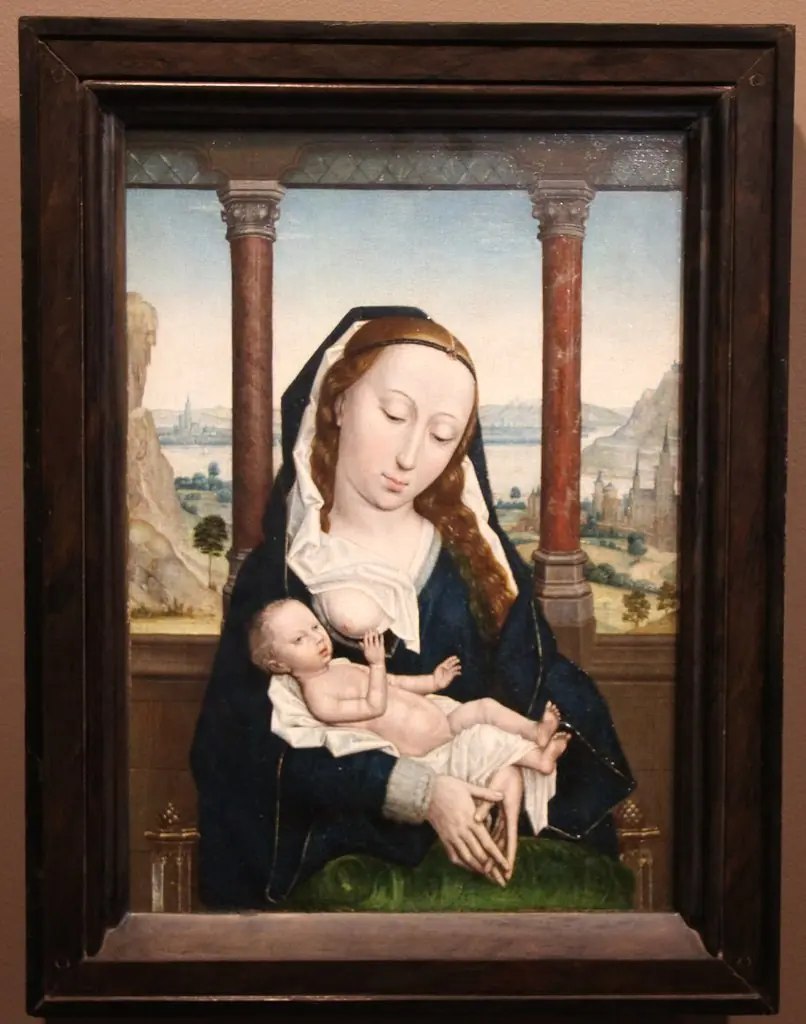
Executed with subdued tones and delicate brushwork, the scene is set against a quiet architectural backdrop featuring two columns and a distant landscape.
This oil painting, attributed to the Master of the Plump-Cheeked Madonnas, portrays the Virgin Mary nursing the infant Jesus. Executed with subdued tones and delicate brushwork, the scene is set against a quiet architectural backdrop featuring two columns and a distant landscape. The work is part of the collection at the Museum of Fine Arts in Lyon, where it reflects a regional devotional tradition from the late medieval or early Renaissance period.
Subject & Meaning
The image presents the Virgin as a nurturing mother, emphasizing physical tenderness over celestial grandeur. The act of breastfeeding, a rare but theologically significant motif, underscores Mary’s humanity and her role as the source of divine nourishment. The infant’s reach toward her chest and her downward gaze convey intimacy, reinforcing the idea of Christ’s incarnation through earthly care.
Technique & Style
The artist employs soft, muted pigments and gentle modeling to create a serene atmosphere. Facial features are rounded, particularly the child’s cheeks, a hallmark of the painter’s known style. The drapery of Mary’s dress and the infant’s white cloth are rendered with subtle gradations, while the background elements—columns and landscape—are simplified, directing focus to the central figures without distraction.
History & Provenance
The painting entered the Museum of Fine Arts of Lyon’s collection in the 19th century, though its earlier ownership remains undocumented. Attributed to an anonymous artist known by a descriptive nickname, it likely originated in a workshop active in the Rhône-Alpes region. Its survival suggests it was venerated locally, possibly in a private chapel or convent setting before entering institutional care.
Context
This work belongs to a group of devotional images produced in northern France or southwestern Germany during the 15th century, where the nursing Virgin was a popular subject among lay devotees. Unlike grand altarpieces, these smaller panels were intended for personal meditation, reflecting a growing emphasis on emotional connection with sacred figures in late medieval piety.
Legacy
Though the artist’s identity is lost, the distinctive style—characterized by plump infant faces and quiet compositions—has allowed scholars to group related works under the name Master of the Plump-Cheeked Madonnas. This painting contributes to understanding how regional workshops adapted religious iconography for intimate worship, preserving a quiet but enduring strand of medieval visual culture.
Artist & collection
Artist
Master of the Plump-Cheeked Madonnas
This anonymous painter left us two surviving Madonnas, both in tempera on panel around 1485.