Artwork
The Virgin and Child
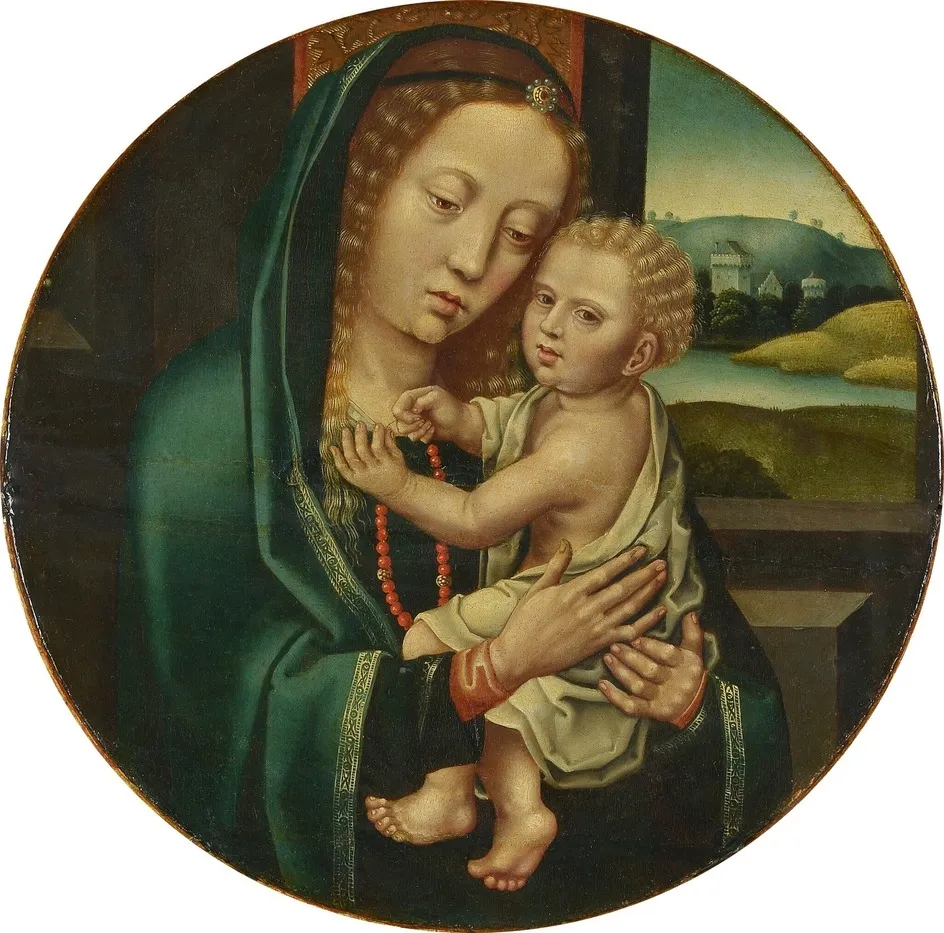
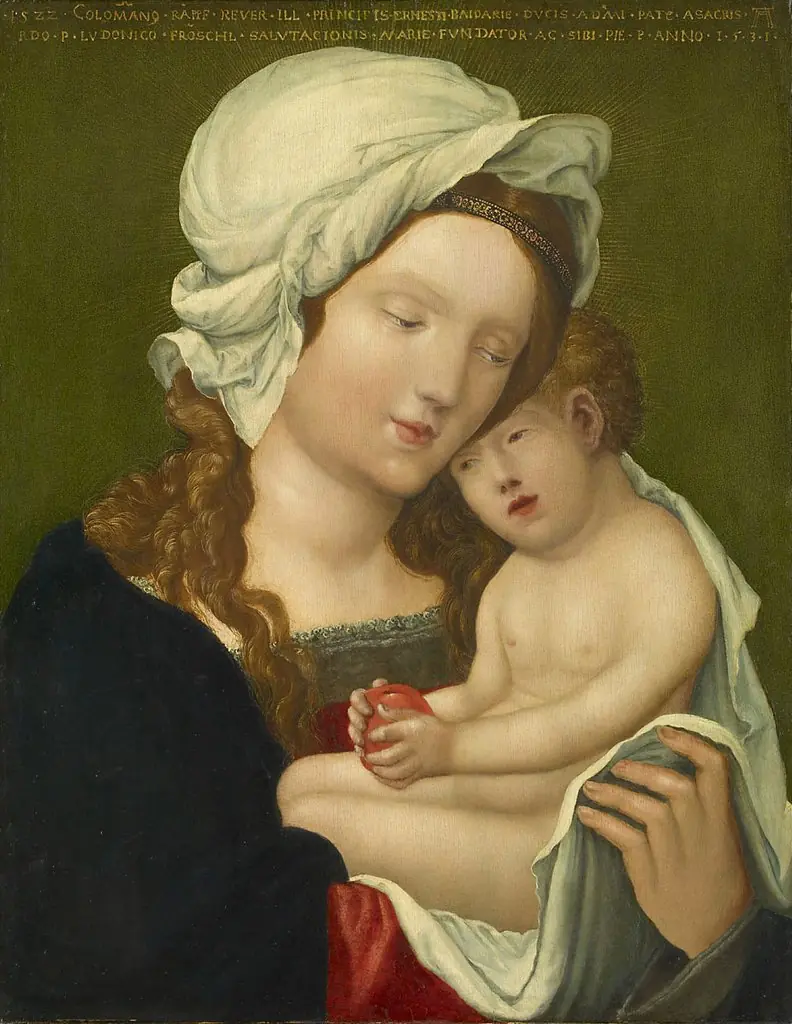
The Virgin and Child is an unspecified painting by the High Renaissance artist Unknown. It dates from 1500 and is held in the collection of the Ashmolean Museum. The work depicts a seated woman cradling an infant, both rendered in subdued tones.
About this work
Overview
The work depicts a seated woman cradling an infant, both rendered in subdued tones. She wears a dark green mantle edged in gold, complemented by a blue veil that covers her hair, while the child is dressed in a pale tunic and clutches a string of red beads. Behind them a distant landscape with a castle or tower rises beneath a pale sky, providing a quiet backdrop.
Subject & Meaning
The figures represent the Virgin Mary and the Christ Child, a conventional devotional theme in Christian art. Mary's composed, solemn expression conveys maternal dignity, whereas the infant's gentle glance backward suggests innocence and contemplation. The inclusion of the red‑beaded string may allude to devotion or the future Passion, adding a subtle symbolic layer to the intimate scene.
Technique & Style
Executed in oil on panel, the painting employs a restrained palette of muted greens, blues, and earth tones, allowing the gold trim on the garments to catch light and draw attention. Soft modeling of the faces and careful handling of light create a calm atmosphere, while the distant architectural element is rendered with minimal detail, emphasizing depth without distracting from the central figures.
History & Provenance
The piece originates from a period when Marian imagery was widely commissioned for private devotion. Though the precise date and artist remain unidentified, its stylistic traits align with late medieval to early Renaissance workshops in Northern Europe. The painting entered a public collection in the early twentieth century, later becoming part of a museum's holdings dedicated to religious art.
Context
During the era of its creation, depictions of the Virgin and Child served both liturgical and personal functions, reinforcing theological concepts of purity and divine motherhood. The inclusion of a distant castle reflects contemporary interest in integrating secular architecture into sacred scenes, a practice that linked earthly authority with heavenly protection.
Artist & collection

 Domestic Scene
 Giacomo and Cardinal Marco, investing Andrea, Abbot of San Zeno, with his Benefice
 The Nymph of Fontainebleau
 Portrait of a Woman
 Madonna and Child with Saints in the Enclosed Garden
 Venus and Minerva
 Family Group of Four on Sofa
 Wall painting from Room H of the Villa of P. Fannius Synistor at Boscoreale
 The Virgin and Child
 The Virgin and Child
 The Virgin and Child
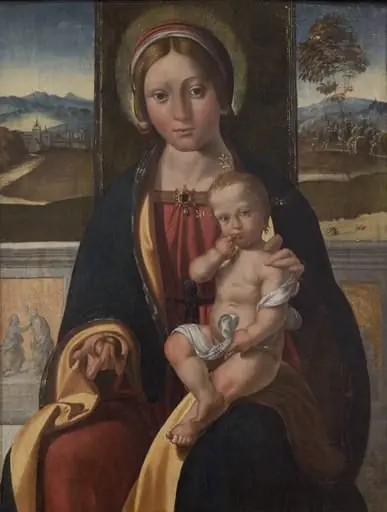 The Virgin and Child
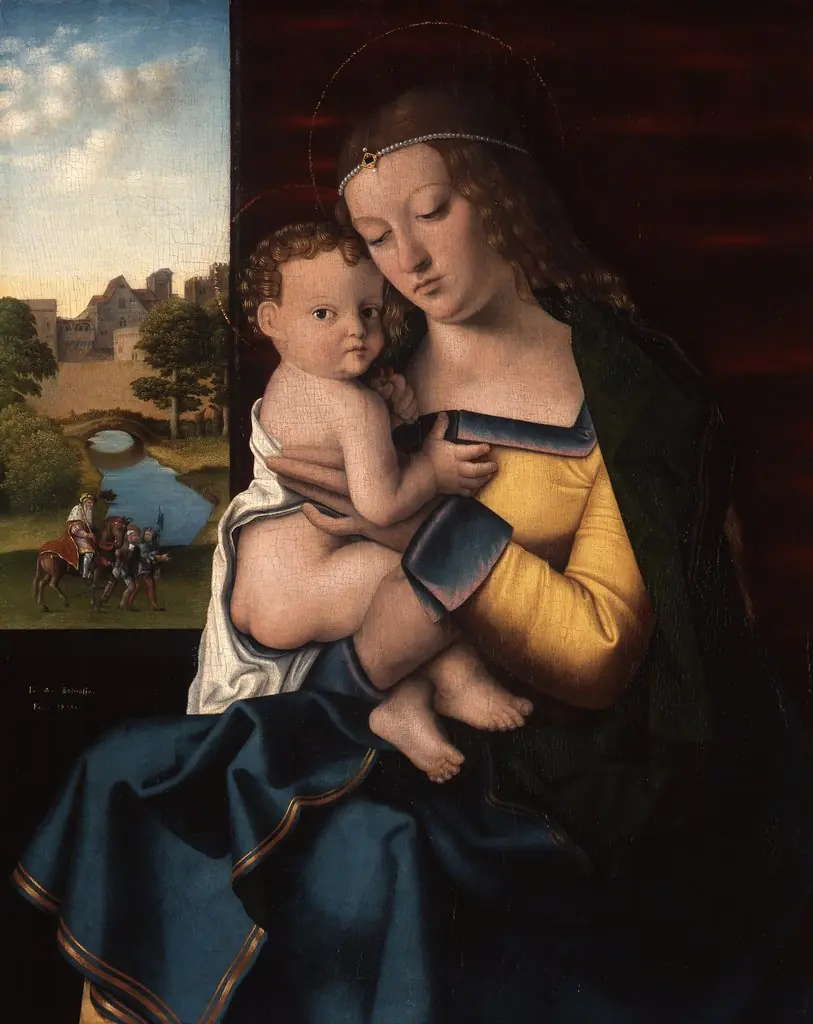 The Virgin and Child
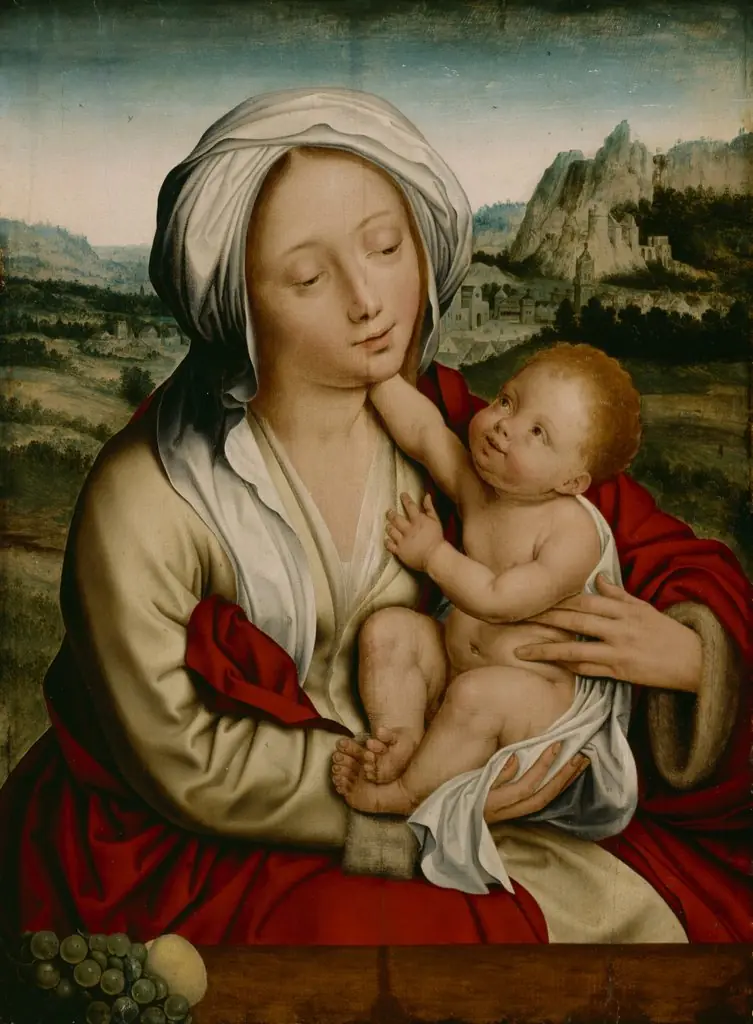 Madonna and Child
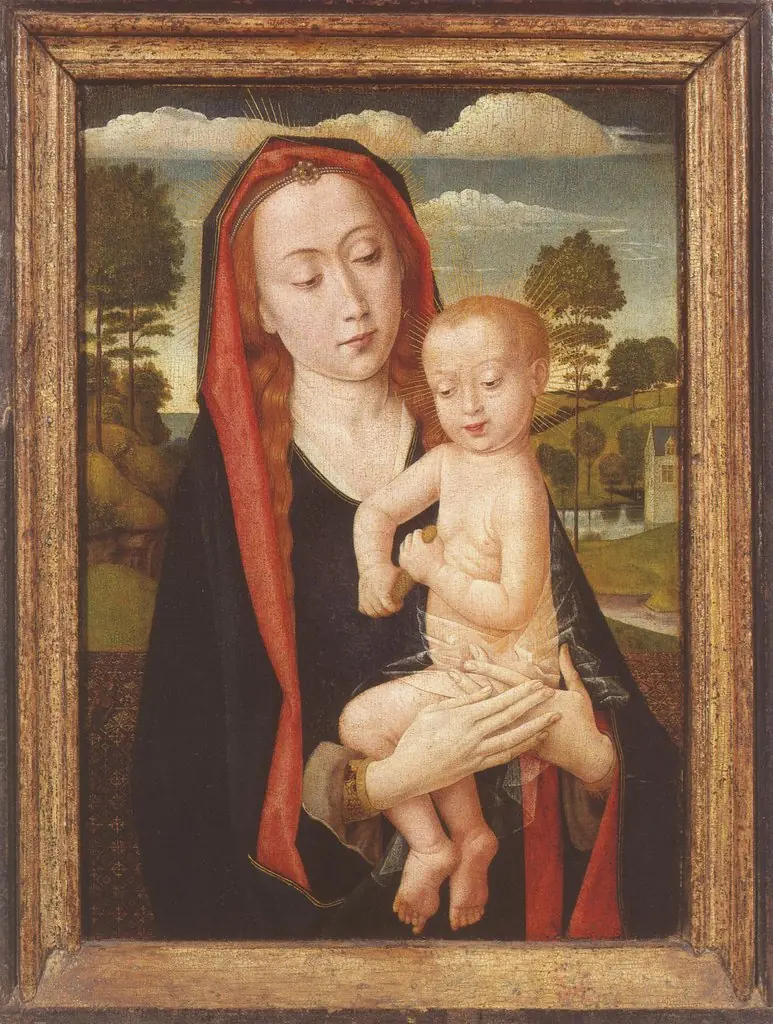 Maria met kind voor een borstwering met doorzicht naar een heuvellandschap
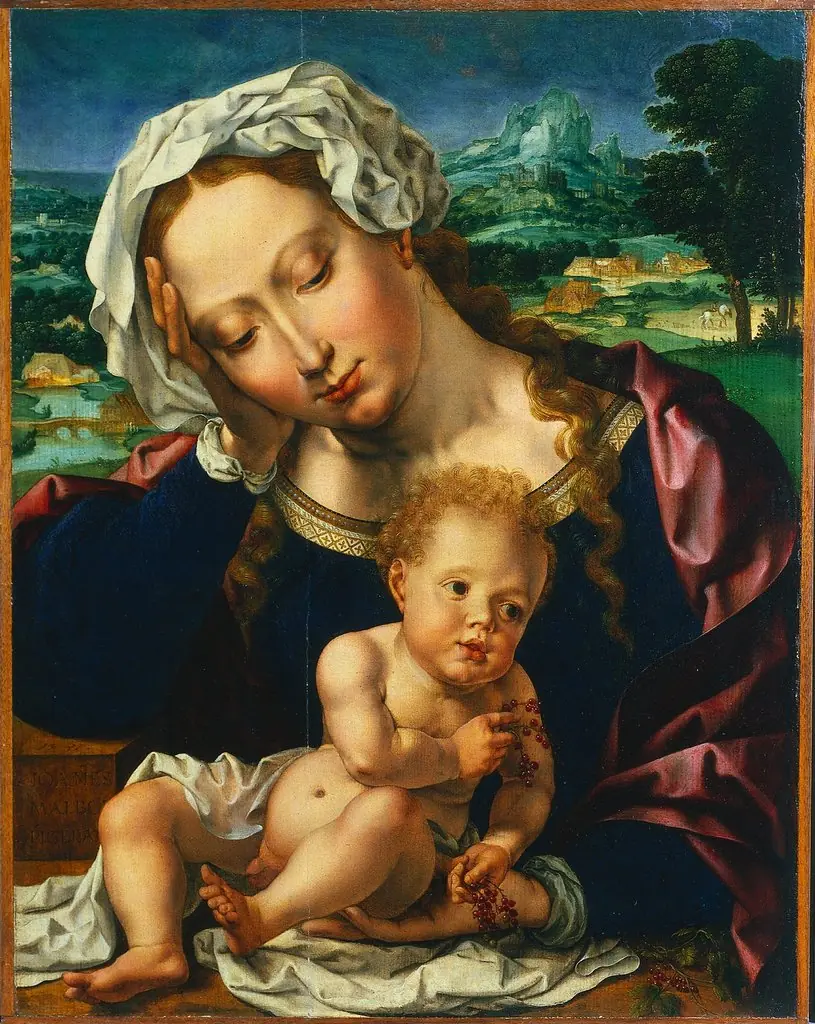 Virgin and Child in a Landscape
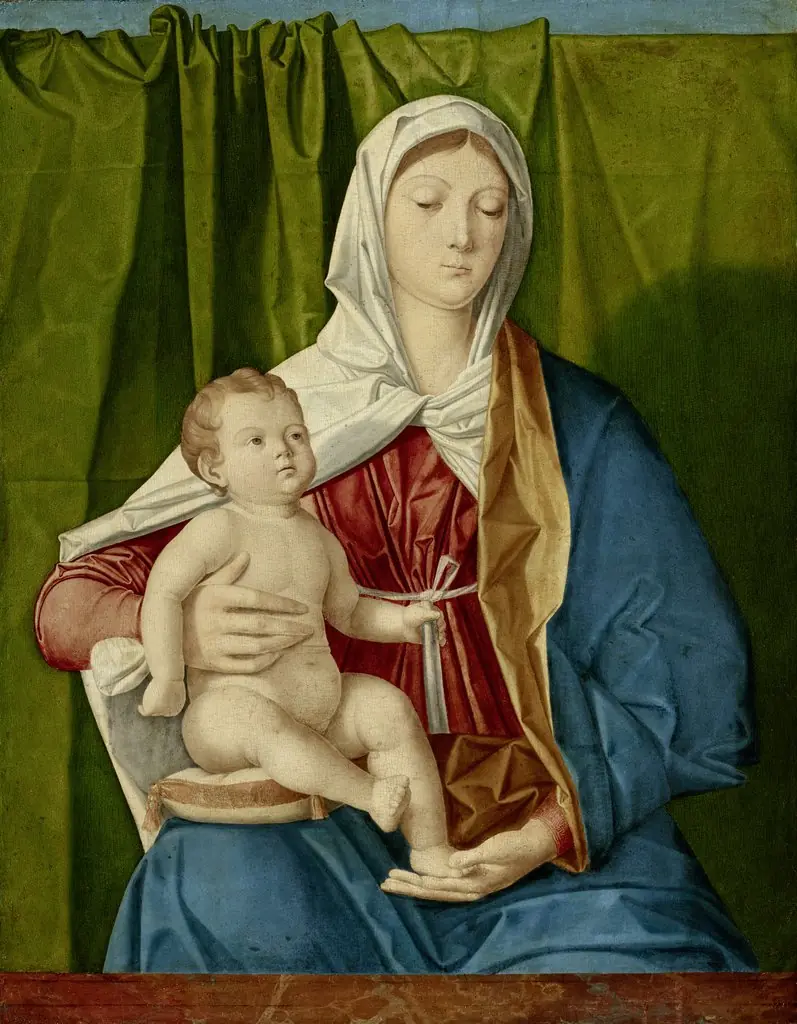 The Virgin and Child
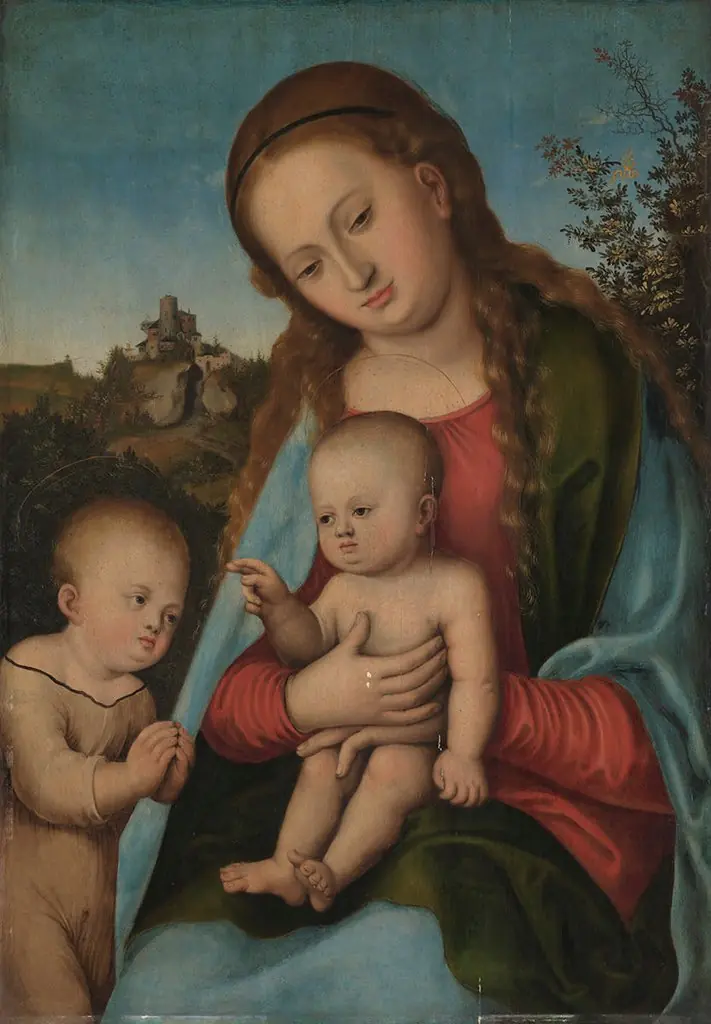 The Virgin and Child and St. John the Baptist as a boy
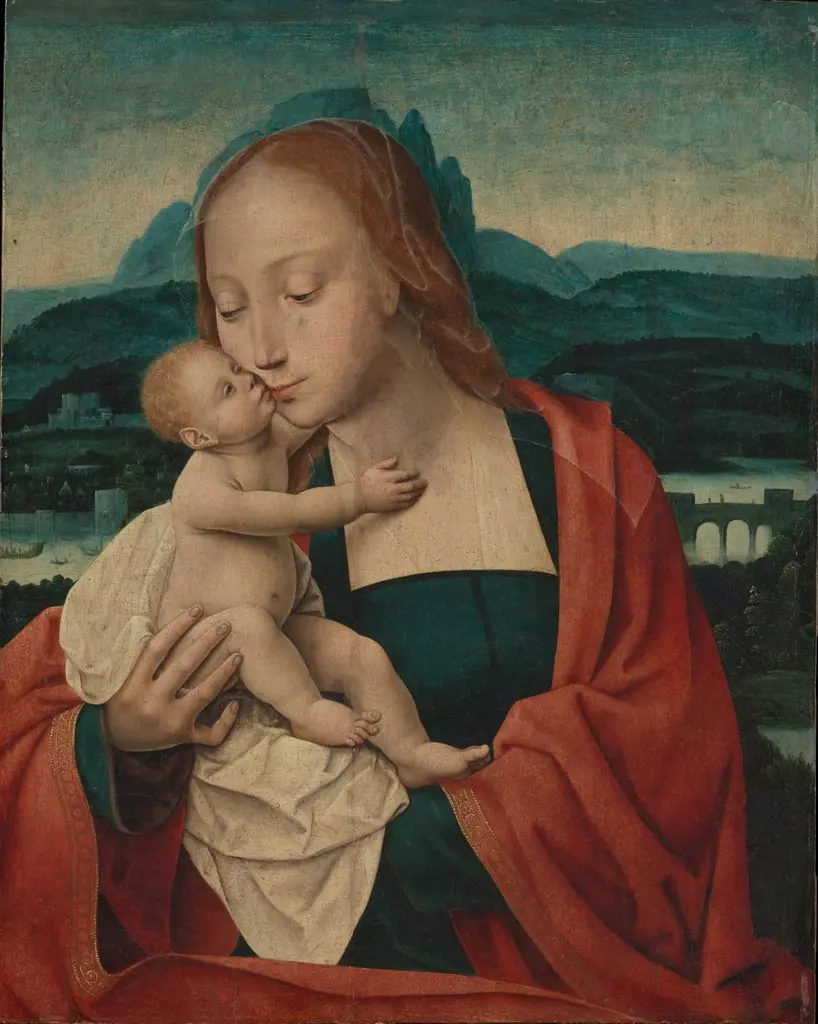 Virgin and Child
 Virgin and child