Artwork
Scriitoarea Dora D’Istria (Elena Ghica)
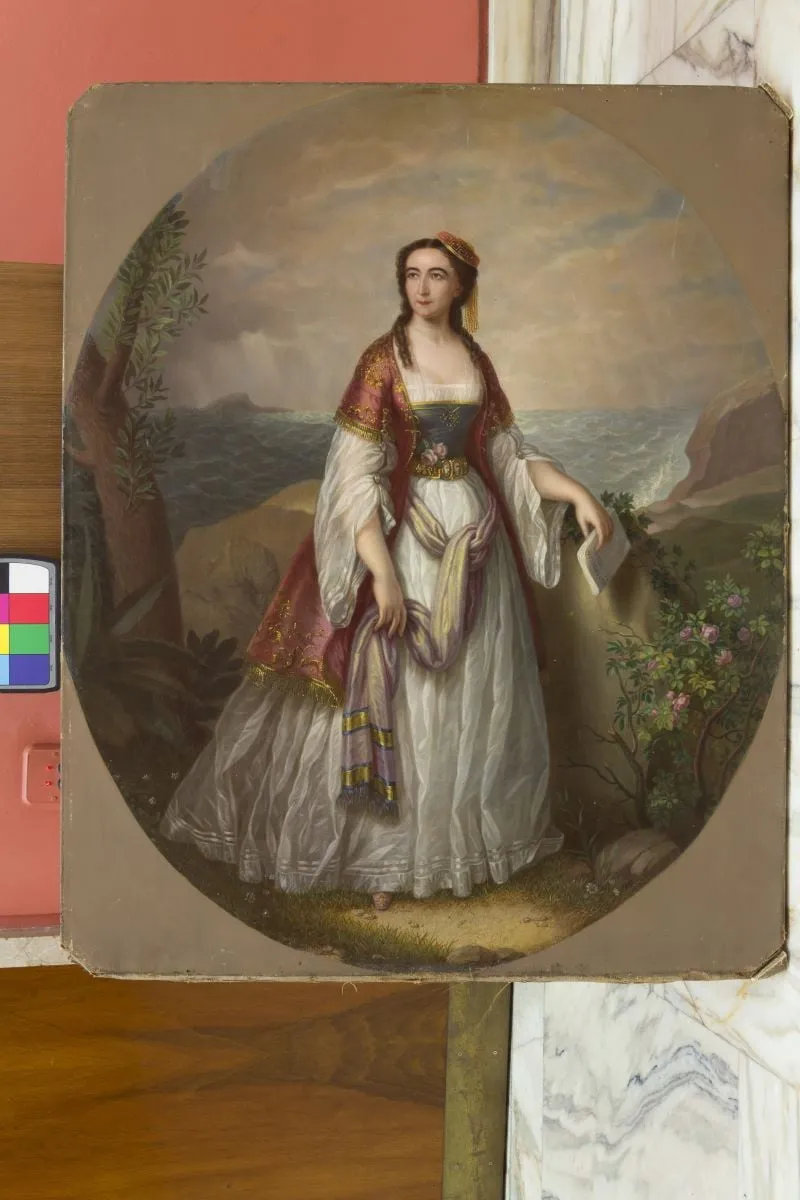
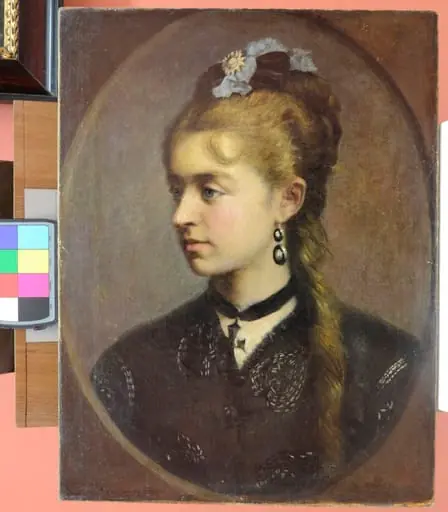
Scriitoarea Dora D’Istria (Elena Ghica) is an unspecified painting by the Impressionist artist Petre Mateescu. It dates from 1876 and is held in the collection of the National Museum of Art of Romania.
About this work
The landscape behind her is also detailed, with different shades of green and brown used to depict the trees and hills.
This painting shows a woman standing in a landscape. She wears a long, white dress with a red shawl over her shoulders and a headband. The background includes a body of water, trees, and hills.
The woman's dress and shawl are detailed, with folds and textures visible. The landscape behind her is also detailed, with different shades of green and brown used to depict the trees and hills.
This painting is a portrait of a woman in a landscape, created in 1876. Look up Impressionism to learn more about the art movement that influenced this piece.
Overview
Painted in 1876 by Petre Mateescu, this portrait depicts Elena Ghica, known by her literary pseudonym Dora D’Istria. The composition places her within a natural setting, blending personal identity with environmental context. The work reflects 19th-century Romanian artistic interests in capturing intellectual figures amid serene landscapes, merging realism with subtle atmospheric detail.
Subject & Meaning
Elena Ghica, a Romanian writer and cultural figure, is portrayed not as a formal sitter but as a contemplative presence in nature. Her attire—a white gown and red shawl—suggests both elegance and symbolic contrast, possibly alluding to her dual role as a woman of letters and a figure navigating societal expectations. The landscape around her evokes introspection, aligning her identity with the quiet dignity of the natural world.
Technique & Style
Mateescu employs careful brushwork to render fabric textures and natural elements with precision. The folds of the dress and shawl are rendered with attention to light and volume, while the background uses layered greens and browns to suggest depth without overt impressionistic blur. The style leans toward academic realism, with soft transitions in the landscape that hint at emerging trends in plein air observation.
History & Provenance
Created in 1876, the painting remained within Romanian cultural circles, likely held by private collectors or institutions connected to Ghica’s literary legacy. Its preservation reflects early national efforts to document prominent intellectual figures. While specific ownership records are limited, the work’s survival underscores its significance in Romania’s artistic and literary historiography.
Context
In the late 19th century, Romanian artists increasingly turned to depicting national intellectuals in natural settings, merging identity with landscape as a form of cultural affirmation. Ghica, as a female writer publishing under a pseudonym, represented evolving gender roles. Mateescu’s choice to portray her outdoors aligns with broader European trends that linked creativity with nature, distancing the subject from traditional studio portraiture.
Legacy
The painting endures as a visual testament to Romania’s literary and artistic awakening. It contributes to the visual record of women who shaped national culture under restrictive social norms. Though not widely reproduced, it remains referenced in studies of Romanian portraiture and the intersection of literature and visual art during the nation’s formative decades.
Artist & collection
Artist
Petre Mateescu kept a sharp eye on the people around him, especially the women who quietly shaped their worlds.